
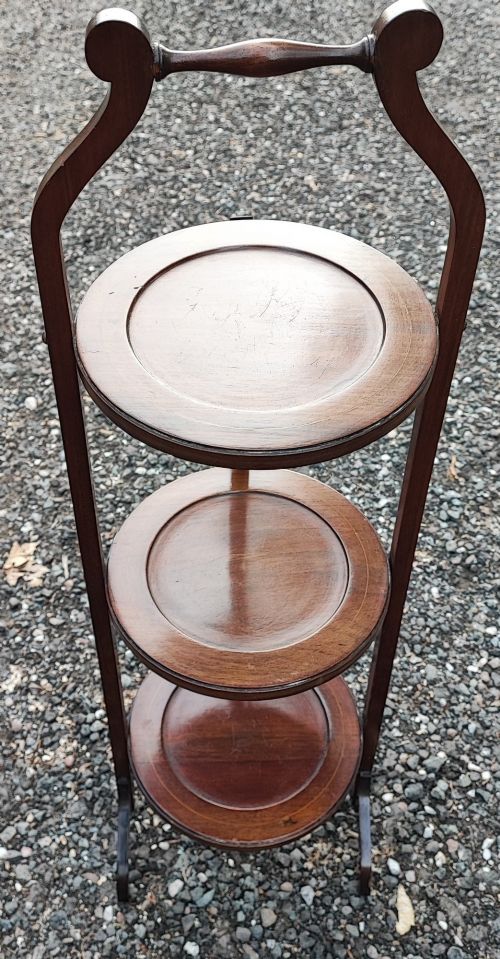
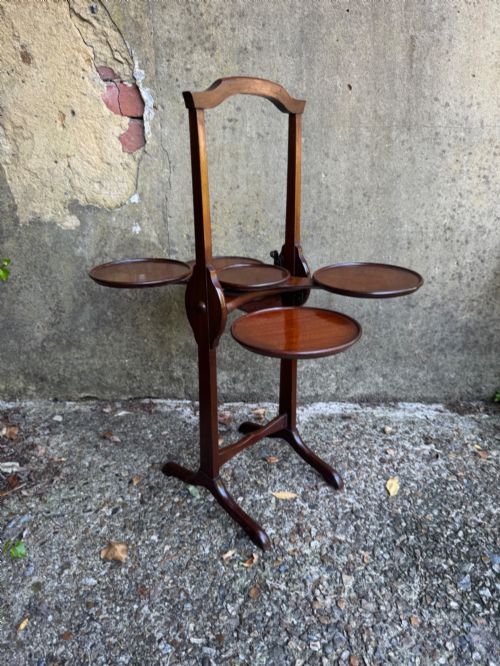


Edwardian Cake Tier
An Edwardian cake tier serves afternoon tea with tiered display surfaces that fold away neatly when the parlour empties.
Edwardian Cake Tier
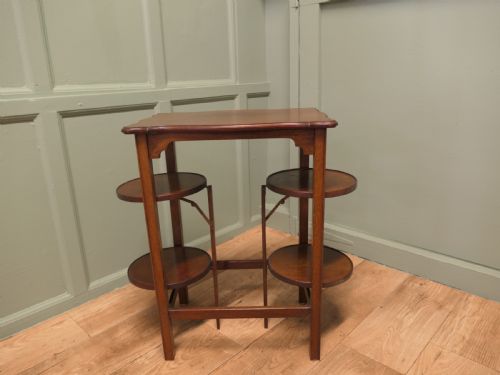
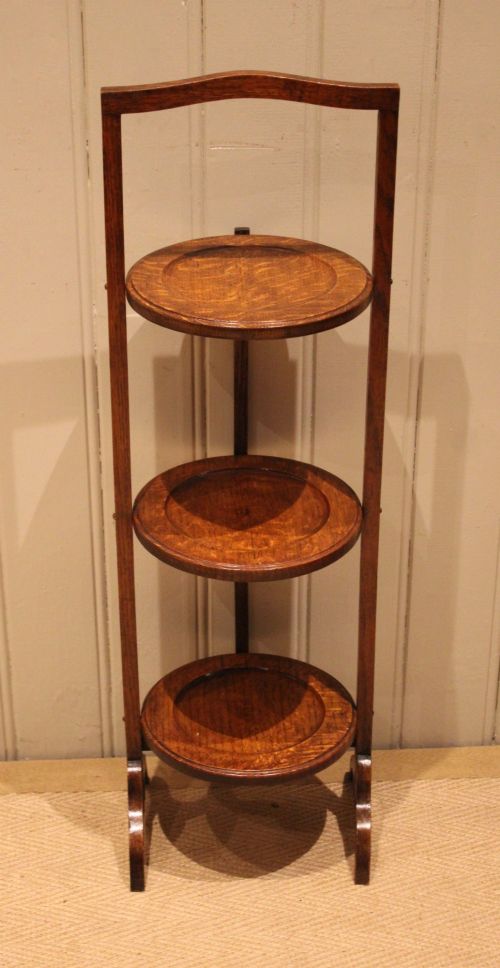
An edwardian cake tier offers multiple horizontal platforms arranged vertically to present pastries, sandwiches, and small cakes during afternoon tea. These pieces range from simple two-tier occasional tables to elaborate four-tier folding stands.
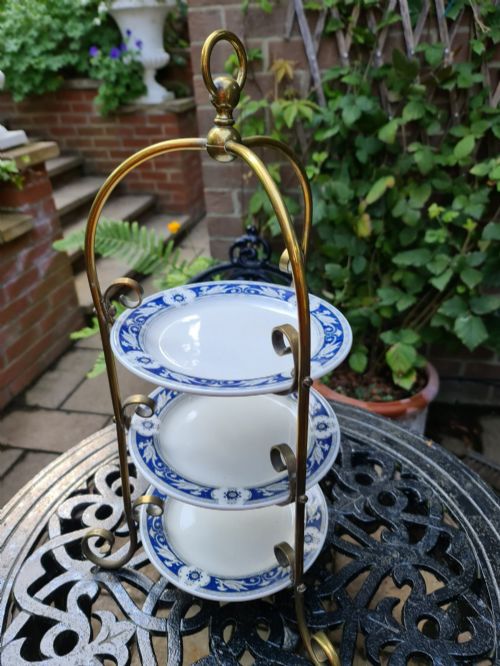
Mahogany forms the dominant wood choice across these pieces, frequently enhanced with satinwood inlay or Sheraton Revival styling. Oak and rosewood examples also appear alongside rarer silver-plated and sterling silver miniatures.
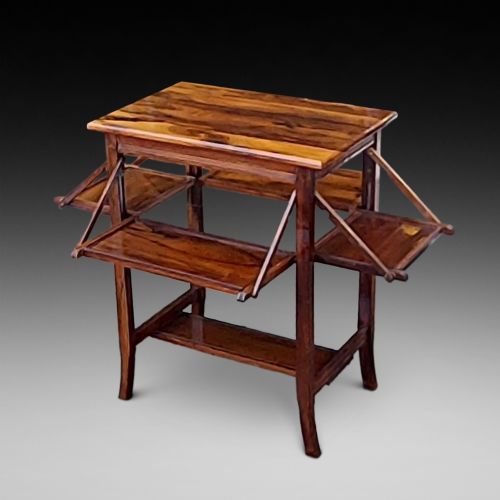
The folding mechanism defines many of these designs, allowing domestic staff to collapse the tiers for storage against a wall or beside a fireplace. Stationary etageres and dumb waiters also populate this category as alternative serving furniture.
Materials and Construction
Cabinet makers utilised solid timbers and selected veneers, employing mahogany as the primary structural wood alongside oak, walnut, and rosewood. Satinwood inlay added contrasting linear stringing and geometric motifs to the tops of the shelves.
Folding brass hinges and clever pivoting struts allowed the tiered frames to articulate smoothly without wobbling during service. Metal components on silver examples involved pierced and reticulated casting techniques for the display plates.
Dating spans from the Victorian era through the Edwardian period into the nineteen-twenties and thirties.
Distinctions in Quality
The refinement of the timber selection and the crispness of the inlay separate standard production from finer workshop pieces. Subtle stringing executed in contrasting woods demands high precision from the cabinet maker.
Mechanical integrity defines the best folding examples, where hinges operate smoothly and tiers lock securely into a level position. Loose joints and warped platforms indicate poor storage or hasty manufacture.
James Dixon & Sons
The Edwardian Cake Tier Glossary
- Etagere
- A set of open shelves for displaying small objects or food. These tiered structures provide multiple surfaces within a compact floor footprint.
- Sheraton Revival
- A late nineteenth and early twentieth century design movement drawing inspiration from eighteenth century neoclassical furniture. Pieces display graceful proportions, taper legs, and delicate inlay.
- Retangulated
- Pierced metalwork creating an openwork lattice pattern. This technique lightens the visual weight of silver serving tiers.
- Dumb waiter
- A multi-tiered serving stand designed to hold dishes without requiring constant attendance from servants. They often feature pivoting or fixed circular trays.
- Satinwood inlay
- A contrasting light-coloured timber inset into a darker wood surface to create decorative borders. This technique highlights the edges of the tiers.
Edwardian Cake Tier: Frequently Asked Questions
How do I fold this cake stand safely?
Locate the central pivoting hinges beneath the top tier and gently lift the locking strut to release the tension.
Guide the side arms inward while supporting the shelves so the tiers fold flat together without catching.
Can I use these for actual food?
Wooden tiers accommodate plates holding dry cakes and pastries, though modern placement of damp food requires protective doilies or paper mats.
Silver-plated and sterling silver versions handle direct contact with food more readily provided they receive proper cleaning after use.
Where should I place a tiered stand at home?
These pieces fit comfortably in corners, beside armchairs, or against empty wall spaces where their vertical height adds visual interest.
Folding versions can be stored flat against a wall and opened out only when visitors arrive for tea.
How do I tell an Edwardian stand from a Victorian one?
Edwardian examples favour lighter mahogany timbers, delicate satinwood stringing, and restrained neoclassical Sheraton Revival motifs.
Victorian pieces often lean towards heavier proportions, darker walnut or oak construction, and more robust turned supports.