




Three Piece Candelabra
These three piece candelabra sets bring sculptural presence and matched illumination to a mantelpiece.
Three Piece Candelabra
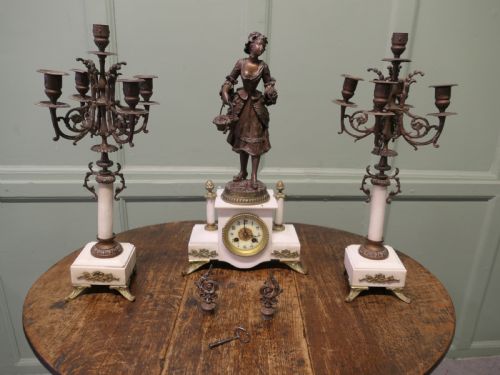
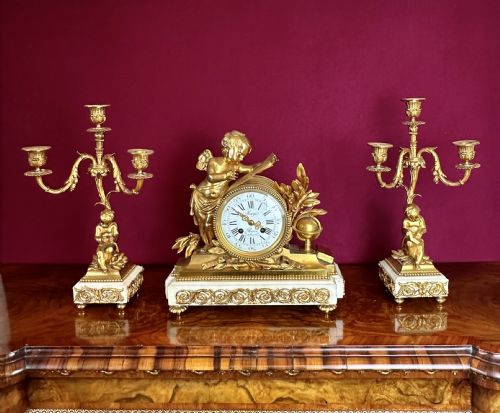
A three piece candelabra set typically comprises a central mantel clock flanked by a matching pair of branch candelabras, forming a unified decorative garniture for the interior. These suites appear across nineteenth-century and early twentieth-century periods, drawing heavily on French Empire, Louis XVI, and Victorian design vocabularies.
The configurations on this page include clock garniture sets paired with candelabras, alongside silver-plated suites and black slate assemblies. Makers constructed these arrangements to sit harmoniously upon a fireplace mantel or console table as a balanced decorative ensemble.
Buyers encounter materials ranging from white marble and bronze to ormolu, gilt metal, and Imari porcelain. The nineteenth century yields the largest share of these sculptural sets, often featuring elaborate ornamentation and matched candle branches.
How they were made
Foundries and workshops cast bronze, brass, and ormolu into intricate decorative frames, mounting them upon bases of white marble or black slate. Artisans combined cast metalwork with hand-chased surface details and porcelain inserts to create layered textures across the three matching pieces.
Silver-plated suites and gilt bronze components received chemical and mechanical finishes to achieve rich metallic lustres. Clock movements were integrated directly into the central housing while matching candelabra branches were cast and assembled to mirror the central piece's decorative theme.
Listings feature French Empire, Louis XVI, and Victorian styles executed in marble, gilt bronze, ormolu, and black slate.
What varies in quality
The crispness of the bronze casting and the depth of the ormolu or gilt finish distinguish finer suites from simpler production. Superior examples display sharply defined sculptural motifs and harmonious integration between the clock case and the flanking candelabras.
Material selection significantly impacts the character of a set, with dense marbles, hand-painted porcelain panels, and heavy bronze mounts indicating higher manufacturing investment. The precision of the assembly and the coherence of the matched style across all three components dictate the standing of the ensemble.
Japy Freres
The Three Piece Candelabra Glossary
- Ormolu
- Ground metallic bronze applied to metal objects through a mercury amalgamation process, or simply cast and gilt brass mimicking gold. This bright finish provided rich highlights to French clock sets and candelabras.
- Japy Freres
- A notable nineteenth-century French clockmaking firm known for producing quality movements for decorative clock garnitures. Their mechanisms appear within various nineteenth-century architectural and sculptural cases.
- Imari porcelain
- Japanese porcelain decorated in underglaze blue and overglaze red, gold, and black, frequently incorporated into European furniture and clock sets. Such ceramic inserts added contrasting colour and pattern to gilt metal mounts.
- Clock garniture
- A decorative grouping consisting of a mantel clock accompanied by matching side ornaments such as candelabras or vases. This arrangement established symmetry and visual weight on nineteenth-century mantelpieces.
Three Piece Candelabra: Frequently Asked Questions
What is a three piece candelabra set?
A three piece candelabra set consists of a central mantel clock accompanied by two matching candelabras designed to sit together as a garniture. These matched suites provide symmetrical decoration for fireplace mantels and large console tables.
They bring together sculptural metalwork, stone bases, and functional timekeeping into a single unified display. Each piece shares matching decorative motifs, materials, and stylistic details.
How do I date a clock garniture?
Dating relies on examining the stylistic clues of the period, such as French Empire, Louis XVI, or Victorian design elements. Materials like white marble, black slate, ormolu, and specific porcelain types also point toward particular decades of manufacture.
Maker marks on the clock movements or inside the cast bronze cases offer more precise chronological markers. Comparing the casting techniques and overall silhouette helps place the set within the nineteenth or early twentieth century.
Where were three piece candelabra sets displayed?
These sets were primarily placed upon mantelpieces in formal nineteenth-century reception rooms, parlours, and drawing rooms. Their symmetrical arrangement framed the fireplace hearth and reflected light from candles or gas lamps.
They also appeared on large sideboards, credenzas, and console tables where a grand decorative focal point was desired. The matched components ensured a balanced visual weight within richly furnished interiors.
How do I care for marble and bronze?
Caring for these materials involves gentle dusting with a soft, dry cloth to prevent the accumulation of grit within intricate bronze chasings. Moisture should be kept away from porous marble and exposed clock movements to avoid staining or corrosion.
Polishing agents should be avoided on gilt bronze and ormolu to protect the original metallic surface finishes. Proper handling ensures the delicate candle branches and decorative mounts remain secure.