
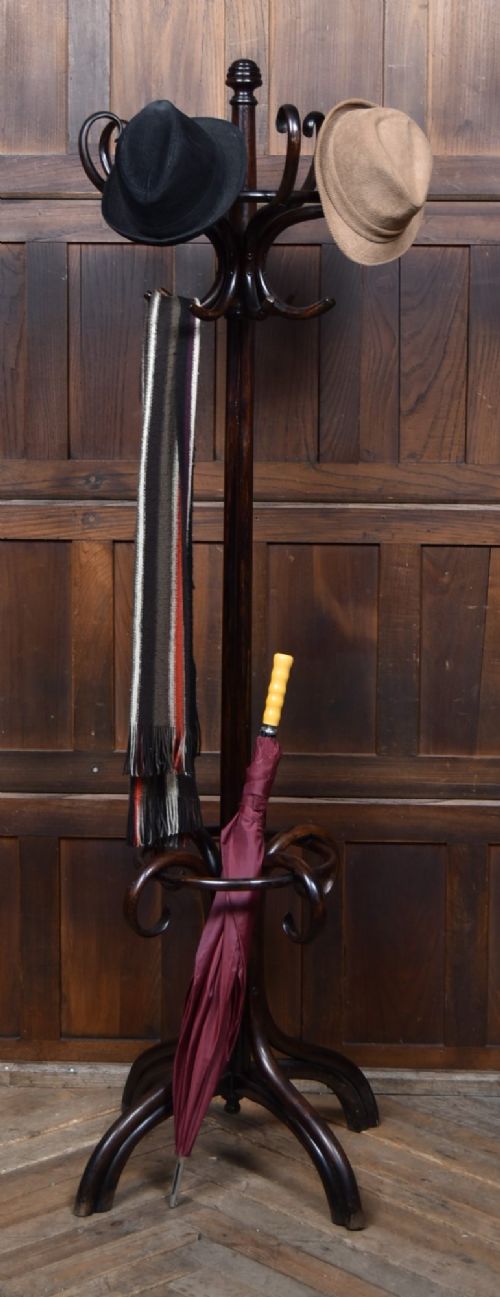
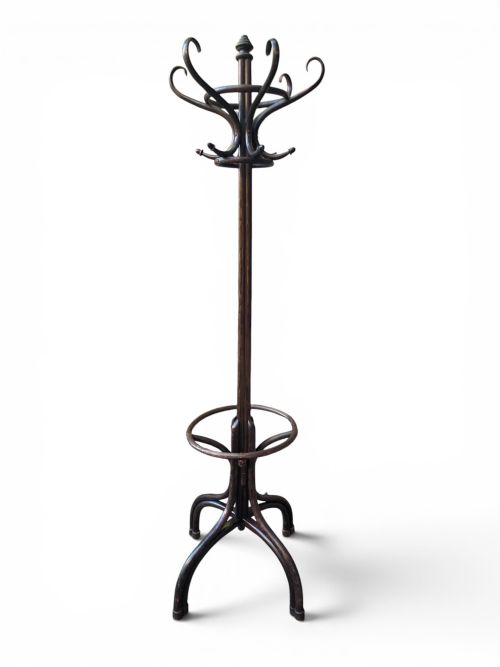
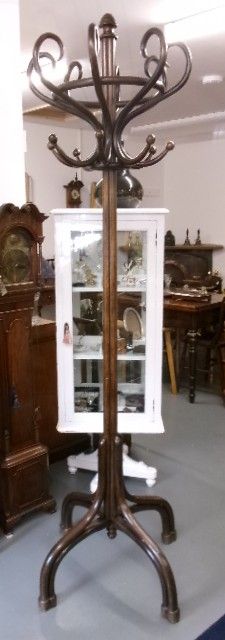
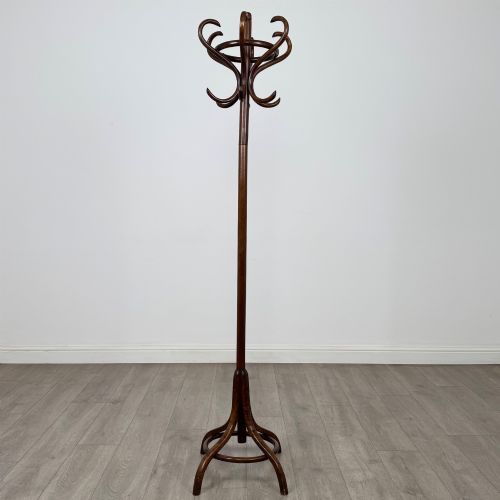
Thonet Hall Tree
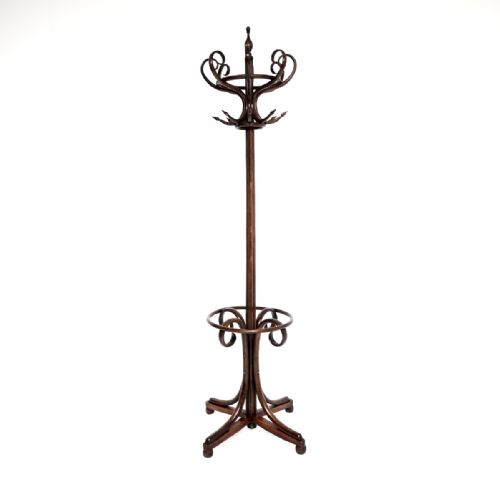
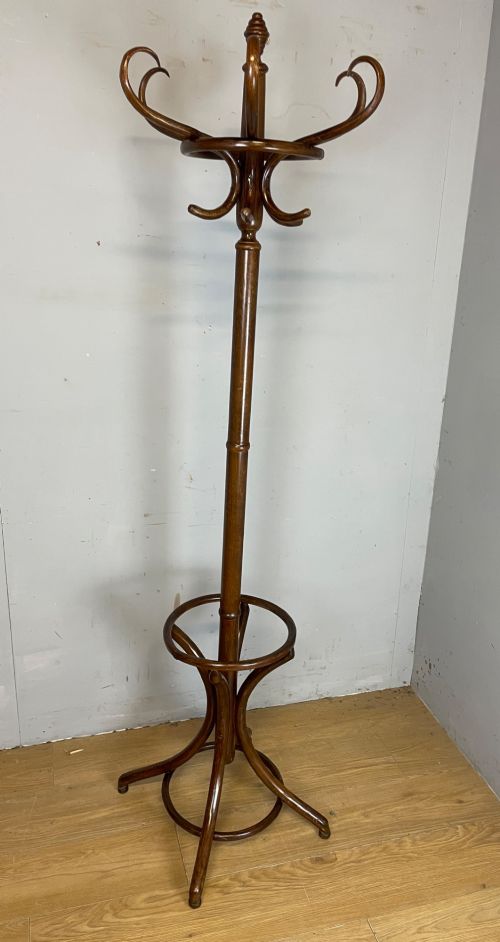
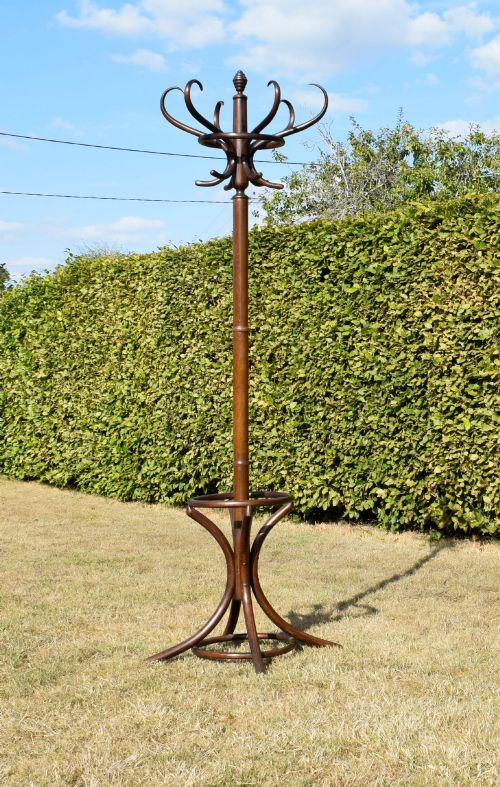
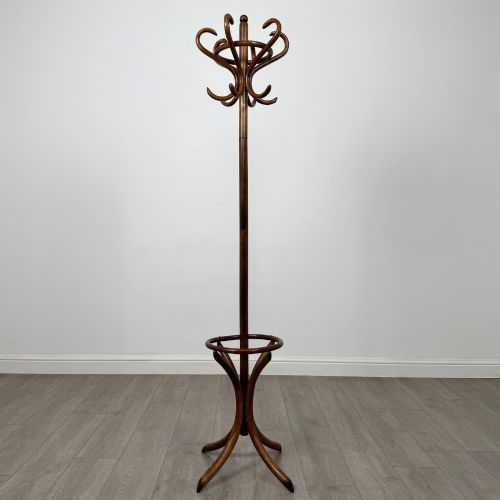
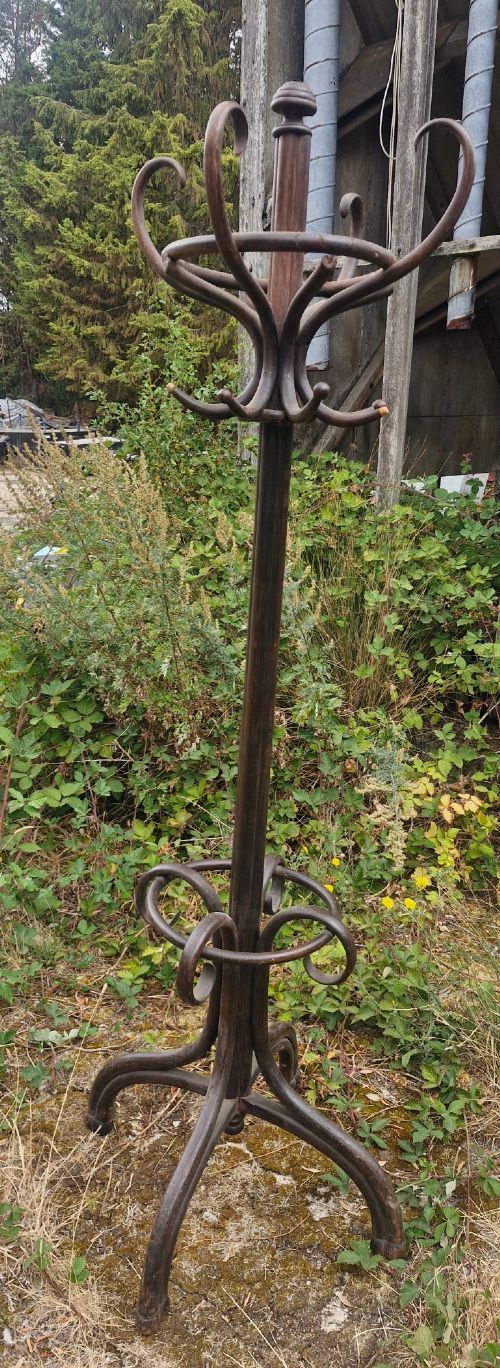
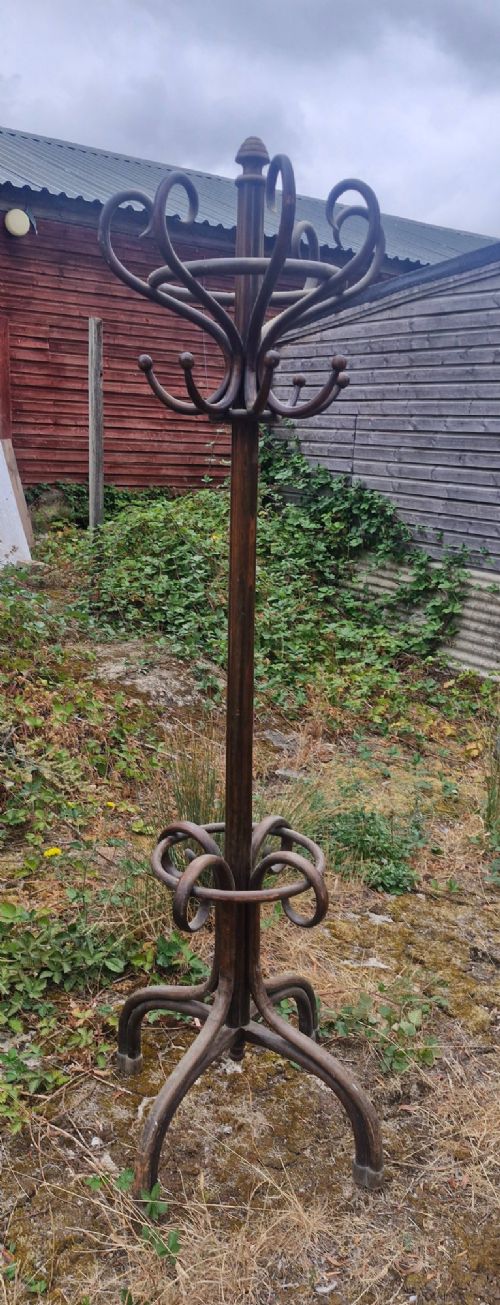
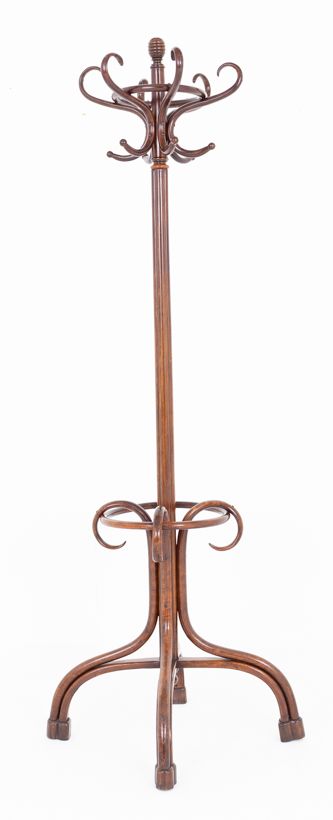
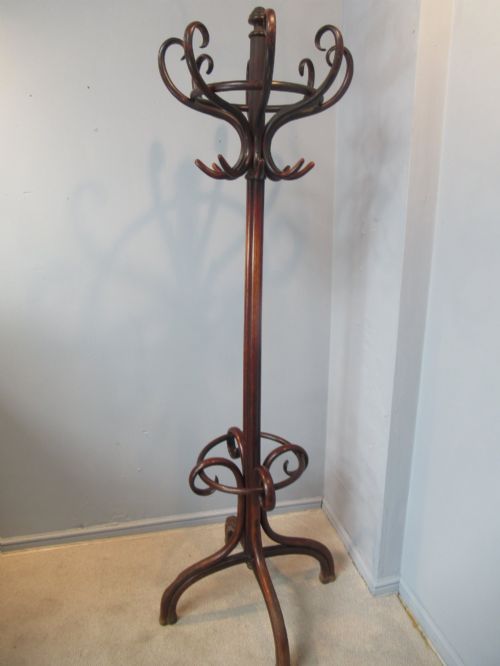
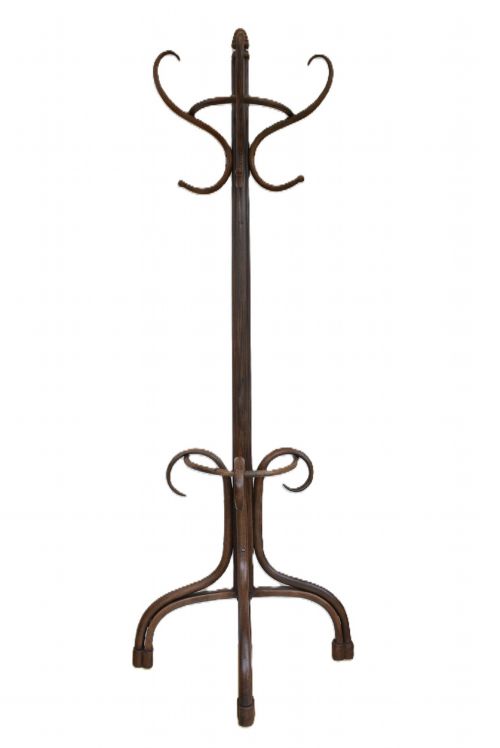
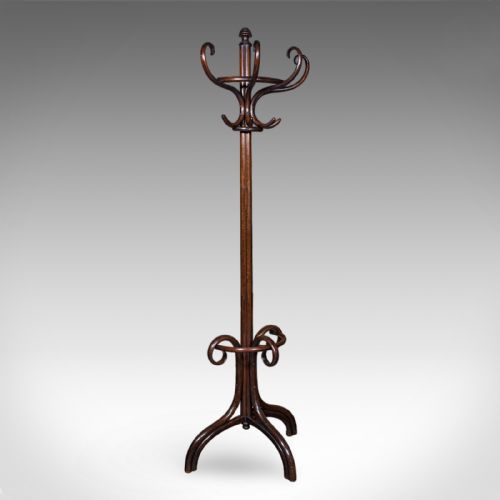
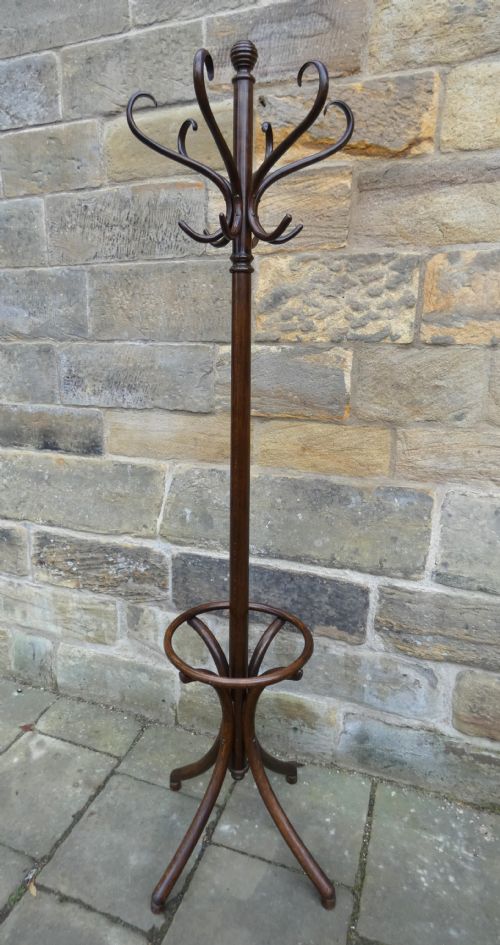
A thonet hall tree brings lightness to an entrance hall through organic curves of steamed timber.
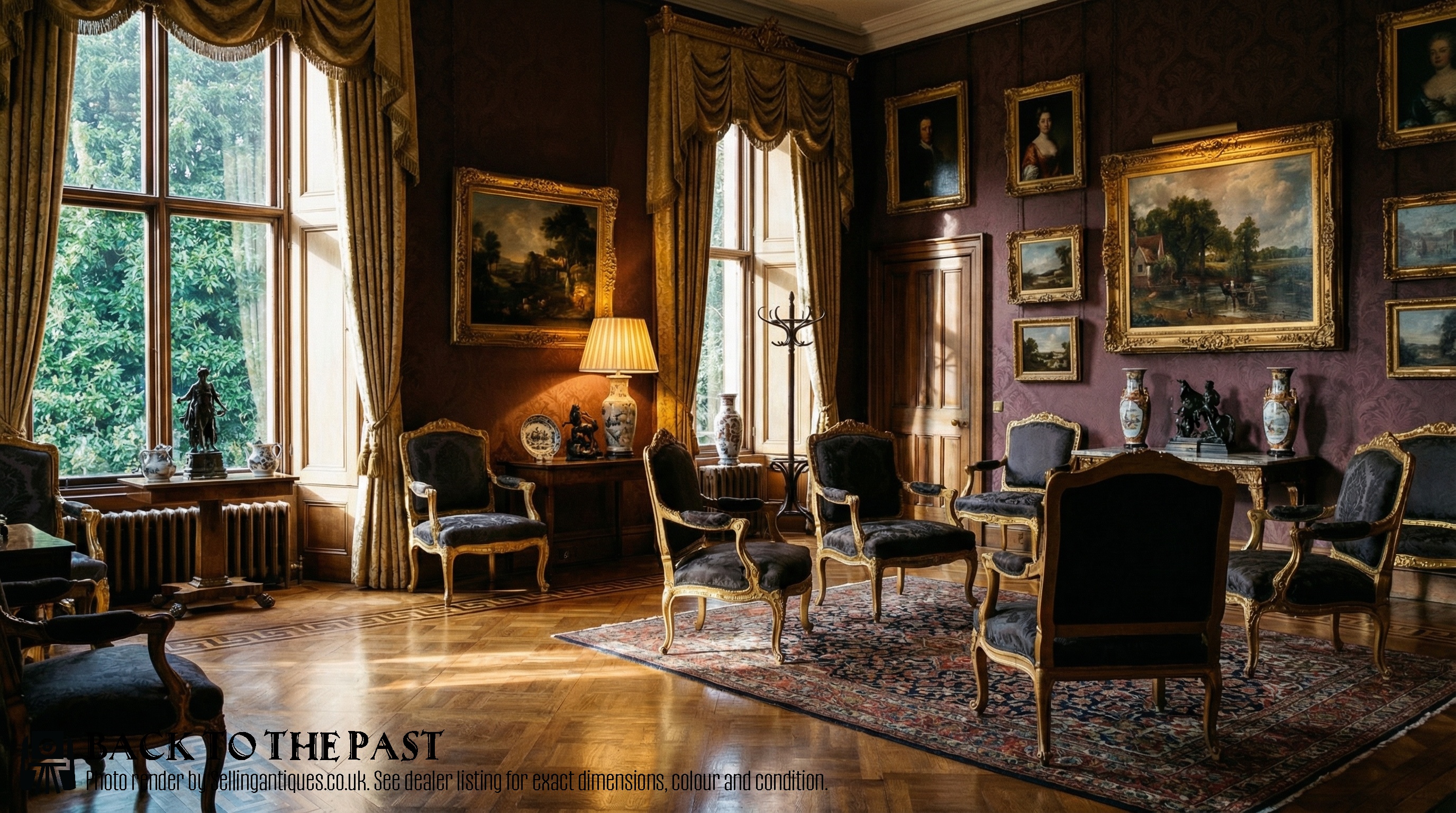
Thonet Hall Tree
When you search for a thonet hall tree, you are looking at tall vertical stands designed for hats, coats, and walking sticks in entrance halls and lobbies. The pieces available here span from the late nineteenth century through the Edwardian period and into the 1920s and 1930s. Most examples follow the bentwood tradition established in Austria, taking the form of upright poles fitted with curved upper hooks and lower ring bases for umbrella storage.
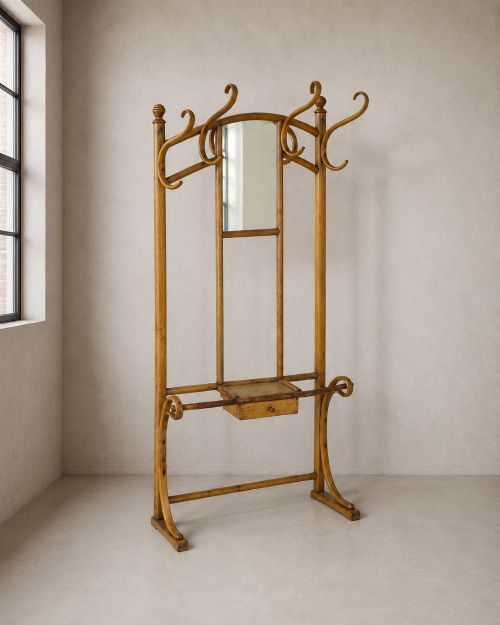
The assortment includes half-round and demi-lune wall-standing designs alongside revolving models that allow easy access to garments from all sides. You will encounter styles labelled as Austrian bentwood or attributed directly to makers such as Fischel alongside traditional Thonet production. Forms range from simple coat racks with double tops to large hall stands incorporating mirror frames and storage attachments.
What varies in quality
The distinction between standard utility stands and pieces of finer quality rests in the complexity of the timber manipulation and the robustness of the frame. Heavier gauge beech and sturdier double-top constructions provide greater stability when loaded with heavy winter overcoats and walking sticks. Superior examples display smooth, continuous curves without splintering at the stress points where hooks join the main upright shaft.
Makers marks, whether paper labels or stamped impressions into the wood, separate generic Thonet style pieces from documented factory output. The crispness of the turning on the central column and the tightness of the joinery where the umbrella ring meets the base distinguish better workshops from mass production.
Listings feature bentwood stands spanning from the Victorian era and 1880 through Edwardian times up to the 1930s.
Thonet·Fischel
The Thonet Hall Tree Glossary
- Bentwood
- Wood shaped by exposure to steam and pressure into curved components. This technique defines the structural form of the furniture.
- Demi-lune
- A half-moon shape used for hall stands designed to sit flush against a wall. This configuration saves floor space in narrow hallways.
- Revolving
- A design feature allowing the upper section of the coat stand to turn on a central axis. This enables access to garments without reaching around the post.
- Steamed beechwood
- Solid beech timber softened by hot moisture prior to bending. It provides the flexibility required for tight radius curves.
Thonet Hall Tree: Frequently Asked Questions
What is a thonet hall tree?
A vertical wooden stand designed for hanging hats and coats in an entranceway. These pieces utilise curved steamed timber to provide multiple hanging points while occupying minimal floor space.
Originating in the nineteenth century, they serve as both practical hallway storage and decorative items showcasing bentwood manufacturing techniques.
How do I date a bentwood hall stand?
Dating relies on stylistic clues, construction methods, and maker stamps or paper labels found on the wood. Pieces from the late nineteenth century often feature heavier proportions and manufacturer marks from firms like Thonet or Fischel.
Edwardian and later 1930s examples tend toward simpler profiles, while revolving mechanisms and mirror attachments appear across various decades depending on the specific model.
Are these stands sturdy enough for daily use?
Solid beech construction and wide umbrella ring bases provide natural stability for everyday hanging of coats and hats. Heavier quality models handle daily weight without tipping.
Placement against a wall or selecting a wall-standing demi-lune design offers additional security for busy households.
What is the difference between a hall tree and a coat stand?
The terms are often used interchangeably, though hall stands occasionally incorporate mirrors, umbrella wells, or flat surfaces for small items. Coat stands focus primarily on vertical posts with radiating upper hooks.
Both forms utilise bentwood construction to organise garments in entrance halls.