


Curved Wood Coat Stand
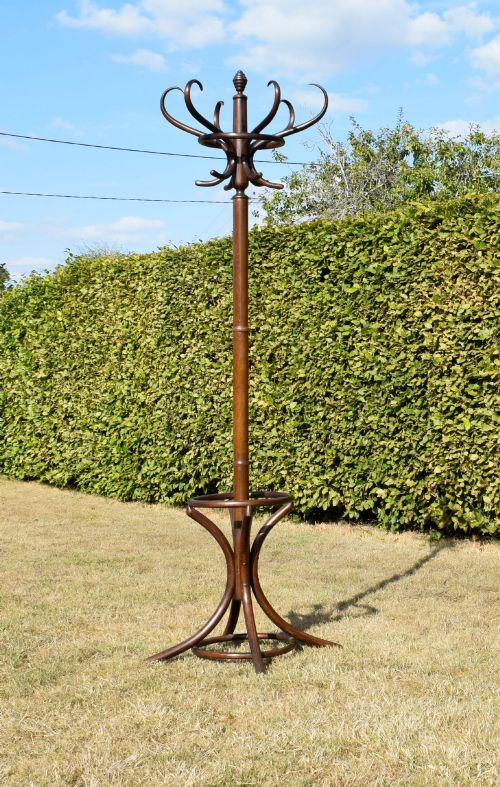
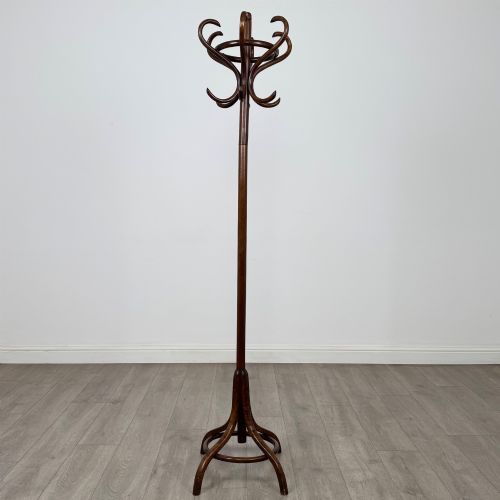
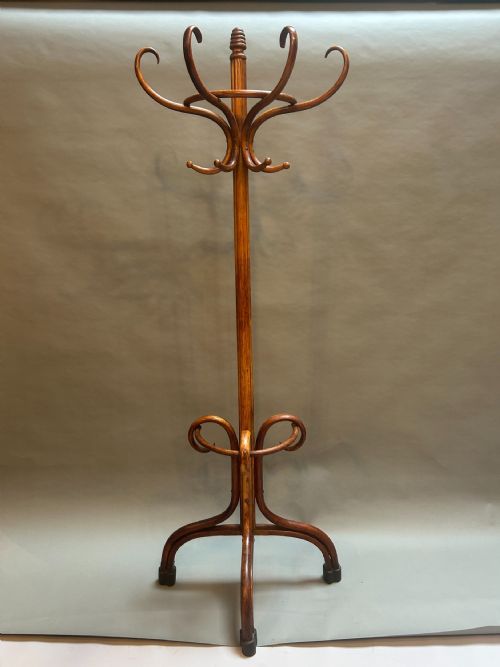
A curved wood coat stand brings lightness and structural strength to the hallway, offering an elegant framework for hats and garments.
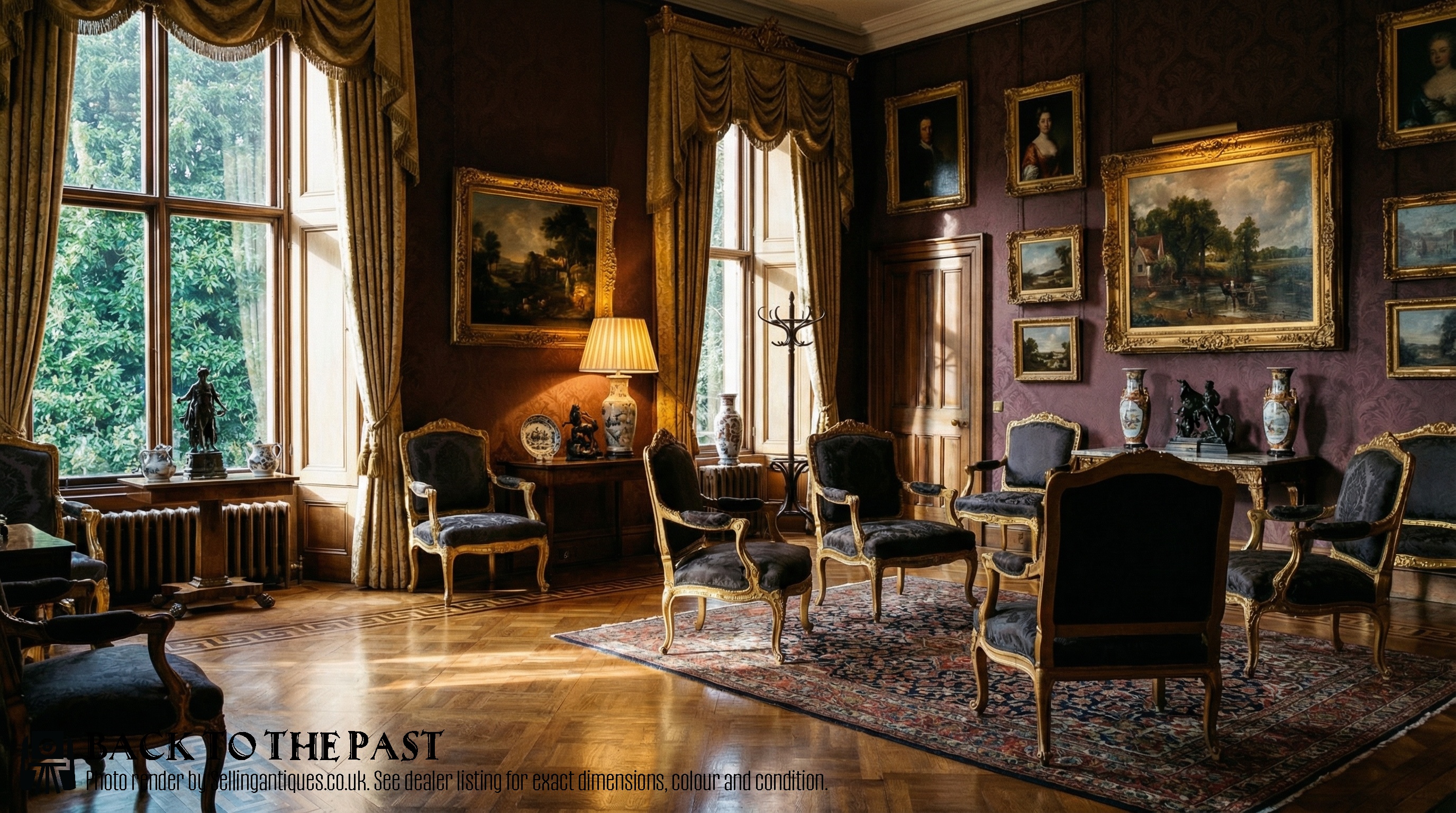
Curved Wood Coat Stand
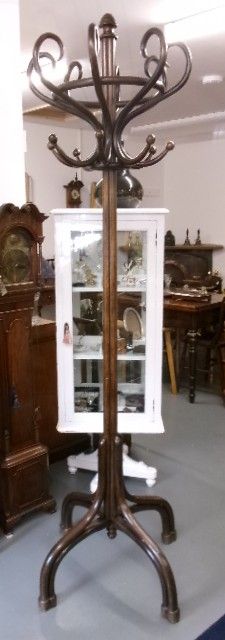
A curved wood coat stand is a practical piece of hall furniture designed for hanging garments, hats and accessories in an entranceway or corridor. These upright pieces combine vertical shafts with sweeping upper hooks to hold everyday outdoor wear without taking up excessive floor space. They appear across several distinct historical periods, notably the Victorian era, the Edwardian period, and the nineteen thirties.
The versions most commonly met on this page belong to the bentwood tradition, often associated with Austrian production or Thonet style manufacturing. Examples range from simple demilune configurations designed to sit flush against a wall to substantial freestanding items featuring multiple tiers of scrollwork hooks. The listed items span from the late nineteenth century through to the interwar period, showing a continuous lineage of steam-bent design.
How they were made
Makers utilised solid timbers such as beech and beechwood, which proved exceptionally responsive to steam-bending techniques. Subjecting the wood to heat and moisture allowed craftsmen to curve straight lengths into permanent structural arcs without losing tensile strength. Additional components included stained wood finishes and occasional metal elements integrated for reinforcement or stability.
The characteristic loops and scrolls of a bentwood coat stand relied upon precise timber preparation and specialised metal formers. Once bent, the components were assembled into sturdy upright frames using traditional joinery and mechanical fixings to support heavy garments. This method of construction produced items that were remarkably lightweight yet rigid enough to bear substantial loads.
The listings span the Victorian era, the Edwardian period, and the nineteen thirties, with beech and bentwood as the primary materials.
What varies in quality
The distinction between ordinary and superior pieces often lies in the density and selection of the timber used for the main upright shaft and curved branches. Heavier, thicker sections of beechwood provide greater overall stability and less flex when laden with heavy winter coats. Finer examples display symmetrical bending and clean, continuous curves that demonstrate high proficiency in the steaming workshop.
Another factor is the complexity of the scrollwork and the number of tiers provided for hats and coats. More ambitious designs incorporate subsidiary ring frames for umbrella storage or intricate demi-lune wall configurations that require advanced joinery. The richness and preservation of the original stained wood finish also influence the overall character of the piece.
The Curved Wood Coat Stand Glossary
- Bentwood
- Wood that has been shaped by applying heat and moisture, usually steam, allowing craftsmen to form smooth curves. This technique defines the primary structural aesthetic of the pieces listed here.
- Beech
- A hard, pale timber favoured for its strength and exceptional response to steam-bending. It forms the core material for the vast majority of these stands.
- Demilune
- A half-moon shape used to describe stands designed to stand flat against a hallway wall. This configuration maximises floor space in narrow corridors.
- Thonet style
- Furniture following the pioneering manufacturing methods and curved aesthetic popularised by Michael Thonet in the nineteenth century. It emphasises functional elegance and lightweight construction.
- Hat stand
- A tall furniture piece specifically arranged with upper tiers for headwear alongside garment hooks. These items were essential furnishings in nineteenth and early twentieth-century hallways.
Curved Wood Coat Stand: Frequently Asked Questions
How were bentwood coat stands used historically?
Historically, these stands stood in domestic entrance halls to receive the outdoor garments of family members and visitors. They provided an accessible place to drop wet coats and hats immediately upon entering the house.
Many designs included lower ring sections specifically intended for holding walking sticks and umbrellas. This kept the hallway tidy and protected interior floors from dripping water.
How do I date a bentwood coat stand?
Dating a bentwood coat stand involves examining the construction methods, the complexity of the wood bending, and any associated hardware. Pieces from the nineteenth century often display heavier timber sections and distinctive joining brackets.
Later examples from the Edwardian period or nineteen thirties tend toward lighter framing and alternative staining treatments. Comparing the specific scroll patterns to documented manufacturing catalogues helps narrow the period further.
How do I place one in a modern home?
A curved wood coat stand fits naturally into modern hallways, entryways, or bedrooms as a functional sculptural element. Its vertical orientation makes it suitable for tight corners or narrow spaces where bulky cabinetry would not fit.
When positioning the stand, ensure the floor surface is reasonably level to maintain stability when hanging heavy coats. Distributing weight evenly across the upper hooks preserves the balance of the upright frame.