



Terracotta Woven Textile
When searching for a terracotta woven textile, collectors find tribal rugs, saddle bags, and wall hangings crafted by nomadic weavers.
Terracotta Woven Textile
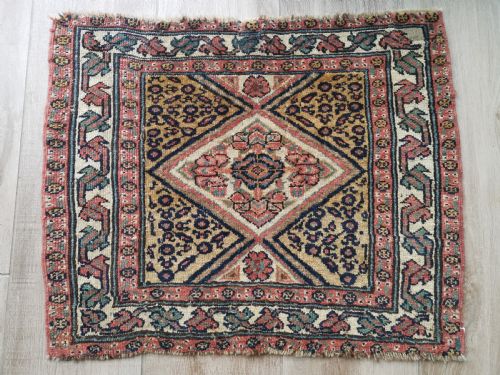
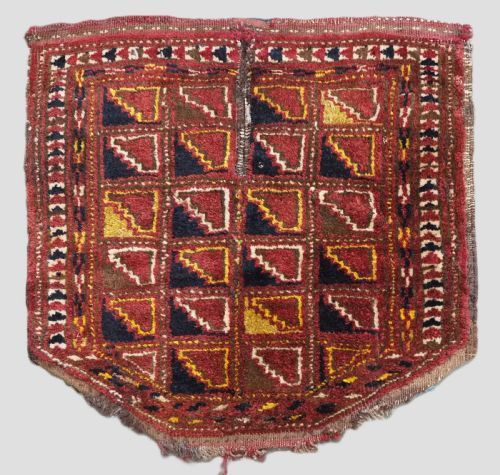
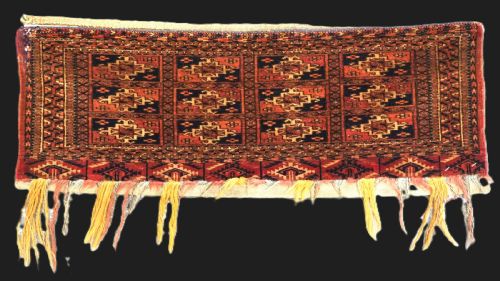
A terracotta woven textile encompasses functional items made by tribal and nomadic groups across Central Asia, the Caucasus, and Persia. Buyers encountering this selection will predominantly view bag faces, torbas, saddle-bags, and kilim panels originating from the nineteenth and early twentieth centuries.
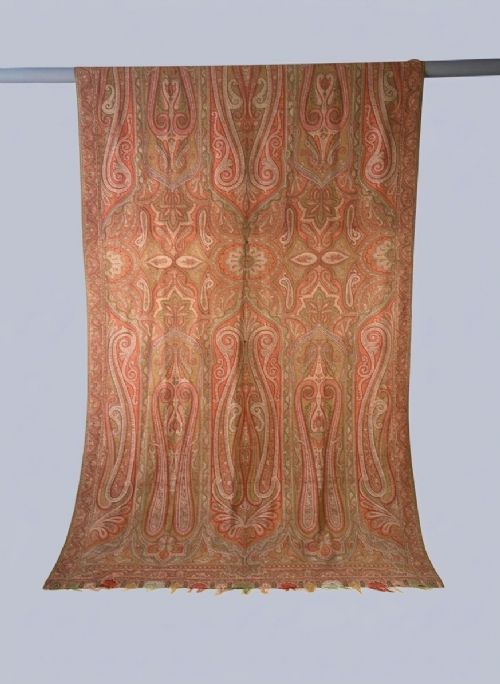
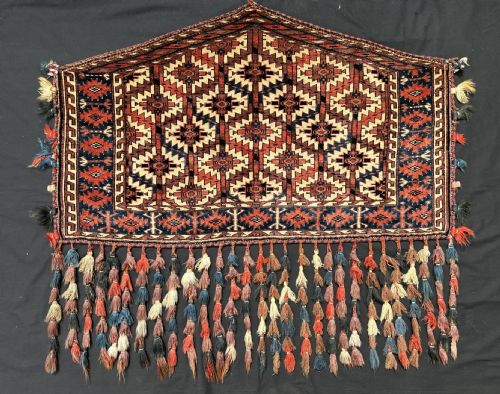
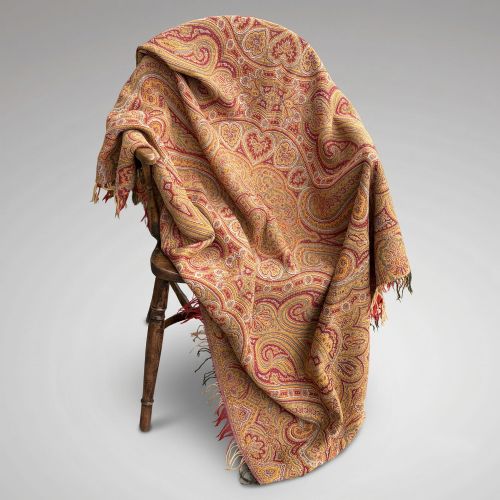
The inventory ranges from Turkmen asmalyks and ersari torbas to Persian tribal weavings and Victorian paisley wool shawls. These objects served utilitarian nomad roles as storage bags, tent hangings, and floor coverings before entering the antique market.
How they were made
Weavers constructed these textiles primarily using hand-spun wool and cotton, occasionally incorporating goat hair and silk details. Natural dyes provided the deep earthy palettes, while certain pieces feature supplementary glass beads.
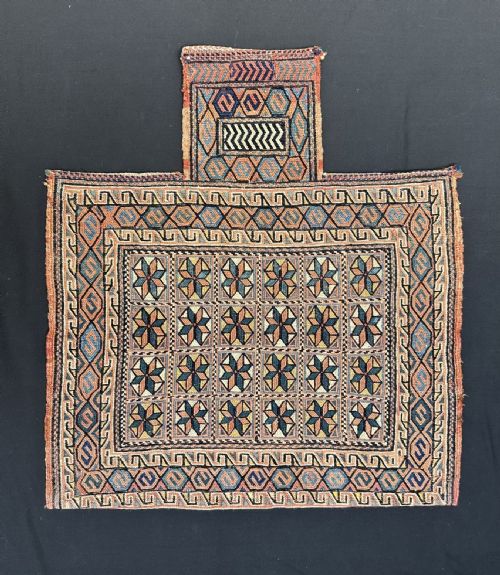
Techniques varied from pile knotting to flatweave structures like soumac and banded weft work. Panels were often woven in separate strips and joined, or completed with original backs and tassels for practical nomad transport.
Several bags retain their original backs and tassels, having survived a century of desert travel intact.
What varies in quality
Quality in a terracotta woven textile depends heavily on the tightness of the weave and the clarity of tribal design guls. Finer knots and precise graphic layouts separate utilitarian workshop pieces from superior dowry weaving.
The integrity of the structure also distinguishes examples, particularly the presence of original backs, side cords, and complete borders rather than cut fragments.
The Terracotta Woven Textile Glossary
- Torba
- A small storage bag produced by Turkmen tribes. These pieces were traditionally utilised for domestic storage inside yurts.
- Asmalyk
- A large pentagonal trapping used in Turkmen camel processions. They formed part of traditional wedding bridal displays.
- Soumac
- A flatweave technique involving wrapping weft threads over warp threads. This method creates a durable structure with a braided surface texture.
- Chuval
- A large storage sack made by Central Asian nomads. They were designed to hold household goods during seasonal migrations.
Terracotta Woven Textile: Frequently Asked Questions
What is a torba?
A torba is a small storage bag traditionally woven by Turkmen tribes for use inside nomad tents.
These pieces often feature distinctive gul motifs and were frequently created as part of dowry furnishings.
How were tribal bags used?
Nomadic groups utilised these woven bags for storing household goods, salt, or bedding during seasonal migrations.
They were hung against the lattice walls of tents or loaded directly onto pack animals.
What materials are used?
Most pieces combine hand-spun wool and cotton foundation threads dyed with natural pigments.
Some examples also incorporate goat hair for durability or glass beads for decoration.
How do you date them?
Dating relies on assessing the natural dye palettes, wool quality, and structural weaving techniques typical of nineteenth-century production.
Specific tribal patterns and structural formats help narrow the decade of origin.