

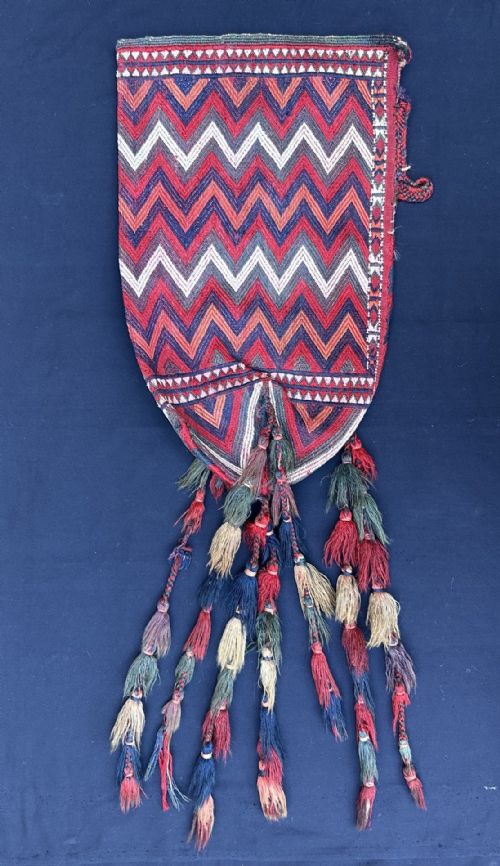


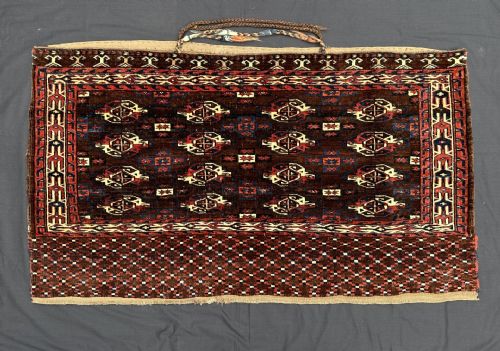
Yomut Wool Tent Bag
A yomut wool tent bag brings the rich nomadic heritage of the Trans-Caspian steppes directly into your interior.
Yomut Wool Tent Bag
A yomut wool tent bag represents the weaving tradition of Central Asian tribes from the nineteenth century. These utilitarian textiles served practical storage functions within traditional yurt dwellings before finding new life as decorative wall hangings. When exploring this selection, collectors will encounter torba face pieces, storage chuval examples, and specialised ok bash tent-pole bags.
The objects stem from nineteenth-century Turkmenistan and the wider Trans-Caspian steppes. Tribal makers fashioned these bags using durable materials suited to nomadic life. Pieces often retain their original structures or complete wool backs, offering a direct connection to Turkmen tribal culture.
How they were made
Weavers utilised hand-spun wool and natural dyes to construct these durable textiles. The combination of sturdy wool and tightly knotted structures ensured the bags endured daily use in nomadic environments. Cotton also appears within the construction of specific structural elements.
The surface patterns rely on traditional tribal motifs such as the kepse gul, aishk gul, and asmalyk style designs. These repeating geometric arrangements required considerable skill from the weaver, resulting in dense and resilient wool surfaces.
Yomut Wool Tent Bag Retail Price Guide 2026
Typical asking prices for yomut wool tent bag among the pieces listed under this phrase on Sellingantiques today, from the lower quarter to the upper quarter. They describe what is for sale here now, not the wider market.
Materials across the selection consist entirely of hand-spun wool, natural dyes, and cotton utilised by Turkmen tribal weavers.
What varies in quality
The fineness of the weave distinguishes individual examples within this group. Tighter knotting and precise geometric execution separate standard utilitarian items from more accomplished tribal weaving. The crispness of natural dye colours also plays a role in the visual impact of the surface design.
Condition and completeness influence the character of each piece. Retaining the original wool back or complete construction adds tangible historical integrity to a storage bag. The survival of clear tribal design motifs ensures the visual strength of the textile remains intact.
The Yomut Wool Tent Bag Glossary
- Torba
- A small Turkmen storage bag traditionally used for domestic items inside a yurt. These pieces frequently feature prominent gul motifs across the face.
- Chuval
- A large nomadic storage bag produced by Turkmen tribes for household possessions. These items display dense pile weaving and structured geometric fields.
- Ok Bash
- A specialised tent-pole bag designed to cover the ends of wooden struts in a nomadic dwelling. These smaller textile forms narrow towards the top.
- Gul
- A primary medallion or repeating tribal motif characteristic of Central Asian carpet and textile design. These octagonal or stepped forms identify the specific weaving group.
- Kepse
- A specific repeating gul design commonly found on Yomut Turkmen torba examples. The pattern creates a lattice effect across the wool surface.
Yomut Wool Tent Bag: Frequently Asked Questions
What is a yomut wool tent bag?
A yomut wool tent bag is a nineteenth-century textile woven by nomadic tribes in the Trans-Caspian steppes. These items functioned as practical storage containers within traditional yurt dwellings.
Today, collectors appreciate these pieces for their geometric tribal designs and natural dye palettes. They serve primarily as decorative wall hangings or statement floor textiles.
How were these bags used?
Nomadic families utilised these wool bags inside tents to store personal possessions, bedding, and utilitarian household goods. Their sturdy construction protected contents from dust and dampness on the steppe.
Specialised forms like the ok bash covered the ends of wooden tent poles. This dual purpose of utility and decoration defined daily nomadic life.
How do I date a yomut tent bag?
Dating relies on examining the materials, natural dye saturation, and structural characteristics of the weave. Pieces on this page originate from the nineteenth century, specifically between eighteen-sixty and nineteen-hundred.
Tribal patterns and the use of hand-spun wool offer further clues to the period of manufacture. Stylistic consistency within Turkmen weaving helps narrow the decade of origin.
How should I care for a textile wall hanging?
Display these wool textiles away from direct sunlight to protect the natural dyes from fading. Gentle vacuuming through a mesh screen helps remove dust without damaging the pile.
Mounting the textile evenly distributes weight across the structure of the piece. Avoid placing wool items in areas of high humidity to preserve the natural fibres.