

Geometric Nomadic Wool Weaving
Geometric nomadic wool weaving comprises tribal rugs, saddle bags and covers created by pastoral groups using traditional patterns and materials.
Geometric Nomadic Wool Weaving
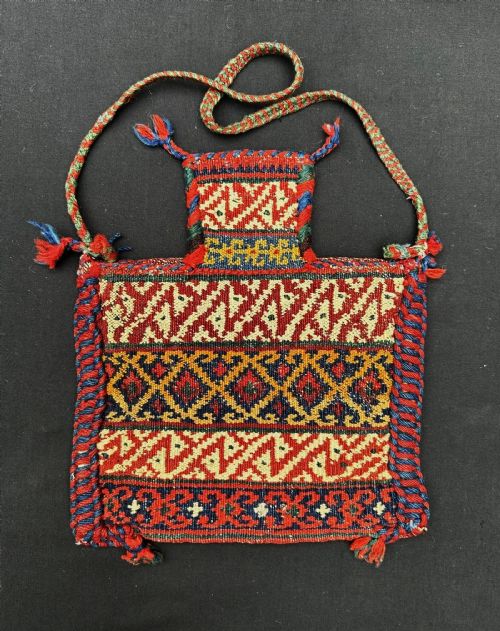
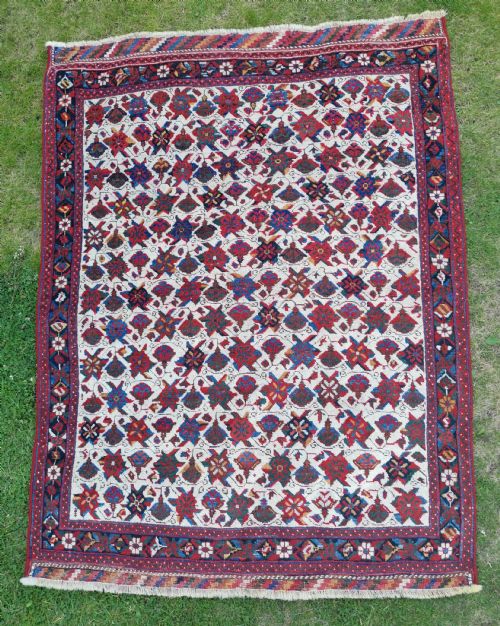
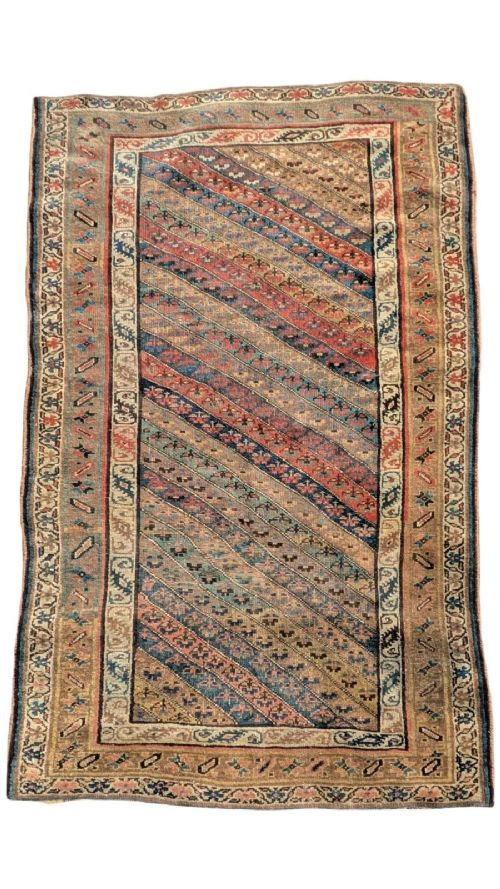
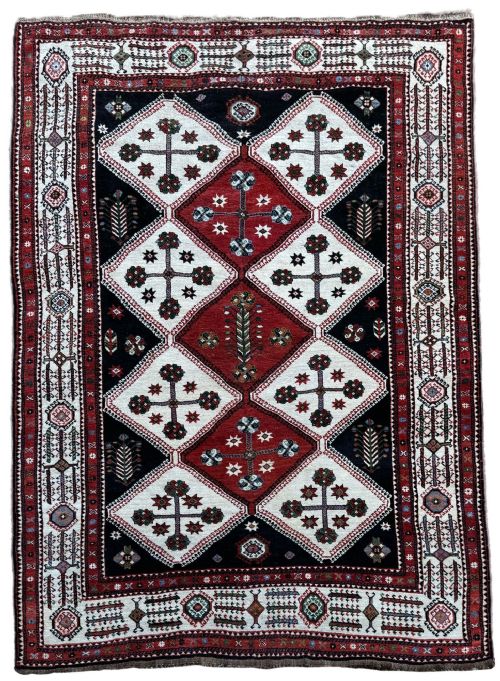
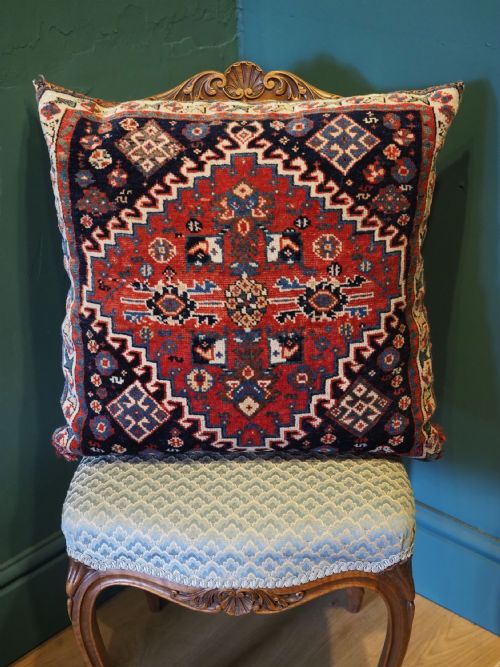
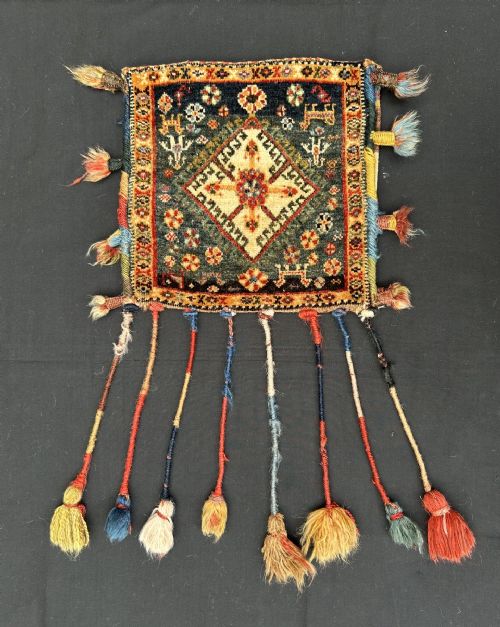
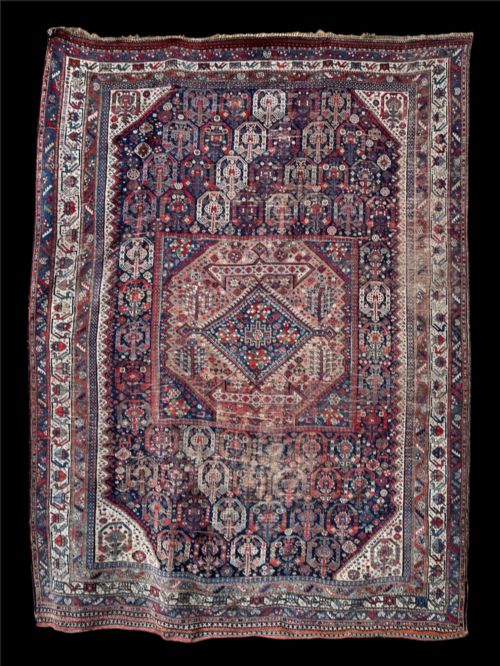
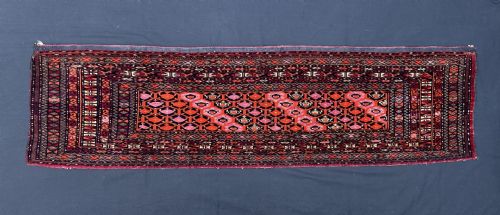
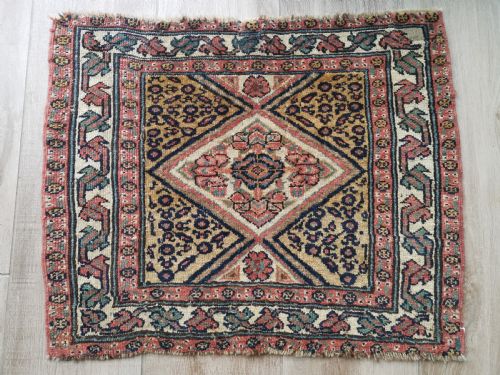
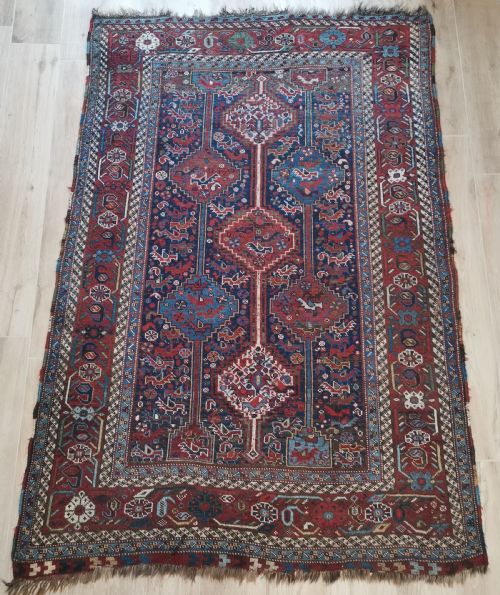
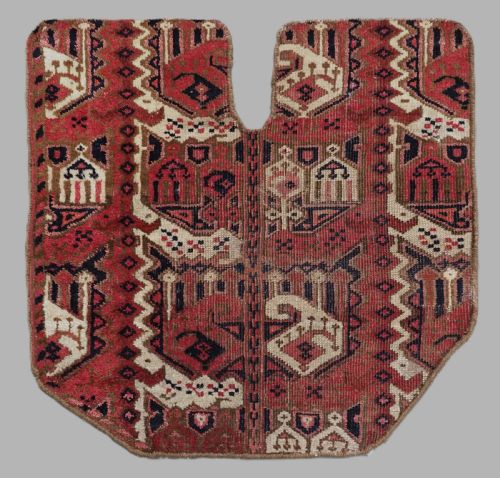
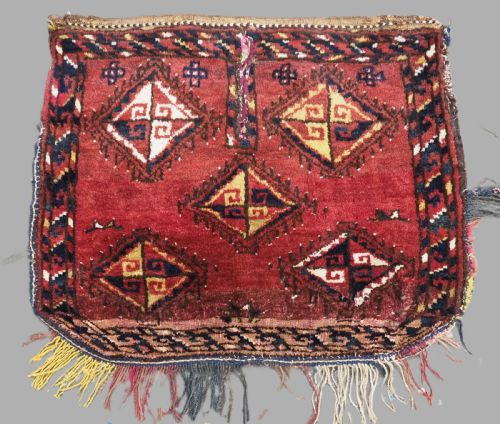
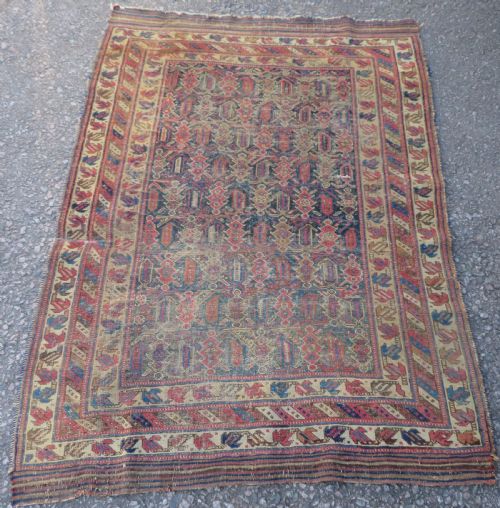
Geometric nomadic wool weaving encompasses utilitarian textiles produced by tribal and confederacy groups across Persia, the Caucasus and Central Asia. These pieces include full-sized carpets, smaller rugs, saddle bags, tent door hangings and eating cloths known as sofreh. The version most commonly encountered on this page is the smaller tribal rug or utilitarian bag face, originating from groups such as the Afshar, Qashqai, Khamseh, Kurdish and Turkmen peoples during the nineteenth and early twentieth centuries.
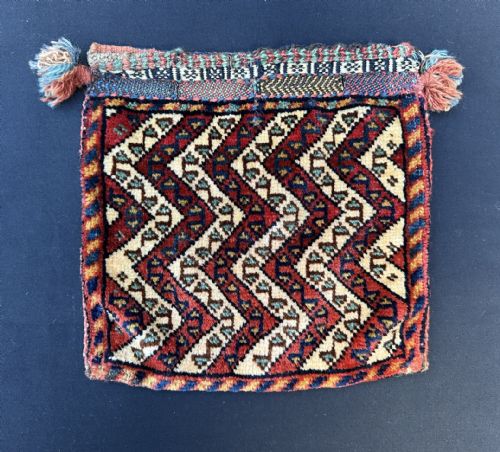
The aesthetic relies heavily on bold geometric medallions, repetitive lattice motifs and stylized animal or plant forms handed down through generations. Rather than following rigid urban workshop cartoons, the makers arranged these symbols from memory, resulting in asymmetrical quirks and spontaneous shifts in colour and pattern. Functional items like salt bags, vanity bags and bread spreads reflect the daily nomadic life of their makers while offering striking graphic compositions for modern interiors.
How They Were Made
The foundational structure relies on hand-spun wool for both the warp and weft threads, providing a resilient and substantial handle. Weavers utilised natural dyes derived from local plants and minerals to colour the wool, producing deep madder reds, indigos and earthy yellows that mellow gracefully over decades.
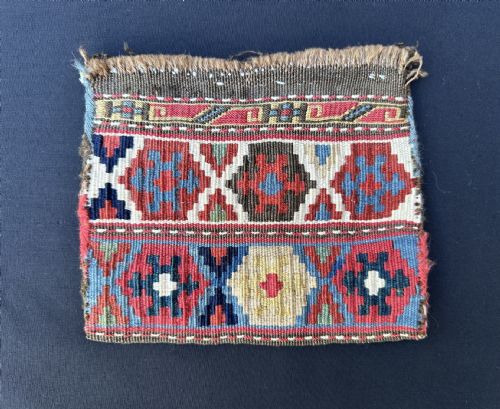
Techniques varied according to the specific tribal tradition, encompassing standard pile knots alongside flat-woven structures like sumakh, kilim and plain weave backs. Many bags and covers combine a dense, plush pile on the front with sturdy flat-weaving on the reverse to withstand practical daily use during transport and camp life.
Listings feature pieces spanning the late nineteenth century through to the early twentieth century, originating from regions across Persia, the Caucasus, and Turkmenistan.
What Varies in Quality
Quality rests significantly on the fineness and integrity of the wool itself, along with the skill applied in hand-spinning and natural dyeing. Pieces featuring dense knotting, supple handles and vibrant, well-preserved natural dye palettes stand apart from examples with stiff foundations or dulled colours.
Another measure of distinction is the clarity and creativity of the geometric drawing within the design. Stronger pieces display confident proportions and balanced layouts where the maker adapted traditional motifs with precision and artistic flair.
The Geometric Nomadic Wool Weaving Glossary
- Sofreh
- A flat-woven or pile textile used for dining, kneading bread or wrapping food within the tent. These cloths often feature striking minimalist geometric layouts.
- Jollar
- A small decorative bag or trapping produced by Turkmen tribes, typically displaying characteristic gul motifs. They were used for storage inside the nomadic dwelling.
- Kapunuk
- A specialised tent door rug or hanging placed around the frame of a yurt entrance by Turkmen weavers. These pieces are distinguished by their broad, shaped headers.
- Chuval
- A large storage bag made by Central Asian nomads for domestic belongings. They frequently feature rows of primary guls and strong secondary ornaments.
- Balisht
- A small pillow or pillow bag-face woven by Kurdish and Baluch tribes for domestic use. The front exhibits detailed geometric pile work while the back utilises simple flat-weaving.
Geometric Nomadic Wool Weaving: Frequently Asked Questions
What are these nomadic textiles?
These items are hand-woven wool rugs, carpets, and utility bags produced by tribal groups in Persia, the Caucasus, and Central Asia.
They utilise traditional geometric patterns and natural dyes, reflecting the distinct cultural heritage of makers such as the Afshar, Qashqai, and Turkmen.
How were these bags used?
Nomadic families used these woven pieces for practical storage, transport, and daily domestic life in tents.
Specific forms served as salt bags, vanity pouches, saddle covers, or flat cloths for preparing bread and sharing meals.
How do I live with them?
These textiles integrate well into contemporary interiors as floor rugs, wall hangings, or surface cushions.
Their durable wool construction and robust flat-weave backs make them resilient for everyday placement when paired with a suitable underlay.
How do I tell tribes apart?
Distinctions rely on characteristic colour palettes, structural formats, and specific geometric motifs native to each region.
For instance, Turkmen pieces often feature deep madder reds and octagonal guls, whereas Persian tribal groups like the Afshar utilise contrasting blues and intricate latch-hook polygons.