

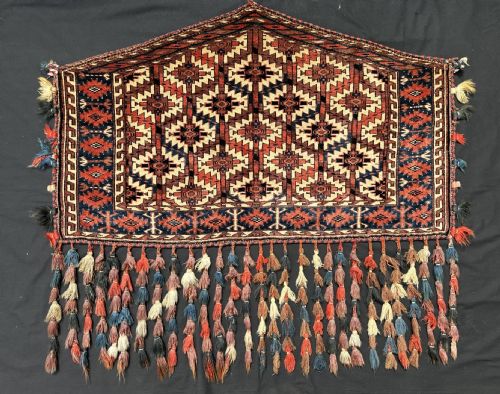


Terracotta Yomut Rug
A terracotta antique yomut rug brings the rich nomadic heritage of the Trans-Caspian steppes directly into your interior with distinct tribal geometry and earthy hues.
Terracotta Yomut Rug
The selections span various utilitarian and decorative forms, including main carpets, asmalyks, torba face pieces, mafrahs, spindle bags, and palas soumak kilims.
Most examples date from the late nineteenth century through to the early twentieth century, reflecting traditional nomadic weaving methods from the Trans-Caspian steppes.
How they were made
These textiles utilise durable wool for the pile and structure, combined with cotton and dyed yarn, often employing natural dyes to achieve their characteristic terracotta and deep red colour palettes.
Weavers constructed them using traditional pile knotting, banded flatweave designs, and soumak techniques, frequently finishing pieces with plain weave backs, tassels, and long kilim ends.
Terracotta Yomut Rug Retail Price Guide 2026
Typical asking prices for terracotta yomut rug among the pieces listed under this phrase on Sellingantiques today, from the lower quarter to the upper quarter. They describe what is for sale here now, not the wider market.
Some spindle bags survive complete with their plain weave backs, reminding us they once held practical wool-spinning tools inside a bustling nomadic tent.
What varies in quality
Quality rests upon the precision of the tribal guls, such as kepse or dyrnak motifs, and the tightness of the knotting or flatness of the soumak weave.
The integrity of the original long kilim ends, tassels, and structural wool foundation further distinguishes finer tribal pieces from standard examples.
The Terracotta Yomut Rug Glossary
- Asmalyk
- A large, pentagonal trapping traditionally used on wedding camels during Yomut nomadic ceremonies. These decorative pieces display distinct tribal iconography and fine pile work.
- Gul
- A repeating medallion or floral-like motif central to Turkmen carpet design. Each tribal group utilises specific gul variations to signal lineage and origin.
- Soumak
- A wrap-stitch flatweaving technique that creates a durable fabric with a textured face resembling braided embroidery. It lacks the cut pile of traditional carpets.
Terracotta Yomut Rug: Frequently Asked Questions
What is a yomut rug?
A yomut rug is a tribal textile woven by the Yomut Turkmen of Central Asia, known for distinctive geometric guls and deep terracotta tones.
These pieces were made for nomadic utility and decoration within the Trans-Caspian steppes during the nineteenth and early twentieth centuries.
How were asmalyks used?
Asmalyks served as decorative wedding trappings hung on the flanks of camels during traditional Yomut marriage processions.
Over time, many of these pentagonal textiles transitioned into interior wall hangings within nomadic dwellings.
What is a torba face?
A torba face is the decorated front panel of a small storage bag used inside traditional nomadic tents for holding household possessions.
These panels display concentrated tribal patterns and demonstrate the fine hand-knotting skills of Yomut weavers.
How do I identify natural dyes?
Natural dyes in these rugs produce rich terracotta and earthy tones that exhibit subtle tonal variations known as abrash across the wool.
These organic colour sources age gracefully, developing a soft patina over decades of use.
Where did the Yomut live?
The Yomut tribe traditionally inhabited the Trans-Caspian steppes and desert regions of Central Asia, spanning modern-day Turkmenistan and surrounding areas.
Their nomadic lifestyle heavily influenced the portable, durable nature of their woven textiles.