
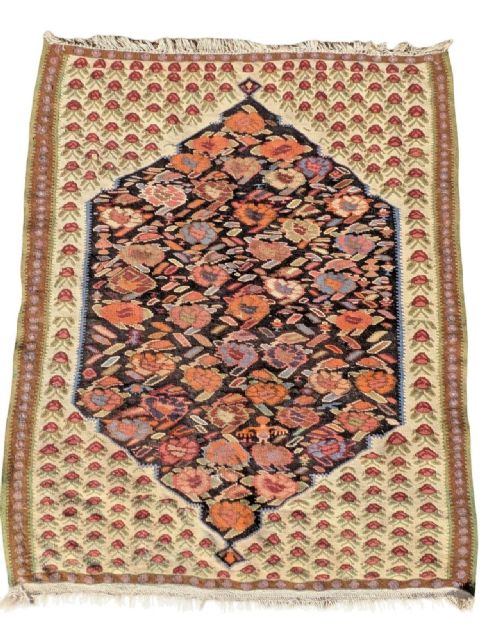


Terracotta Woven Kilim
Terracotta woven kilim describes flatweave tribal textiles featuring earthy reddish-brown tones, prized for geometric patterns and historical nomadic craftsmanship.
Terracotta Woven Kilim
A terracotta woven kilim encompasses flatwoven carpets, rugs, panels, and cushions originating from tribal and nomadic traditions across Persia, the Caucasus, Anatolia, Central Asia, and the Balkans. These items span periods from the mid-nineteenth century through the early twentieth century, including pieces attributed to specific groups such as the Yomut Turkmen, Qashqa'i, Shahsavan, and Pirot makers.
The objects take many functional forms, ranging from large room-sized carpets and long runner formats to storage bags, mafrash panels, tent bands, and scatter cushions. Buyers frequently encounter nineteenth and early twentieth-century examples displaying banded designs, repeat medallions, and graphic geometric layouts characteristic of tribal weaving.
Originating from diverse cultural landscapes like the Fars Province, the High Atlas Mountains, and various Caucasian regions, these textiles served utilitarian roles within nomadic and village households before entering the antique market. Their construction relies entirely on flatweaving traditions without pile, producing a lightweight and durable textile suited to diverse interior settings.
Materials and construction methods
Makers utilised wool and hand-spun wool as the primary fibre for these flatweaves, often combining them with cotton foundations or supporting structures. The spinning process yielded variable textures, from tightly spun yarns to softer hand-spun variations that took natural dyes with subtle tonal shifts.
The creation of these textiles involved intricate flatweave techniques such as slit-weave, soumak, cicim, and weft-wrapping. Artisans constructed panels individually before joining them together, or built complex banded patterns directly on portable looms set up by nomadic and village weavers.
Several items retain their original backs and tassels, ready for immediate service.
Assessing quality in flatweaves
Quality rests upon the tightness and precision of the weave, with finer structures and complex supplementary weft-work denoting greater technical skill. Pieces exhibiting balanced proportions and deliberate symmetry in their graphic layouts demonstrate superior craftsmanship.
The depth and harmony of the colour palette also define distinction within the range, particularly where natural dye variations create soft, nuanced tones across banded designs or large medallion fields. Furthermore, the retention of original structural elements such as long kilim ends, backs, and tassels adds substantial integrity to surviving examples.
The Terracotta Woven Kilim Glossary
- Kilim
- A flatwoven carpet or rug produced without pile across Anatolia, Persia, the Caucasus, and Central Asia. These textiles rely on interlocking weft threads to create sharp geometric patterns.
- Mafrash
- A large rectangular storage bag or pannier used by nomadic tribes for bedding and household goods. Surviving panels from these containers frequently appear as flatweave rugs or cushion faces.
- Soumak
- A brocading flatweave technique where pattern yarns are wrapped over and under the warp threads in a herringbone-like structure. This method adds considerable weight and durability to the textile.
- Torba
- A small storage bag produced by Turkmen and other Central Asian tribes for domestic use inside tents. They commonly feature banded designs and elaborate fringe or tassel work.
- Cicim
- An embroidered or supplementary weft-float flatweave technique applied to the surface of a plain weave ground. It introduces raised geometric motifs across the fabric.
Terracotta Woven Kilim: Frequently Asked Questions
What is a kilim?
A kilim is a flatwoven textile made without pile by tightly interweaving warp and weft threads together on a loom. This technique produces a lightweight, reversible fabric decorated with geometric motifs.
Historically utilised across the Middle East, Central Asia, and Eastern Europe for floor coverings, wall hangings, and storage, kilims reflect the distinct regional aesthetics of various nomadic and village groups.
How were tribal bags used?
Tribal bags such as mafrash, juval, and torba served practical domestic functions within nomadic households for transporting and storing household items, blankets, and provisions. Families packed them tightly onto animals during seasonal migrations or stacked them inside tents.
Over time, many of these utilitarian containers became separated into individual face panels or cushions, preserving the original weaving and design work for decorative use.
How do I care for a antique flatweave?
Maintaining an antique flatweave requires gentle handling, regular light vacuuming without a rotating brush bar, and professional textile cleaning when necessary. Placing a suitable underlay beneath rugs prevents sliding and reduces friction against hard floors.
Keep these textiles away from direct, prolonged sunlight to protect natural dyes from fading over time, and rotate them periodically to ensure even wear.
How are regional styles distinguished?
Regional styles are identified through specific combinations of colour palettes, structural techniques, and characteristic geometric motifs unique to individual tribes or weaving centres. For instance, Yomut and Ersari pieces display distinct Turkmen guls and banded formats, while Caucasian and Persian tribal work employs bolder medallions or stark lattice patterns.
Examining the edge finishes, end structures, and wool preparation helps connect individual pieces to their geographic and cultural origins.