


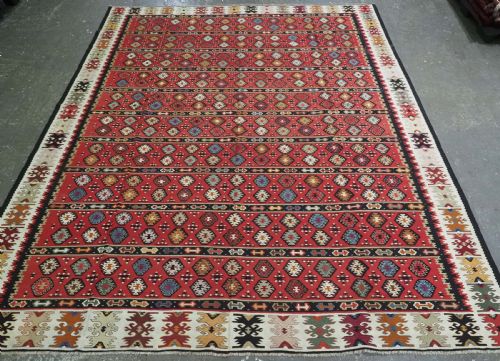
Antique Banded Kilim
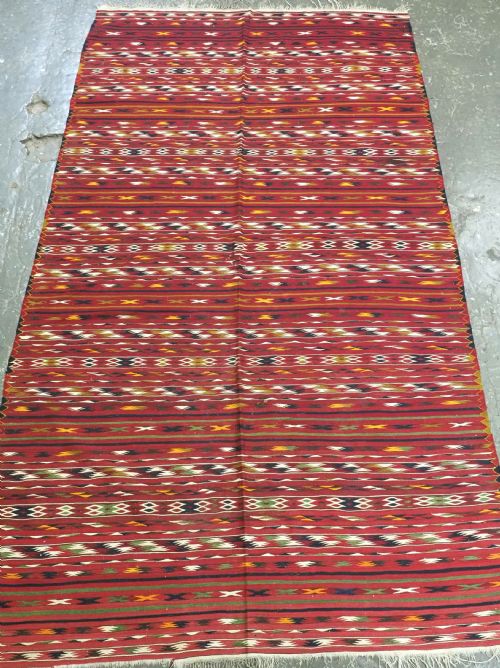
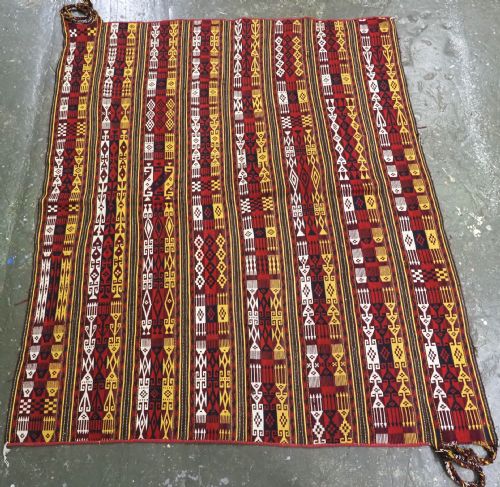
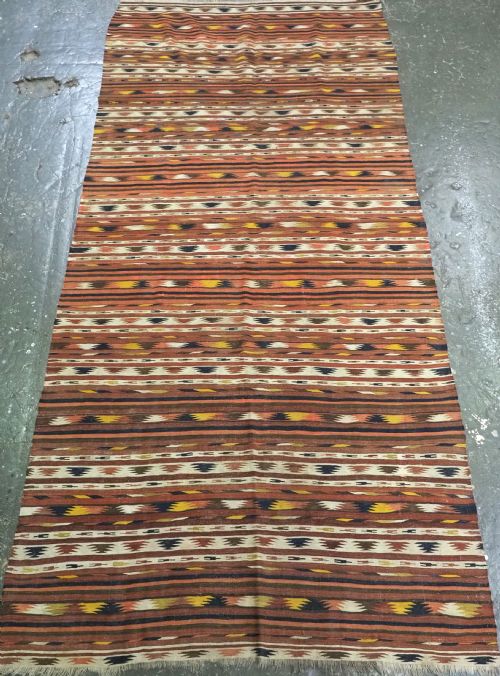
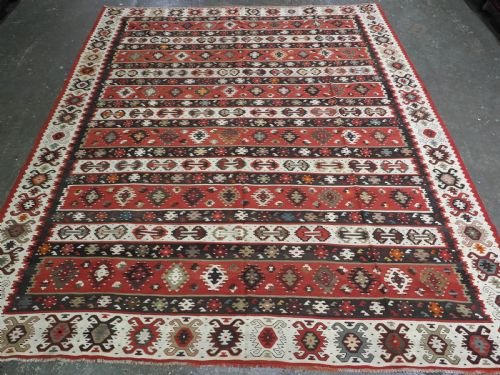
These antique banded kilim pieces are flatwoven tribal rugs and textiles defined by striking horizontal rows, prized for their rich historic character and geometric rhythm.
Antique Banded Kilim
An antique banded kilim represents a tradition of flatwoven textile artistry originating from nomadic and village communities across Central Asia, the Caucasus, Persia, and the Balkans. When searching for this phrase, collectors encounter various forms including storage bags, saddlebags, tent bands, runners, and area rugs created for utilitarian domestic use. The predominant examples seen on this page date from the late nineteenth century through to the early decades of the twentieth century, reflecting distinct regional weaving cultures.
The visual structure relies heavily on horizontal bands of pattern, ranging from simple geometric weft work to intricate tribal motifs and chevrons. Pieces such as Uzbek gajeri kilims, Yomut Turkmen mafrash bags, and Pirot or Sarkoy flatweaves demonstrate the wide geographic scope of this aesthetic. Each regional group utilised specific layouts and palettes, producing items that functioned as floor coverings, wall hangings, or animal trappings before entering the collector market.
How they were made
The construction of an antique banded kilim is rooted in flatweaving techniques where the weft threads are tightly packed to cover the warp completely, resulting in a smooth surface without a pile. Weavers relied primarily on wool and hand-spun wool, often combined with cotton foundations, to build durable textiles capable of withstanding daily nomadic life.
Colour was achieved through natural dyes, which produced the soft, warm tones characteristic of these older tribal weavings. The structural integration of bands required precise tension and colour control, particularly in examples featuring fine weaves and complex geometric striping.
Listings span the late nineteenth century through to the 1930s, featuring wool, cotton, and natural dyes across tribal traditions.
What varies in quality
Quality in an antique banded kilim is determined by the tightness of the weave, the handling of the wool, and the harmony of the palette. Finer weaves show greater precision in the geometric transitions between bands, demonstrating the weaver's technical skill and control over the loom.
The integrity of the materials also distinguishes finer examples, particularly where hand-spun wool and well-preserved natural dyes retain their depth and softness over time. Condition plays a role, with surviving original elements such as backings on storage bags or complete borders elevating the textile's historical completeness.
The Antique Banded Kilim Glossary
- Kilim
- A flatwoven carpet or rug produced without a pile by tightly packing coloured weft threads over a warp foundation. This technique allows for sharp geometric designs and reversible patterns.
- Mafrash
- A large rectangular storage bag or bedding container used in nomadic households, often woven in flatweave or sumakh techniques before being split into panels for the market.
- Warp
- The vertical foundation threads stretched tightly on a loom across which the coloured weft is woven. The quality of the warp often dictates the stability and flatness of the textile.
- Weft
- The horizontal threads passed back and forth through the warp to create the visible design and colour bands. In kilims, the weft completely obscures the warp to form the patterned surface.
- Natural Dyes
- Colourants derived from plant, insect, and mineral sources used historically to dye wool before the introduction of synthetic alternatives. They age gracefully, developing subtle patinas over decades.
Antique Banded Kilim: Frequently Asked Questions
What is an antique banded kilim?
An antique banded kilim is a flatwoven tribal textile characterised by horizontal stripes of geometric patterns and motifs. These pieces were made by nomadic and village weavers across regions such as the Caucasus, Central Asia, and the Balkans.
They encompass a variety of functional objects, including rugs, runner formats, saddlebags, and tent furnishings. Their defining feature is the linear arrangement of colour and design across the woven surface.
How were these textiles used originally?
Nomadic and village communities utilised these flatweaves for practical domestic purposes within tents and houses. Items functioned as floor coverings, sleeping mats, storage containers for bedding and clothing, and decorative animal trappings.
Because they were made for daily life, durability was essential. The robust wool construction allowed these textiles to endure heavy wear while serving as portable furnishings for mobile lifestyles.
How do I live with an antique kilim?
Living with these textiles involves placing them in low-to-moderate traffic areas to preserve their historic structure. Many collectors use smaller pieces or bag faces as wall hangings, table covers, or accent rugs.
Using a quality rug underlay helps prevent slipping and reduces friction against hard floors. Regular gentle vacuuming without a rotating brush roll keeps dust from settling into the flatweave structure.
How do I tell regional styles apart?
Regional styles are distinguished by specific colour palettes, wool qualities, and characteristic geometric motifs. For example, Caucasian Shirvan kilims often display crisp, sharp coloration, while Uzbek gajeri pieces feature distinct banded arrangements.
Examining the weave density and the specific combinations of stripe widths provides clues to origin. Turkmen and Baluch pieces carry distinct tribal vocabularies passed down through generations of weavers.