
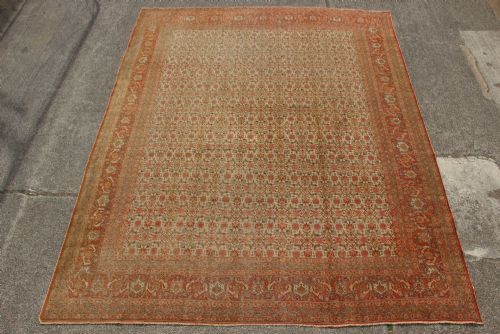
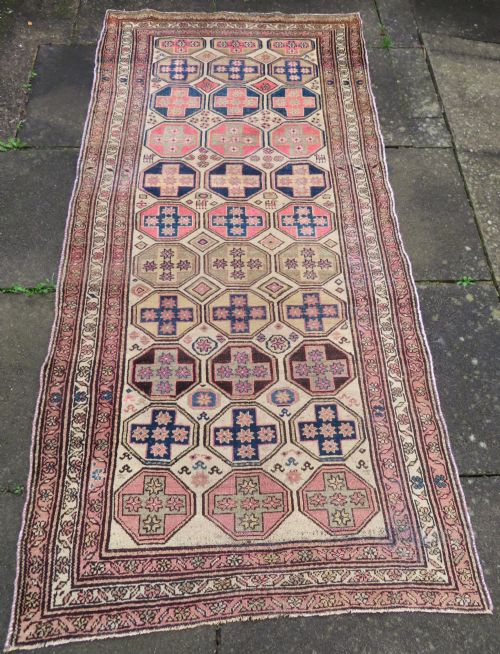

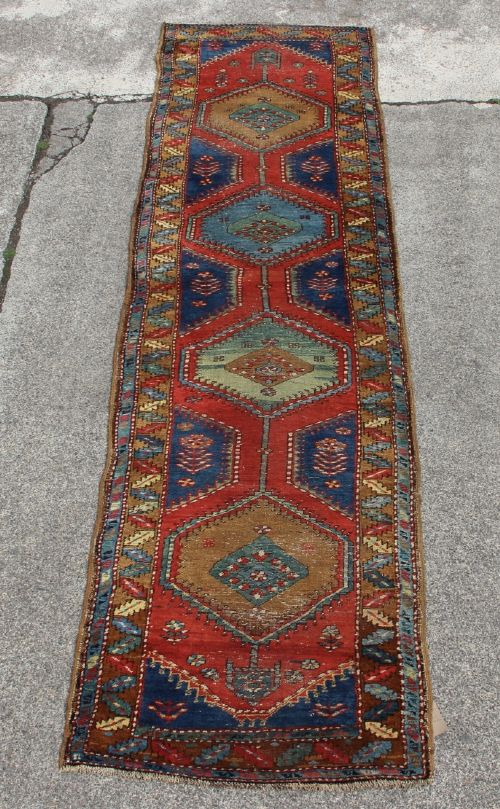
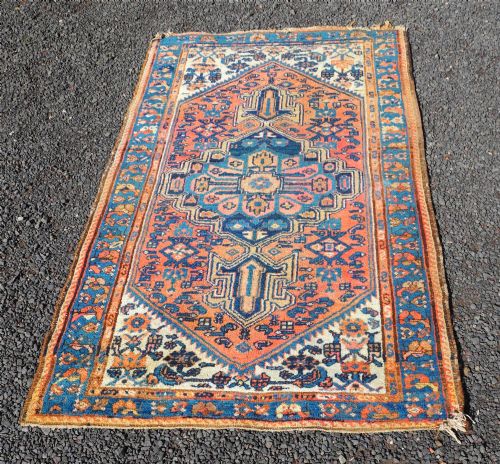
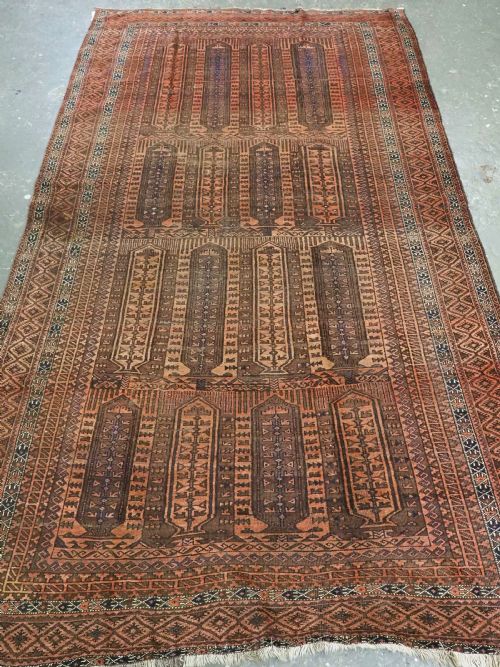
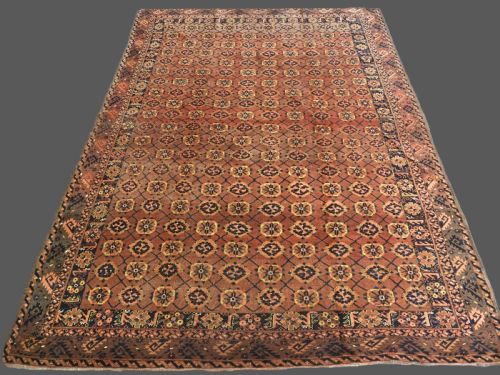
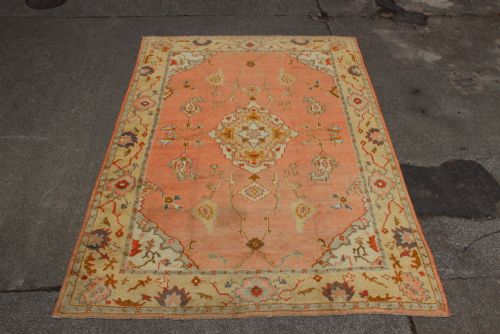
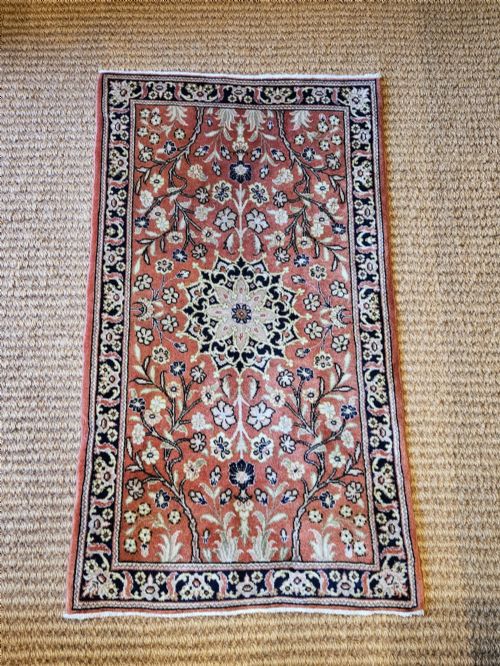

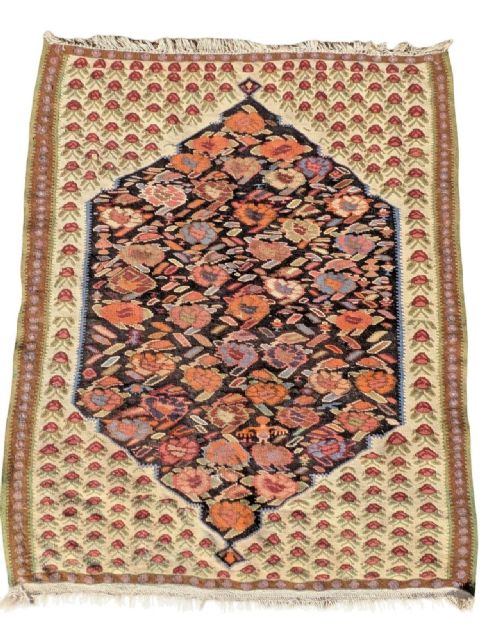
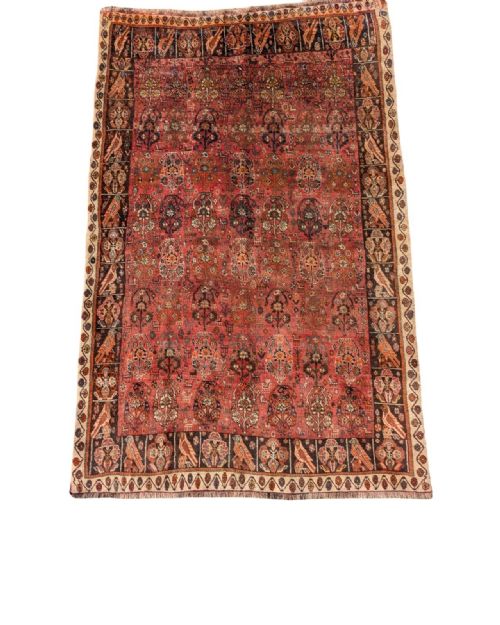
Terracotta Wool Oriental Rug
A terracotta wool oriental rug brings warmth and grounding pattern to a room through centuries of weaving traditions.
Terracotta Wool Oriental Rug
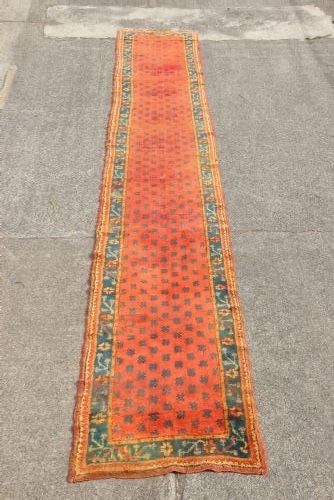
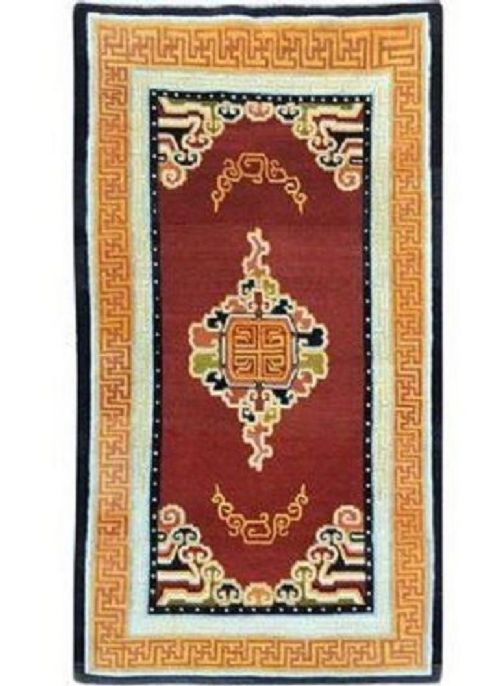
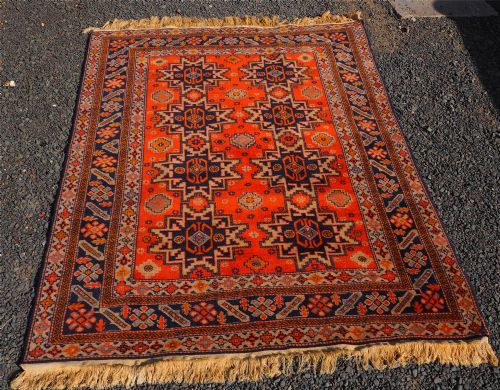
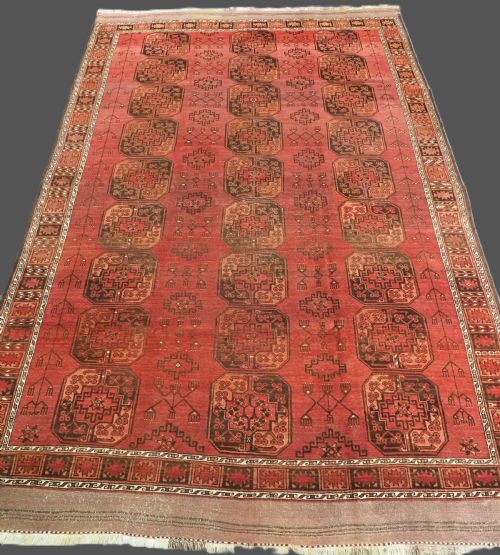
A terracotta wool oriental rug encompasses hand-knotted floor coverings hailing from village workshops, tribal confederacies, and city looms across the Near East and Central Asia. The pieces available here span from the mid-nineteenth century through the early decades of the twentieth century, with many examples originating from Persian, Turkish, Afghan, and Caucasian regions. Buyers encounter diverse formats, ranging from small hearth-sized mats and square rugs to room-sized carpets and exceptionally long runner rugs designed for hallways.
The aesthetic identity of a terracotta wool oriental rug rests on rich earthy hues combined with geometric medallions, all-over field patterns, tribal guls, and architectural prayer designs. Village pieces such as Heriz, Hamadan, and Baluch examples display bold rectilinear motifs, whilst Oushak and Tabriz carpets often introduce softer floral elements. Runners stretch narrow and long, serving functional corridor spaces with repeating tribal motifs or expansive field designs.
How they were made
The construction of a terracotta wool oriental rug relies on durable hand-spun wool pile knotted onto sturdy cotton or wool foundations. Weavers utilised natural dyes derived from plants and minerals, creating the characteristic terracotta, madder red, and indigo tones that mature gracefully over decades. Hand-knotting techniques varied between symmetric and asymmetric knots, determining the density and crispness of the geometric or floral patterns.
Village and tribal weavers worked on portable vertical looms, translating memory and local convention into complex tribal designs without drawn paper cartoons. Foundation threads of cotton or wool provide the structural grid, whilst tightly packed rows of knots secure the dense pile. Finished edges were typically overcast in wool, and ends secured with flatweave kilim strips to prevent fraying.
Nomadic weavers occasionally wove tiny misplaced tassels into carpet corners to ward off the evil eye.
What varies in quality
Quality in a terracotta wool oriental rug is found in the integrity of the natural dyes, the fineness of the wool, and the precision of the knotting. Superior examples display depth of colour resulting from varied dye lots and natural oxidation over time, rather than flat or chemically uniform hues. The handle of the rug - its weight, pliability, and the resilience of the pile - reflects the grade of wool and the tightness of the weave.
Structural proportion and design execution further separate standard village pieces from masterworks. The most accomplished carpets maintain balance in large-scale geometric medallions and borders without spatial crowding or distortion. Preservation of original side selvages and end finishes also contributes to the desirability of older floor coverings.
The Terracotta Wool Oriental Rug Glossary
- Gul
- A repeating medallion or octagonal motif frequently found in Turkmen and Baluch tribal carpets. These motifs often served as tribal emblems or family crests.
- Medallion
- A large central decorative motif set within the field of a rug. Heriz and Oushak carpets frequently anchor their compositions around this central element.
- Selvage
- The reinforced outer edge of a rug running parallel to the warp threads. Original selvages protect the structural integrity of the piece.
- Warp
- The vertical foundation threads stretched tightly on the loom before knotting begins. Weft threads are passed across the warp to secure the rows of knots.
- Prayer Rug
- A smaller format rug featuring a mihrab or arch design at one end. This architectural niche indicated the direction of prayer.
Terracotta Wool Oriental Rug: Frequently Asked Questions
How do I choose the right size?
Measure your floor space carefully, allowing adequate bare flooring around the perimeter of the rug to frame the piece correctly. Consider whether the furniture will sit entirely on the rug or float off its edges.
Runners require precise corridor measurements, keeping in mind doorways and clearance for opening doors. Larger carpets work best when anchoring seating groups in living areas or dining spaces.
Are these rugs suitable for high traffic?
Hand-spun wool combined with a sturdy cotton or wool foundation provides exceptional durability for everyday use. Natural lanolin present in untreated wool helps repel dirt and resists crushing underfoot.
Regular gentle vacuuming without a rotating brush roll helps maintain the pile. Professional cleaning ensures the natural dyes remain stable and vibrant.
What causes terracotta shades to vary?
Natural dyes react to sunlight, cleaning, and age, causing terracotta and madder red tones to develop subtle tonal shifts known as abrash. This variation reflects organic dyeing processes using roots and plant matter.
Each batch of dye produced slight colour changes across the wool yarn, creating depth and character as the rug aged.
How do I identify a tribal rug?
Tribal rugs display geometric patterns, bold colour palettes, and repeating motifs woven by nomadic or village communities rather than urban workshops. Designs rely on tribal tradition rather than printed blueprints.
Irregularities in straight lines and spontaneous shifts in motif indicate hand-woven execution by individual weavers working from memory.