



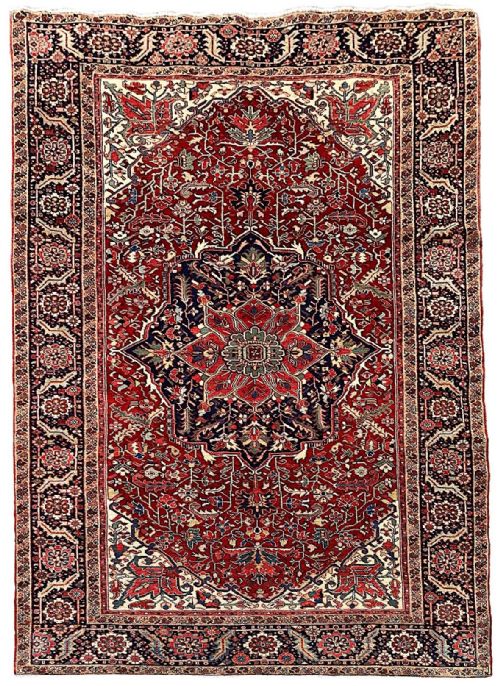
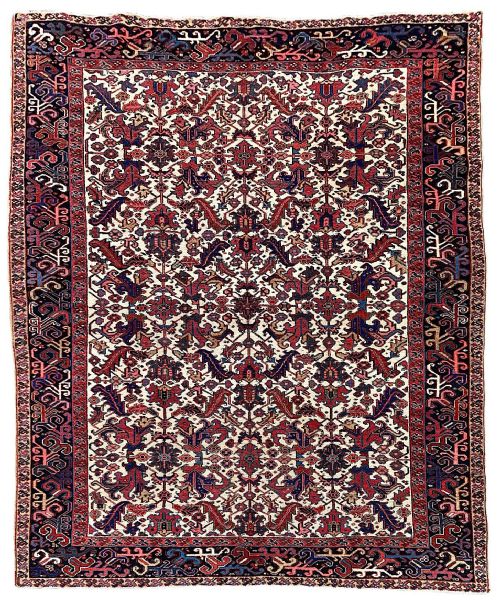
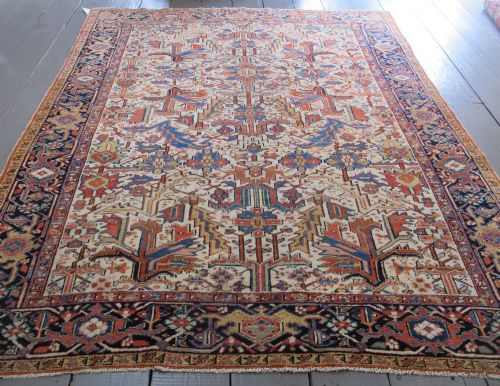
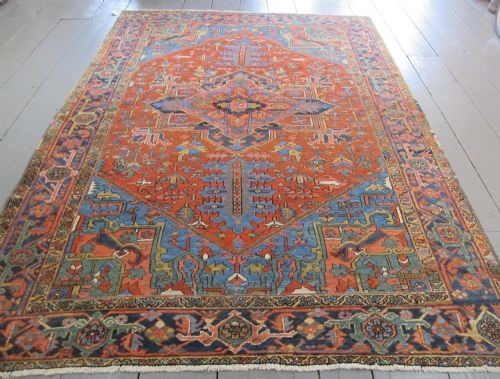
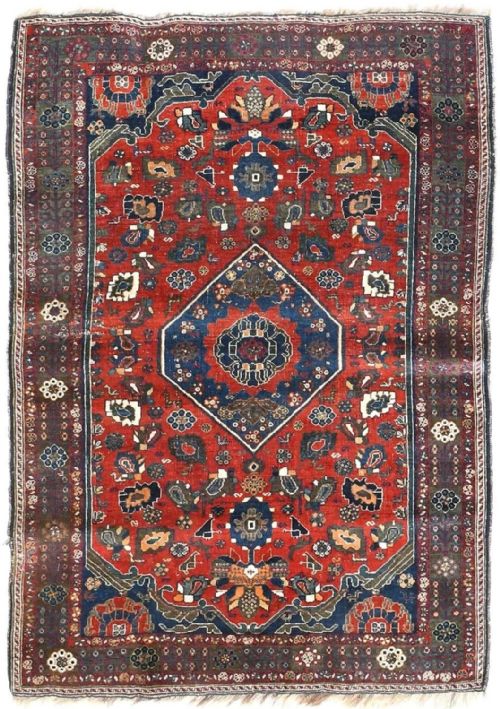
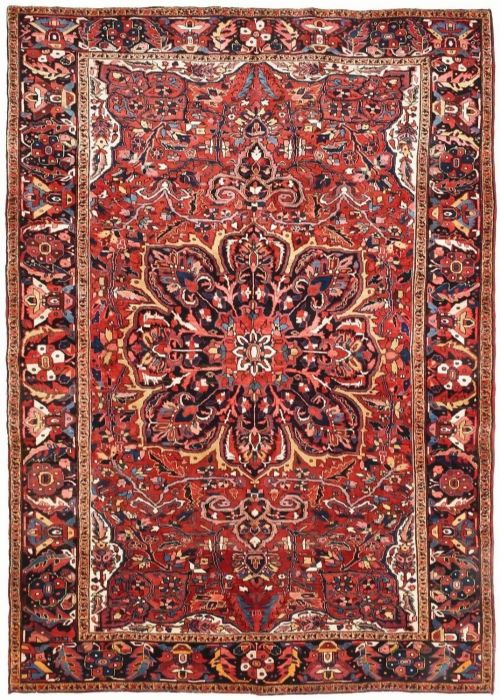


Large Heriz Wool Carpet
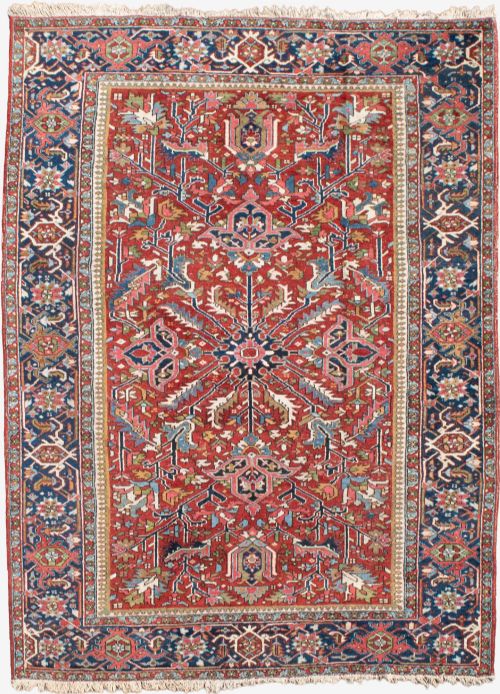
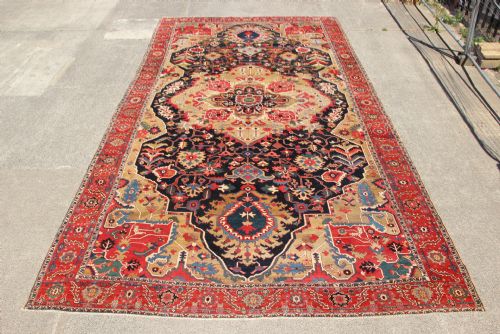
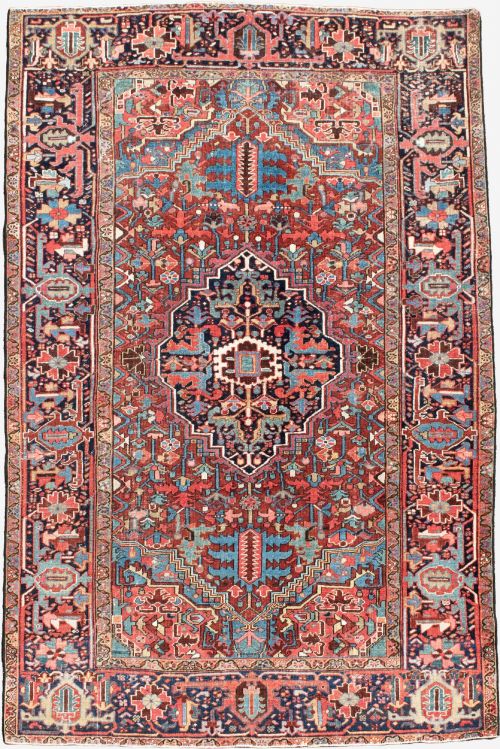
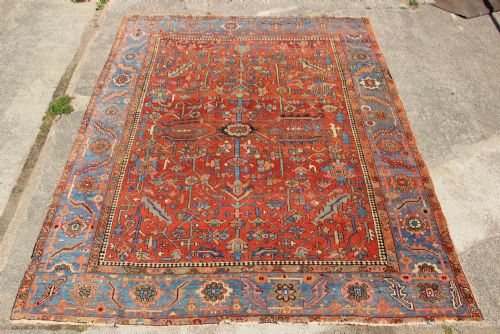
A large heriz wool carpet brings robust North-West Persian geometry and hardy village knotting straight to a substantial floor.
Large Heriz Wool Carpet
When you search for a large heriz wool carpet, you encounter heavy village floor coverings woven in the mountainous North-West of Persia during the late nineteenth and early twentieth centuries. These pieces typically display bold, geometric medallions and sturdy corner spandrels rooted in traditional Persian design.
The version you are most likely to meet on this page is a room-sized carpet dating from around nineteen hundred, woven with village resilience. They vary from rustic country house room formats to grander formats incorporating detailed Serapi or Bakshaish influences.
How they were made
Weavers constructed these large carpets using durable local wool for the pile, hand-tied in sturdy symmetrical knots over sturdy cotton foundations. This pairing of wool and cotton provides the substantial weight and structural rigidity characteristic of North-West Persian village weaving.
Dyers utilised natural vegetable dyes to achieve the distinct terracotta, ivory, and sky blue grounds seen across the region. The resulting palette mellows gracefully over decades of use while retaining its graphic clarity.
Several village weavers evidently grew tired of strict symmetry, slyly mismatching the tiny floral motifs in the corner spandrels.
What varies in quality
The distinction between ordinary and exceptional examples rests in the crispness of the geometric drawing and the saturation of the dye palette. Finer pieces exhibit balanced proportions in the central medallion and subtle shifts in colour that create visual depth across the wool surface.
Structural integrity and the fineness of the knotting also separate standard village production from master-woven pieces. A more tightly packed pile preserves the sharp angles of the tribal motifs through generations of heavy footfall.
The Large Heriz Wool Carpet Glossary
- Heriz
- A region in North-West Persia known for producing geometric carpets with bold central medallions and cotton foundations. These heavy floor coverings serviced substantial homes.
- Serapi
- A sub-style associated with older Heriz carpets featuring more open designs and muted colour palettes. They generally date to the nineteenth century.
- Bakshaish
- An adjacent village weaving style characterised by whimsical, spaced-out geometric patterns and soft vegetable dyes. These pieces often predate standard Heriz production.
- Medallion
- The large central ornamental motif that anchors the symmetrical design of the carpet. It typically dominates the field of the rug.
- Spandrels
- The triangular corner pieces situated in the corners of the main field outside the central medallion. They balance the geometry of the composition.
Large Heriz Wool Carpet: Frequently Asked Questions
How do I clean a large wool carpet?
Regular gentle vacuuming without a beater bar removes loose dirt from the wool pile without straining the cotton foundation. Professional cleaning remains necessary every few years to flush out deep-seated grit.
Avoid chemical spot treatments that can strip the natural vegetable dyes from the wool. Blot spills immediately with plain water and a clean white cloth.
Are these carpets suitable for heavy traffic?
The dense wool pile and sturdy cotton warps of these village weaves withstand constant footfall in hallways and living rooms. Their robust construction was originally intended for demanding daily use.
Using a quality underlay prevents sliding and cushions the base against hard floorboards. This extra layer significantly extends the working life of the textile.
How do I distinguish Heriz from Serapi?
Serapi carpets generally display a more open field layout with quieter, more subdued colour harmonies and finer knotting. They often date to the earlier nineteenth century.
Standard Heriz carpets tend to feature denser geometric fills, heavier outlines, and dates stretching into the early twentieth century. The overall visual weight is frequently bolder and more rigid.
Where were these carpets originally woven?
Villages across the mountainous North-West region of Persia produced these carpets as part of a long domestic tradition. Local households worked independently or in small workshops.
Trading towns then gathered these heavy floor coverings for export to Western markets. The local water and wool quality dictated the unique handle of the region.