



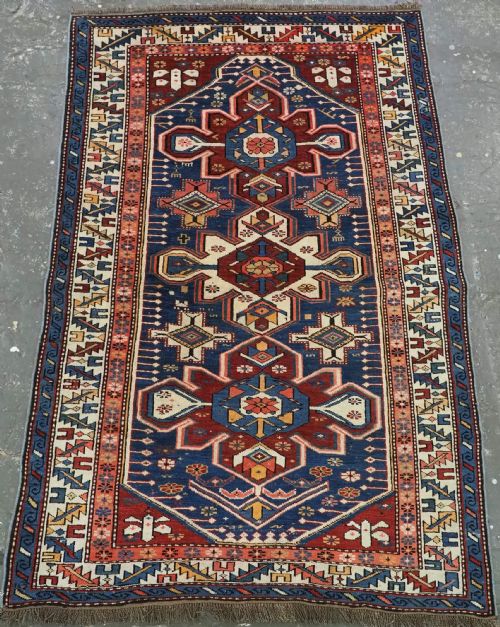
1920s Oriental Area Rug
When sourcing a 1920s oriental area rug, buyers encounter diverse regional traditions from Persian city workshops to Afghan village weaves.
1920s Oriental Area Rug
A 1920s oriental area rug encompasses hand-knotted floor coverings, kilims and prayer rugs originating from Persia, Anatolia, the Caucasus and China. These textiles reflect specific regional identities through distinct tribal motifs, medallion layouts and floral vase compositions.
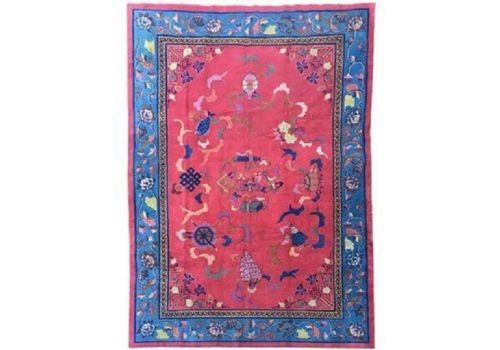
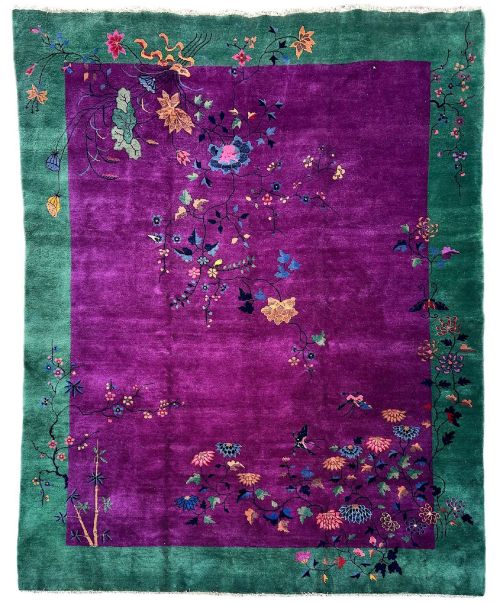
The selection on this page relies heavily on Persian city carpets from Kashan and Tabriz alongside Afghan village and Turkmen tribal weaves. Buyers also find Chinese Art Deco carpets featuring distinctive field designs from the same period.
Materials and construction methods
Weavers constructed these pieces predominantly using wool pile on cotton or wool foundations, occasionally incorporating silk foundations and camel wool fields. Natural dyes provided the warm reds, ivory grounds and soft pastel colour palettes recorded across the region.
Makers employed hand-knotted techniques for dense carpet piles and flatweave methods for kilims, producing hard-wearing runner rugs and prayer rugs with long kilim ends.
1920s Oriental Area Rug Retail Price Guide 2026
Typical asking prices for 1920s oriental area rug among the pieces listed under this phrase on Sellingantiques today, from the lower quarter to the upper quarter. They describe what is for sale here now, not the wider market.
Listings feature regional styles from Persian, Afghan tribal, Caucasian, and Chinese Art Deco traditions dating to the early twentieth century.
Factors determining quality
Knot density and structural fineness separate standard village production from exceptionally fine city weaving, such as pieces utilising lamb wool on silk foundations. The precision of the weave dictates both the definition of motifs like the Herati pattern and the long-term durability of the carpet.
The integrity of the natural dyes and the balance of the wool quality influence the visual depth of the field. Examples displaying well-preserved soft colours and intact structural borders sit higher in the range.
Benlian Tabriz
The 1920s Oriental Area Rug Glossary
- Prayer rug
- A small rug featuring a mihrab or niche design used historically for daily prayers. These often incorporate lotus leaf motifs or double lanterns.
- Kilim
- A flatwoven carpet or rug made without a pile, produced across various regions including the Balkans and Afghanistan. They feature sharp geometric designs and banded patterns.
- Medallion
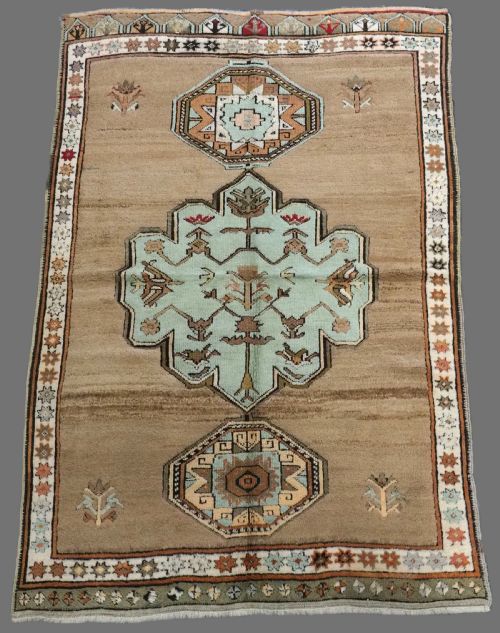
- A central ornamental motif placed in the field of a carpet, such as the triple lobbed medallion or star medallion seen in Caucasian and Heriz pieces.
- Herati
- A repeating floral trellis pattern composed of a central rosette surrounded by leaf motifs, frequently found across Persian rugs.
- Gul
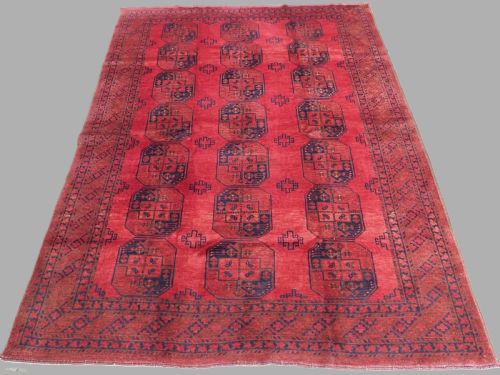
- An octagonal medallion or tribal crest repeated across Turkmen and Afghan carpets to signify specific clan or village origins.
1920s Oriental Area Rug: Frequently Asked Questions
How do I identify a prayer rug?
Prayer rugs feature a distinct architectural niche known as a mihrab, which points toward Mecca during use. They are typically smaller in scale to accommodate individual placement on the floor.
Many examples from this era also incorporate supplementary symbols such as hanging lanterns, floral vases, or repeating lotus leaf designs within the arch.
What is the difference between a kilim and a carpet?
Kilims are flatwoven textiles created by tightly interweaving warp and weft threads without producing a raised pile. This results in a thinner, lighter textile that functions well as a decorative floor covering or wall hanging.
Carpets and rugs possess a knotted pile that creates a dense, plush surface designed to endure heavier foot traffic in living spaces.
How should I care for an antique wool rug?
Regular gentle vacuuming without a beater bar helps prevent dust accumulation in the wool pile. Professional cleaning tailored to antique textiles preserves the natural dyes and foundation fibres.
Keeping the rug out of direct, harsh sunlight prevents the fading of warm reds and soft pastel field colours over time.
What defines Chinese Art Deco carpets?
Chinese Art Deco carpets from this period break from traditional Persian geometry to present minimalist fields, open ivory or neutral spaces, and asymmetrical floral or architectural motifs.
They utilise dense hand-knotted wool pile tailored to the aesthetic preferences of the 1920s international export market.