


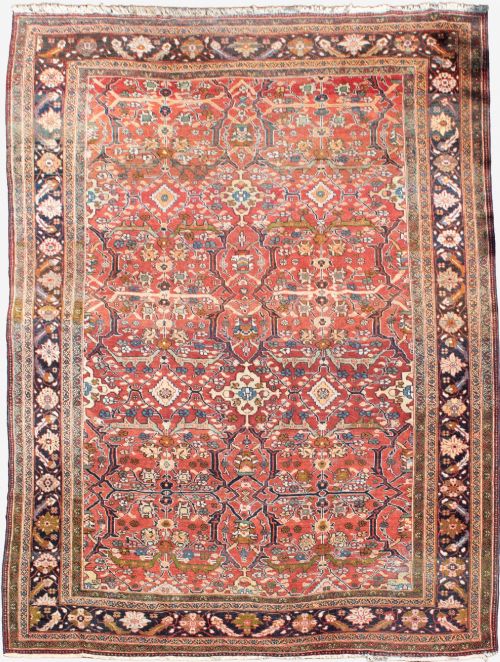

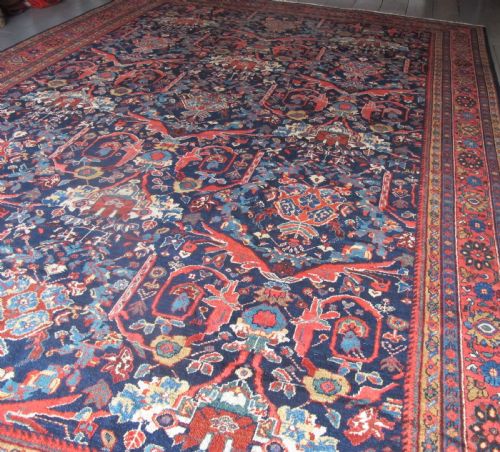
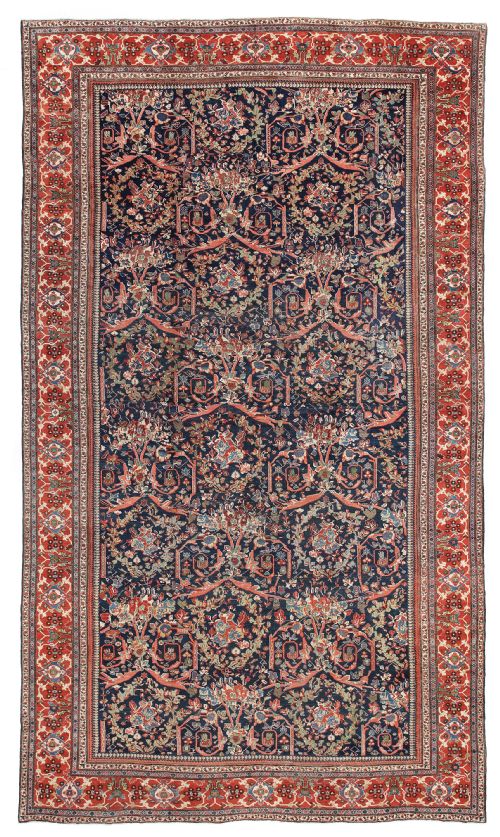

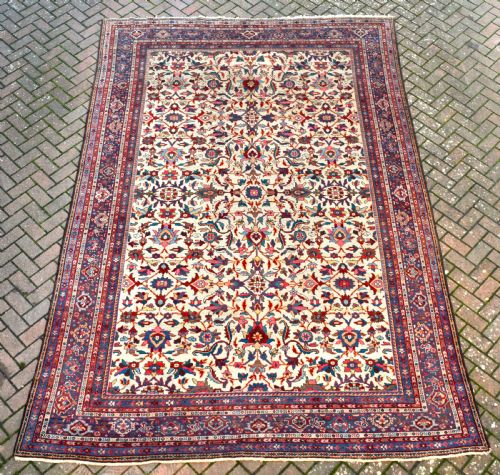

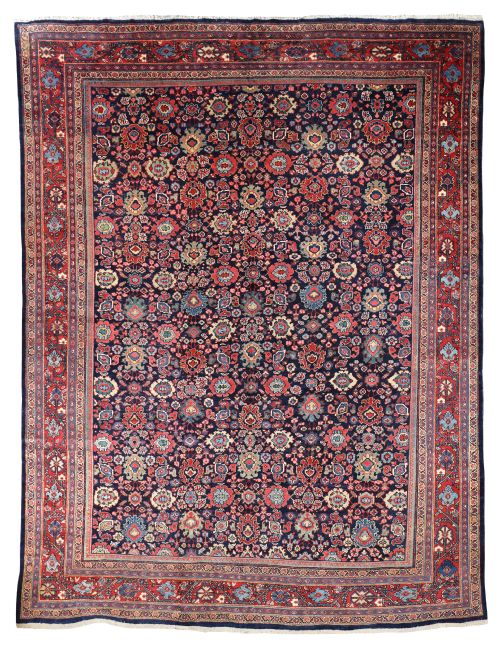


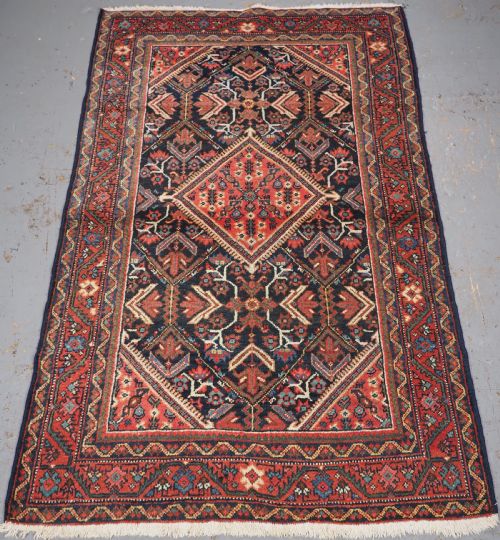
Red Navy Mahal Carpet
These red navy mahal carpet examples bring traditional Persian artistry into large interiors through room-sized formats and long runners.
Red Navy Mahal Carpet
A red navy mahal carpet represents a traditional Persian rug style woven across various decades from the Victorian era into the early twentieth century. These floor coverings range from room-sized formats down to long kelleh runners designed for specific architectural spaces.
Buyers browsing this selection will frequently encounter pieces attributed to specific design traditions such as Ziegler or Mustafi patterns. The palette relies on deep reds and navy blues combined with floral and small medallion motifs.
Materials and construction
Construction relies on wool pile knotted onto sturdy cotton foundations to provide durability for heavy floor use. Weavers utilised traditional Persian techniques to build dense surfaces that support intricate floral and medallion layouts.
Natural dye traditions within these workshops produced the characteristic red and navy tones seen across the surviving pieces. The combination of wool and cotton gives each carpet a heavy, flexible handle suited to domestic interiors.
Red Navy Mahal Carpet Retail Price Guide 2026
Typical asking prices for red navy mahal carpet among the pieces listed under this phrase on Sellingantiques today, from the lower quarter to the upper quarter. They describe what is for sale here now, not the wider market.
Listings span from the Victorian period through to the 1920s, utilising wool and cotton materials in traditional Persian designs.
Distinctions in quality
Quality depends upon the fineness of the knotting and the precision with which the floral or medallion design is executed across the field. Superior examples display greater clarity in the border details and a more harmonious balance between the red ground and navy accents.
The integrity of the wool pile and the survival of the original outer borders significantly influence the overall character of each carpet. Even wear across the surface reflects how well the materials were originally spun and dyed.
The Red Navy Mahal Carpet Glossary
- Mahal
- A type of Persian carpet woven in the Mahallat region known for large-scale floral patterns and room-sized dimensions. These rugs often feature softer colour palettes and spacious medallion designs.
- Kelleh
- A long, narrow carpet format traditionally used in Persian rooms as a runner or hallway covering. This shape accommodates specific architectural layouts.
- Ziegler
- A nineteenth-century commercial design style adapted from traditional Persian patterns for Western markets. These pieces typically feature muted tones and large-scale motifs.
- Mustafi
- A classic Persian repeating pattern composed of compartments or floral bouquets linked in a continuous lattice network. It provides a formal structure to the carpet field.
- Pile
- The upright yarn loop or cut ends that form the soft surface of a woven carpet. The density of this layer determines the tactile feel and durability.
Red Navy Mahal Carpet: Frequently Asked Questions
How do I clean an antique carpet?
Professional specialist cleaning is essential to protect the natural wool fibres and dyes from damage during maintenance.
Regular gentle vacuuming without a beater bar removes surface dust before it settles deep into the cotton foundation.
Where should I place a large room-sized rug?
These large formats work best in spacious reception rooms or dining areas where the central medallion and border designs remain visible.
Ensure the room humidity is stable to keep the natural wool and cotton materials in sound condition.
What is the difference between a mahal and a saroukh?
Mahal carpets typically feature more relaxed, expansive floral patterns with generous use of open background space.
Saroukh weaves often present denser knotting and tighter, more structured overall floral compositions.
How do I identify a kelleh long rug?
A kelleh is distinguished by its elongated rectangular proportions, making it narrower than standard room-sized carpets.
This specific format was historically woven to fit narrow halls or specific spaces alongside larger carpets.