


Terracotta Urn Pot
These terracotta urn pot selections span French provincial confit jars, Italian campana planters and British garden vessels shaped for courtyard and patio.
Terracotta Urn Pot
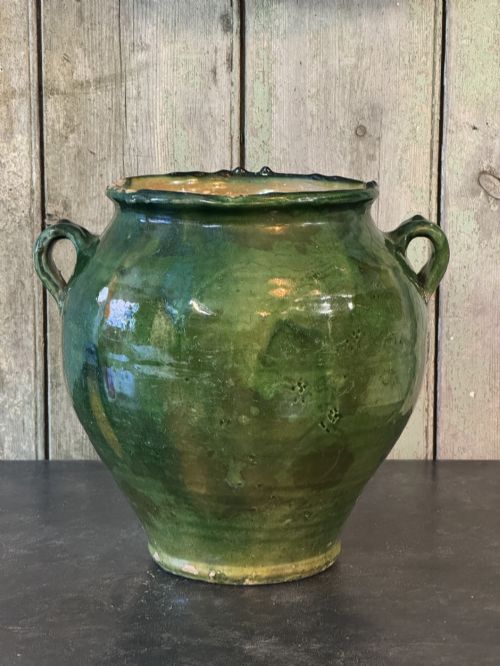
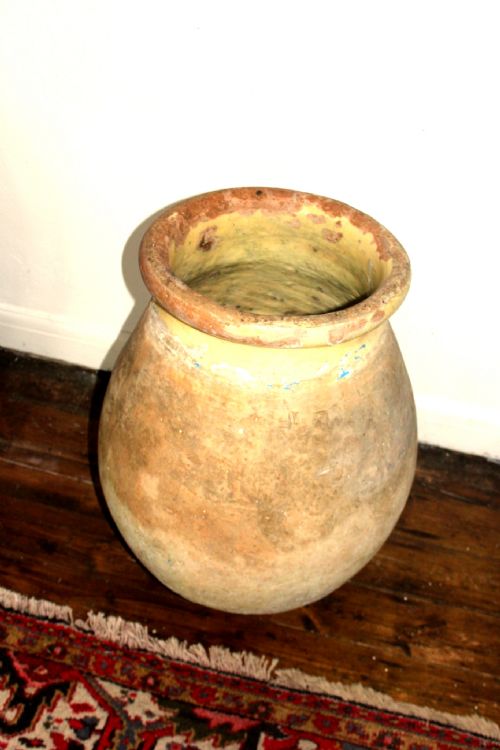
A terracotta urn pot serves primarily as a horticultural vessel or garden ornament, designed to hold plants, trees or water in outdoor settings. The pieces found here range from nineteenth century French confit jars and olive pots to Italian campana garden urns and salt-glazed planters.
Buyers will frequently encounter traditional forms such as amphorae, baluster vases, and multi-handled storage jars originating from regional European workshops. These objects bridge utilitarian agricultural use and decorative landscape design, carrying the weathered patinas of extended service.
Materials and Construction
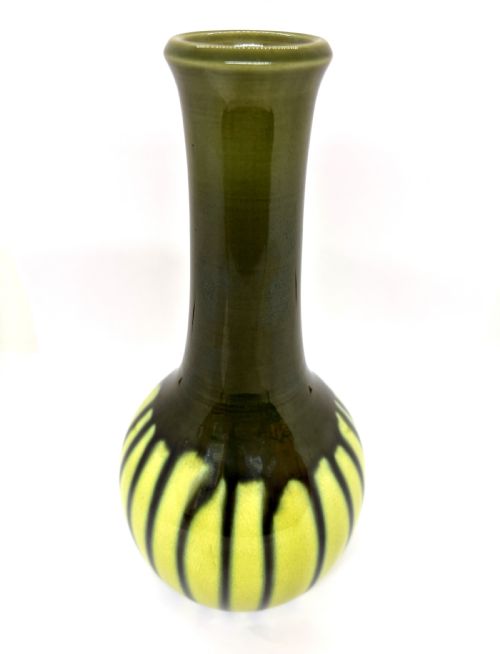
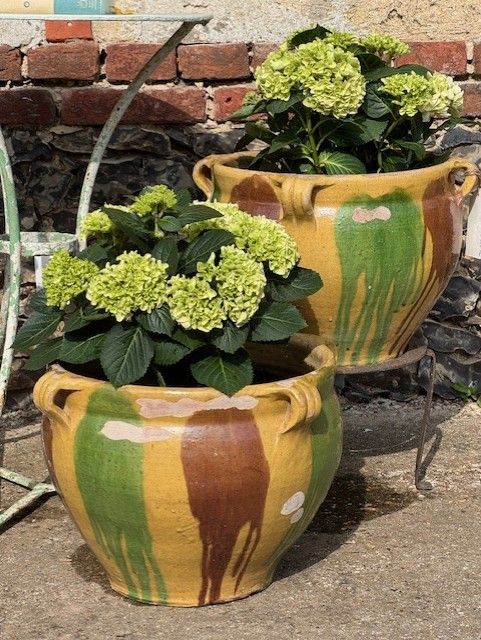
Potters shaped these vessels from local clay, earthenware and terracotta, often throwing them on wheels or moulding them by hand before open firing. Many examples incorporate partial green, brown or salt-glazes designed to seal the porous body against moisture.
Makers utilised buff clay, salt-glazed stoneware and specialised regional slips, sometimes impressing naturalistic motifs or faux bois textures directly into the damp surface. The resulting physical structure balances dense weight with the natural breathability inherent to fired earth.
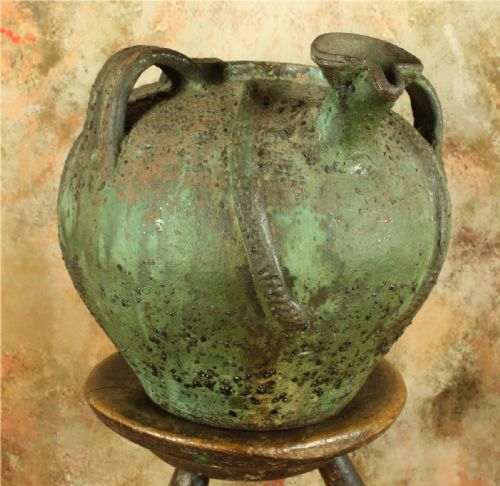
Several heavy olive jars retain their original three-handled design, thoughtfully arranged so workers could roll the vessel rather than lift it.
Assessing Quality and Character
The distinction between standard utility vessels and superior collector pieces rests upon the crispness of moulded detail, the harmony of proportion and the depth of natural weathering. Early French Biot jars and salt-glazed garden urns demonstrate superior control over kiln temperature and clay purity.
Surface integrity, original handling marks and the presence of historic drip-glazes or aged patinas elevate individual examples beyond basic mass-produced items. Quality reveals itself in the organic integration of wear earned through decades of garden use.
Burmantoft's Pottery·Compton Pottery
The Terracotta Urn Pot Glossary
- Terracotta
- A porous, brownish-red fired earthenware clay used extensively for pottery and garden planters. It develops a chalky surface patina over time when exposed to the elements.
- Confit pot
- A traditional French earthenware jar featuring single or multiple handles, originally utilised for preserving meats. Most surviving examples display characteristic lead or green glazing near the rim.
- Campana urn
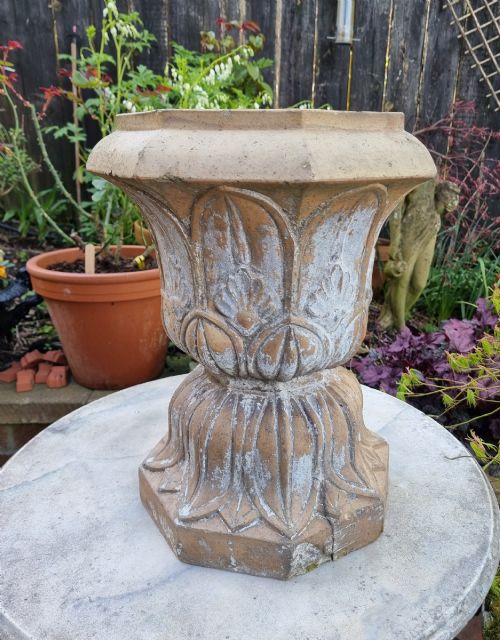
- A classical bell-shaped garden vessel with an everted rim, rising from a pedestal base. This neoclassical form has been reproduced in British and Italian terracotta since the nineteenth century.
- Salt-glazed stoneware
- A dense ceramic material fired at high temperatures with common salt introduced into the kiln, producing an orange-peel texture. This finish offers superior frost resistance for outdoor garden use.
- Amphora
- A two-handled ancient vessel body shape with a narrow neck, adapted across the Mediterranean for storing oil and wine. Decorative nineteenth century iterations translate this classical silhouette into garden ornaments.
- Jardiniere
- A large ornamental pot or stand designed to hold growing plants or flower arrangements. These pieces frequently appear in Victorian and Edwardian conservatory settings.
Terracotta Urn Pot: Frequently Asked Questions
How do I protect my terracotta urn pot from frost?
Porous earthenware absorbs moisture that expands upon freezing, potentially causing the ceramic body to crack or flake during severe winter weather.
Gardeners typically elevate these vessels on pot feet to ensure proper drainage, line them with protective material, or store them indoors throughout freezing months.
Can I plant directly inside antique olive jars?
Many historic vessels were designed for bulk agricultural storage rather than active horticulture, lacking modern drainage holes at the base.
Owners frequently place potted plants inside using a smaller plastic liner, or carefully drill a drainage aperture if the clay body permits without risking structural integrity.
What causes the white powdery marks on old terracotta?
Efflorescence occurs naturally when soluble salts within the clay or surrounding soil migrate to the surface as moisture evaporates.
This chalky deposit is harmless and forms part of the aged patina valued by collectors of nineteenth century garden ornaments.
How should I clean algae from a garden urn?
Aggressive scrubbing or harsh chemical cleaners can strip away desirable historic patinas and erode the soft outer surface of historic earthenware.
Gentle brushing with water and a soft-bristle brush removes excessive biological growth while preserving the weathered skin built up over decades.