



Terracotta Red Woven Panel
These terracotta red woven panel examples are tribal textiles and flatweaves from Central Asia and Persia, prized for their rich natural dyes and geometric motifs.
Terracotta Red Woven Panel
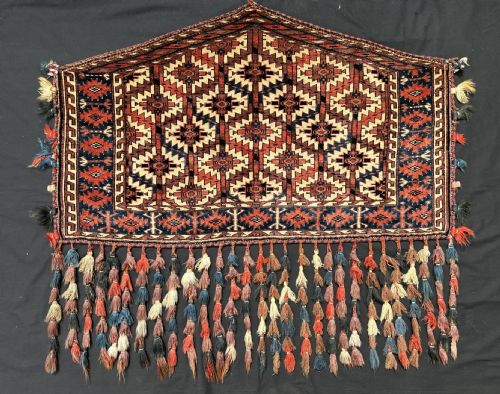
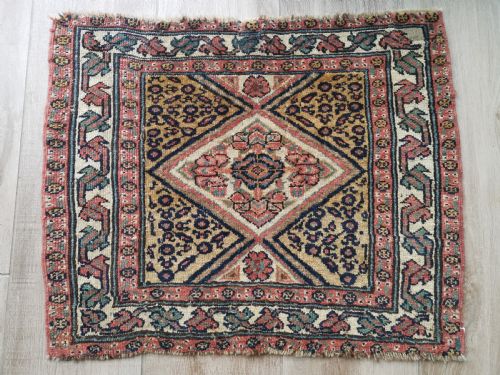
When you search for a terracotta red woven panel, you encounter tribal textiles originating from Central Asia, Persia, and the Caucasus. These pieces include fragments, storage bagfaces, asmalyks, torbas, and flatweave kilims dating from the nineteenth and early twentieth centuries.
The objects on this page represent nomadic and village weaving traditions, spanning Yomut, Tekke, Ersari, Shahsavan, and Qashqa'i groups. You find formats ranging from small fragments and animal trappings to larger carpet panels made in strips.
Materials and construction methods
Weavers constructed these textiles predominantly using wool on natural foundations, employing techniques such as flatweave, soumak, and pile knotting. Natural dyes provided the characteristic terracotta, madder, and rust tones seen across the pieces.
Terracotta Red Woven Panel Retail Price Guide 2026
Typical asking prices for terracotta red woven panel among the pieces listed under this phrase on Sellingantiques today, from the lower quarter to the upper quarter. They describe what is for sale here now, not the wider market.
Several nomadic bagfaces retain their original woolen backs, preserving the complete utility intended by the weaver over a century ago.
Assessing quality in tribal weaving
Quality rests in the precision of the geometric design, the saturation of the natural dyes, and the integrity of the weave. Tighter knotting and clear graphic execution separate finer tribal works from simpler utilitarian pieces.
Preservation of original edges, complete formats, and intact backs or borders also define the better examples. The depth and clarity of the terracotta red palette directly influence the visual impact of each textile.
The Terracotta Red Woven Panel Glossary
- Kilim
- A flatwoven carpet or panel produced without a pile. These pieces rely on interlocking weft threads to create sharp geometric patterns.
- Torba
- A small tribal storage bag used in nomadic dwellings. They typically feature elaborate face designs with traditional gul motifs.
- Soumak
- A brocading technique where supplementary threads wrap around the warp yarns. This creates a textured surface resembling braids.
- Gul
- A repeating medallion or octagonal motif used in Turkmen and Central Asian tribal weaving. Each pattern identifies a specific tribal group.
Terracotta Red Woven Panel: Frequently Asked Questions
What is a terracotta red woven panel used for?
These panels functioned primarily as nomadic storage bags, animal trappings, or tent furnishings within tribal communities. Today, collectors mount them as wall hangings or display them as decorative textile art.
Their durable wool construction allows them to serve as small rugs or decorative accents in residential interiors.
How do I date a tribal textile panel?
Dating relies on stylistic analysis, material evaluation, and structural characteristics such as wool quality and dye types. Pieces attributed to the nineteenth century often display specific tribal gul motifs and hand-spun materials.
Comparing structural details against documented tribal weaving traditions helps narrow down the period of origin.
What tribes made these woven panels?
Nomadic and village groups across Central Asia, Persia, and the Caucasus produced these textiles. Prominent makers include Turkmen tribes such as the Yomut and Tekke, alongside Shahsavan and Qashqa'i weavers.
Each group utilised distinct colour palettes, including terracotta red, and characteristic geometric symbol systems.
Are these panels made from larger carpets?
Certain items originate as fragments from larger rugs, carpet sections, or dismantled storage bags like mafrash panels. Artisans sometimes repurposed surviving sections into smaller wall hangings or panels.
Examining the edges and construction reveals whether a piece is an intact bagface or a fragment.