



Uzbek Woven Textile
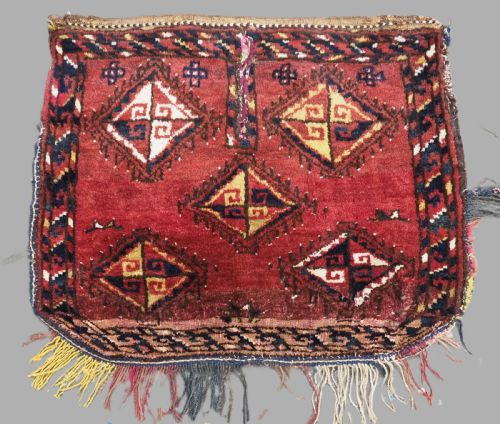
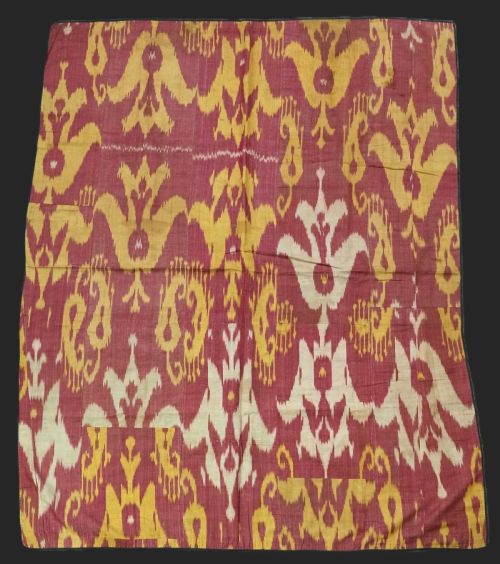
These uzbek woven textile pieces are striking Central Asian tribal rugs, panels, and saddle covers woven from wool, cotton, and silk.
Uzbek Woven Textile
An uzbek woven textile covers a range of traditional Central Asian tribal objects, including kilim rugs, wall hangings, and saddle covers originating from regions such as Bukhara and Shakrisabz. You will most frequently encounter panels and kilims woven in narrow strips around eighteen-ninety to nineteen-ten.
The forms span practical tribal items like torba ilgich and saddlebag faces alongside decorative textile panels and suzani kilims. These items reflect the utilitarian and nomadic requirements of Uzbek tribes, executed with distinct regional patterns.
Makers utilised local weaving traditions, constructing pieces in multiple narrow strips stitched together or working in banded weft designs. The visual identity of an uzbek woven textile is rooted in bold graphic layouts characteristic of Central Asian tribal work.
How they were made
Weavers combined wool, cotton, and silk yarns, often integrating natural dyes to achieve deep reds and varied background tones. Semi silk adras fabrics combined cotton and silk warps and wefts to create durable yet lustrous surfaces.
Construction methods involved weaving narrow widths on portable tribal looms before joining multiple strips together to form larger panels or covers. Details such as glass beads sometimes embellished the textile work.
Specialised techniques included flatweave kilim structures and banded weft work designs, requiring precise control over tension and pattern alignment across separate woven sections.
Uzbek Woven Textile Retail Price Guide 2026
Typical asking prices for uzbek woven textile among the pieces listed under this phrase on Sellingantiques today, from the lower quarter to the upper quarter. They describe what is for sale here now, not the wider market.
Some nineteenth-century saddle covers still carry the quiet dust of Central Asian tracks in their tightly packed wool wefts.
What varies in quality
Quality rests upon the crispness of the graphic design and the complexity of the strip construction, where precision in joining multiple woven widths marks superior execution. Finer examples display harmonious natural dye palettes that have aged to soft tones.
The handling of traditional motifs, from bold geometric gajeri patterns to intricate tartari banding, distinguishes more ambitious tribal commissions from standard utilitarian work. Structural integrity in the stitching of multi-strip panels also plays a role.
The Uzbek Woven Textile Glossary
- Adras
- A traditional Central Asian fabric woven with a silk warp and a cotton weft, combining the lustre of silk with the substance of cotton. This hybrid textile forms the base of many patterned panels.
- Kilim
- A flatwoven textile produced without a pile, created by tightly interweaving warp and weft strands. These rugs and panels form the core of Central Asian tribal output.
- Torba
- A small utilitarian bag or hanging used in nomadic tents for storage, often associated with specific tribal groups like the Lakai Uzbeks. They feature dense geometric or symbolic ornament.
- Suzani
- A type of embroidered or woven textile panel produced in Central Asia, often constructed in multiple joined strips. They served decorative functions within traditional interiors.
- Gajeri
- A descriptive term for specific kilim panels from the region, known for bold graphic layouts and strong linear patterning. These pieces rely on contrasting visual rhythms.
Uzbek Woven Textile: Frequently Asked Questions
What is an uzbek woven textile?
An uzbek woven textile encompasses flatwoven kilims, saddle rugs, and decorative panels produced by Central Asian tribes around the turn of the twentieth century. These items utilise wool, cotton, and silk materials.
They reflect nomadic traditions and regional weaving methods, characteristically constructed from multiple narrow strips joined together.
How were these textiles used?
Tribal groups utilised these pieces practically as saddle covers, bags, and floor coverings, alongside decorative wall hangings inside dwellings. Items like torba ilgich served specific storage functions in nomadic camps.
Their construction balanced durability for daily travel with visual significance for domestic spaces.
How do I date an uzbek textile?
Dating relies on material analysis, natural dye characteristics, and traditional structural formats associated with the period around eighteen-ninety to nineteen-ten. Wear patterns and the specific assembly of narrow-strip widths offer further clues.
Comparing regional styles from centres like Bukhara and Shakrisabz helps place items within their historical window.
How do I care for a textile panel?
Protect these fragile wool, cotton, and silk pieces from direct sunlight to prevent natural dye fading. Gentle vacuuming through a mesh screen removes surface dust without stressing old fibres.
Mount wall hangings carefully to distribute weight evenly across the textile body rather than suspending them from single points.