


Tribal Kilim Wall Hanging
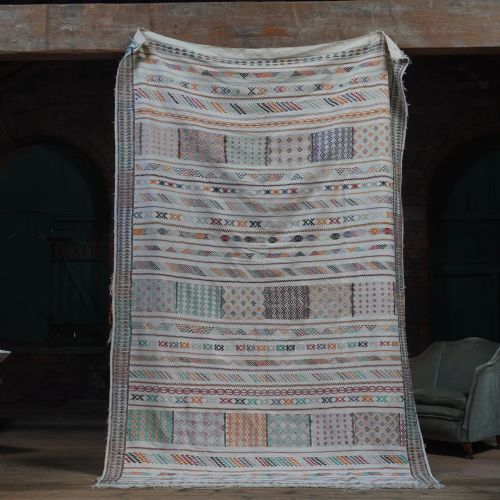
When choosing a tribal kilim wall hanging, you select a functional textile repurposed from nomadic life to display graphic geometry in a room.
Tribal Kilim Wall Hanging
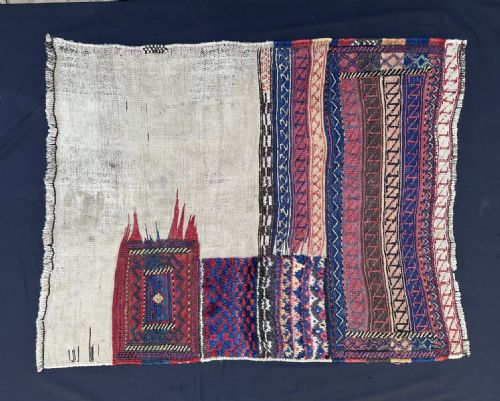
A tribal kilim wall hanging encompasses various flatwoven utilitarian objects originating from nomadic and village communities across Persia, Anatolia, Central Asia, and the Caucasus.
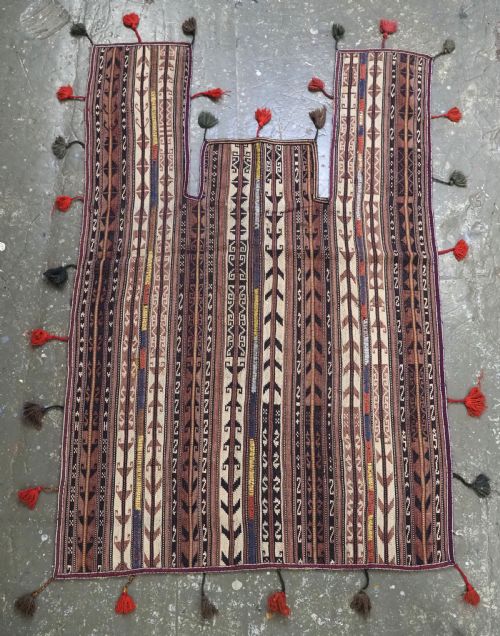
The selection on this page frequently comprises bread spreaders, storage bags, grain sacks, and animal covers created during the nineteenth and early twentieth centuries.
These textiles represent the domestic output of specific tribal confederations, including the Afshar, Qashqa'i, Bakhtiari, and various Turkmen groups.
Materials and construction
Weavers utilised hand-spun wool, occasionally combined with cotton, goat hair, leather, or cactus silk, depending on regional availability and the intended function of the piece.
Natural dyes provide the palette across these flatweaves, yielding deep earth tones, indigo blues, and rich reds that stabilise over decades of exposure.
Techniques range from standard slit-tapestry weave to banded weft-work designs and supplementary embroidery applied to panels.
Many of these pieces began life as heavy-duty luggage strapped to the side of a camel during seasonal migrations.
Markers of distinction
Quality rests upon the tightness of the weave, the precision of the geometric layout, and the complexity of the tribal iconography expressed within the panel.
The integrity of the natural dyes and the survival of original finishes, such as backings, fringes, and side-cords, elevate an example.
Pieces retaining their complete structural form or functional context demonstrate superior ethnographic value compared to isolated fragments.
The Tribal Kilim Wall Hanging Glossary
- Kilim
- A flatwoven carpet or textile produced without a pile by tightly interweaving warp and weft strands.
- Sofreh
- A spread or cloth traditionally used for kneading bread, serving meals, or storing food within nomadic households.
- Mafrash
- A large rectangular storage bag or chest face utilised by nomadic groups for bedding and household possessions during migration.
- Torba
- A smaller utilitarian storage bag or hanging sack woven by tribal weavers for household organisation.
- Tacheh
- A traditional grain or wheat sack produced by tribal groups in western regions of Persia.
Tribal Kilim Wall Hanging: Frequently Asked Questions
What is a tribal kilim wall hanging?
A tribal kilim wall hanging is a flatwoven textile originally created for practical domestic use by nomadic or village weavers that is now mounted for interior display.
These pieces include utilitarian items like grain sacks, bread cloths, and storage bags featuring traditional geometric motifs.
How were these flatweaves used originally?
Nomadic communities utilised these flatweaves for daily tasks such as serving meals, storing grain, carrying possessions during migration, and blanketing horses.
They formed essential household property, designed to withstand rigorous daily handling while displaying distinct tribal patterns.
How do I hang a kilim securely?
Mounting a textile requires spreading the weight evenly along the top edge to prevent distortion of the historic wool and cotton structure.
Conservation mounting often involves hand-stitching the piece to a cotton sleeve supported by a hidden wooden batten or rod.
How do I identify the tribal origin?
Attribution relies on recognising specific geometric motifs, colour combinations, and weave structures characteristic of particular regional confederations.
Details such as the specific structure of a bag face or the palette of natural dyes point directly to groups like the Afshar or Qashqa'i.