
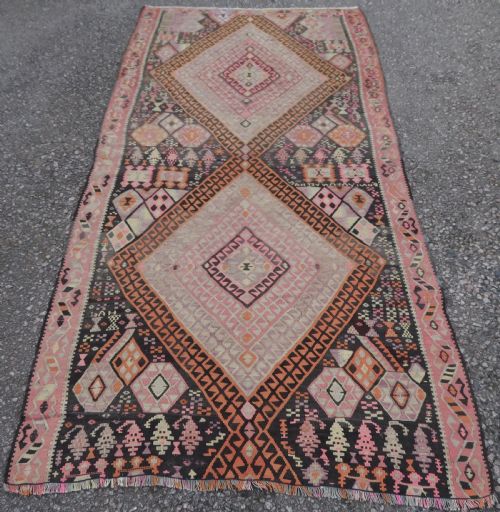



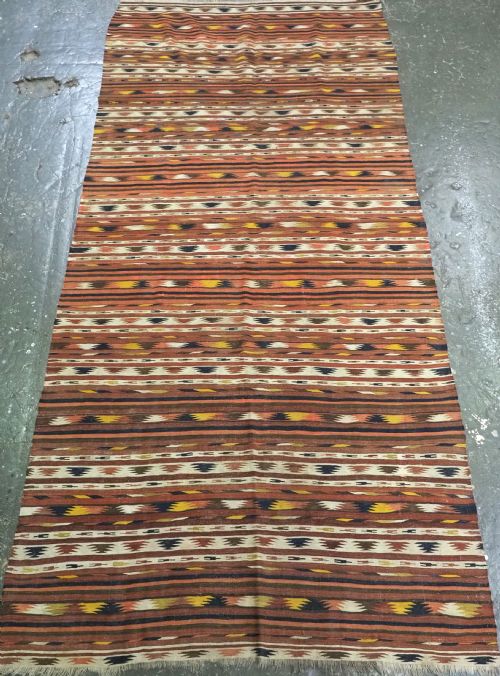


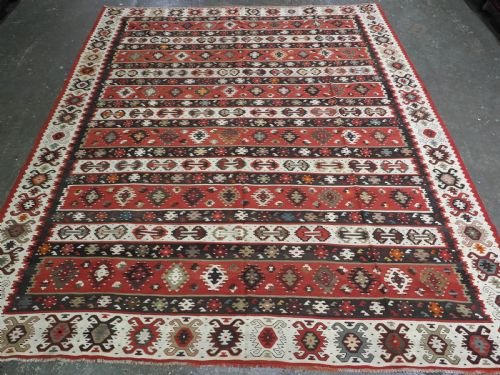
Terracotta Kilim Runner
These terracotta kilim runner examples bring tribal flatweave textile traditions into interior spaces through geometric patterns.
Terracotta Kilim Runner
When searching for a terracotta kilim runner, buyers look at flatwoven nomadic textiles originating from regions including Anatolia, the Caucasus, Persia, and Central Asia. These pieces often feature banded, repeat, or graphic compartment layouts developed by tribal makers.
The selection here encompasses flatweave rugs, long kilim panels, and tent bands produced across several decades around the turn of the twentieth century. Examples range from structured Persian Bidjar pieces to bold Uzbek and Turkmen tribal works.
What varies in quality
The fineness of the weave and the tightness of the structural tension separate standard examples from superior works. Tightly packed weft threads create a denser, more resilient textile that maintains its structural integrity over decades of use.
The clarity of the graphic layout and the consistency of the hand-spun wool fibres also determine the overall refinement of the piece.
Several textiles preserve extended flatweave ends that once secured nomadic tents against rushing steppe winds.
The Terracotta Kilim Runner Glossary
- Kilim
- A flatwoven textile produced without a pile by tightly interlacing warp and weft threads. This technique results in a thin, reversible rug with sharp geometric pattern boundaries.
- Soumak
- A wrapping technique where pattern threads are wound over and under the warp yarns to create a textured, durable surface. It adds considerable weight and structural rigidity to the finished textile.
- Warp
- The stationary vertical threads stretched onto a loom that form the foundational skeleton of the rug. Weft threads are woven horizontally through these structural cords.
- Weft
- The horizontal threads passed back and forth through the warp to build the visible pattern and colour fields. In flatweaves, these yarns completely conceal the underlying warp.
- Cicim
- A supplementary weft-float technique where decorative patterns are embroidered or brocaded onto the surface of a woven ground. This method produces raised motifs that stand proud of the base textile.
Terracotta Kilim Runner: Frequently Asked Questions
How were these runners used originally?
Nomadic and village communities utilised these flatwoven textiles as floor coverings, tent decorations, storage bags, and partition panels within traditional dwellings.
Their lightweight structure made them practical for packing up and transporting during seasonal migrations across tribal territories.
How do I care for a flatweave runner?
Protect the textile by placing a breathable rug underlay beneath it to prevent slipping and reduce friction against hard flooring.
Vacuum gently using suction only without a rotating brush bar, and consult a specialist textile conservator for professional cleaning when necessary.
How can I tell different tribal styles apart?
Caucasian and Anatolian pieces frequently display sharp, angular compartmental designs and banded layouts executed in contrasting tones. Central Asian and Persian tribal works often incorporate denser geometric motifs, supplementary brocading, and specific wool characteristics.
Examining the structural edge finishes and the handling of the slit-tapestry gaps helps identify the specific weaving group.
Are these pieces suitable for high traffic areas?
The dense flatweave construction provides a durable surface that handles regular foot traffic well in hallways and corridors. Selecting a quality underlay helps cushion the textile and distributes pressure evenly across the wool foundation fibres.