




Tribal Kilim Runner
When you select a tribal kilim runner, you bring home a flat-woven textile born from nomadic and village traditions across Persia, Turkey, the Caucasus, and Central Asia.
Tribal Kilim Runner
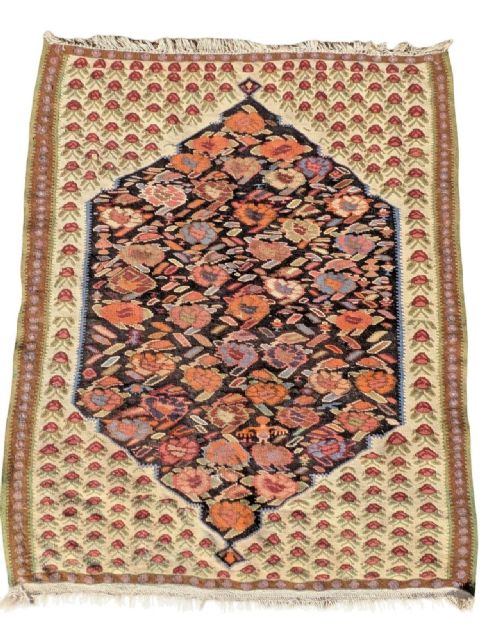
A tribal kilim runner presents a long, narrow format originally woven for specific domestic purposes within nomadic tents and village houses. The pieces found here span from the late nineteenth century through to the early decades of the twentieth century, originating from regions such as Persia, Anatolia, the Caucasus, and Uzbekistan.
Makers produced these flat-weaves using traditional upright or horizontal looms, resulting in sturdy floor coverings and utilitarian textiles rather than purely decorative items. Examples range from narrow runners created in regions like Senneh and Bijar to longer village and tribal panels joined in multiple strips.
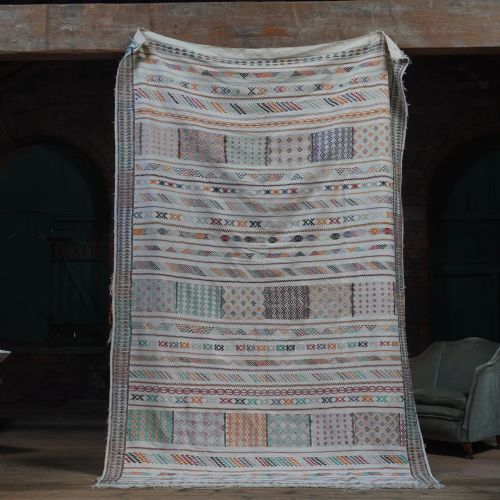
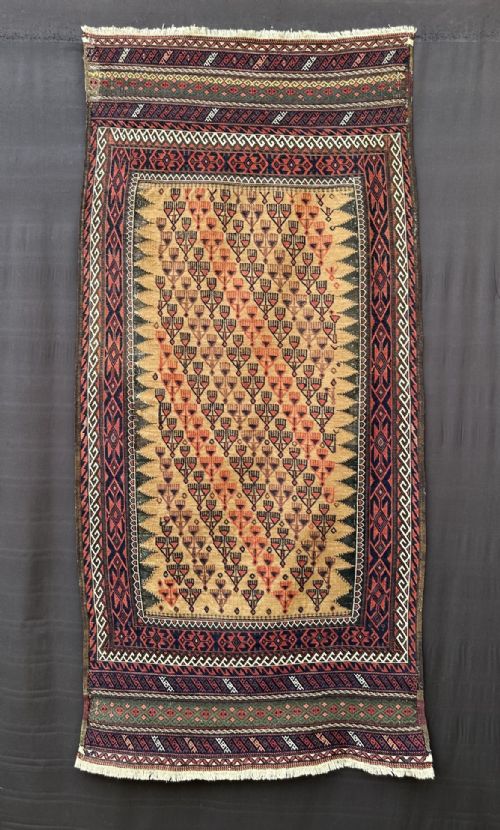
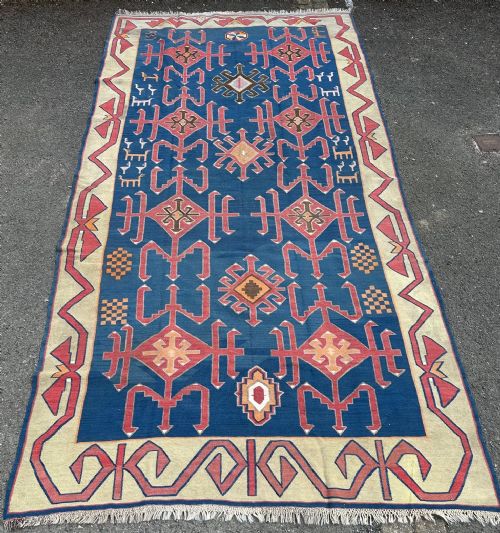
The aesthetic relies on bold geometric patterns, banded designs, and tribal motifs reflecting specific groups including the Baluch, Qashqa'i, and various Uzbek communities. Buyers encounter formats designed for corridors and narrow spaces, often characterised by strong graphic energy.
Assessing quality
Quality rests upon the tightness of the weave and the precision with which the geometric patterns are executed across the length of the runner. Finer examples display a dense, even structure that demonstrates superior control over the flat-weaving technique.
The integrity of the natural dyes and the preservation of the original edges and ends significantly influence the overall standard of a piece. Runners that retain their structural wholeness alongside crisp graphic definitions represent the stronger examples of the genre.
Some nineteenth-century weavers joined as many as thirteen separate narrow strips to create a single expansive cover.
The Tribal Kilim Runner Glossary
- Kilim
- A flat-woven carpet or rug produced without a pile by tightly interlacing warp and weft threads. This technique creates a lightweight textile that is reversible and historically versatile.
- Sofreh
- A type of spread or cloth used traditionally for dining or the preparation of bread within nomadic and village households. These utilitarian textiles frequently feature striking geometric compositions.
- Warp
- The vertical foundation threads stretched lengthwise on the loom before weaving begins. The weft threads are passed through these structural lines.
- Weft
- The horizontal threads passed back and forth across the warp to create the pattern and colour of the textile. In kilims, these packed wefts form the visible design.
- Mafrash
- A storage bag or panel associated with nomadic tribes, often featuring distinctive tribal iconography. Surviving panels are occasionally repurposed into smaller flat-woven pieces.
Tribal Kilim Runner: Frequently Asked Questions
Where were these runners made?
These runners originate from nomadic and village communities across Persia, Turkey, the Caucasus, and Central Asia, including regions like Anatolia, Shirvan, and Khorassan.
Different tribes and areas developed distinct geometric vocabularies and weaving structures that identify their geographical source.
Are these runners reversible?
Because kilims are constructed using a flat-weave technique without a raised pile, both sides present the same pattern and colour arrangement.
This structural characteristic allows owners to alternate sides over time to balance wear in high-traffic corridors.
How do I care for a flat-weave runner?
Maintenance requires regular gentle vacuuming without a rotating brush roll to prevent catching the flat-woven wool or cotton foundation threads.
Professional cleaning suited for antique textiles helps preserve the integrity of natural dyes and hand-spun fibres.
What is a multi-strip kilim?
Many traditional weavers produced narrow looms that required them to weave a runner in two or more separate strips.
Artisans then joined these individual lengths together down the centre to achieve a wider format suitable for domestic use.