
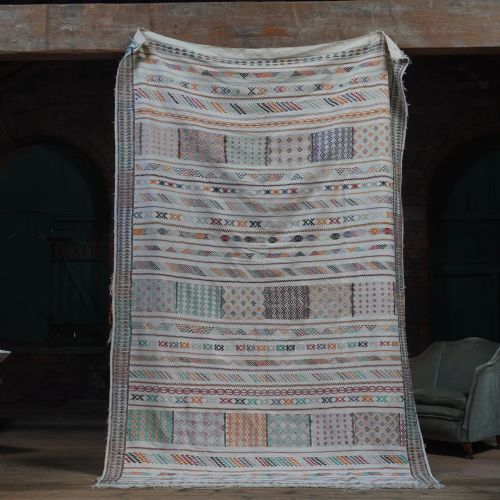


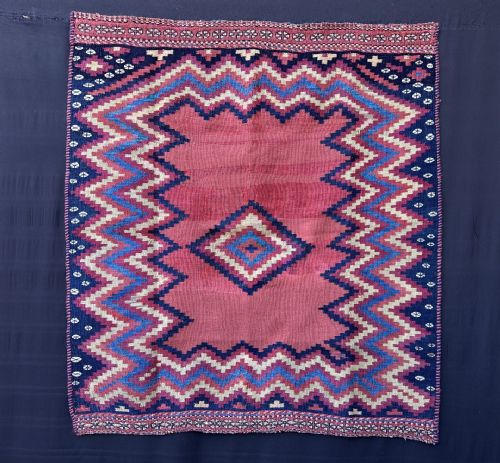
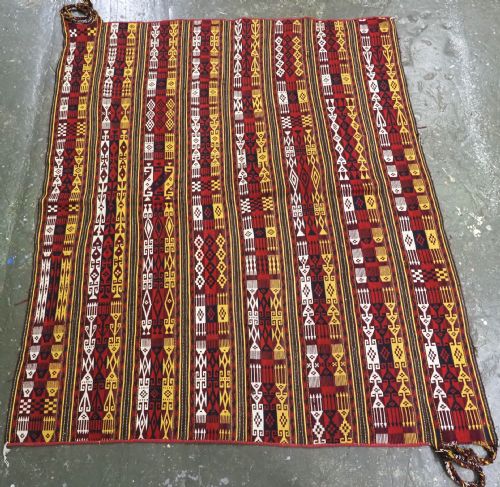
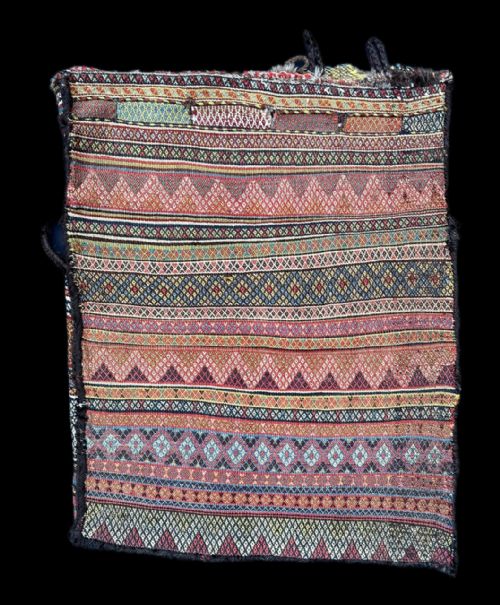

Geometric Kilim Wall Hanging
A geometric kilim wall hanging brings sharp tribal patterns and flatweave textile history directly onto a room's bare plaster.
Geometric Kilim Wall Hanging
A geometric kilim wall hanging encompasses flatweave rugs, panels, sofreh cloths, storage bag faces, and tent bands originating from Central Asian, Persian, and Anatolian tribal makers. These textiles date from the nineteenth century up to the 1920s, representing nomadic traditions from regions including Uzbekistan, Persia, and Turkey.
You are most likely to encounter antique Uzbek kilim panels, Persian tribal sofreh cloths, or Turkish embroidered cicim panels adapted for display. These pieces display bold graphic layouts, banded weft work, and repeat designs originally utilised for domestic, storage, or ceremonial purposes within nomadic communities.
What varies in quality
The visual strength of the graphic design and the clarity of the natural dyes separate the more striking examples from plainer work. Pieces featuring crisp, balanced repeat patterns or unusual structural divisions command greater visual presence on a wall.
The integrity of the flatweave structure and the survival of original components, such as bag backs or complete borders, distinguish items that retain their historical context from fragments altered for modern display.
Origins span Central Asian, Persian, and Anatolian tribal traditions, including Uzbek, Afshar, Baluch, Qashqa'i, Kurdish, and Turkish makers.
The Geometric Kilim Wall Hanging Glossary
- Kilim
- A flatweave textile produced without a pile by tightly interweaving the warp and weft strands. This technique creates a smooth, tapestry-like surface suitable for hanging or floor use.
- Sofreh
- A utilitarian cloth used by nomadic tribes for kneading dough, eating, or storing bread. These often feature striking geometric arrangements.
- Cicim
- An embroidered flatweave technique where decorative threads are added by hand over the base warp and weft structure. It produces raised patterns on the textile surface.
- Juval
- A large tribal storage bag used within nomadic tents for household possessions. Surviving faces often display complex banded designs.
- Suzani
- A type of embroidered textile originating from Central Asia, occasionally combined with kilim weaving methods. They typically showcase bold repeat motifs.
Geometric Kilim Wall Hanging: Frequently Asked Questions
How do I hang a kilim securely?
Mounting a flatweave textile safely requires distributing the weight evenly across the top edge rather than piercing the fabric with nails or direct fixings. A conservation-grade Velcro strip system or a custom wooden sleeve sewn to the reverse works well for wall display.
Ensure the hanging method does not stretch the wool or cotton fibres unevenly over time. Keeping the textile slightly away from direct sunlight preserves the natural dyes.
What is a bread sofreh?
A bread sofreh is a traditional woven cloth used by nomadic and village tribes in Persia for preparing and serving meals. These cloths were central to daily nomadic domestic life.
Because they were made for practical household use, their geometric designs often reflect the personal style of specific tribal groups like the Afshar.
How do I identify a tribal panel?
Tribal panels often show specific structural traits like narrow woven strips joined together or remnants of storage bag openings. The motifs generally draw from Central Asian, Persian, or Anatolian tribal traditions.
Examining the reverse side reveals the original construction methods, such as banded weft work or embroidery techniques distinct to regions like Uzbekistan or Fars province.
What materials are used in these textiles?
Most pieces incorporate hand-spun wool and cotton dyed with natural colourants. Some Moroccan examples utilise cactus silk or sabra fibre.
The combination of these organic fibres gives antique flatweaves their characteristic texture and tonal depth, which shifts under different interior lighting.