






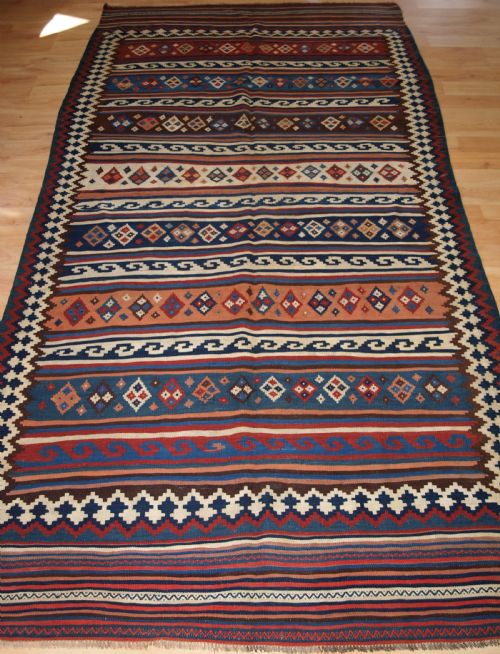
Striped Kilim Carpet
A striped kilim carpet delivers bold tribal geometry and flatweave texture to a room, drawn from nomadic traditions across Central Asia, the Caucasus, and Persia.
Striped Kilim Carpet
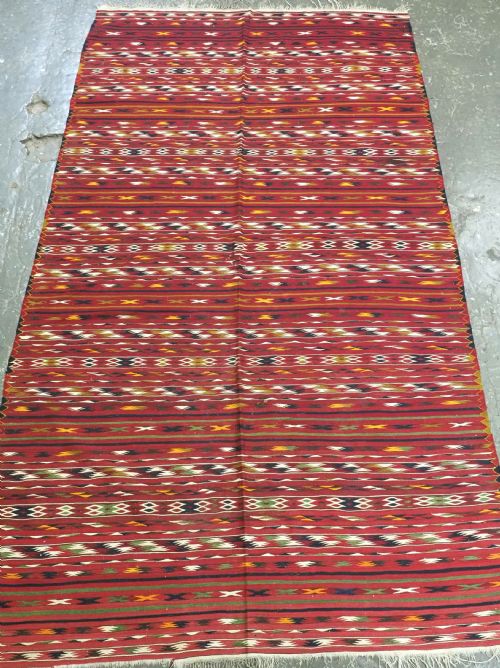
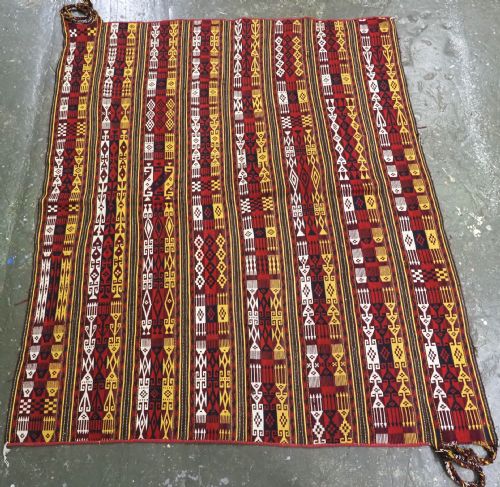
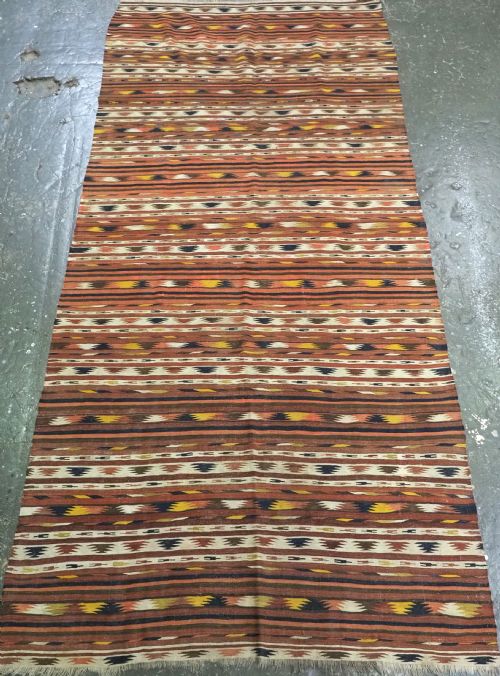
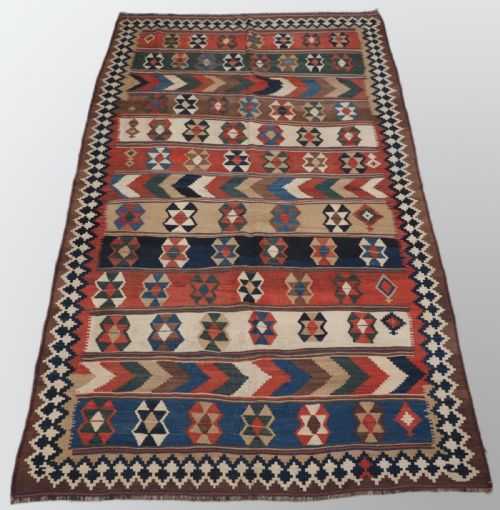
A striped kilim carpet encompasses flatwoven rugs and panels originating from tribal and nomadic groups, including Uzbek, Turkmen, Caucasian, Shahsavan, Baluch, Qashqai, and Lor makers. These textiles typically showcase banded, striped, or chevron patterns created through meticulous flatweaving traditions spanning the late nineteenth and early twentieth centuries.
Buyers are most likely to encounter Uzbek Gajeri kilims, Turkmen Dali kilims with banded designs, and various Central Asian or Caucasian pieces on this page. These items often take the form of rugs, panels adapted from tent bags or tent bands, and utilitarian cloths like Sofreh dining kilims.
The aesthetic centres on graphic linear arrangements and horizontal bands, reflecting the practical loom methods of nomadic weavers. Each piece connects modern interiors to historical tribal weaving practises from regions such as Shirvan, Luristan, and Varamin.
Materials and technique
The construction relies fundamentally on hand-spun wool and natural dyes, sometimes supplemented by cotton or camel hair foundations. Weavers employed slit-tapestry and flatweave techniques to build crisp geometric stripes without pile.
Nomadic workshops produced these textiles on portable horizontal looms, resulting in tight, fine weaves capable of withstanding daily utilitarian use. The reliance on natural colourants yielded rich, organic tones that age with distinct character.
Some narrow striped kilims began life as nomadic tent bands before finding new life as compact floor rugs.
Variations in quality
Quality rests upon the fineness of the weave and the precision of the graphic banding. Tightly compressed structural warps and wefts indicate superior craftsmanship by the weaver.
The integrity of the natural dyes and the balance of the tribal colour palette distinguish finer examples. The crispness of the geometric repeat lines defines the upper tier of these flatweaves.
The Striped Kilim Carpet Glossary
- Kilim
- A flatwoven carpet or rug produced without a pile by tightly interweaving warp and weft strands. This construction method creates a lightweight textile with identical patterns visible on both sides.
- Mafrash
- A traditional tribal storage bag or panel often repurposed into flatweave rugs. These items originate primarily from Shahsavan and Turkmen nomadic groups.
- Sofreh
- A utilitarian spread or dining kilim used traditionally by Persian tribes for sharing meals. They typically feature strong linear or banded compositions.
- Gajeri
- A specific style of Uzbek flatweave characterised by bold horizontal bands and graphic stripes. These pieces frequently originate from nineteenth or early twentieth-century Central Asian looms.
- Flatweave
- A textile technique where vertical warp threads and horizontal weft threads interlace directly on a loom. This process yields a flat surface devoid of raised pile.
Striped Kilim Carpet: Frequently Asked Questions
How do I clean a flatweave carpet?
Gentle surface brushing and professional specialist textile cleaning maintain the wool fibres without damaging the flatweave structure. Avoid excessive moisture and harsh chemical detergents.
Regular light shaking removes embedded dust from the tight weave while preserving the natural dyes and hand-spun wool integrity.
Can I use these rugs on heated floors?
Natural wool and cotton flatweaves tolerate underfloor heating well due to their breathable, organic material composition. Placing a suitable breathable underlay underneath prevents slipping and promotes air circulation.
Such placement allows the antique textile to rest securely on modern flooring surfaces without suffering heat degradation.
What is the difference between a kilim and a pile rug?
Kilims are constructed entirely through interlocking warp and weft threads to form a flat surface. Pile rugs feature vertical knots tied around warp threads that are subsequently sheared to create a soft, raised surface.
This structural distinction gives striped kilim carpets their characteristic lightweight profile and sharp graphic geometry.
Where were these tribal carpets made?
Nomadic and village weavers produced these textiles across Central Asia, the Caucasus, and Persia. Specific regions represented include Uzbekistan, Luristan, Varamin, and Shirvan.
Each weaving community utilised distinct local wools, natural dye palettes, and geometric band arrangements native to their specific tribal culture.