


Circa 1900 Kilim
A circa 1900 kilim represents a flatwoven textile from the turn of the twentieth century, prized by collectors for authentic tribal patterns and natural dyes.
Circa 1900 Kilim
A circa 1900 kilim is a flatwoven textile originating from various tribal and regional traditions across Central Asia, the Caucasus, Persia, and Anatolia. These pieces were made primarily for utilitarian household purposes rather than export, serving as floor coverings, blankets, storage bags, or eating cloths.
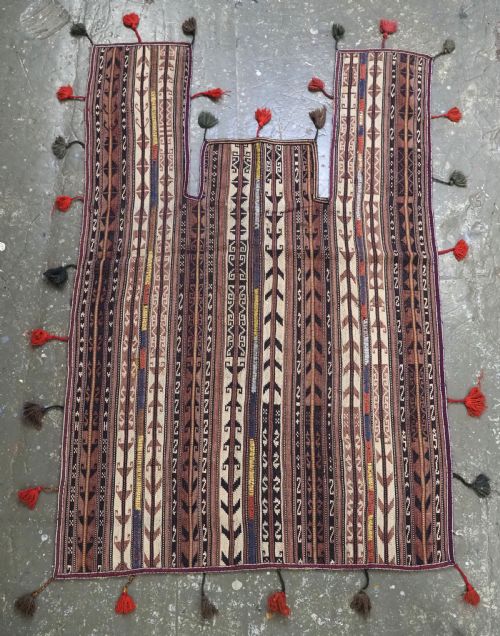
Buyers encountering this selection will frequently find Uzbek gajeri kilims, Turkmen dali kilims, and Anatolian or Caucasian pieces often constructed in multiple panels or strips. Utility items such as horse blankets, saddlebags, and grain bags frequently appear converted into manageable flatweave formats.
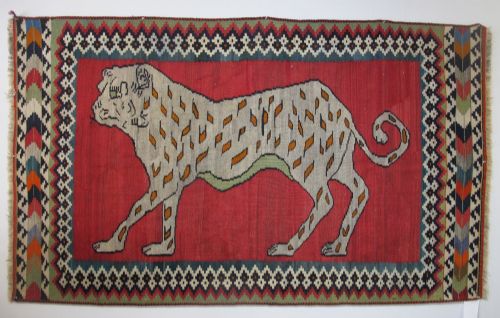
The aesthetic leans heavily toward bold graphic layouts, banded weft work designs, and soft faded red or muted palette tones. Each region imparts distinct geometric markers, allowing keen observers to trace a piece back to specific nomadic groups or weaving districts.
Materials and Construction Techniques
The construction relies fundamentally on hand-spun wool and cotton, utilised either independently or blended to form durable foundation warps and wefts. Natural dyes derived from local plants and minerals provide the muted or rich colour palettes observed across surviving examples.
Weavers employed slit-tapestry flatweaving techniques, alongside specialised brocade methods like cicim or soumak wrapping to build up textured surface designs. Many larger formats were constructed by weaving narrower strips or separate panels on portable looms and subsequently stitching them together.
Listings feature structural variations including multi-strip assemblies, original backs, and specialised utilitarian items like horse blankets and eating cloths.
Evaluating Quality and Execution
Quality rests significantly on the tightness and fineness of the weave, where denser knotting or flatter interlacing indicates superior technical execution by the maker. Pieces demonstrating exceptionally crisp geometric alignment and complex structural assembly require higher skill levels.
The integrity of the original natural dyes and the preservation of long kilim ends or original backs heavily influence the standing of a textile. Surviving examples that retain their structural utility without excessive chemical or physical degradation command deeper appreciation from purists.
The Circa 1900 Kilim Glossary
- Kilim
- A flatwoven carpet or rug produced without a pile by tightly interweaving warp and weft strands. This technique creates a lightweight textile historically used for flooring, wall hanging, and utility covers.
- Sofreh
- A traditional woven eating cloth or dining spread utilised by nomadic and village households. These utilitarian flatweaves often feature distinctive central fields and minimal borders.
- Mafrash
- A large rectangular storage bag or compartment face produced by tribal groups for transporting household goods. Surviving panels from these containers are frequently repurposed into flatweave rugs.
- Soumak
- A brocade-like flatweaving technique where weft threads are wrapped over and under warp threads before being pulled tight. This method adds structural thickness and textural relief to the surface.
- Cicim
- An embroidery-like supplementary weft technique worked directly onto the foundation weave during production. It creates raised geometric patterns across the face of the textile.
Circa 1900 Kilim: Frequently Asked Questions
What is a kilim?
A kilim is a flatwoven carpet or textile made without pile by tightly interlacing the warp and weft threads together. This creates a thin, durable fabric that was traditionally portable and multipurpose.
Nomadic and village weavers across the Middle East and Central Asia produced these textiles for everyday domestic functions, utilising geometric motifs that reflected their specific tribal heritage.
How were these rugs used?
These flatweaves served practical daily roles within nomadic tents and permanent village homes as floor coverings, blankets, and horse covers. Many were constructed as specialised containers, including grain sacks, salt bags, and storage chests.
Households also utilised them as dining cloths and partition hangings, meaning surviving examples carry a history of active domestic utility.
How do I care for a vintage kilim?
Care requires gentle handling, regular low-suction vacuuming without a rotating brush roll, and occasional professional cleaning tailored for antique textiles. Keeping the fabric out of direct, harsh sunlight prevents the natural dyes from fading prematurely.
Placing a breathable rug underlay beneath the textile prevents slipping and reduces friction against hard floor surfaces.
How can I tell regions apart?
Regional attribution relies on identifying specific structural traits, colour palettes, and distinct geometric vocabulary unique to each weaving group. Caucasian and Anatolian pieces often display sharp, angular medallions, while Central Asian and Turkmen textiles frequently utilise deep reds and banded repeat patterns.
Examining the selvages, end finishes, and the presence of joined panels provides further clues regarding the geographical workshop or nomadic tribe of origin.