
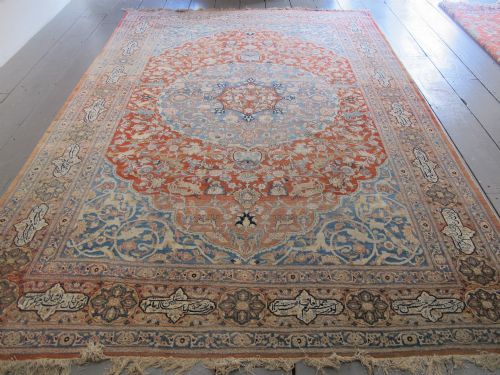


Terracotta Border Rug
A terracotta border rug brings earthy warmth to a room through traditional Persian and Turkish styles.
Terracotta Border Rug
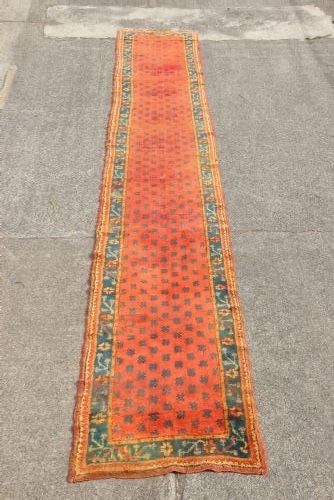
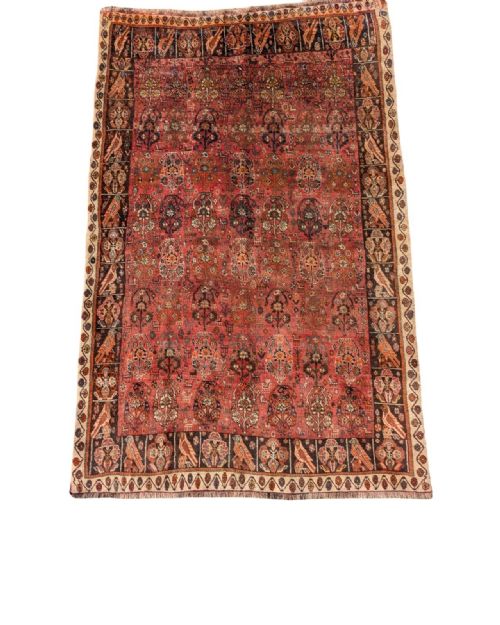
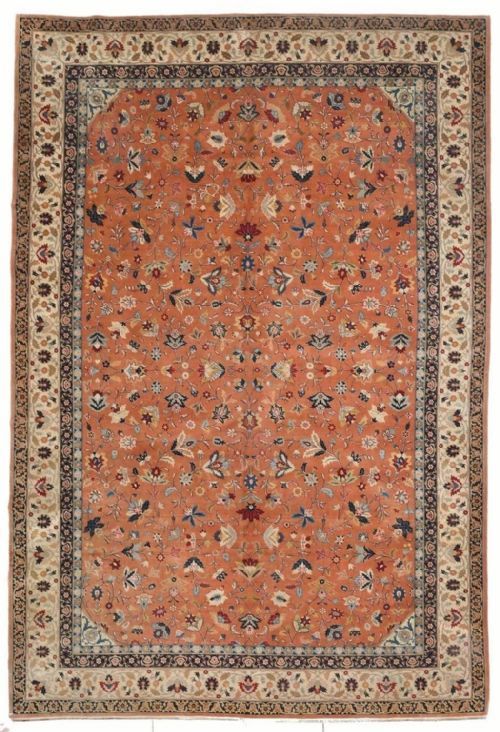
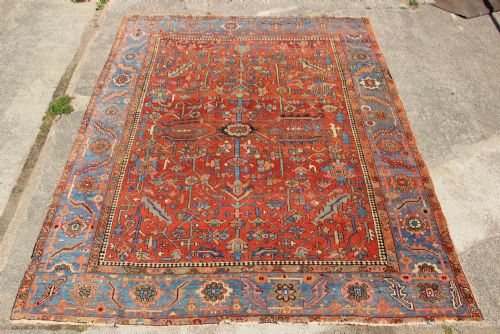
A terracotta border rug centres on floor coverings defined by reddish-brown terracotta framing and foundational styles originating from Persian and Turkish weaving traditions. These textiles appear across formats from narrow runners to large room-size carpets.
The pieces on this page span the late nineteenth century into the early twentieth century, incorporating regional aesthetics such as Heriz, Ushak, Sultanabad, and Mahal designs. Buyers will encounter both expansive carpets designed for principal rooms and extended runners intended for hallways.
Traditional Persian and Ottoman motifs dominate the selection, offering geometric medallions, repeating floral patterns, and distinct border configurations. Each piece reflects the specific weaving centres and village traditions of its geographic origin.
Materials and construction methods
Construction relies primarily on wool and hand-spun wool fibres, providing durability and a tactile pile, supported by cotton foundations in many examples. The organic materials absorb natural dyes with depth, yielding the characteristic terracotta tones found in the borders.
Weavers utilised traditional hand-knotting techniques on vertical looms, building dense piles that withstand heavy foot traffic while retaining flexibility. The integration of hand-spun wool in particular creates subtle variations in texture and colour absorption across the surface of each rug.
Listings span production dates from the 1870s through the 1930s, featuring wool, cotton, and hand-spun wool materials across multiple regional styles.
Factors influencing quality
Quality rests in the precision of the weave density, the clarity of the design drawing, and the vibrancy of the dye palette. Finer knots permit more intricate geometric or floral articulation within the terracotta borders and central fields.
The integrity of the wool, the consistency of the hand-spinning, and the harmonious balance of secondary colours against the terracotta ground separate standard village pieces from exceptional atelier productions.
Ziegler and Co
The Terracotta Border Rug Glossary
- Terracotta
- A reddish-brown clay colour that forms the defining border hue for this group of rugs. It provides a warm, grounded frame for the interior field patterns.
- Runner
- A long, narrow carpet format specifically proportioned for corridors, hallways, and stairs. These pieces accommodate restricted spatial dimensions while displaying full design programmes.
- Pile
- The upright yarn loops that form the usable surface of a woven carpet. Its density and height determine the plushness and wear resistance of the rug.
- Medallion
- A central ornamental motif positioned in the middle of the rug field. It acts as the visual focal point around which secondary borders and corners revolve.
Terracotta Border Rug: Frequently Asked Questions
How do I style a terracotta border rug?
A terracotta border rug works well as a grounding element in neutral or earth-toned living spaces. Its warm framing complements hardwood floors and traditional furniture arrangements.
Position the rug to allow the distinctive border to remain visible around coffee tables or beneath dining furniture without heavy obstruction.
Where were these rugs made?
These rugs originate primarily from weaving regions in Persia and Turkey, including centres such as Heriz, Ushak, Sultanabad, and Tabriz. Each region developed distinct stylistic signatures.
Local materials and regional dyeing traditions shaped the specific terracotta shades and pattern arrangements seen in the pieces.
How do I care for antique wool rugs?
Regular gentle vacuuming without a beater bar removes surface grit from the wool pile. Professional cleaning suited to antique textiles preserves the natural lanolin and dye stability.
Keep the rug away from direct, prolonged sunlight to prevent fading of the terracotta and secondary tones.
How can I tell different regional styles apart?
Regional styles reveal themselves through motif geometry, knot density, and palette combinations. Heriz carpets often feature bold geometric medallions, while Ushak rugs display softer, larger floral forms.
Examining the border structure and corner designs helps identify whether a piece stems from a Persian village or an Anatolian workshop.