


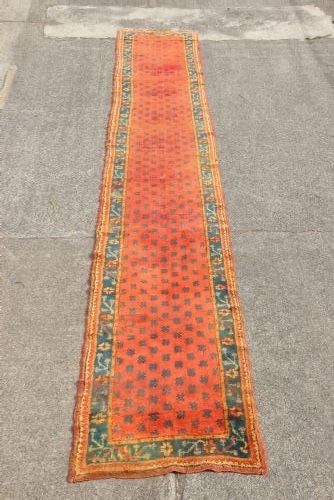

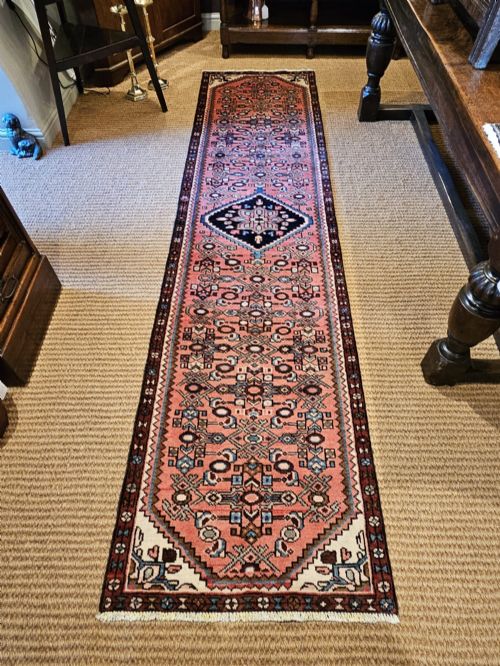
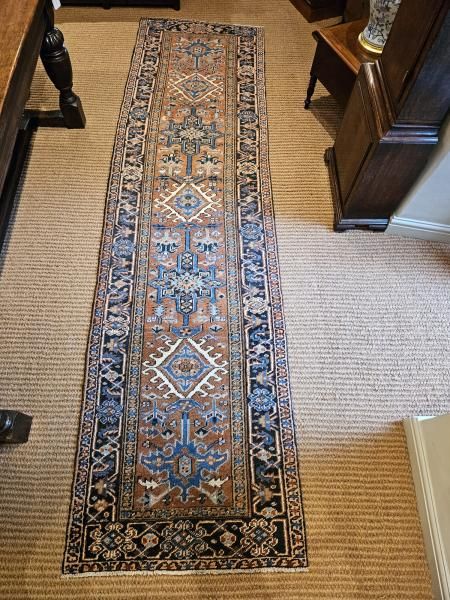
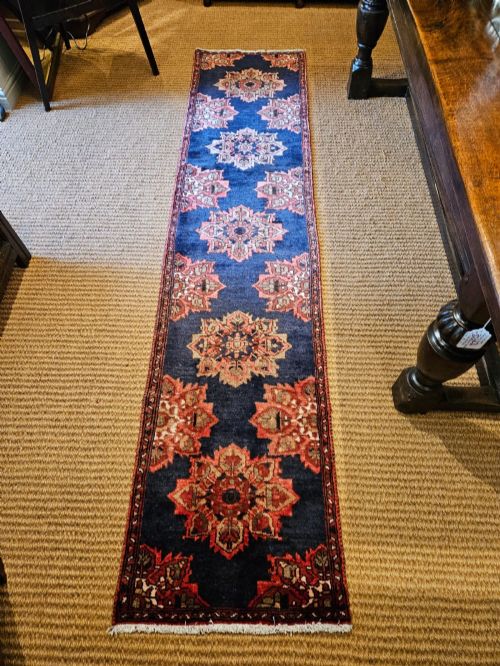


Terracotta Hallway Rug
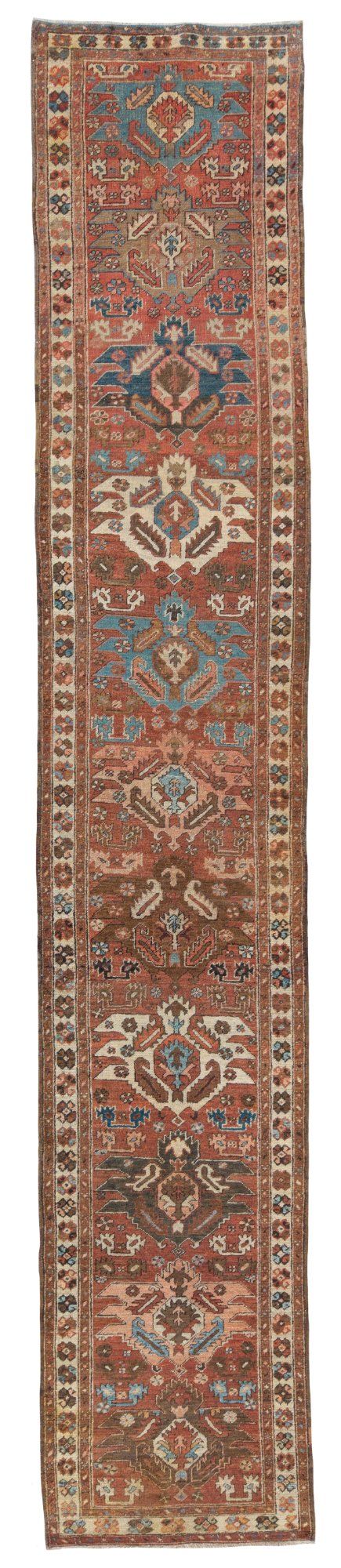
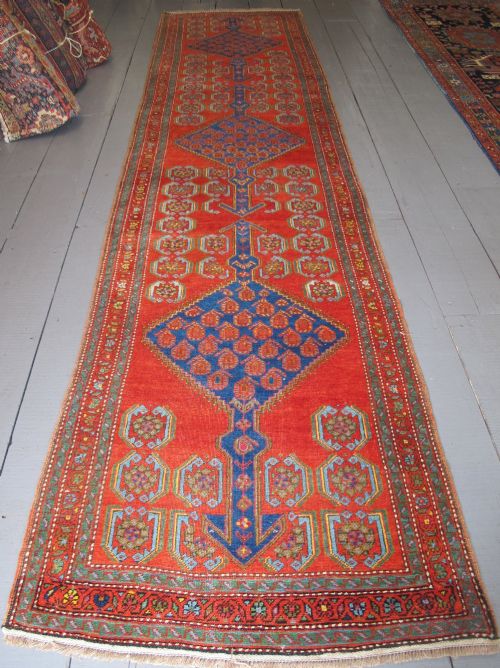
A terracotta antique hallway rug brings warmth and structured pattern to long corridors through durable wool and traditional dyeing methods.
Terracotta Hallway Rug
A terracotta antique hallway rug selection brings together narrow formats designed specifically for corridors and extended spaces within the home. Buyers searching for a terracotta antique hallway rug encounter long formats originating from Persian, Turkish, and Kurdish weaving traditions dating from the nineteenth and early twentieth centuries.
The inventory on this page consists predominantly of runner rugs, carpet runners, and long gallery pieces spanning periods from the 1870s through to the 1930s. These pieces utilise traditional village and tribal weaving methods, delivering the elongated proportions required for narrow architectural spaces.
Origin designations span specific regions such as Heriz, Bidjar, Oushak, and Hamadan, alongside broader tribal classifications. Each piece provides the characteristic earthy red or terracotta tones combined with geometric and floral motifs typical of these weaving districts.
Materials and construction
Construction relies primarily on wool and hand-spun wool, often paired with cotton foundations to provide structural stability for heavy foot traffic. Weavers knotted these materials by hand, utilising natural dyes derived from plants and minerals to achieve the characteristic terracotta and red palette.
Techniques range from fine city workshops to robust tribal weaving methods, resulting in varying pile densities and structural weights. The interplay of wool quality and knot density determines how each runner handles the physical demands of a hallway.
Many village weavers worked from memory, meaning geometric border patterns occasionally shift slightly off-centre as the day fades.
Assessing quality and character
Quality separates along the precision of the wool preparation and the consistency of the hand-spinning process. Finer pieces demonstrate tighter knotting and greater resilience in the pile, maintaining structural integrity across long spans of heavy use.
The nuance of the dye work also divides the range, distinguishing uniform commercial tones from complex, abrash-rich terracotta variations produced by natural dyeing methods. Structural proportion and the preservation of original borders further distinguish the finer examples from standard village pieces.
The Terracotta Hallway Rug Glossary
- Runner
- A long, narrow carpet format designed specifically for corridors, hallways, and stairs. These pieces typically exceed three times their width in length.
- Abrash
- Subtle tonal variations within a single colour field caused by changes in batches of naturally dyed wool. This variation is a hallmark of traditional hand-knotted weaving.
- Hand-Knotted
- A construction method where individual strands of wool are tied by hand onto a warp foundation. This technique produces durable textiles that withstand generations of use.
- Kelleh
- A traditional Persian carpet format that is longer than a standard rug but wider than a runner. These pieces serve grander hallway spaces and reception rooms.
- Warp
- The stationary vertical strings stretched on a loom that form the structural skeleton of the rug. Weft threads and knots are woven around these foundation lines.
Terracotta Hallway Rug: Frequently Asked Questions
How do I measure for a hallway runner?
Measure the clear floor space of your corridor, leaving an equal margin of exposed wood or stone around the perimeter. Ensure doorways can swing freely over the pile thickness.
Account for any radiators or architectural protrusions that might disrupt a straight run down the centre of the hallway.
Are these runners suitable for heavy traffic?
Traditional wool construction and tight knotting provide the natural durability required for high-traffic entryways and corridors. The resilience of hand-spun wool allows the pile to recover from daily foot movement.
Using a quality underlay beneath the rug prevents sliding and cushions the fibres against hard subfloors.
How do I identify a Heriz runner?
Heriz runners typically display bold geometric medallion designs and strong, angular corner spandrels. The palette often incorporates deep terracotta, navy blue, and ivory highlights.
These pieces feature a sturdy, heavy handle due to thick wool and robust cotton foundations characteristic of the region.
What is a Bidjar runner?
Bidjar runners are known as the iron rugs of Iran due to their exceptionally dense weave and heavy construction. Weavers beat down the weft threads heavily during production, creating a rigid and durable fabric.
Designs frequently feature Herati patterns or all-over Heriz-inspired motifs rendered in rich terracotta and blue hues.