




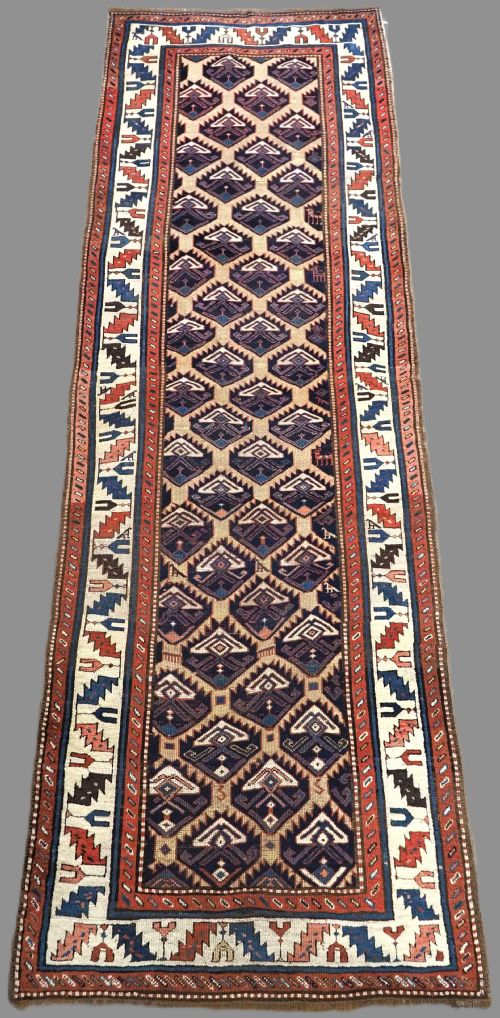
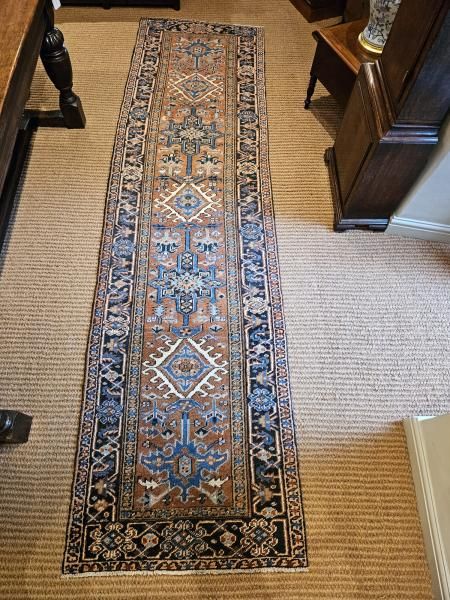
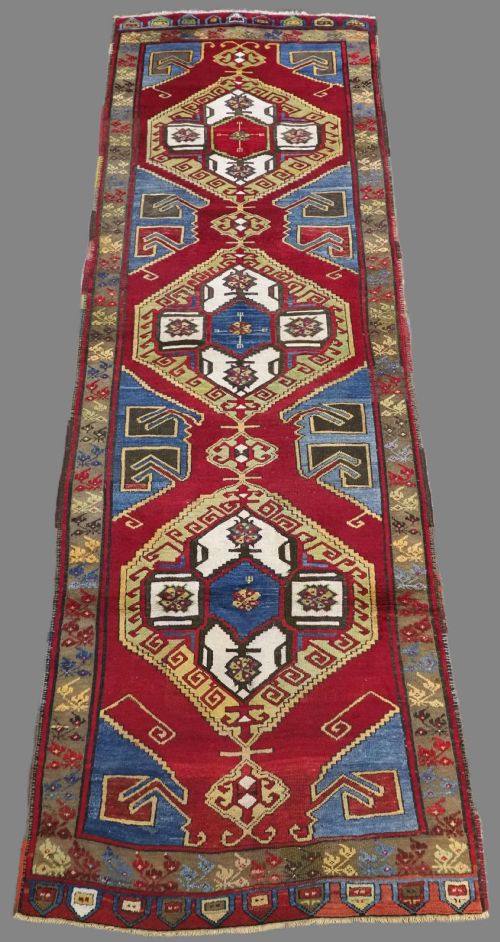

Traditional Wool Hallway Runner
A traditional wool hallway runner anchors a long transit space with deep dyes and dense pile formed over a century ago.
Traditional Wool Hallway Runner
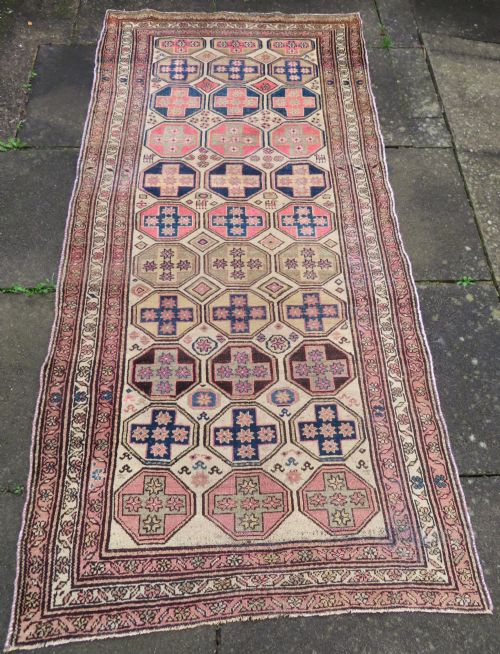
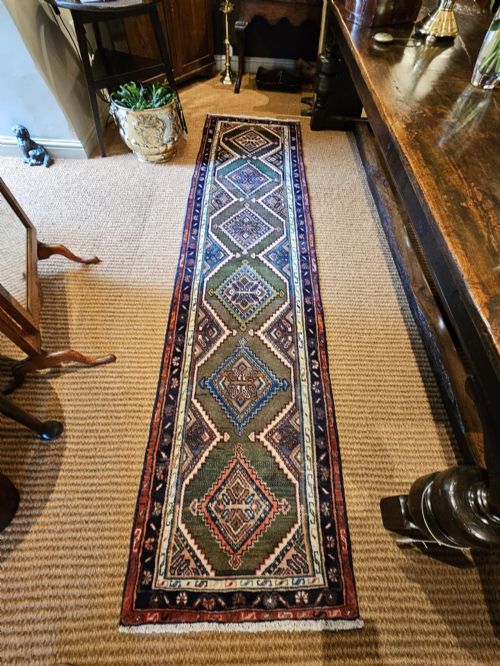
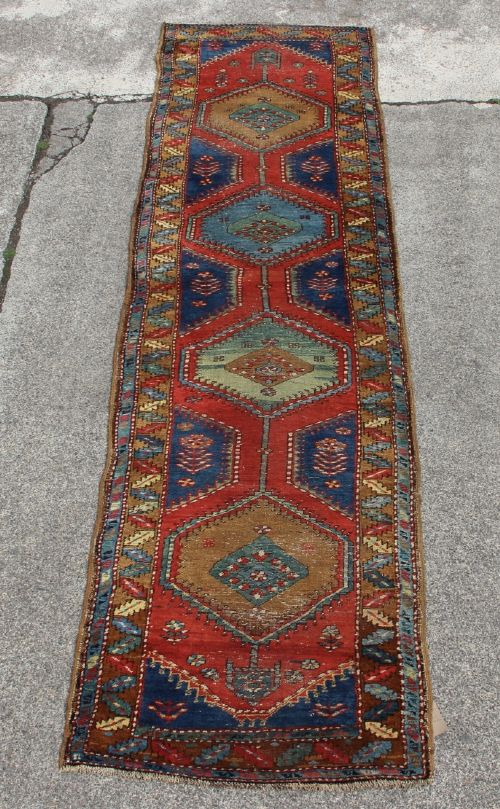
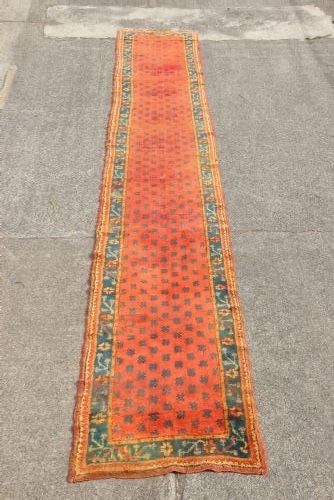
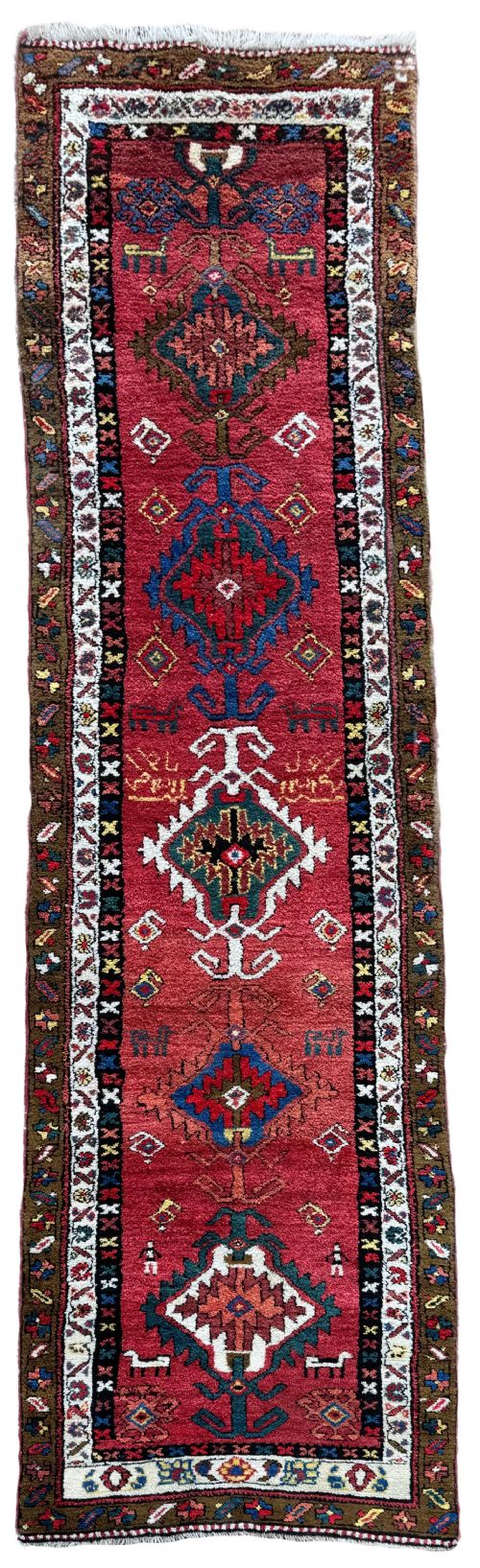
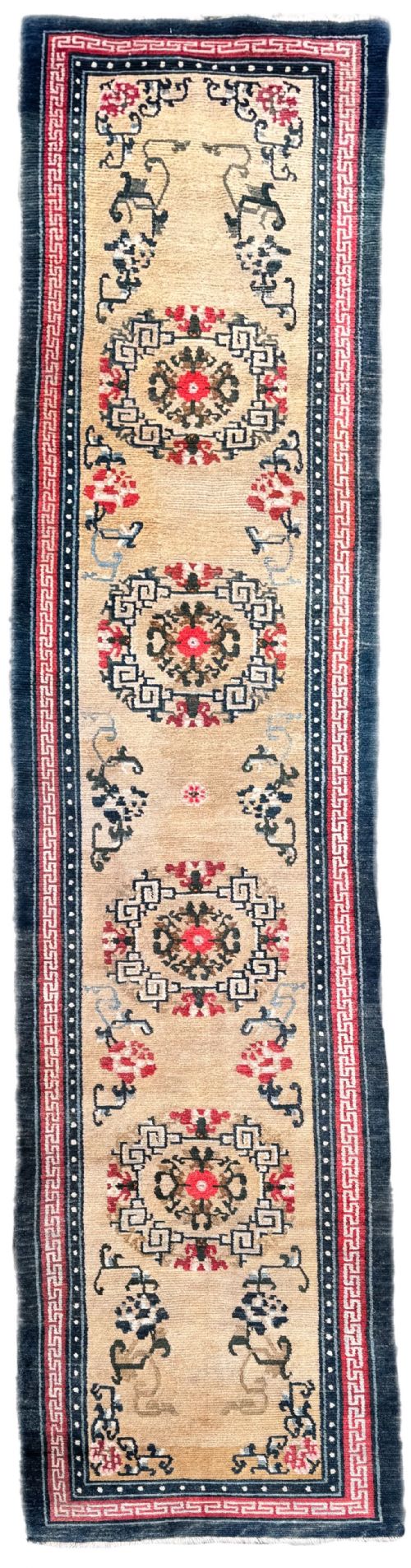
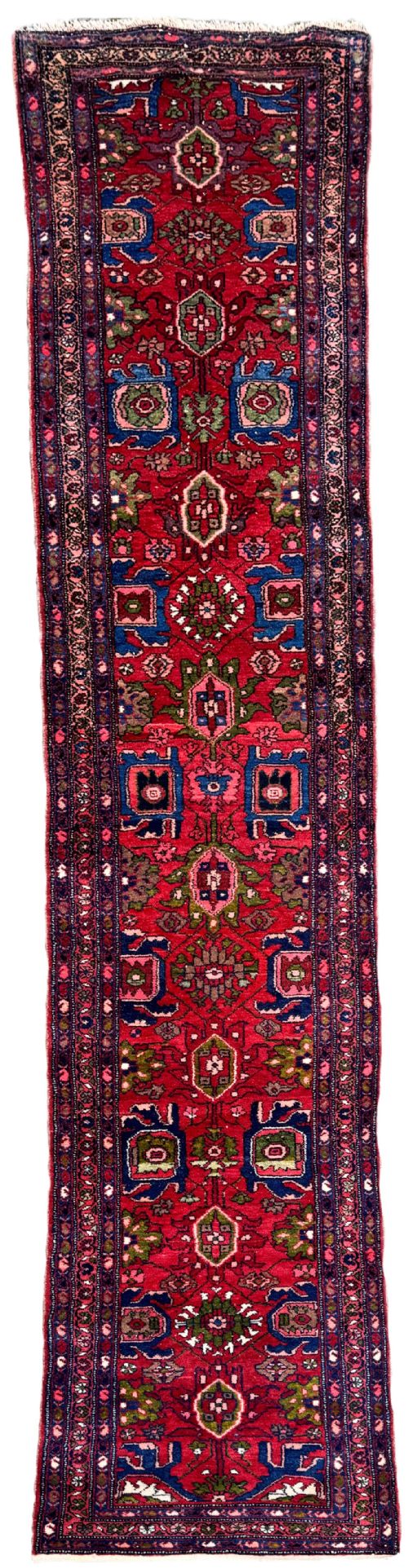
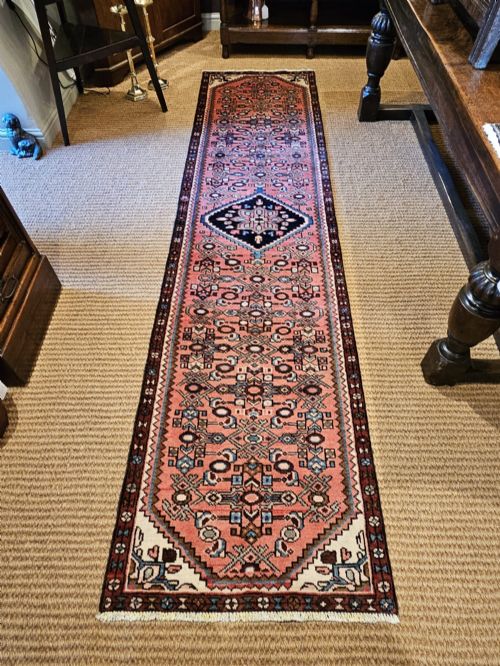
A traditional wool hallway runner brings linear pattern and tactile warmth to narrow domestic floors, typically spanning lengths from compact proportions up to grand dimensions exceeding three metres. The selections meeting this search phrase draw primarily from nineteenth and early twentieth century workshops across Persia, the Caucasus, and Anatolia, alongside village weaves from Kurdish and tribal groups.
These floor coverings balance utility with intricate regional design, employing repetitive geometric medallions, lattice motifs, and stylized floral fields suited to linear spaces. Buyers encounter formats categorized broadly as runner rugs, long rugs, and corridor carpets, often woven with distinctive narrow proportions designed specifically for passageways.
Originating from established weaving traditions such as Heriz, Ushak, Kurdish, and Caucasian centres, these pieces reflect the specific decorative vocabulary of their source communities. The inventory spans from austere tribal compositions to intricate village interpretations, all sharing a foundational reliance on durable animal fibres.
How They Were Made
Construction relies upon hand-spun wool pile secured to sturdy cotton or wool foundation warps and wefts, creating a dense textile matrix built to endure generations of foot traffic. Artisans tied individual knots by hand across vertical looms, varying knot density according to regional convention and the intended fineness of the finished floor covering.
Dye baths utilised natural materials extracted from plants, roots, and minerals, yielding deep indigo blues, madder reds, and earthy olive greens that settle into rich patinas over time. The manual carding, spinning, and dyeing processes ensure each textile possesses subtle tonal variations unique to its specific production batch.
Traditional Wool Hallway Runner Retail Price Guide 2026
Typical asking prices for traditional wool hallway runner among the pieces listed under this phrase on Sellingantiques today, from the lower quarter to the upper quarter. They describe what is for sale here now, not the wider market.
Current selections span woven structures from eighteen ninety through nineteen sixty, utilising pure wool and cotton foundations across Persian, Caucasian, and Anatolian traditions.
What Varies in Quality
Quality rests upon the integrity of the foundation weave, the precision of the hand-knotted pile, and the depth achieved by natural dyestuffs. Tighter knot counts allow for crisper geometric definition and superior structural resilience against heavy corridor usage.
The artistic merit of the design layout, including balanced border proportions and harmonious colour saturation, separates ordinary village utilitarian weaving from masterwork tribal artistry. Preserved structural edges and minimal structural intervention maintain the integrity that collectors prioritize.
The Traditional Wool Hallway Runner Glossary
- Warp
- The vertical foundation threads stretched lengthwise on the loom before knotting begins. These longitudinal cords carry the primary structural load of the textile.
- Weft
- The horizontal threads passed across the warps between rows of knots to bind the structure laterally. They maintain the rigidity and shape of the runner.
- Pile
- The upright surface of cut wool yarn forming the soft face of the rug. Its height and density determine how the textile feels underfoot and how it wears over decades.
- Medallion
- A central ornamental motif dominating the field of the rug. These geometric or floral centerpieces anchor the symmetrical composition of traditional weaves.
- Natural dye
- Colourants derived from organic sources such as plants, insects, and minerals rather than synthetic chemical compounds. They develop a characteristic soft patina as they age.
Traditional Wool Hallway Runner: Frequently Asked Questions
How do I clean a wool runner?
Maintenance requires gentle vacuuming without rotating brush heads to protect the aged wool pile from unnecessary friction. Professional specialist cleaning remains essential for addressing deep-seated dirt.
Water exposure should be managed carefully to prevent dye migration or weakening of the foundational cotton and wool fibres. Immediate blotting handles accidental spills safely without rubbing the affected area.
Are these runners suitable for heavy traffic?
Traditional construction methods utilising dense wool pile on sturdy foundations make these textiles well-suited for high-traffic corridors and staircases. The natural lanolin present in genuine wool resists dirt and cushions impacts effectively.
Purchasing a quality underlay provides crucial slip resistance while absorbing mechanical stress from footsteps. This simple addition significantly extends the working life of antique floor coverings.
How do I identify the regional origin?
Attribution relies upon examining specific structural characteristics, including knot types, edge finishes, and colour palettes unique to particular weaving centres. Kurdish, Caucasian, and Anatolian pieces each display distinct design vocabularies and border arrangements.
Comparing the secondary motifs and abrash tonal shifts against documented regional examples clarifies where and approximately when the piece was knotted. Consultation with stylistic reference literature assists in confirming these attributions.
What is abrash in antique rugs?
Abrash describes the subtle horizontal colour variations within a field of dye, caused by changes in dye batches or wool lots during weaving. This spontaneous tonal shift is a hallmark of traditional hand-dyed textiles rather than a manufacturing flaw.
Connoisseurs prize this characteristic for adding visual depth and organic movement to the surface of the runner. It confirms the use of traditional artisanal dyeing methods.