


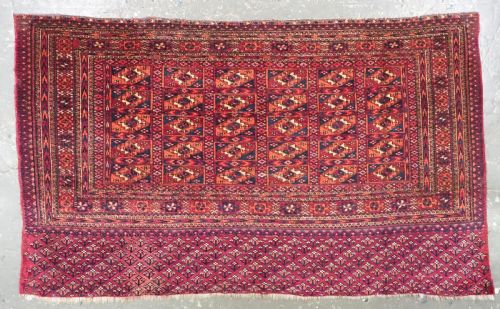


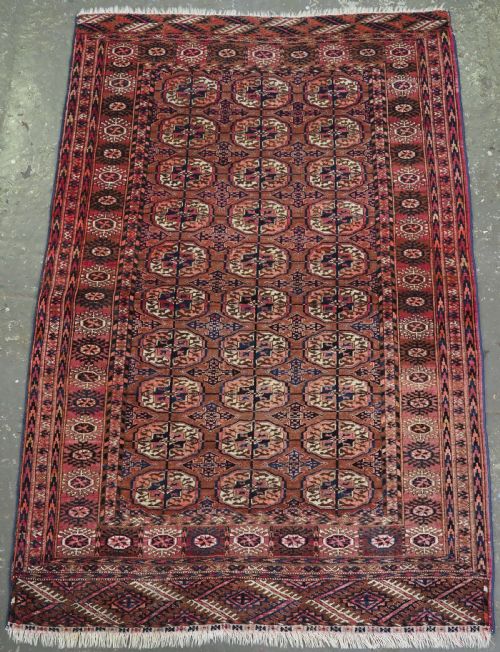

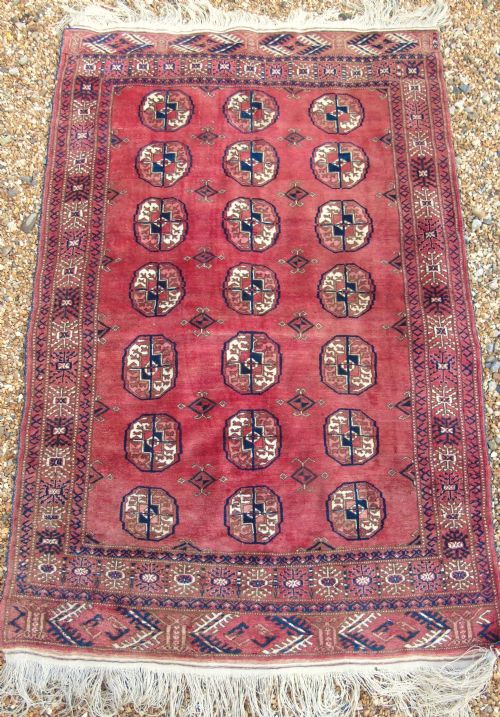

Tekke Turkmen Area Rug
A tekke turkmen area rug brings deep madder tones and precise tribal geometry into a room, offering enduring warmth and historic character.
Tekke Turkmen Area Rug
When searching for a tekke turkmen area rug, buyers encounter tribal weavings originating from Central Asia during the nineteenth and early twentieth centuries. These pieces encompass various formats, from small dowry rugs and wedding pieces to larger main carpets and torba faces.
The format most commonly met on this page is the antique rug or carpet displaying traditional tribal guls, often produced by Turkmen weavers. Examples frequently span periods from the second half of the nineteenth century through to the early decades of the twentieth century.
How they were made
These textiles rely on wool for the pile and foundation, occasionally paired with cotton elements in the construction. The materials combine to create durable, resilient floor coverings designed for practical daily use.
Weavers utilised traditional techniques to achieve dense piles and fine weaves, incorporating cochineal highlights and rich natural dyes. This construction method ensures both longevity and the characteristic depth of colour seen in tribal textiles.
Carpets woven with scarce ovoid guls offer a delightful surprise for collectors hunting beyond the standard octagonal patterns.
What varies in quality
Quality in these pieces is dictated by the fineness of the weave and the precision of the gul motifs. Tighter knotting and meticulous execution of geometric patterns separate standard utility items from exceptional dowry pieces.
The handling of colour further differentiates examples, particularly the vibrancy of cochineal highlights and the richness of the main palette. Condition and completeness of the original borders also play a significant role in determining the standing of an individual textile.
The Tekke Turkmen Area Rug Glossary
- Gul
- A repeated octagonal medallion motif central to Turkmen design. These primary ornaments distinguish specific tribal groups and weaving traditions.
- Chuval
- A large tent bag face produced by tribal weavers for storage purposes. These panels frequently feature multiple guls and fine geometric detailing.
- Ensi
- A specialised rug used as a door hanging for a yurt. They typically display a quartered field design separated by a candelabra motif.
- Torba
- A smaller storage bag face created by tribal groups. Collectors prize these for their condensed proportions and intricate border work.
- Cochineal
- A natural red dye derived from insects, producing vibrant crimson and magenta highlights. Its presence often indicates a piece of higher visual quality.
Tekke Turkmen Area Rug: Frequently Asked Questions
How do I identify a Tekke rug?
Look for the characteristic octagonal gul motifs arranged in precise rows across a red or madder field. The secondary ornaments and border arrangements also provide clear indicators of the Turkmen tradition.
Examining the weave density and the handling of the wool helps confirm the period of manufacture. Traditional examples typically display characteristic structural traits belonging to nineteenth-century Central Asian weaving.
How should I care for an antique rug?
Protect the textile by placing it in a low-traffic area out of direct sunlight to preserve the natural wool and dyes. Regular gentle vacuuming without a beater bar removes trapped dust without damaging the pile.
Professional cleaning tailored for antique wool textiles ensures the longevity of the piece. Avoid harsh chemical treatments and consult a specialist for any restorative work.
What is a dowry rug?
A dowry rug is a special textile woven by a bride or her family as part of her marriage possessions. These pieces often showcase exceptionally fine weaves and meticulous attention to detail.
Because they held personal and cultural significance, dowry pieces frequently exhibit superior craftsmanship. Collectors value them for their refined aesthetic and intimate connection to tribal traditions.