
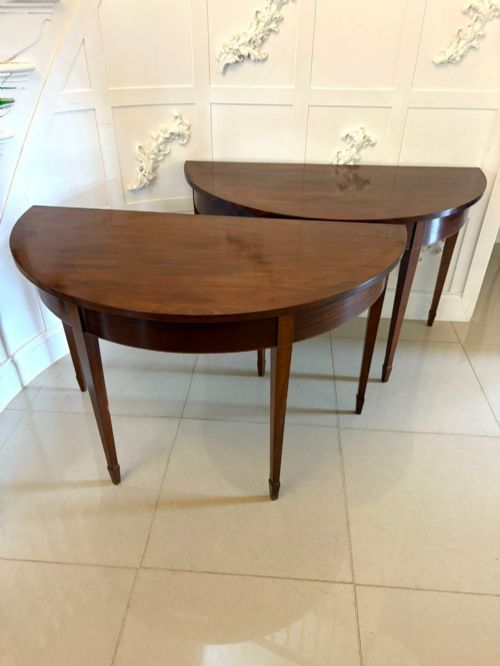
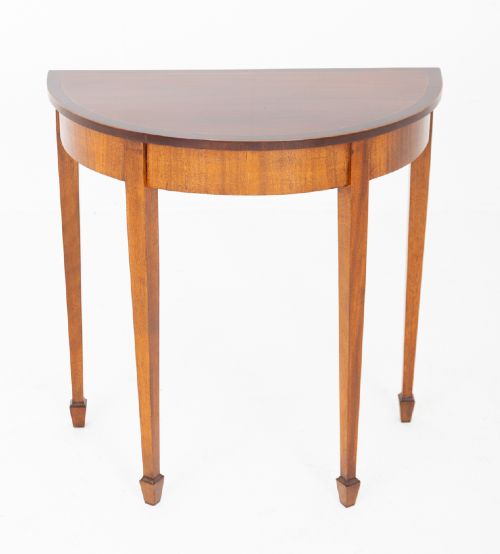
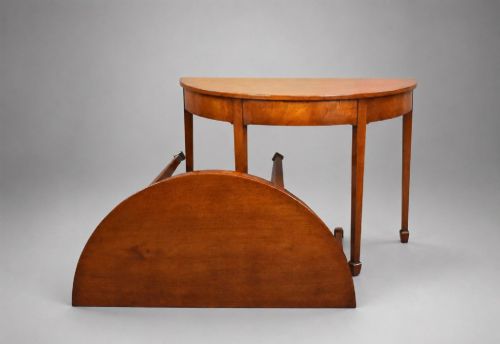


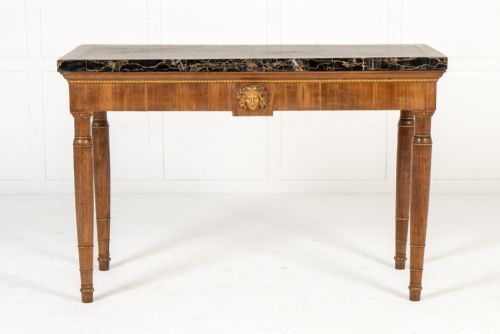


Tapered Leg Pier Table
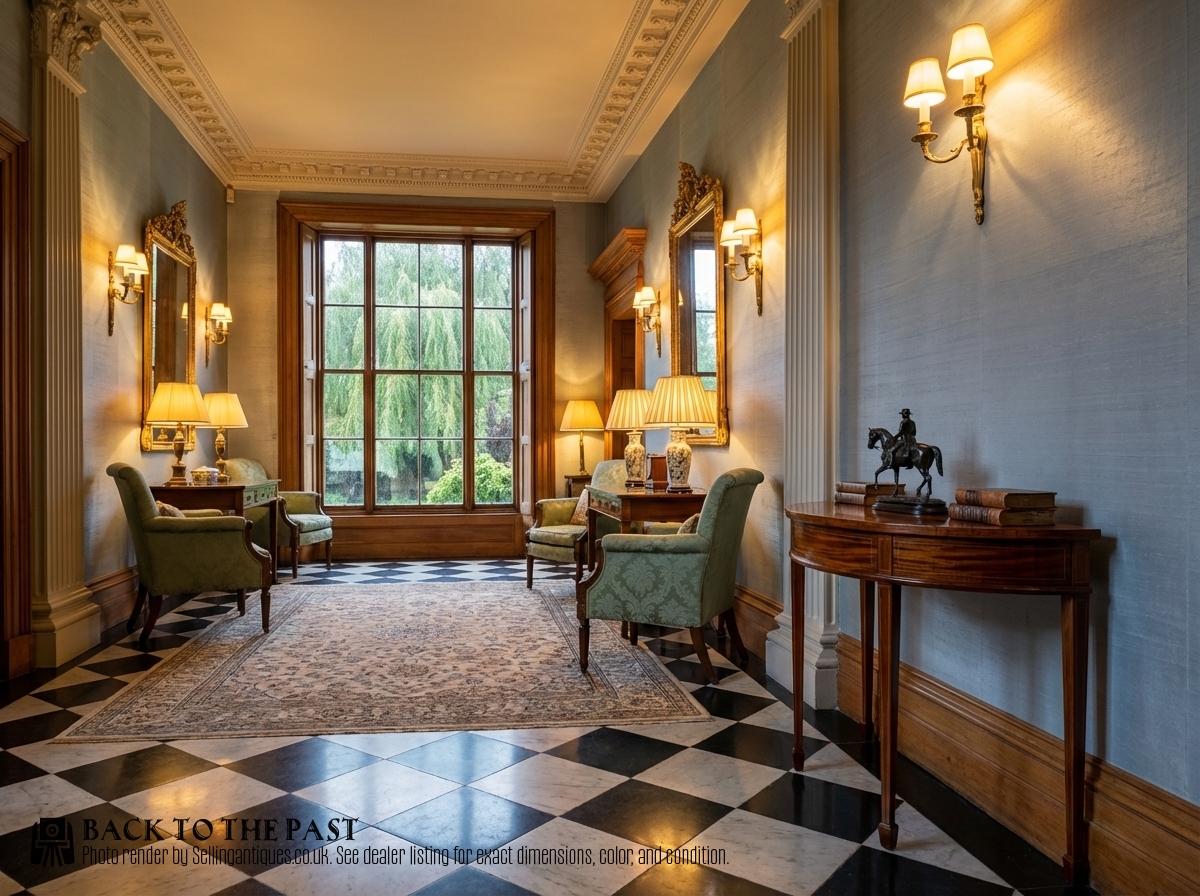
These tapered leg pier tables bring refined classical form and rich mahogany timbers directly to a hallway or drawing room wall.
Tapered Leg Pier Table
When you search for a tapered leg pier table, you look for a console or side table designed to stand flat against a wall, frequently in a demi-lune or semi-circular shape. These pieces appear across George III, Georgian, Regency, and Victorian periods, often taking the form of hall tables or console tables.
The most common version met on this page is the demi-lune mahogany console table from the Georgian era or the nineteenth century, often found in pairs. Makers executed these works in styles ranging from Adam revival and Neoclassical to Italian variations.
Object types stretch from dedicated console and hall tables to occasional writing desks and pier tables. Walnut, satinwood, and painted wood versions also feature alongside the dominant mahogany examples.
Assessing Quality and Craftsmanship
The distinction between standard examples and the finest work lies in the choice of timber and the precision of the inlay. Highly figured mahogany or finely grained satinwood paired with crisp boxwood stringing elevates a piece significantly.
Proportion and decorative restraint mark the superior tables, particularly in Neoclassical and Adam revival designs where carved details or painted motifs must remain sharp and balanced. The execution of the tapered legs and the tightness of the joints ultimately determine the standing of the table.
One versatile nineteenth-century specimen doubles as a ladies writing desk, centre lamp table, sofa table, hall console, pier table, and dressing table all at once.
The Tapered Leg Pier Table Glossary
- Demi-lune
- A half-moon shape popular for console and pier tables designed to sit flush against a wall. This form saved floor space while offering a decorative surface.
- Crossbanding
- A narrow strip of veneer laid around the border of a table top with the grain running perpendicular to the centre. It creates a neat framing effect on mahogany and satinwood pieces.
- Pier table
- A table specifically designed to stand against the wall between two windows, often positioned beneath a pier glass mirror. These tables share forms with console and hall tables.
- Neoclassical
- A style drawing inspiration from classical antiquity, featuring symmetrical lines, tapered legs, and restrained ornamentation. It dominates George III and Adam revival furniture.
- Inlay
- A technique where contrasting woods, such as boxwood, are inserted into recessed portions of the primary timber to form decorative patterns.
Tapered Leg Pier Table: Frequently Asked Questions
Where should I place a pier table?
These tables suit narrow spaces, entryways, and hallways where a deep piece of furniture would block traffic. Their flat backs allow them to anchor securely against a wall.
They also function well in living rooms beneath mirrors or artwork, providing a compact surface for lamps or decorative objects.
How do I distinguish George III from Victorian examples?
George III pieces typically display lighter proportions, superior timber selection, and more restrained hand-carved detailing. Boxwood inlay and crossbanding tend to be crisper and more delicate.
Victorian and later revival pieces often feature heavier timber cuts, denser rosewood or walnut, and bolder decorative motifs reflecting nineteenth-century tastes.
What is the difference between a console and a pier table?
Historically, pier tables were built to stand specifically against the wall space between windows, often matching a hanging mirror. Console tables serve a similar structural purpose against any flat wall.
In modern usage, the terms overlap significantly, and many pieces function equally well in either location.
Are these tables sturdy enough for daily use?
Despite their slender tapered legs, these tables were constructed from durable hardwoods like mahogany and walnut to support decorative items and occasional use. Most rely on wall placement or a secure stance for stability.
Heavy weight should be avoided, but standard household objects, lamps, and books sit securely on their tops.