


Tan Leather Books
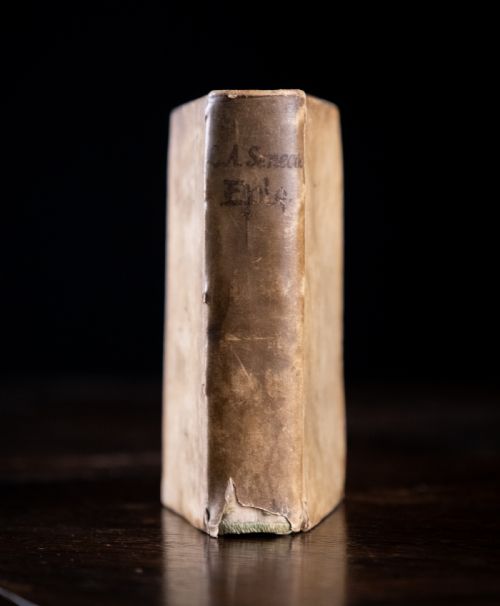
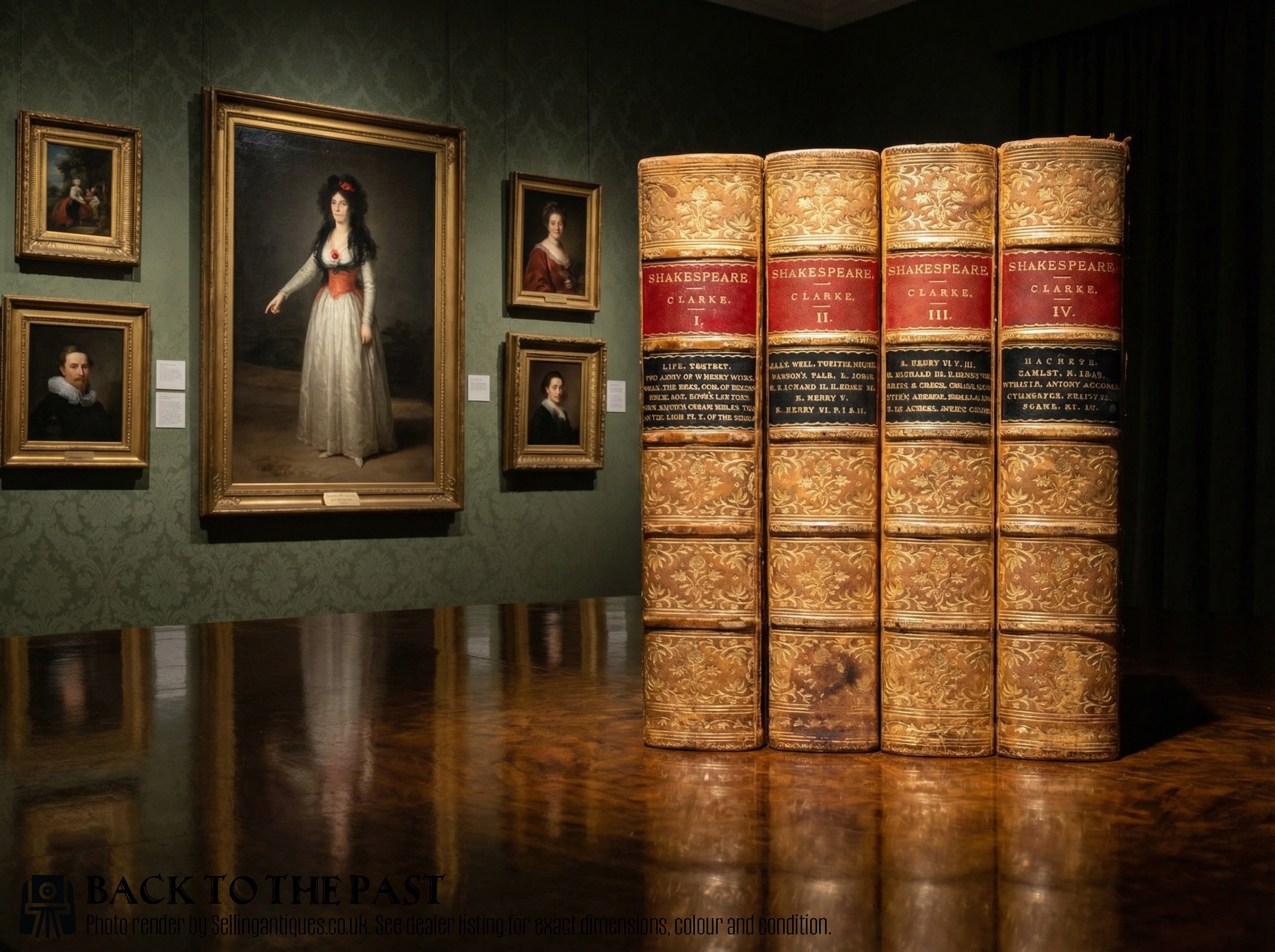
Tan leather books bring warmth and historical depth to a room, ranging from single seventeenth-century philosophy volumes to nineteenth-century sets.
Tan Leather Books
When you search for tan leather books, you encounter a variety of antique reading materials and decorative items spanning multiple centuries. The selection includes individual historical volumes, extensive multi-volume literature sets, and unexpected objects shaped like literature.
Most examples hail from the nineteenth century, including Victorian editions, Edwardian printings, and specific years such as eighteen fifty or eighteen ninety. You will find works by authors like Sir Walter Scott and William Shakespeare, alongside historical and biographical texts.
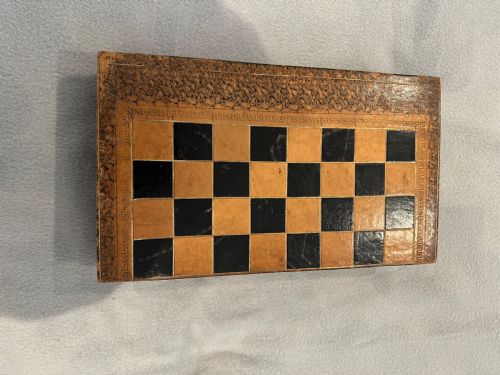
The category also encompasses curious decorative pieces shaped like literature, such as desk pen stands and tantalus boxes disguised as leather stacks or games boards. These items demonstrate how nineteenth-century craftsmen utilised book forms for practical household containers.
How they were made
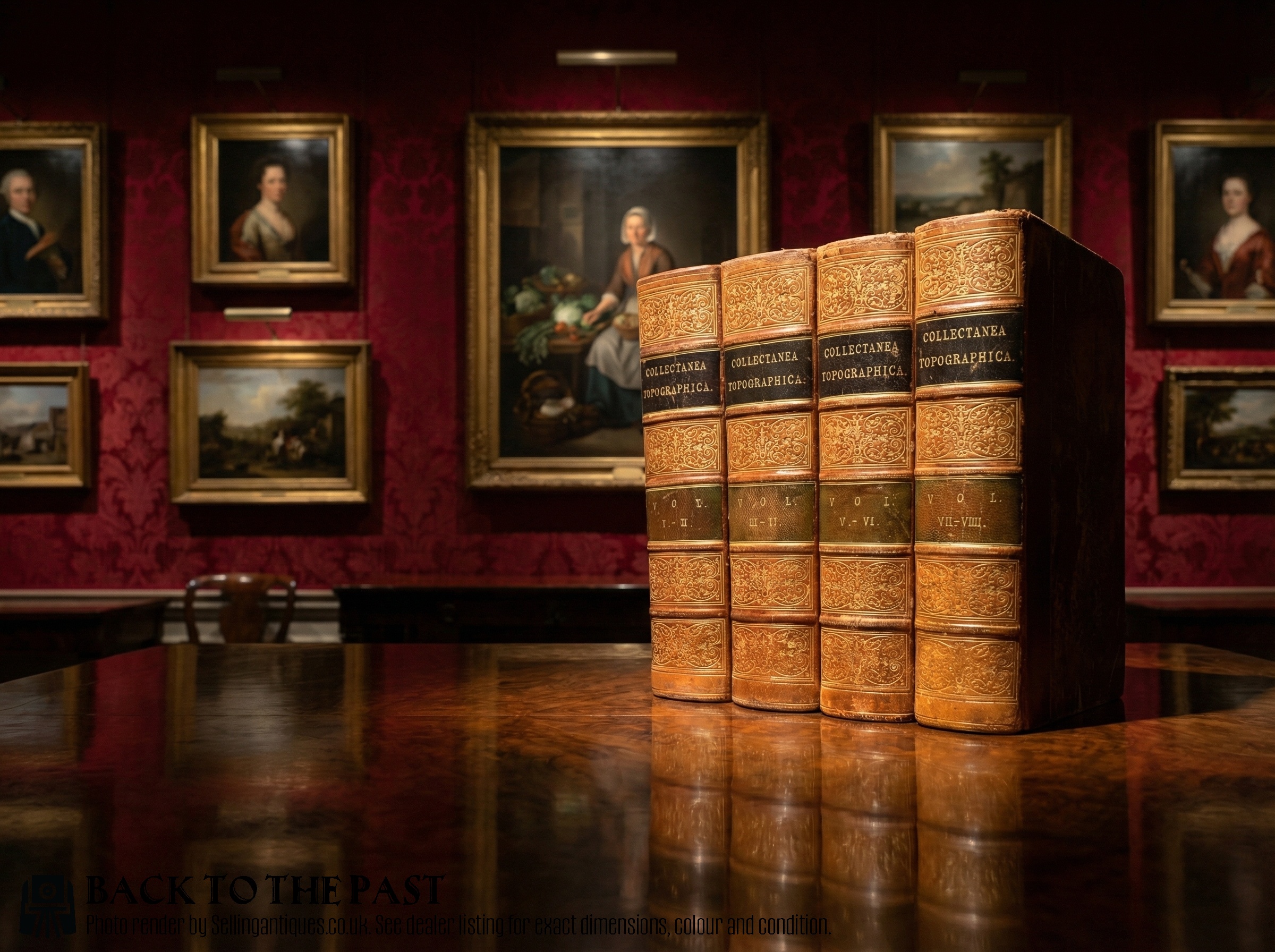
The primary materials recorded in these editions include paper, calfskin leather, and vellum, complemented by wood in structural containers and games boards. Binders utilised calfskin to cover boards, providing a durable exterior that aged to various shades of tan.
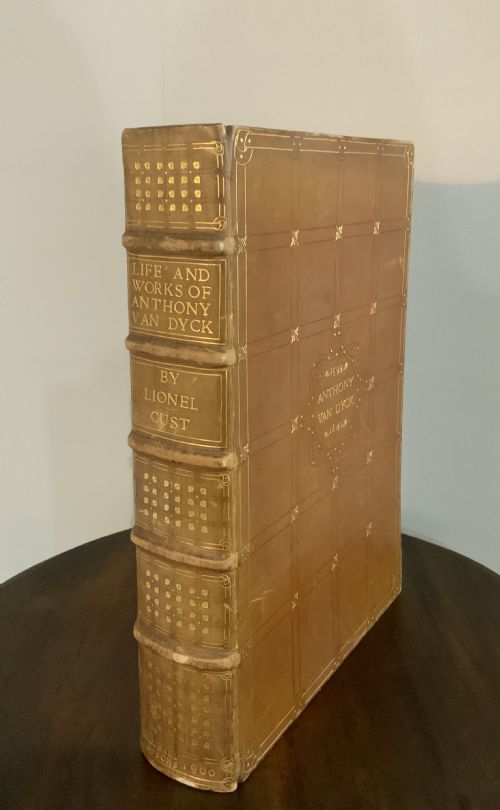
Decoration relied heavily on gold leaf and gilt tooling applied to the leather spines and covers. Craftsmen impressed metallic leaf into the skin using heated tools to create lettering, geometric borders, and decorative motifs.
Listings feature periods spanning from the seventeenth century through the Edwardian era, with a strong concentration of nineteenth-century Victorian publications.
What varies in quality
Quality in these volumes lies in the completeness of sets and the execution of the binding. Uniformly bound collections spanning multiple volumes demand higher regard than mismatched single copies, particularly when the original calfskin remains intact.
The crispness of the gilt tooling and the quality of the leather preparation distinguish superior volumes from standard printings. Finer editions display precise gold leaf application and careful hand-tooling that withstands centuries of handling.
The Tan Leather Books Glossary
- Calfskin
- A soft, fine leather prepared from the skin of a calf, frequently used for binding historical volumes because of its smooth texture and ability to take gilt tooling cleanly.
- Gilt
- A thin application of gold or gold leaf used to decorate the edges of pages, leather covers, and spines. This technique protected the materials while adding decorative brilliance.
- Vellum
- A fine parchment made from calfskin or other animal skin, utilised for durable historical book bindings before mass paper production.
- Tantalus
- A decorative container holding decanters or desk accessories, concealed within a housing designed to resemble a stack of leather-bound volumes.
- Antiquarian
- Pertaining to books, documents, or artefacts of significant age and collectible value, generally predating the twentieth century.
Tan Leather Books: Frequently Asked Questions
How do I care for antique leather books?
Keep volumes away from direct sunlight and extreme humidity to prevent the calfskin from drying out or cracking. Handle them gently by the middle of the spine rather than pulling them from the shelf by the headcap.
Ensure adequate air circulation around your bookshelves to protect the paper and leather from dampness. Periodic dusting with a soft, dry cloth preserves the gilt tooling.
Are these book sets complete?
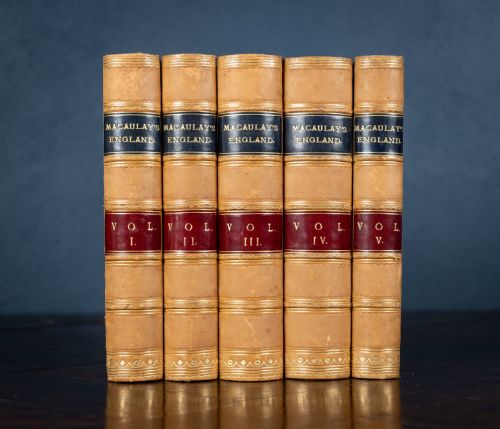
Many listings feature complete multi-volume sets, such as twelve-volume works of Shakespeare or extended runs of novels. Descriptions typically specify whether a collection is complete or represents a partial run.
Check individual listings for exact volume counts and publication years. Nineteenth-century publishers often issued works across several matching volumes bound uniformly in calfskin.
What periods do these books represent?
The selection spans from the seventeenth century through the Edwardian era and early twentieth century. Key periods include the Victorian age, alongside specific dates from the eighteenth and nineteenth centuries.
Earlier examples feature seventeenth-century philosophy and eighteenth-century French texts, while the majority originate from the eighteen hundreds. Each period employs distinct binding styles and typography characteristic of its printing era.