


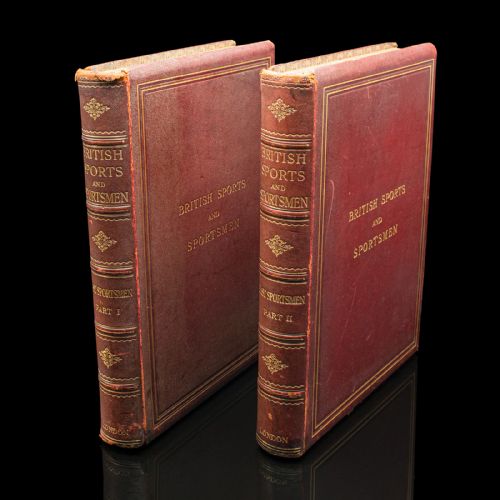


Edwardian Leather Books
Edwardian leather books bring tactile comfort and historic depth to a room, offering genuine calfskin bindings alongside silver-embossed prayer sets and decorative library volumes.
Edwardian Leather Books
When you search for edwardian leather books, you encounter volumes spanning the early twentieth century alongside Victorian precursors and later 1930s miniature sets. The selection ranges from single biographical volumes and sporting references to long uniform runs and devotional duos.
Beyond standard reading matter, the category encompasses related library accessories such as silver-mounted desk volumes, document boxes styled as books, and novelty biscuit tins. Most pieces date from the Edwardian period itself or the surrounding decades of the early twentieth century.
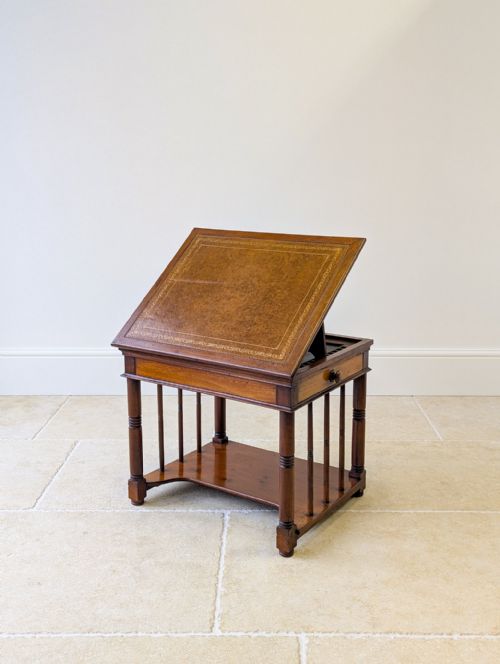
The bindings take various forms, from simple polished calfskin to elaborate gold-tooled decorative covers. Buyers select these volumes for display in traditional libraries, on chairside reading tables, or within specialised miniature bookcases.
Materials and construction
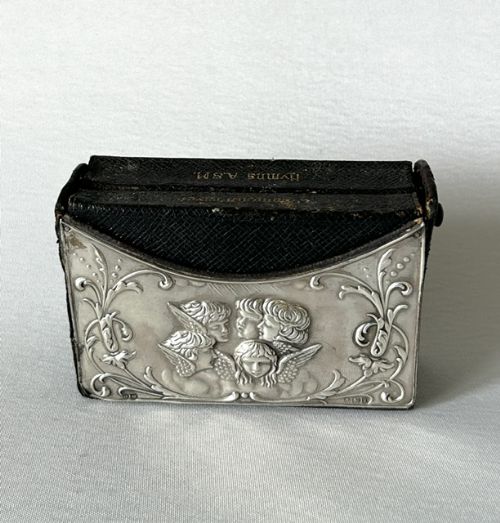
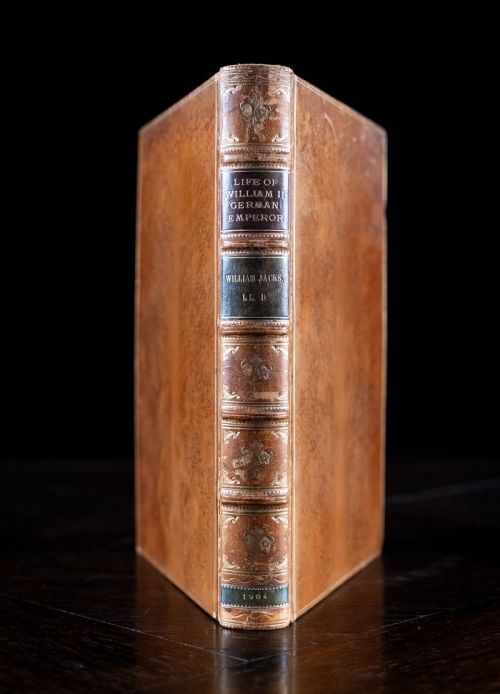
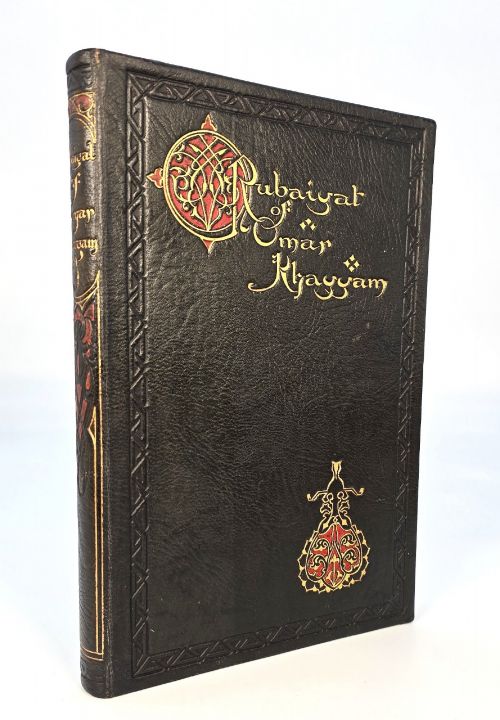
Binders utilised genuine leather over robust paper blocks, frequently applying gold leaf tooling to the spines and covers for decorative lettering and ornate borders. Selected volumes incorporate sterling silver mountings, particularly on devotional books and pocket-sized diaries.
Internal structures rely on traditional paper signatures stitched securely together before being fitted into wooden boards or thick card casing. Supplementary items incorporate brass fixtures, mahogany, and occasional timber supports within associated reading tables and boxes.
Materials across this selection include leather, paper, gold leaf, cloth, sterling silver, mahogany, brass, and wood.
Assessing quality in bindings
Quality rests primarily on the integrity of the leather binding and the precision of the gold leaf tooling. Uniformity across multi-volume sets elevates a collection, whereas mismatched replacements disrupt the visual harmony of a library shelf.
The crispness of the typography and the depth of the spine embossing distinguish standard commercial editions from superior presentation volumes. Intact silver clasps and sound internal paper blocks further separate finer examples from heavily worn stock.
The Edwardian Leather Books Glossary
- Calfskin
- A fine, smooth leather commonly utilised for high-quality book bindings during the period. It accepts gold leaf tooling exceptionally well.
- Gold leaf
- Extremely thin gold beaten into sheets and applied to leather covers and spines through heated stamping. This creates the characteristic metallic lettering and decorative borders.
- Devotional object
- Items intended for religious observance, such as prayer and hymn book duos often housed in fitted sterling silver cases. They represent a distinct subcategory of pocket-sized literature.
- Uniform binding
- A set of books produced or rebound to match in material, colour, and spine decoration. These create a cohesive aesthetic when displayed together on a shelf.
Edwardian Leather Books: Frequently Asked Questions
How do I care for leather books?
Keep bindings away from direct sunlight and damp environments to prevent the leather from drying out or developing mould. Dust them gently with a dry cloth and avoid modern chemical cleaners.
Maintain a stable room temperature to protect the organic materials of both the paper and the leather over time.
Are these books suitable for reading?
Many volumes remain structurally sound for gentle reading, particularly sturdy biographical sets and sporting references. Care should be taken with delicate miniature editions or heavily aged spines.
For everyday reading, collectors often reserve fragile or silver-mounted devotional pieces strictly for display.
What defines the Edwardian style?
Edwardian design generally favours lighter, more refined aesthetics compared to heavy Victorian counterparts, though traditional library furnishings remained popular. Book bindings from this era often feature clean typography alongside classic gilt ornamentation.
This period bridged traditional craftsmanship with early twentieth-century publishing trends, resulting in varied yet elegant formats.
How are multi-volume sets collected?
Collectors typically look for complete runs by a single author or publisher, such as biographical series or translated works. Uniform bindings are especially sought after for interior display.
Checking that all volumes share matching publication years and binding styles helps confirm the integrity of a set.