

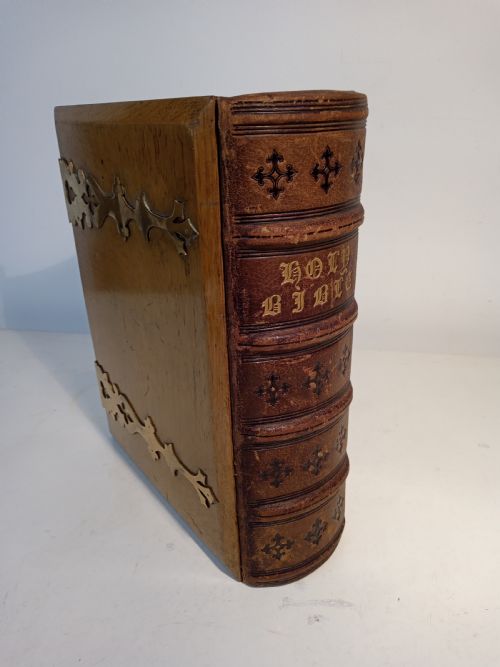

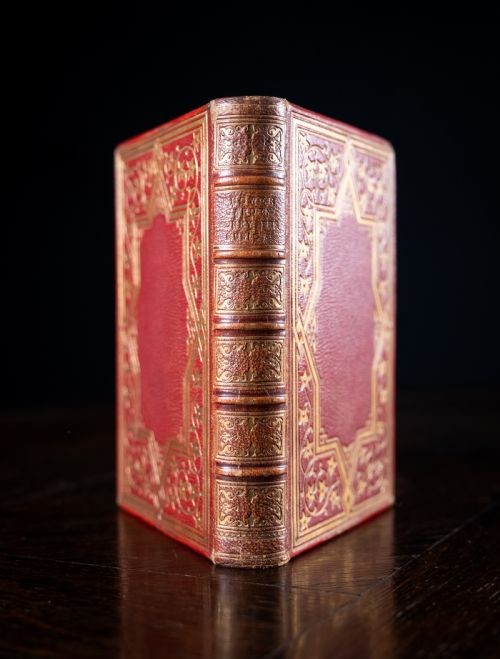
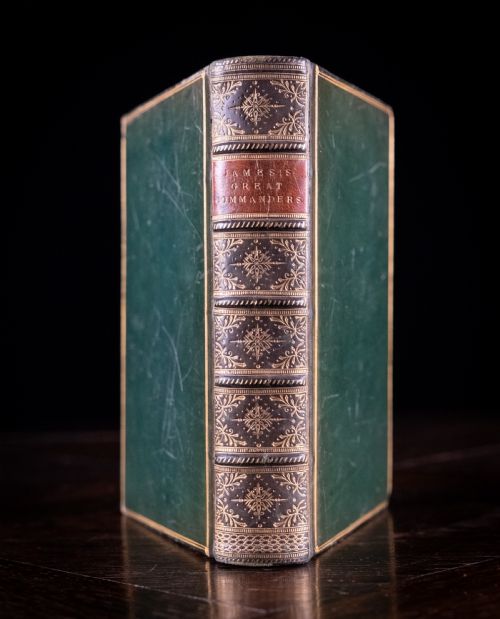


Victorian Leather Volumes
Victorian leather volumes bring physical substance and rich nineteenth-century typography to a shelf, offering enduring reading matter bound in durable animal skin.
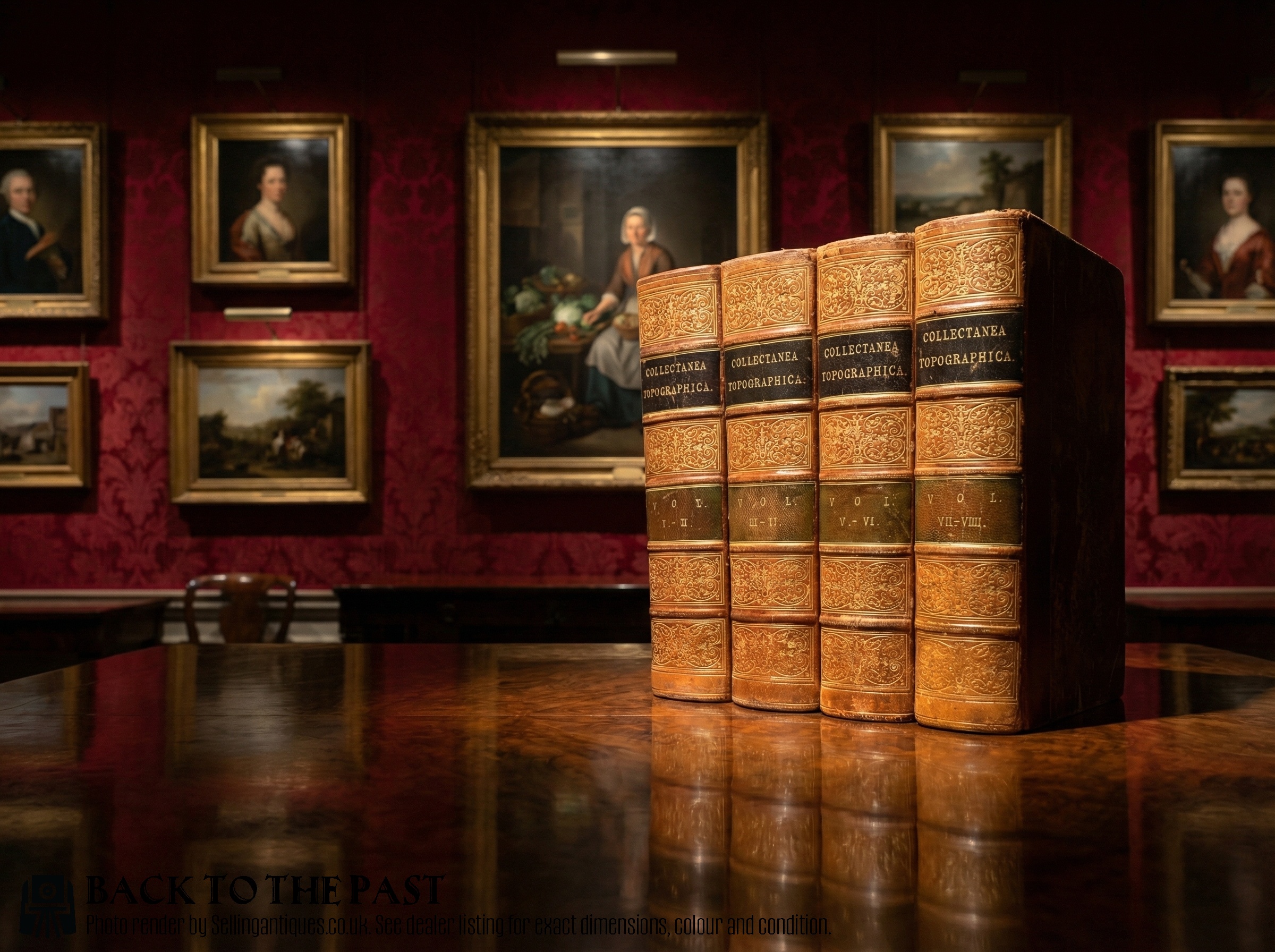
Victorian Leather Volumes
When searching for victorian leather volumes, collectors look for bound books produced during the nineteenth century, ranging from single devotional texts to multi-volume literary sets. The selection here spans historical surveys, poetry, sporting novels, and theological works published between eighteen-forty and nineteen-hundred.
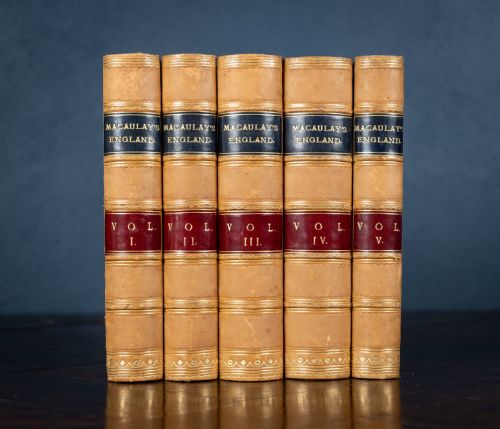
Buyers most frequently encounter complete book sets alongside individual rebound or original leather-bound editions. These library survivors represent the dominant publishing formats of the period, executed in calfskin or full leather bindings with decorative spines.
The objects bridge domestic reading habits with substantial craft, utilising paper leaves sewn into sturdy structures and encased in protective animal skin. They reflect the era's taste for uniform library series and finely bound presentation copies.
Materials and construction
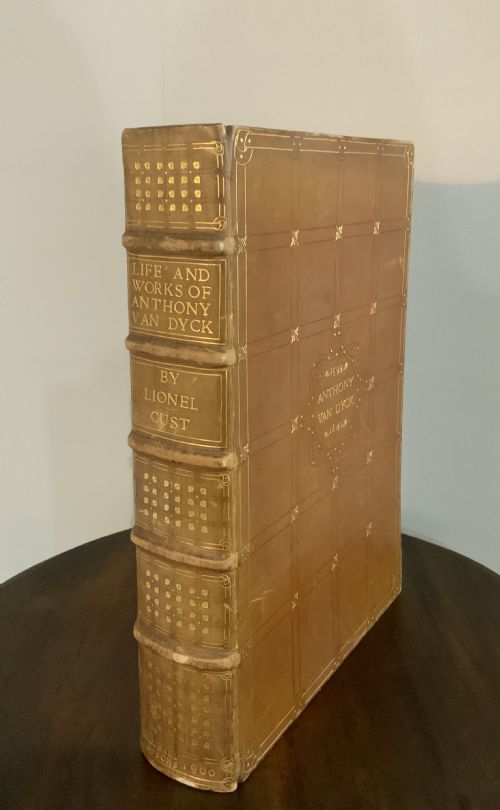
Binders utilised calfskin and standard leather over wooden or thick pasteboard cores, applying gold leaf tooling directly to the spine ribs and board edges. Marbled paper often lined the interior endpapers, while heavy rag paper formed the internal text block.
The textual pages were printed using nineteenth-century typography before being hand-sewn into signatures and glued into leather covers. Gilding was pressed into the leather using heated metal stamps to create titles and decorative motifs.
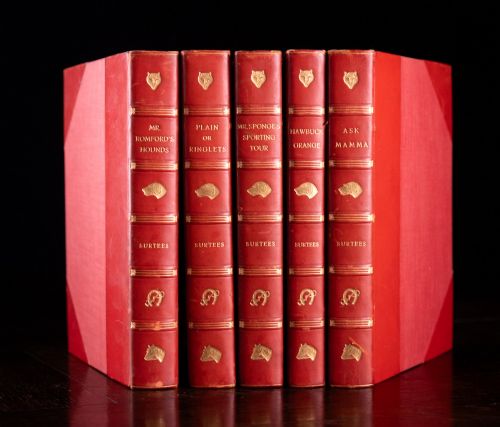
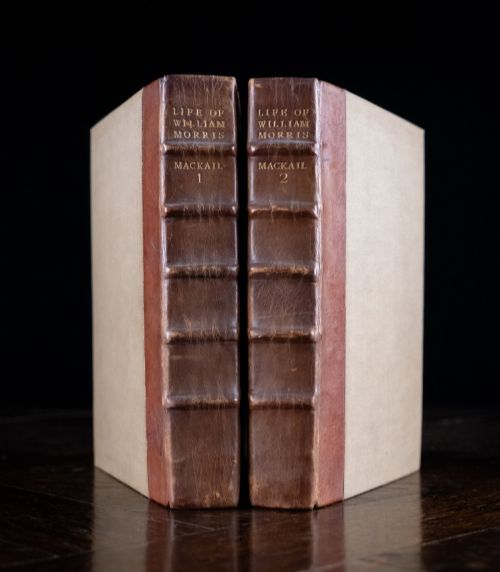
Books on mind philosophy and historic foot journeys share shelf space with Victorian poetry and canine novels.
Evaluating craftsmanship and condition
Quality rests in the crispness of the gold leaf tooling upon the spine and the structural integrity of the leather hinges holding the boards to the text block. Superior examples retain supple hides without heavy cracking, alongside well-preserved marbled endpapers.
Uniformity across multi-volume sets distinguishes finer library editions from pieced-together collections. The depth of the blind stamping and the quality of the original paper stock further separate standard reading copies from fine presentation bindings.
Henry Young & Son
The Victorian Leather Volumes Glossary
- Calfskin
- A fine, smooth leather prepared from the hide of a calf, frequently utilised for nineteenth-century book bindings due to its receptive surface for tooling.
- Gilt tooled
- A decoration applied to leather using gold leaf pressed with heated metal stamps. This technique creates shimmering titles and ornamental borders upon spines and covers.
- Marbled paper
- Paper decorated with a colourful patterned surface resembling marble, traditionally pasted inside the front and back covers of nineteenth-century books.
- Signatures
- The individual folded sections of printed paper sewn together to form the internal block of a book.
- First edition
- The earliest printed appearance of a work from its initial typesetting.
Victorian Leather Volumes: Frequently Asked Questions
How should I clean Victorian leather volumes?
Dust the exterior gently with a dry, soft cloth to remove surface particles without disturbing the aged surface. Avoid modern chemical cleaners or excessive moisture, which can damage the delicate leather and gold leaf tooling.
Keep the volumes stored away from direct sunlight and damp environments to prevent the animal skin from drying out or growing mould. Maintaining stable room humidity preserves the flexibility of the historical binding.
Are multi-volume sets usually complete?
Many sets offered from the nineteenth century remain together as originally published, housing complete runs of novels, memoirs, or historical surveys. Checking the title pages and volume numbers confirms whether all expected parts are present.
Some collections represent assembled groupings rather than original single-purchase sets, which may show slight variations in spine height or leather shade.
How can I tell the date of a leather-bound book?
Look for a publication date printed on the title page or within the preliminary copyright notices near the front of the volume. Nineteenth-century books often include explicit printing years or dedication dates that help narrow down the decade.
Stylistic clues such as typography, spine rib placement, and binder signatures also assist in dating volumes lacking a clear publication year.
Can these books still be read safely?
Most nineteenth-century volumes remain structurally sound enough for careful reading if handled with respect for their age. Opening the books gently prevents stress on the leather hinges and sewn internal signatures.
Support the covers fully while reading rather than forcing the spine flat against a hard surface. This protects the original binding materials from unnecessary strain.