



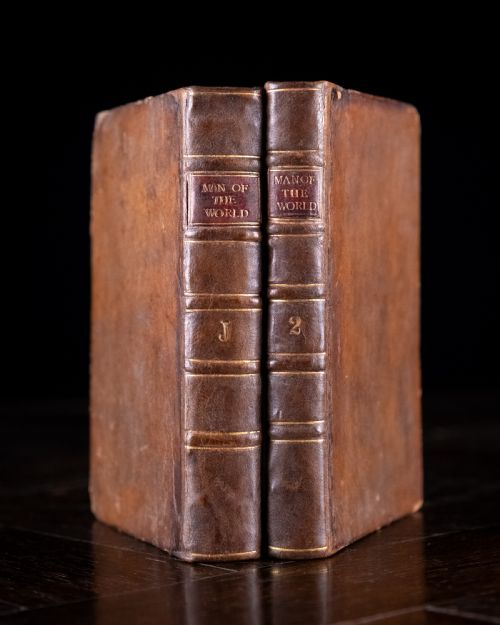


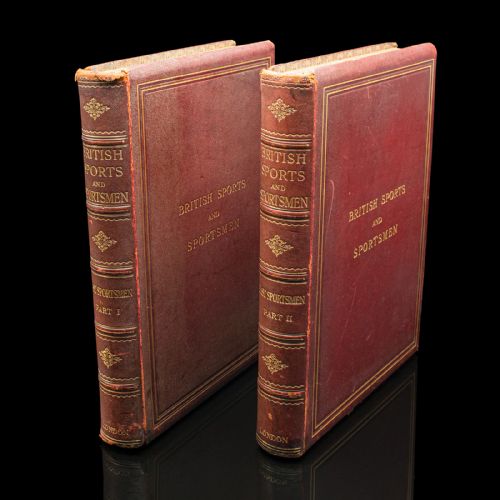

Antique Leather Bindings
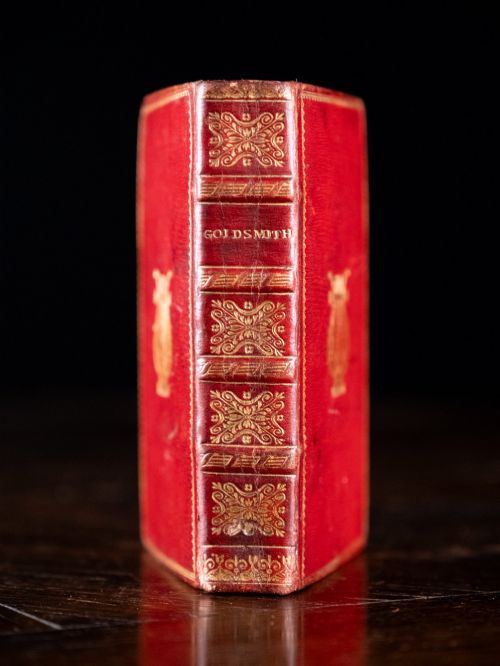
Antique leather bindings bring centuries of literature and history to shelves through rich calfskin, vellum, and intricate gold tooling.
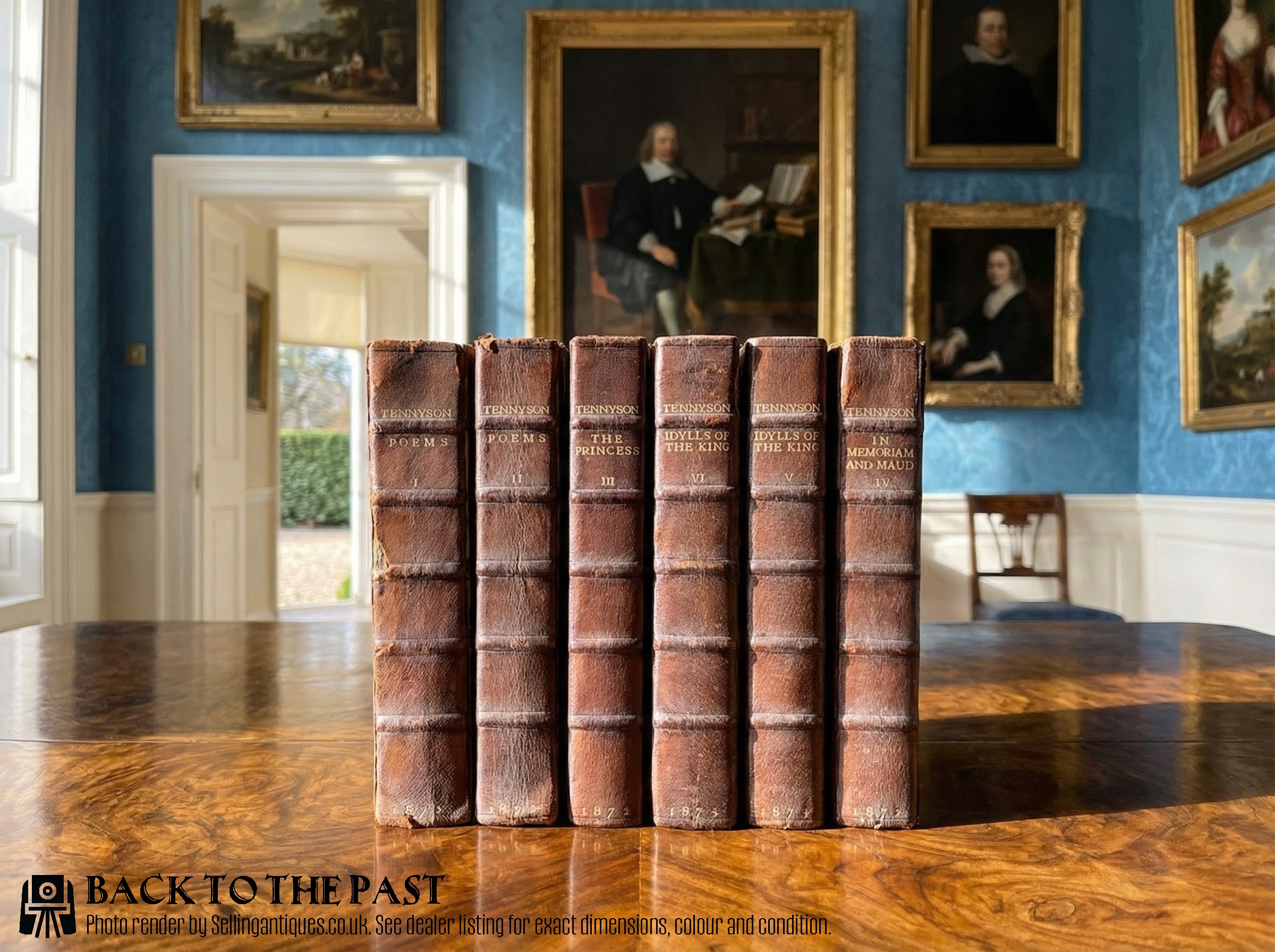
Antique Leather Bindings
When you search for antique leather bindings, you encounter volumes ranging from single miniature books to multi-volume sets spanning the seventeenth through the early twentieth centuries. These volumes include poetry, historical memoirs, plays, and novels produced across the Georgian, Victorian, and Edwardian periods.
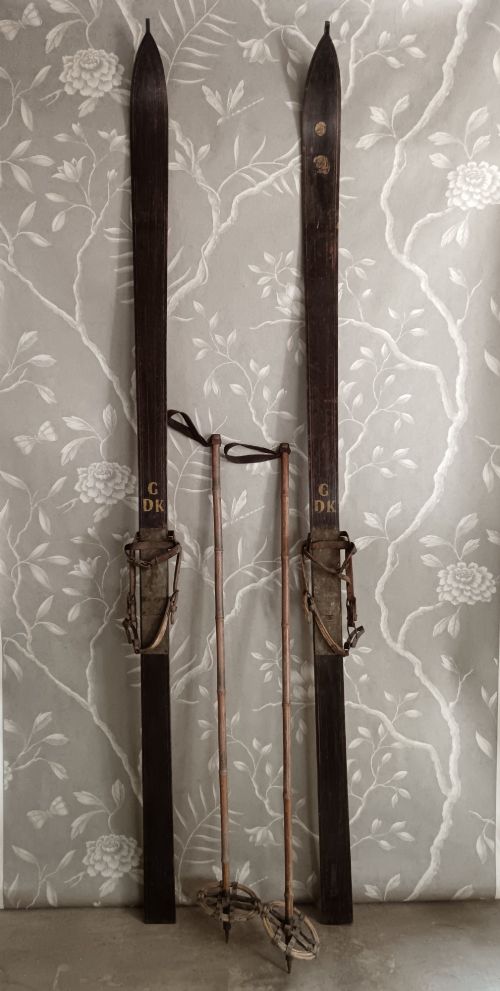
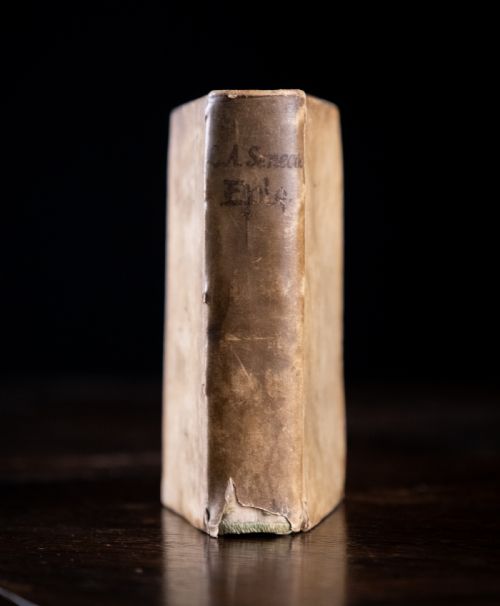
The selection here encompasses complete sets of Shakespeare, nineteenth-century histories, and poetry volumes encased in calfskin and vellum. Alongside traditional literature, the listings also feature distinct categories such as sporting equipment.
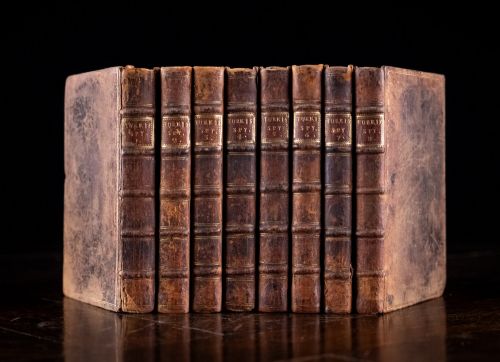
Most pieces date from the nineteenth century, reflecting the heavy publishing output of the Victorian era. Buyers find both individual editions and uniform sets designed to sit neatly together on library shelves.
Materials and Construction
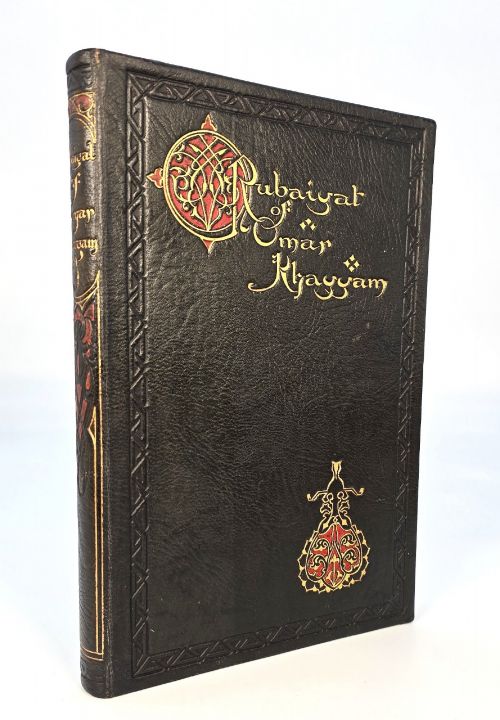
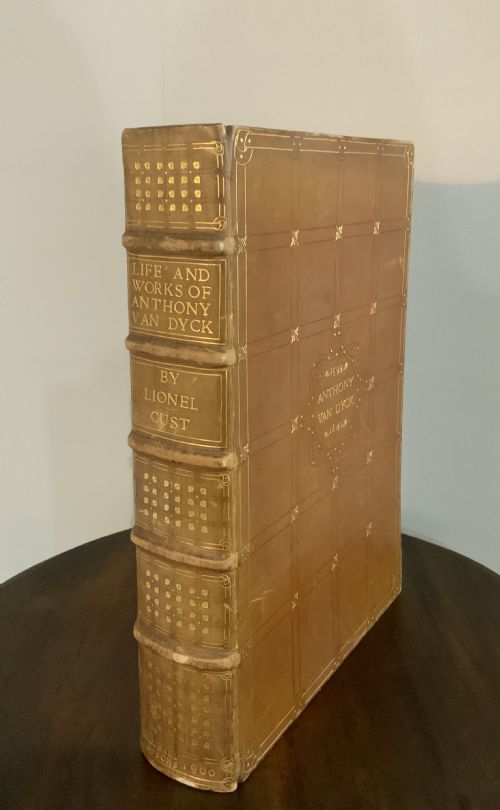
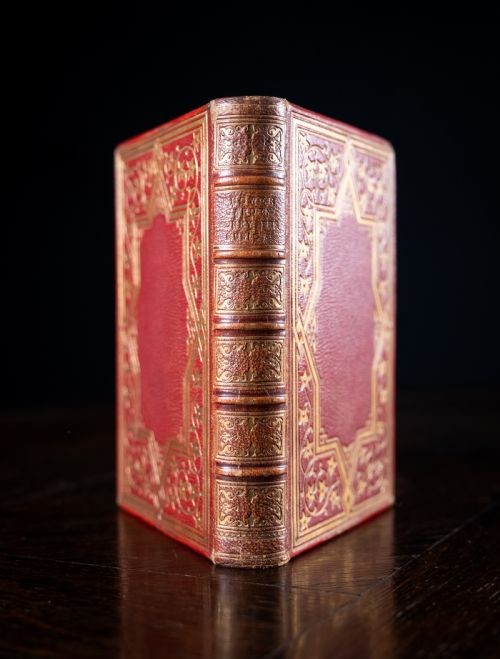
Binders utilised durable materials such as calfskin leather, vellum, and cloth over wooden boards to protect the paper pages within. Spines and covers were frequently decorated using gold leaf tooling, creating detailed patterns and lettering.
Text blocks combined folded paper sections sewn together by hand before being attached to the outer covers. Marbled paper often appeared on endpapers inside the covers, complementing the exterior leather and gilt work.
Amidst the shelves of leather-bound literature, unexpected wooden skis from Christiania remind us that binding applied to winter sports too.
Assessing Quality and Execution
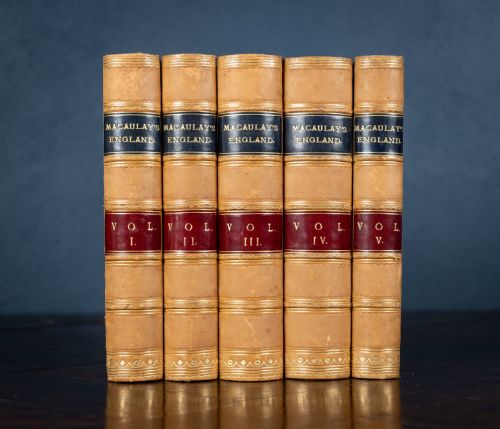
Quality rests in the crispness of the gold tooling on the spine and the uniformity of the leather binding across multi-volume sets. Volumes bound by established workshops demonstrate superior precision in the hand-stitching and the application of gilt.
The choice of covering material also marks a distinction, with full calfskin and robust vellum sitting at a different level of craftsmanship compared to simpler cloth or half-leather bindings. The clarity of contemporary illustrations and the preservation of the original marbled endpapers further elevate an edition.
L.H. Hagen & Co·Henry Young & Son
The Antique Leather Bindings Glossary
- Vellum
- A fine parchment made from calfskin, used as a durable covering material for books. It offers a smooth, pale surface that often bears subtle natural grain markings.
- Calfskin leather
- A soft, supple leather derived from the skin of a calf, prized for bookbinding due to its smooth finish. It takes gold leaf tooling exceptionally well.
- Gold leaf
- Extremely thin sheets of beaten gold applied to the leather covers and spines during the tooling process. This material provides the bright metallic lettering and ornamentation seen on period volumes.
- Marbled paper
- Paper decorated with a colourful swirled pattern resembling marble, traditionally used for the endpapers inside the front and back covers.
- Miniature book
- A tiny volume produced in a very small format, often measuring only a few inches in height. These compact editions required high skill from the binder.
Antique Leather Bindings: Frequently Asked Questions
How do I care for antique leather bindings?
Keep volumes away from direct sunlight and excessive humidity to prevent the leather from drying out or cracking.
Ensure adequate airflow around your bookshelves and handle the spines gently when removing books.
What is the difference between calfskin and vellum?
Calfskin is a tanned animal leather that is flexible and takes deep impressions from tooling dies.
Vellum is an untanned or lightly tanned parchment made from skin, offering a stiff, smooth, and pale cream-coloured surface.
Are book sets usually bound uniformly?
Publishers and binders often produced multi-volume works, such as novels or historical accounts, in matching bindings so they appeared cohesive on a library shelf.
Individual books were also rebound by independent binders to match existing private collections.
How can I tell the period of a binding?
Stylistic details in the gold tooling, the texture of the paper, and the typography on the title page within the text block provide clear indications of the era.
Specific dates are frequently stamped on the spine or printed on the title page by the publisher.