
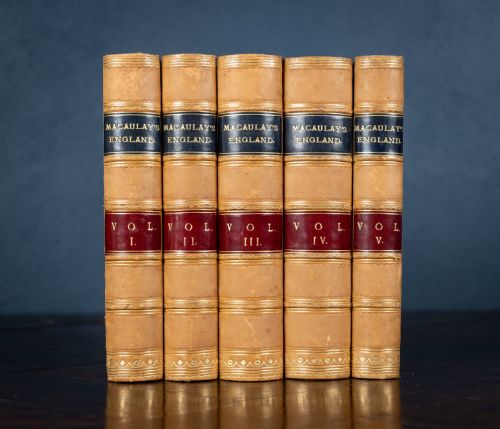
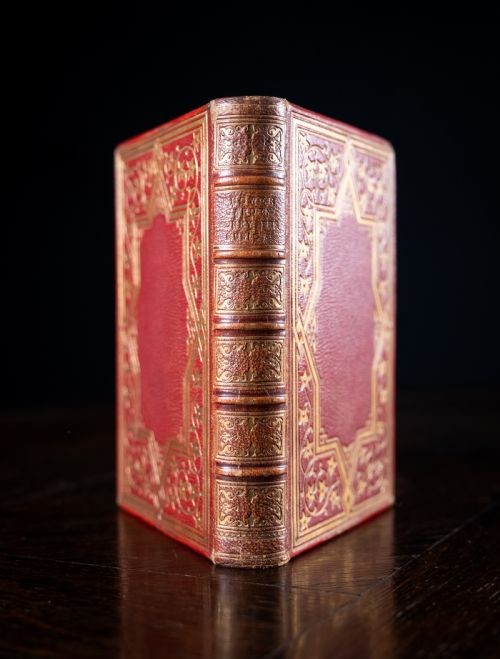
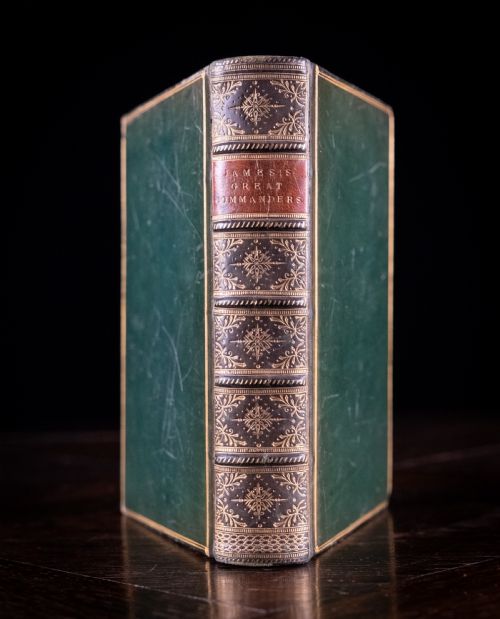


Vintage Leather Hardbacks
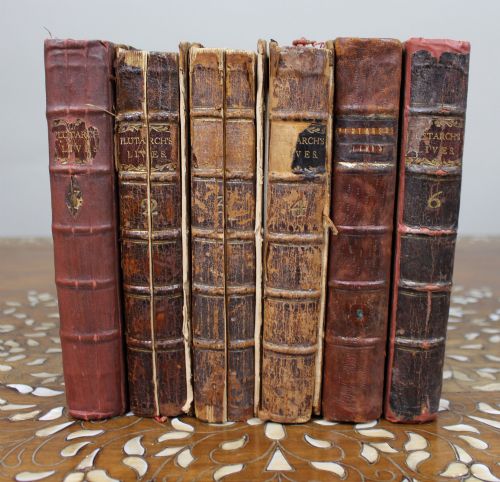
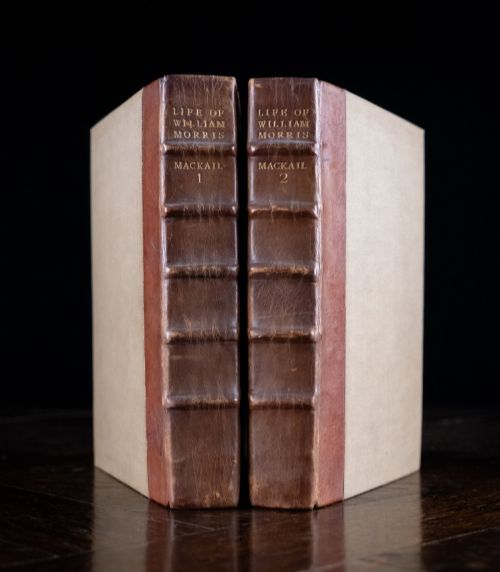
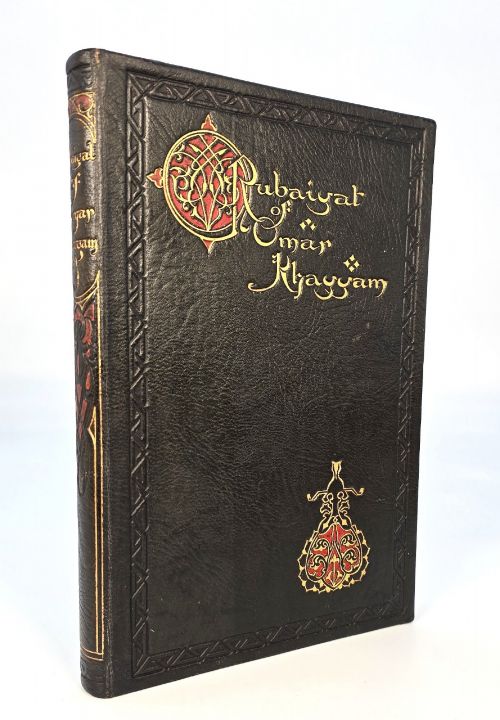
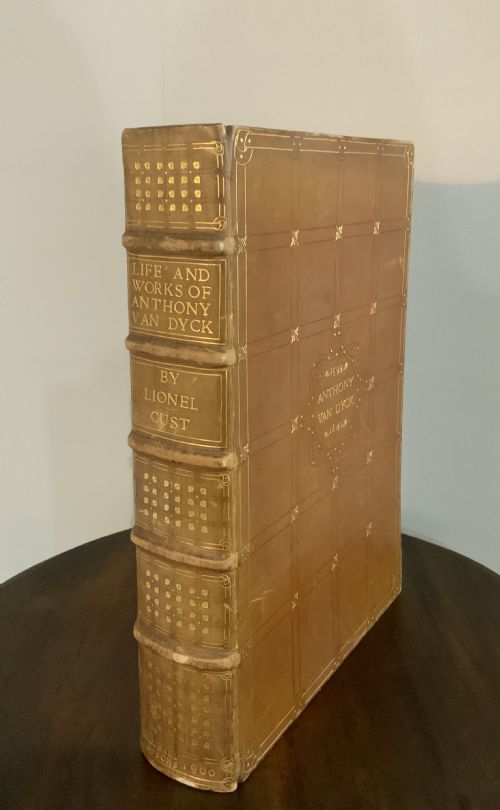
These vintage leather hardbacks bring historic texts, literature, and cartography into the room through tactile calfskin, vellum, and gold leaf bindings.
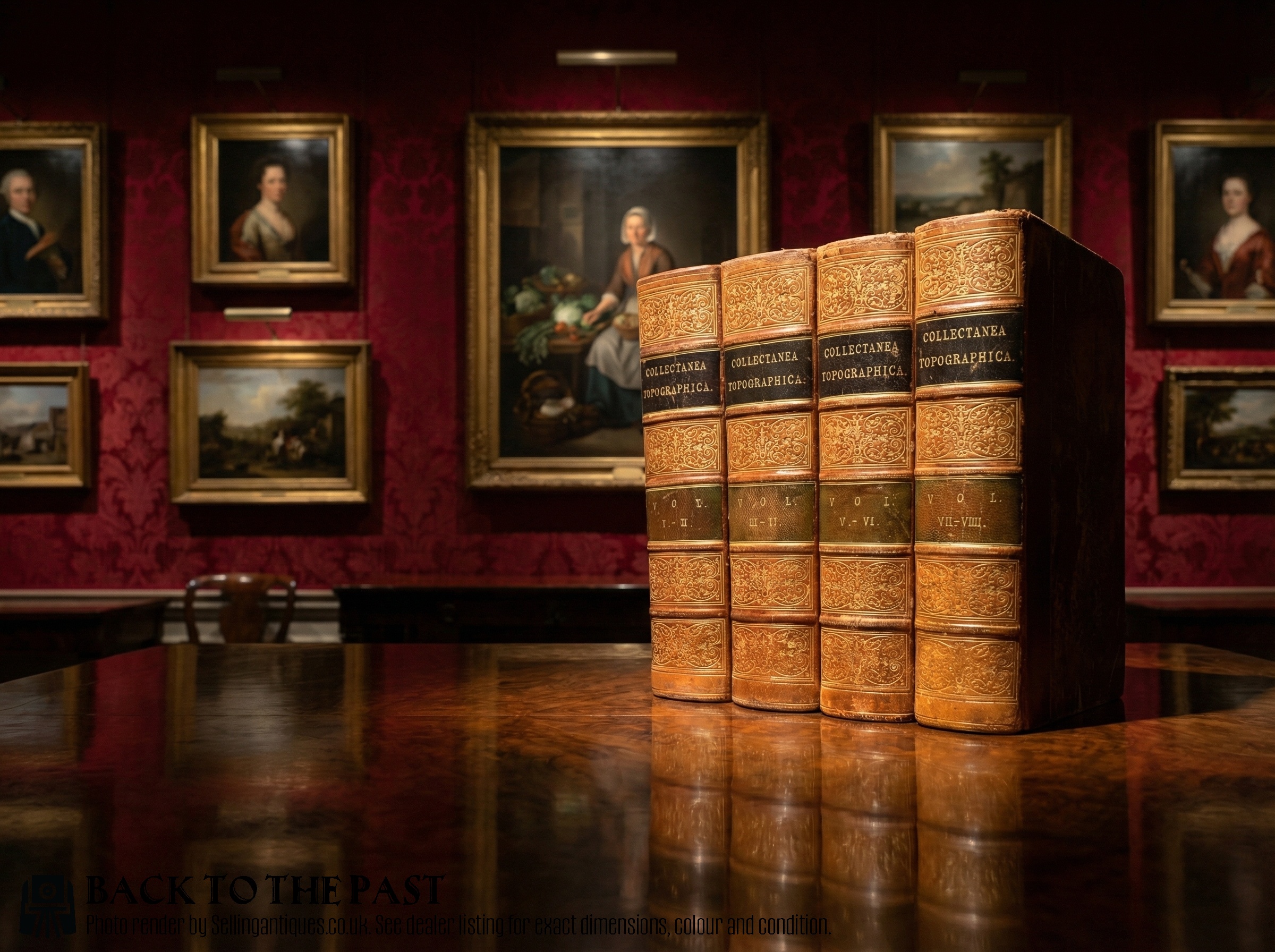
Vintage Leather Hardbacks
Vintage leather hardbacks span single volumes of biography and poetry alongside multi-volume sets of history, novels, and reference atlases. The selection on this page stretches from Georgian publications through Victorian multi-volume sets up to early twentieth-century cartography and literature.
Buyers encounter single volumes like nineteenth-century biographies and poetry alongside extensive nineteenth-century novel sets and cartographic reference works. Vellum bindings and full leather editions appear alongside cloth-reinforced or rebound volumes.
Origins include London publishing houses and European cartographic works, encompassing works by historical authors, biographers, and poets. These volumes served as working reference books or decorative library sets for domestic interiors.
Materials and construction
Binders utilised genuine leather, calfskin, and vellum over sturdy paper boards to protect printed text blocks. Spines and covers received hand-tooled decoration using gold leaf and gilt accents.
Ink on paper forms the interior pages, accompanied by engraved illustrations and hand-coloured or printed maps in cartographic volumes. Bindings range from original calfskin covers to later professional rebinding.
Listings feature nineteenth-century literature and cartography bound in calfskin, vellum, and gold leaf.
Qualities of the binding
Quality rests in the integrity of the leather binding, the crispness of the gilt tooling upon the spine, and the completeness of multi-volume sets. Uniformity across a long run of books commands greater appreciation than mismatched rebound copies.
The precision of nineteenth-century typography, the inclusion of original engravings by artists such as Gustave Doré, and the durability of the paper stock separate standard reference texts from finer editions.
J. & R. Tonson·Gustave Dore·Thomas Babington Macaulay·Sir Walter Scott
The Vintage Leather Hardbacks Glossary
- Vellum
- A fine parchment prepared from calfskin, frequently used for durable historical book bindings. It offers a smooth, pale surface that ages to a warm tone.
- Gilt tooled
- The technique of impressing gold leaf into leather using heated metal tools. This creates decorative lettering and geometric borders on spines and boards.
- First edition
- The earliest commercially produced printing of a book from the original setting of type. Collectors value these for their direct link to the author's initial publication.
- Cartography
- The study and practice of making maps, represented here through nineteenth and twentieth-century atlases. These volumes contain detailed engraved plates and regional charts.
Vintage Leather Hardbacks: Frequently Asked Questions
How do I care for leather books?
Keep vintage leather hardbacks away from direct sunlight and damp environments to prevent the calfskin and vellum from drying out or warping.
Handle the spines with care when removing volumes from crowded shelves to preserve the original headcaps and gilt tooling.
Are these books complete sets?
Many listings comprise multi-volume sets, such as historical runs or collected novels, kept together in matching bindings. Check individual descriptions for volume counts.
Single volumes often represent standalone biographies, poetry collections, or individual reference books.
What is the difference between leather and vellum?
Traditional leather bindings utilise tanned animal hides like calfskin, which offer flexibility and deep textures that accept gilt tooling readily. Vellum uses prepared calfskin or parchment that remains smoother and firmer.
Vellum surfaces provide a pale, durable exterior that resists handling wear differently than soft leather.
How do I date an antique book?
Title pages frequently state the original publication or printing year, particularly on eighteenth and nineteenth-century London editions. Dedication pages and publisher imprints also offer firm chronological clues.
Typography styles, paper watermarks, and binding fashions help narrow down the period when publication dates are absent.