





Tambour Door Bedside Table
A tambour door bedside table brings sliding slatted timber and compact storage to the bedroom.
Tambour Door Bedside Table
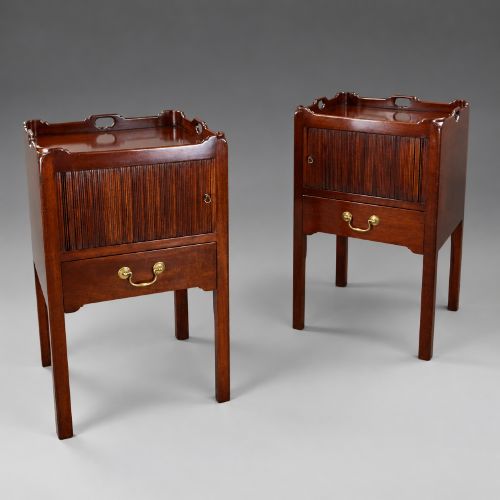
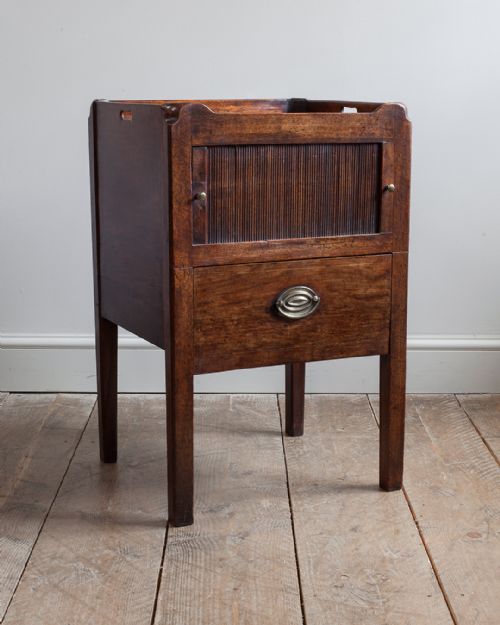
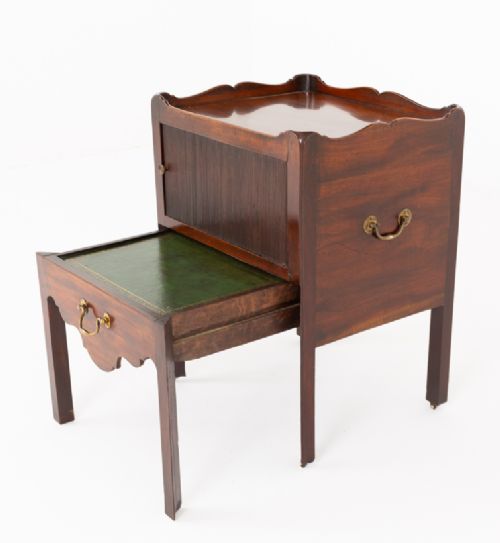
A tambour door bedside table is a small bedside cabinet or nightstand featuring a slatted sliding closure, appearing primarily in Georgian and Regency periods alongside later 19th and early 20th century iterations. These items function as compact bedside storage units designed to conceal chamber pots or personal belongings behind curved or straight sliding wooden tracks.
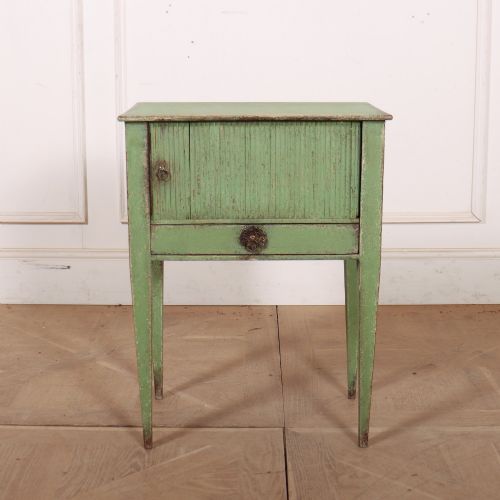
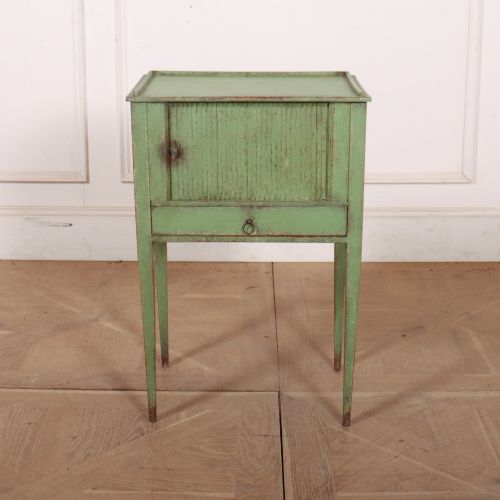
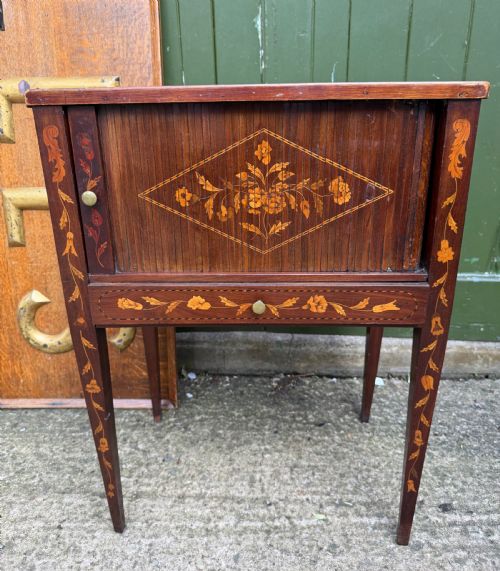
The most common examples encountered on this page belong to the Georgian and George III eras, constructed in rich timber and often featuring tray tops. Buyers frequently meet variants styled as nightstands, pot cupboards, and commodes alongside Dutch provincial painted versions and marquetry inlaid pieces.
How they were made
The construction relies on joining thin vertical strips of solid timber, such as mahogany or walnut, to a flexible canvas or linen backing to form the sliding tambour track. Cabinetmakers fitted these slatted panels into grooved wooden frames that allowed the door to curve smoothly around the corners of the bedside table.
Primary woods like mahogany and walnut are paired with secondary softwoods for internal framing, whilst decorative elements utilise boxwood stringing and brass handles. Paint and floral marquetry further adorn specific Dutch provincial pieces within the selection.
Tambour Door Bedside Table Retail Price Guide 2026
Typical asking prices for tambour door bedside table among the pieces listed under this phrase on Sellingantiques today, from the lower quarter to the upper quarter. They describe what is for sale here now, not the wider market.
Many a Georgian nightstand spent its youth guarding a chamber pot before retiring to hold modern paperbacks and reading glasses.
What varies in quality
The standard of a tambour door bedside table rests upon the precision of the slatted track mechanism and how smoothly the sliding door travels within its groove. Superior examples maintain exact alignment along the curved channel without binding or sagging.
Material selection and cabinetmaking flourishes dictate the upper tier, distinguishing plain utility pieces from sophisticated George III commodes with tray tops and intricate marquetry. The crispness of carved details and the choice of dense, well-figured mahogany separate fine workshop output from later provincial cabinet work.
The Tambour Door Bedside Table Glossary
- Tambour
- A flexible door formed of narrow vertical strips of wood glued to a fabric backing. This clever mechanism slides smoothly around a curved track to conceal the interior cabinet space.
- Nightstand
- A small bedside table or cabinet built to hold bedroom essentials during the night. These pieces often incorporate cupboards, drawers, or open surfaces.
- Marquetry
- Decorative veneer work arranged in pictorial or geometric patterns using various coloured woods. Dutch makers frequently applied floral marquetry designs to bedside furniture.
- Commode
- A low cabinet or chest of drawers, which in earlier periods often designated a bedside table enclosing a chamber pot. Georgian versions frequently pair this form with a tambour front.
- Tray top
- A raised rim moulding around the upper surface of a bedside table designed to prevent items from rolling off. This practical feature appears frequently on Georgian mahogany cabinets.
Tambour Door Bedside Table: Frequently Asked Questions
What is a tambour door?
A tambour door consists of narrow wooden slats attached to a flexible backing fabric, allowing the panel to slide neatly around a curved track.
This clever design conceals the cabinet interior while saving the space that a swinging door would otherwise require in a tight bedside setting.
How were these tables used?
These pieces served beside the bed to hold personal items, lighting, and chamber pots hidden behind the sliding cabinet doors.
Their compact footprints made them practical additions to period bedrooms where floor space was at a premium.
How do I date a Georgian nightstand?
Dating relies on observing timber choices, construction methods, and characteristic hardware styles associated with the 18th and early 19th centuries.
Georgian pieces typically feature solid mahogany construction, hand-cut dovetails, and subtle details like boxwood stringing or tray tops.
Will a tambour door stick?
A tambour door travels within a wooden groove and can sometimes bind if humidity causes the timber to expand or shift over time.
Gentle cleaning and careful waxing of the track usually restore smooth operation to the sliding mechanism.