

Tall Plant Stand
A tall plant stand elevates green life and light, bringing height and structure to a room through centuries of timber and marble design.
Tall Plant Stand
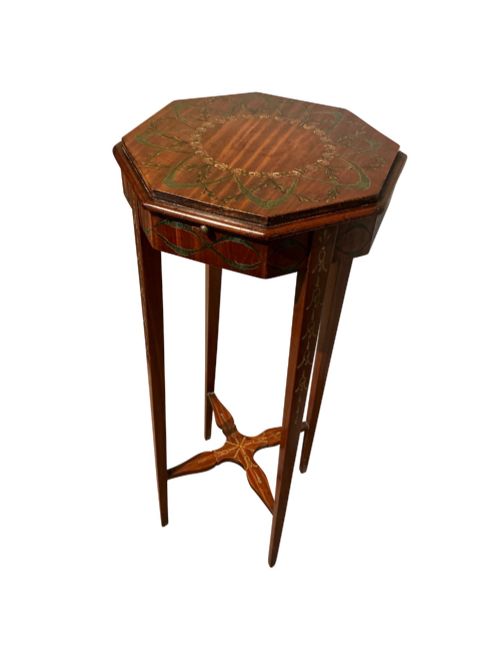
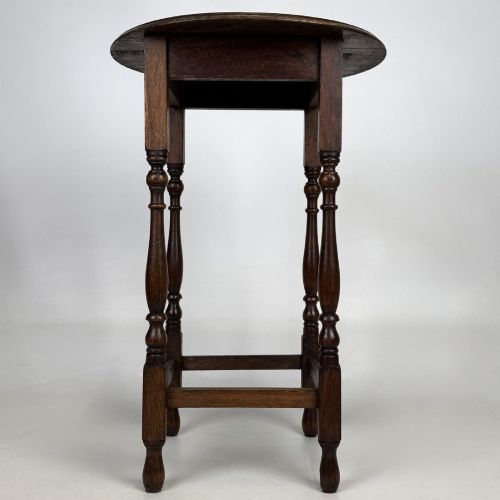
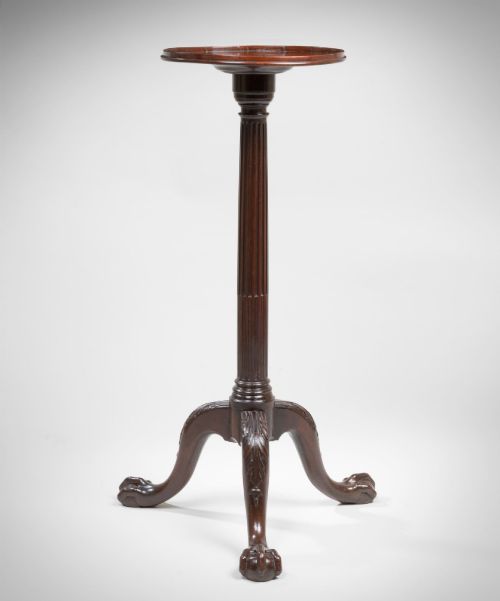
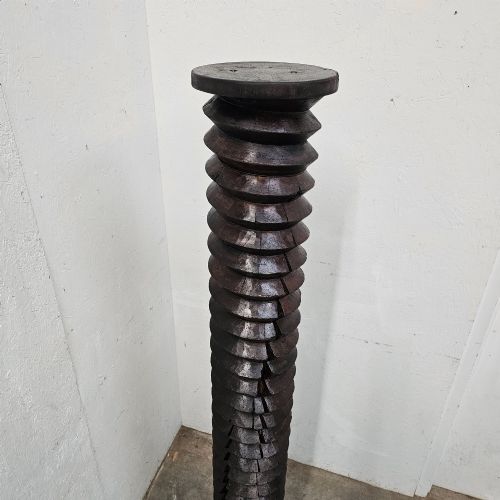
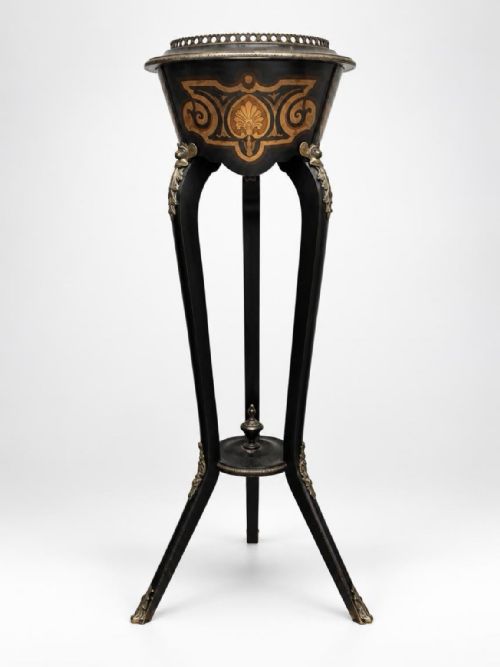
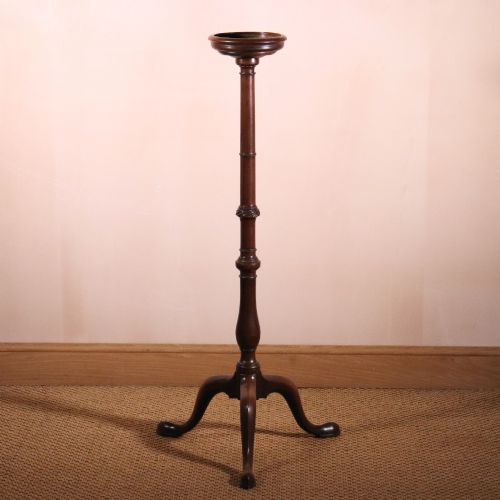
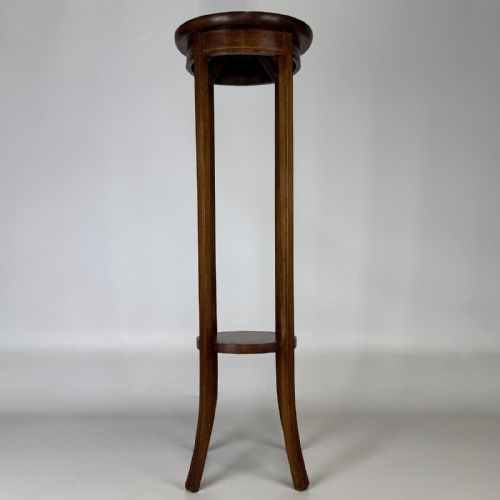
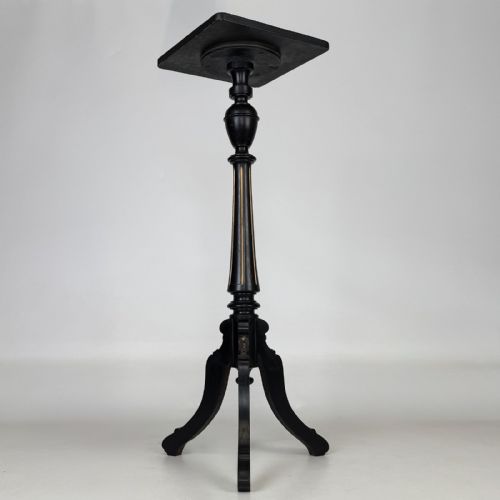
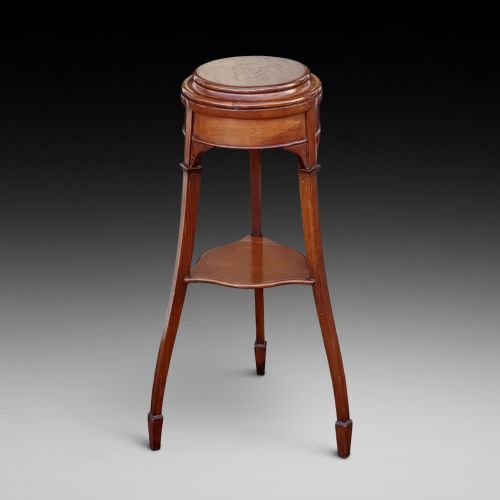
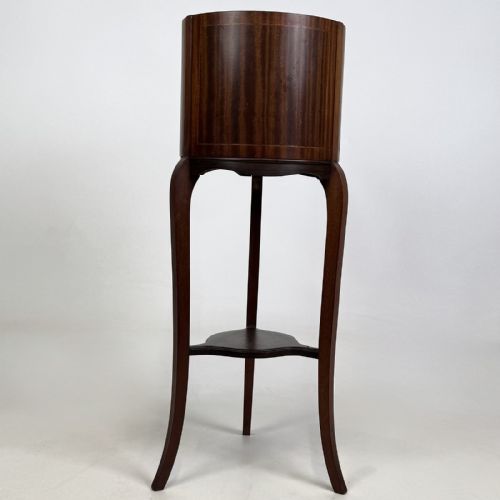
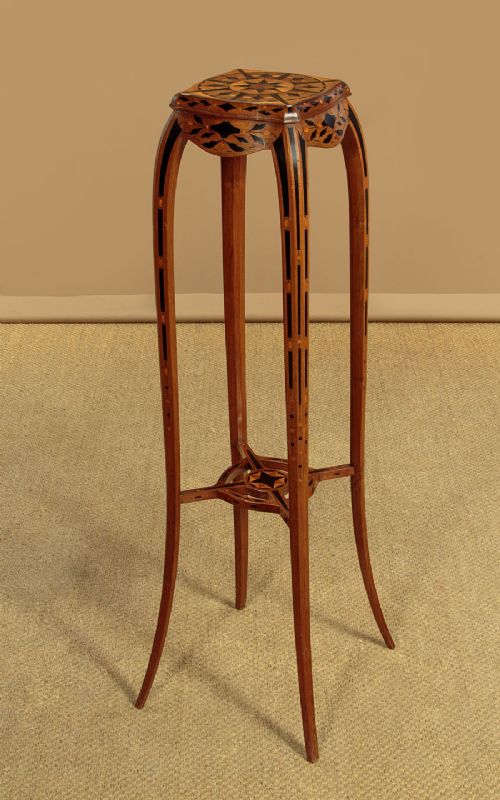
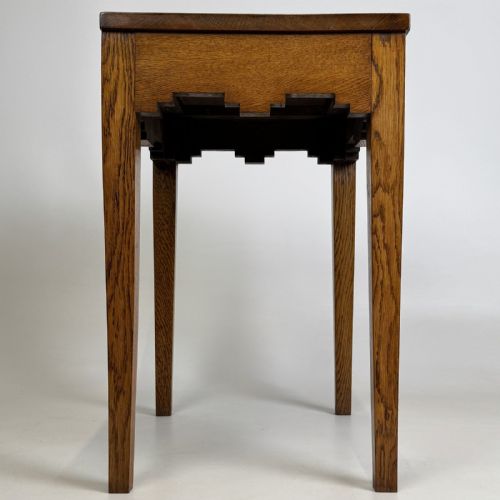
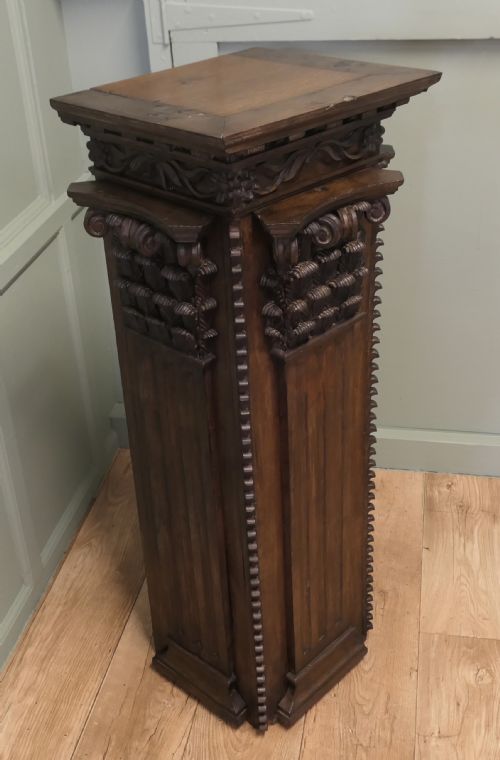
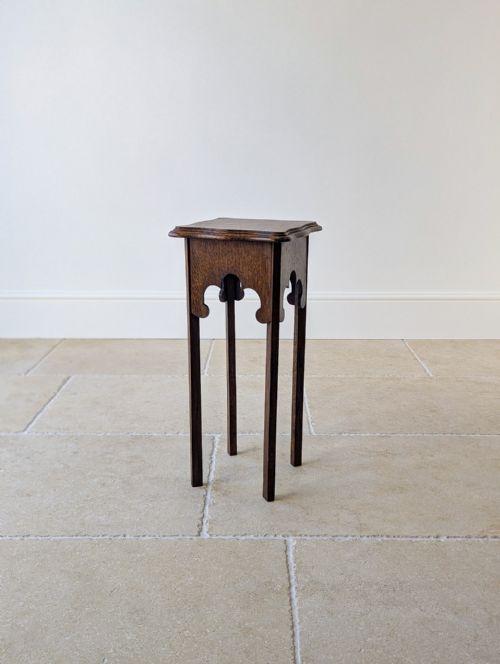
A tall plant stand serves to elevate pots, urns and lamps above floor level, drawing the eye upwards and introducing vertical lines into a domestic interior. These pieces frequently appear in forms such as torcheres, pedestals, display columns and occasional tables.
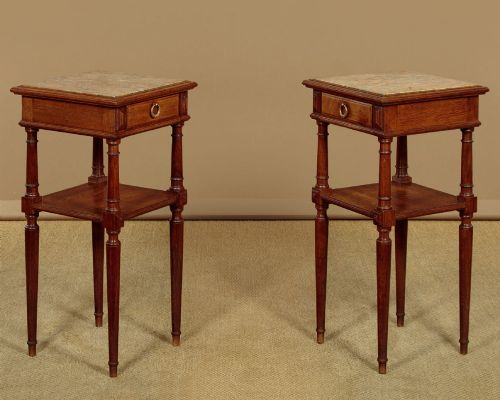
The pieces on this page span several centuries, with Edwardian mahogany and oak versions appearing alongside Victorian interpretations, Georgian styles and Chinese hardwood designs. Many pieces double as lamp tables or jardiniere stands, reflecting flexible domestic use.
How they were made
Cabinetmakers constructed these stands using dense timbers including mahogany, oak, walnut, satinwood and ebonised wood, often turning columns on a lathe or joining sturdy legs with lower tiers for stability. Surfaces occasionally feature marquetry inlay, hand-painted details or carved ornamentation.
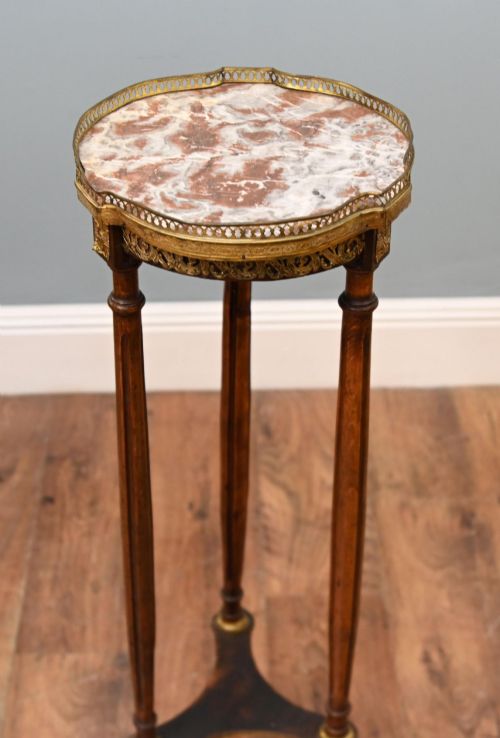
Many examples incorporate contrasting inset tops of marble, tile or mother-of-pearl to withstand moisture from watering plants or to provide a cool, durable surface for vases and lamps.
Tall Plant Stand Retail Price Guide 2026
Typical asking prices for tall plant stand among the pieces listed under this phrase on Sellingantiques today, from the lower quarter to the upper quarter. They describe what is for sale here now, not the wider market.
Some tall stands feature tiny mother-of-pearl fish inlaid into dark hardwood, swimming eternally past potted ferns.
What varies in quality
Quality rests in the choice of timber and the crispness of the turning, carving or inlay work executed by the maker. A well-balanced base and tight joinery separate sturdy architectural examples from lighter, purely decorative pieces.
Materials such as original honey-coloured or rouge marble inserts, paired sets of torcheres, and signed or attributed pieces elevate certain examples above standard utilitarian designs.
Hubert Simpson of Kendal·Druce and Co London·Shoolbred
The Tall Plant Stand Glossary
- Torchere
- A tall, slender stand originally designed to hold a torch or candle, later adapted to support plants, lamps or vases. These pieces often feature a circular top supported by a single central column.
- Jardiniere
- A large ornamental pot or container for plants, which sits upon or integrates directly with a tall stand. The term also describes the stands themselves when built specifically for holding planted troughs.
- Marquetry
- Decorative woodwork in which small pieces of coloured veneers are fitted into a ground to form geometric or floral patterns. This technique frequently decorates the tops and friezes of Edwardian and Georgian tables.
- Ebonised
- Wood treated with a chemical or stain to imitate costly ebony, producing a dense black finish. This technique appeared on decorative Victorian and Edwardian stands to create dramatic contrast.
- Pedestal
- A structural support or column designed to elevate a bust, urn or plant stand. They occur in solid woods and stone-topped variations across the nineteenth and twentieth centuries.
Tall Plant Stand: Frequently Asked Questions
What is a torchere stand?
A torchere is a tall, slender standing support historically used for lighting and now commonly employed for displaying plants or decorative objects.
They feature elevated platforms atop single columns or multi-legged bases, bringing height to dark corners.
How were plant stands used?
These pieces placed potted greenery near windows to catch maximum light while protecting wooden floors and carpets from water damage.
They also served as display surfaces for decorative urns, lamps and art pieces in reception rooms.
How do I style a tall plant stand?
Pair a tall stand with trailing foliage or an upright fern to emphasise the vertical proportions of the furniture.
Position them in hallway corners, beside fireplaces, or in pairs framing a doorway to balance architectural space.
How do I date an antique plant stand?
Dating relies on identifying timber choices, construction methods, and stylistic cues such as Edwardian inlay or Victorian turning.
Comparing the secondary woods, fixings, and overall design characteristics against documented historical periods helps confirm the era.