



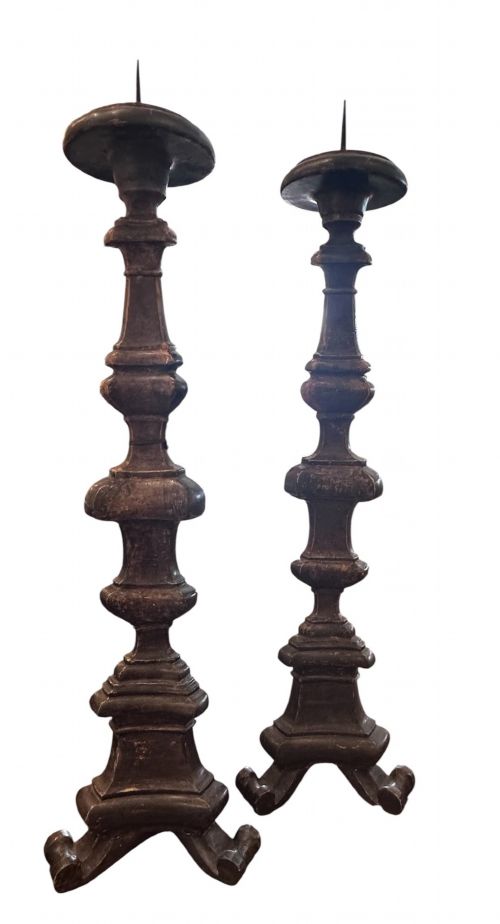
Tall Church Pricket Stands
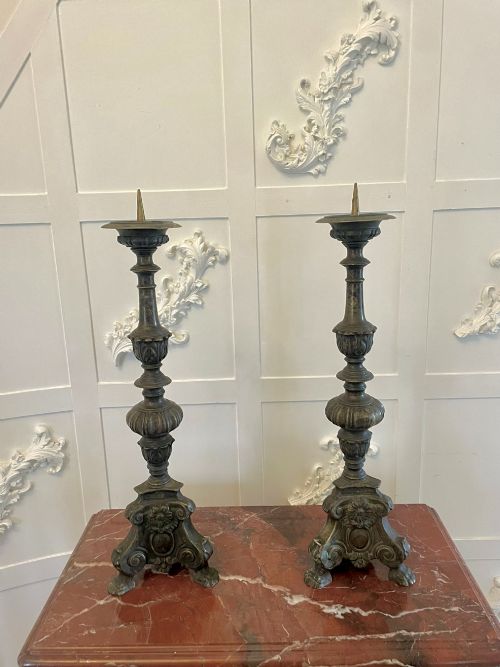
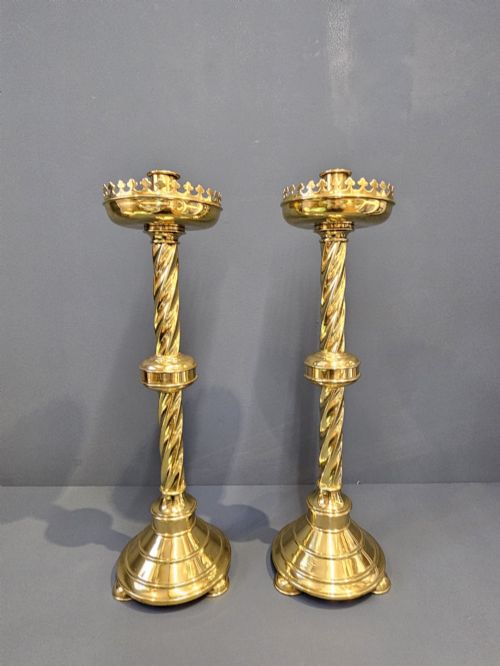
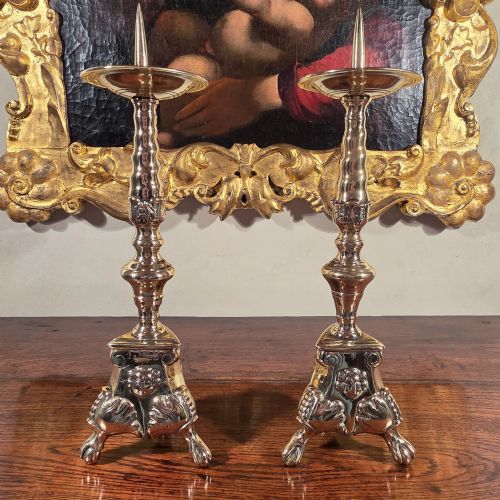
These tall church pricket stands are substantial ecclesiastical altar fixtures designed to elevate large candles with a central spike.
Tall Church Pricket Stands
When searching for tall church pricket stands, a buyer encounters substantial ecclesiastical furnishings designed to hold large candles via a vertical spike rather than a socket. These items appear primarily in floor-standing and large altar formats spanning the eighteenth and nineteenth centuries, frequently reflecting Gothic Revival, Baroque, and Italian tastes.
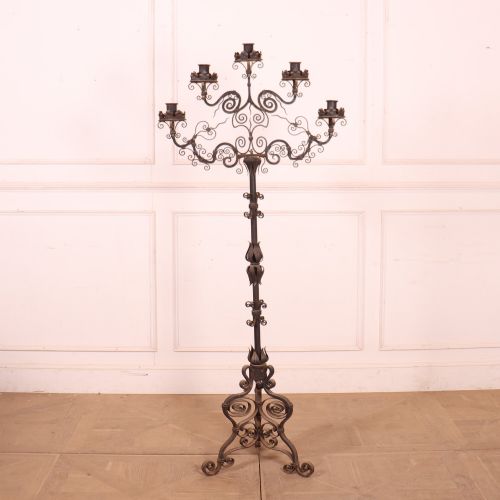
The selection ranges from heavy cast brass and bronze to carved, silvered, and giltwood timber structures. Brass and wrought iron pairs dominate the metal examples, while carved pine and gesso pieces represent continental altar-type candle-holders and torcheres.
How they were made
Metal versions utilise heavy casting techniques for brass and bronze components, combined with forged wrought iron for structural shafts and tripod bases. These methods provided the necessary weight at the base to support tall candles securely.
Wooden examples rely on hand-carving in pine and other timbers, finished with gesso, silver leaf, or giltwood surfaces. Artisans shaped these materials into elaborate baroque and Gothic forms intended for ecclesiastical interiors.
Listings feature materials spanning brass, wrought iron, gesso, giltwood, bronze, and carved wood across the eighteenth and nineteenth centuries.
What varies in quality
The calibre of these stands depends upon the crispness of the original metal casting and the depth of hand-carving in the wooden iterations. Examples featuring finely chiselled brass detailing or deeply sculpted giltwood display a higher degree of artisan skill.
Proportion and structural integrity separate standard utility pieces from grander altar furnishings. Stands maintaining their original patination, silver leaf, or polychrome surfaces without excessive intervention sit at the upper end of the scale.
The Tall Church Pricket Stands Glossary
- Pricket
- A metal spike on a candlestick designed to pierce the base of a candle and hold it upright. This form is traditional in church and altar lighting.
- Torchere
- A tall ornamental stand or candlestick designed to carry a single light. These pieces often feature carved wooden shafts and decorative bases.
- Giltwood
- Wood that has been coated with a thin layer of gold leaf or gold paint. This technique is common on baroque and nineteenth-century altar pieces.
- Gesso
- A plaster-like mixture applied to wood surfaces as a base for painting or gilding. It allows for smooth surfaces and moulded relief decoration.
Tall Church Pricket Stands: Frequently Asked Questions
How were pricket stands used in churches?
These stands held large wax candles on altars or sanctuary floors during religious services. The sharp metal spike secured heavy candles in place without requiring a socket.
Their height ensured that candlelight reached across large ecclesiastical spaces, providing both illumination and ritual focus.
How do I clean antique brass pricket stands?
Dust the metal gently with a dry or slightly damp soft cloth to preserve the existing surface texture. Avoid harsh chemical polishes that strip away age and historical patination.
Leaving the natural oxidation intact maintains the visual character developed over centuries of handling.
Can these stands support modern candles?
Most antique pricket stands require candles with a pre-drilled base hole to fit securely onto the metal spike. Standard household taper candles will not balance properly on a pricket.
Specialist church candles or custom-drilled wax cylinders are necessary for safe use.
How do I distinguish eighteenth and nineteenth century stands?
Eighteenth-century examples often exhibit deeper hand-carving in giltwood or heavier wrought iron forged construction. Their proportions typically reflect baroque or strict altar-style layouts.
Nineteenth-century pieces frequently incorporate Gothic Revival motifs and machine-assisted brass casting alongside traditional hand-finishing methods.