



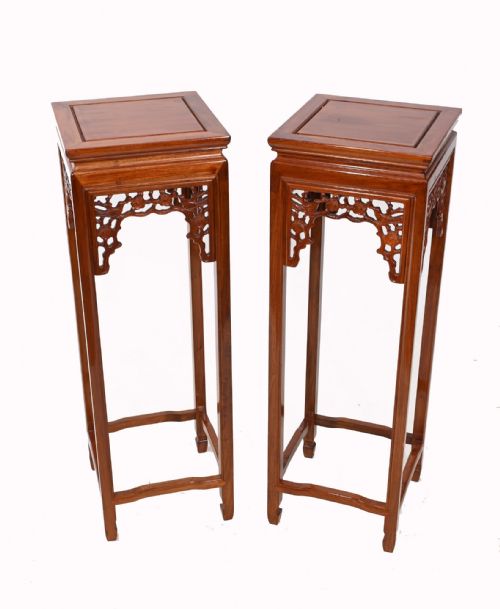
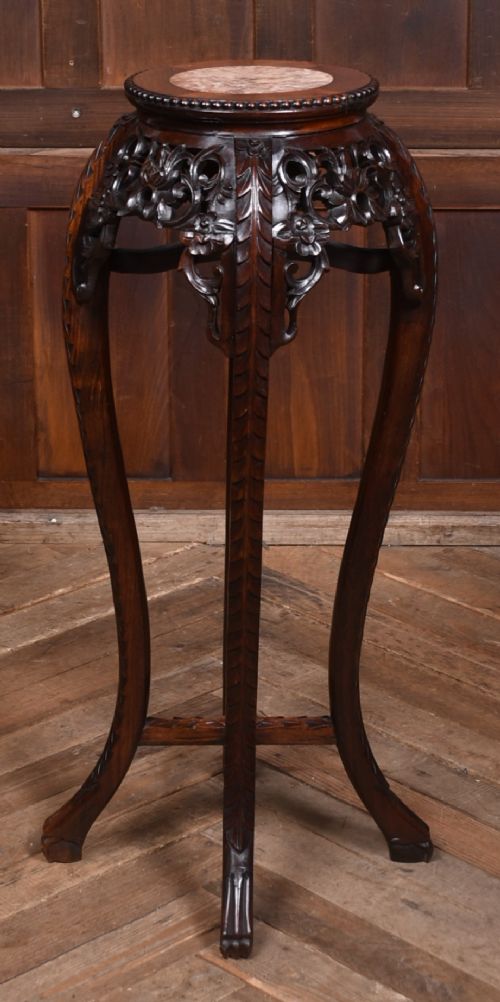


Tall Chinese Plant Table
A tall chinese plant table brings structured height and carved timber to a room, holding vases or jardiniere stands with quiet authority.
Tall Chinese Plant Table
When you search for a tall chinese plant table, you encounter elevated furniture designed primarily to display decorative objects. These tall surfaces lift planters, vases, and lamps away from the floor.
The selections here span periods from the 18th century to the Edwardian era, taking the form of plant stands, side tables, pedestal stands, and jardiniere stands. Hardwood construction dominates the offerings.
You meet pieces described through styles such as Chinese Qing Dynasty, Chinese Chippendale, and Chinese Export. Many examples integrate inset marble surfaces into their timber frames.
How they were made
Cabinetmakers utilised dense timbers such as hardwood, mahogany, huali wood, and elm to construct these tall supports. These woods provided the necessary structural integrity to hold heavy stone inserts and ceramic vessels.
Carving defines the ornamentation, with artisans shaping the frames in traditional Chinese and Qing Dynasty styles. Inset marble panels are fitted neatly into the wooden tops to create durable display surfaces.
Tall Chinese Plant Table Retail Price Guide 2026
Typical asking prices for tall chinese plant table among the pieces listed under this phrase on Sellingantiques today, from the lower quarter to the upper quarter. They describe what is for sale here now, not the wider market.
Materials recorded across these stands include hardwood, marble, mahogany, huali wood, and elm.
What varies in quality
The refinement of the woodcarving separates standard examples from exceptional ones. Crisp lines in the floral or geometric motifs indicate skilled execution by the maker.
The quality of the inset marble and its grain pattern influence the visual weight of the stand. Heavier, well-figured timber frames show greater stability and substance.
The Tall Chinese Plant Table Glossary
- Jardiniere stand
- A tall piece of furniture specifically built to support a large decorative flower pot or planter. These stands elevate the greenery for better visibility.
- Huali wood
- A fragrant, highly figured Asian hardwood favoured for fine furniture. It provides distinctive grain patterns on traditional tables.
- Pedestal stand
- A narrow, elevated support used for displaying single objects such as vases or sculptures. They feature a compact footprint to maximise vertical space.
- Chinese Chippendale
- A design style combining English rococo furniture forms with Chinese decorative motifs. It appears in British interpretations of oriental furniture.
Tall Chinese Plant Table: Frequently Asked Questions
What is a tall chinese plant table used for?
These pieces function primarily as elevated surfaces for displaying heavy ceramic planters, vases, and lamps. They lift decorative objects to eye level.
Historically, they served to showcase prized ornamental plants within traditional interiors. Today, they fit into corners or beside seating to add vertical interest.
How do I identify a Qing Dynasty stand?
Look for characteristic carved hardwood frames often paired with inset marble tops. The joinery and decorative motifs follow traditional Chinese craftsmanship of the period.
Many examples from this era feature rich huali wood or dense dark hardwoods. Details typically reflect classical oriental aesthetic standards.
Are these tables sturdy enough for heavy vases?
Hardwood construction and dense timber frames provide the necessary structural strength for substantial vessels. The addition of heavy marble inserts adds stability.
Their narrow vertical design requires careful placement on level flooring. They support significant weight when placed correctly in a room.
How do I live with a plant stand?
Position the stand where it avoids high traffic areas to protect the elevated display. Use protective pads under heavy ceramic pots placed on the marble surfaces.
Pair the timber tones with existing wooden furniture in your room. They work effectively in empty corners or framing doorways.