
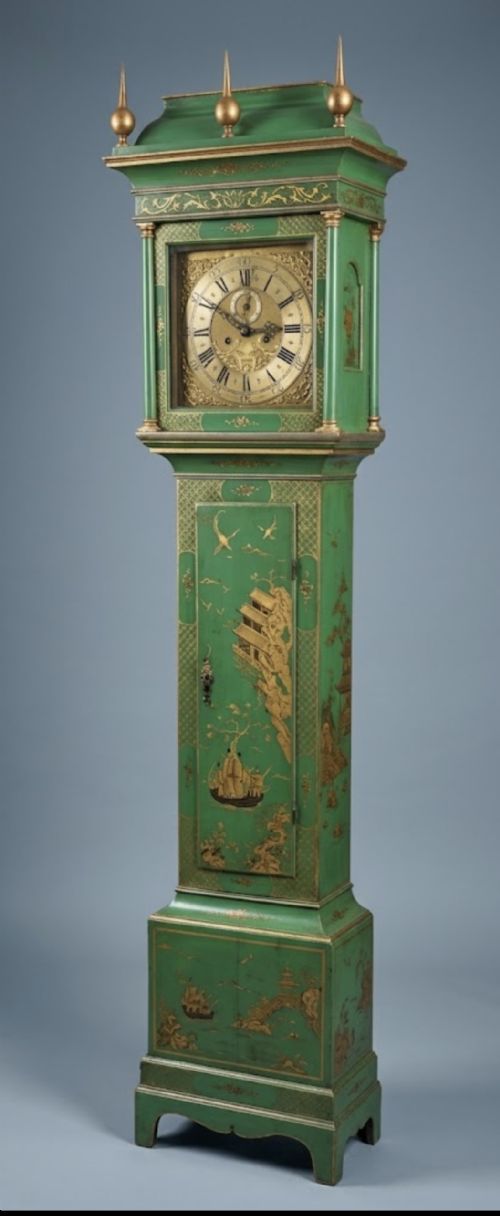
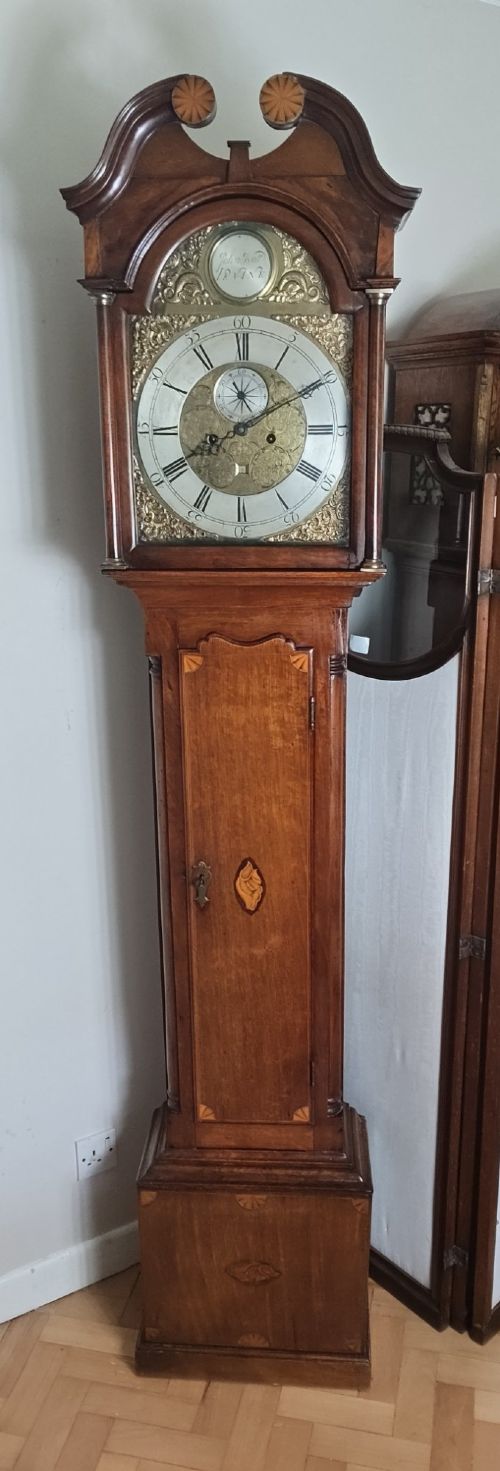
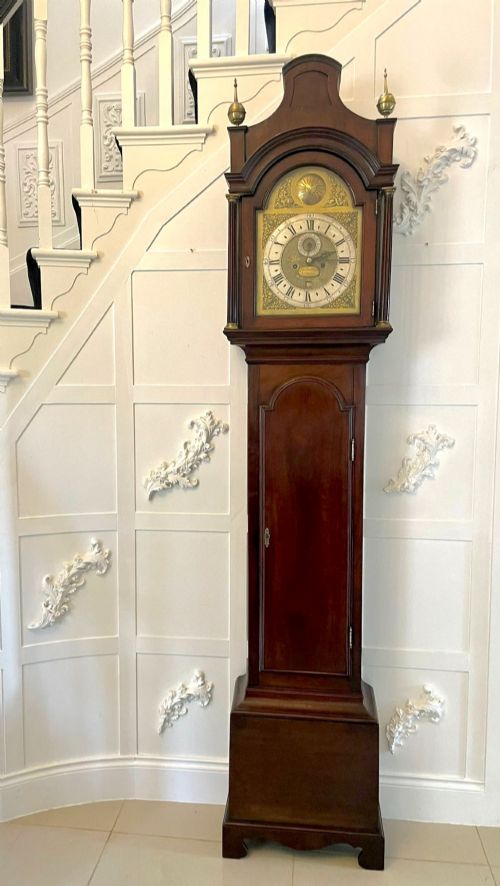
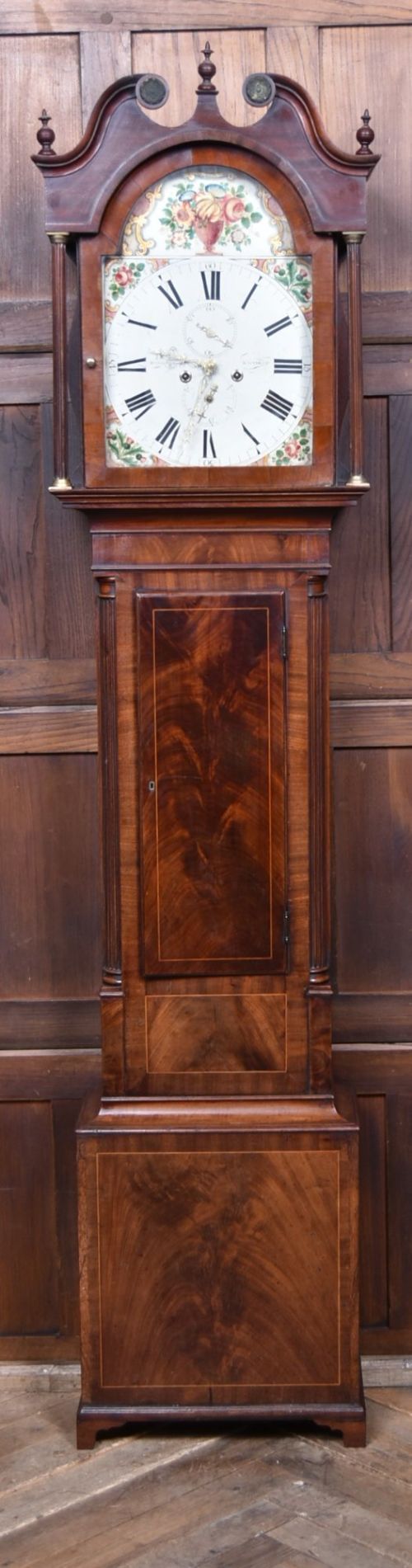
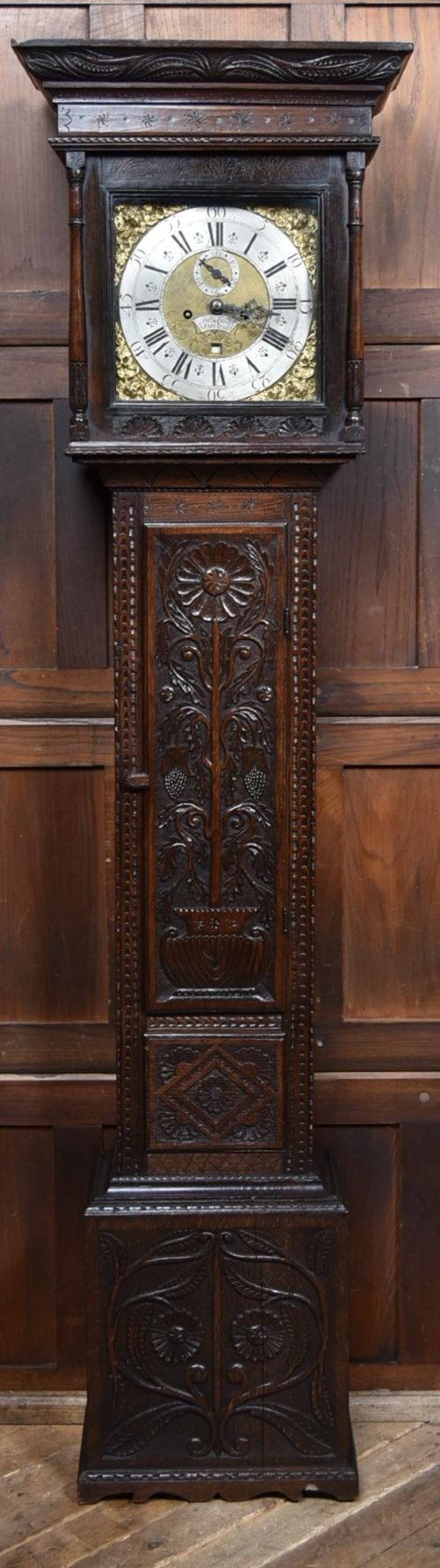


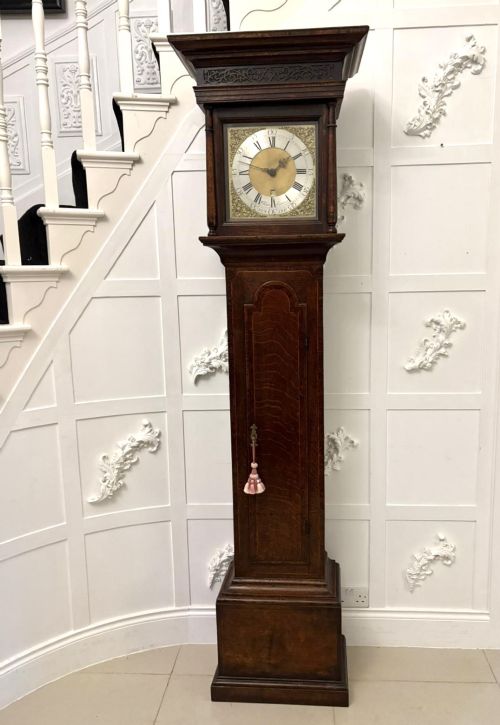
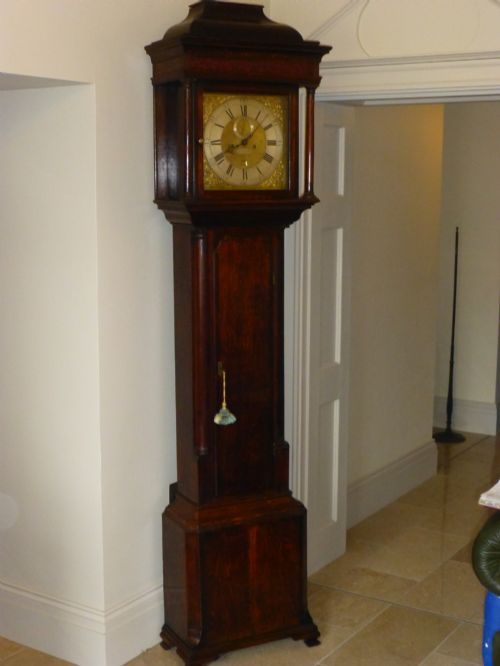
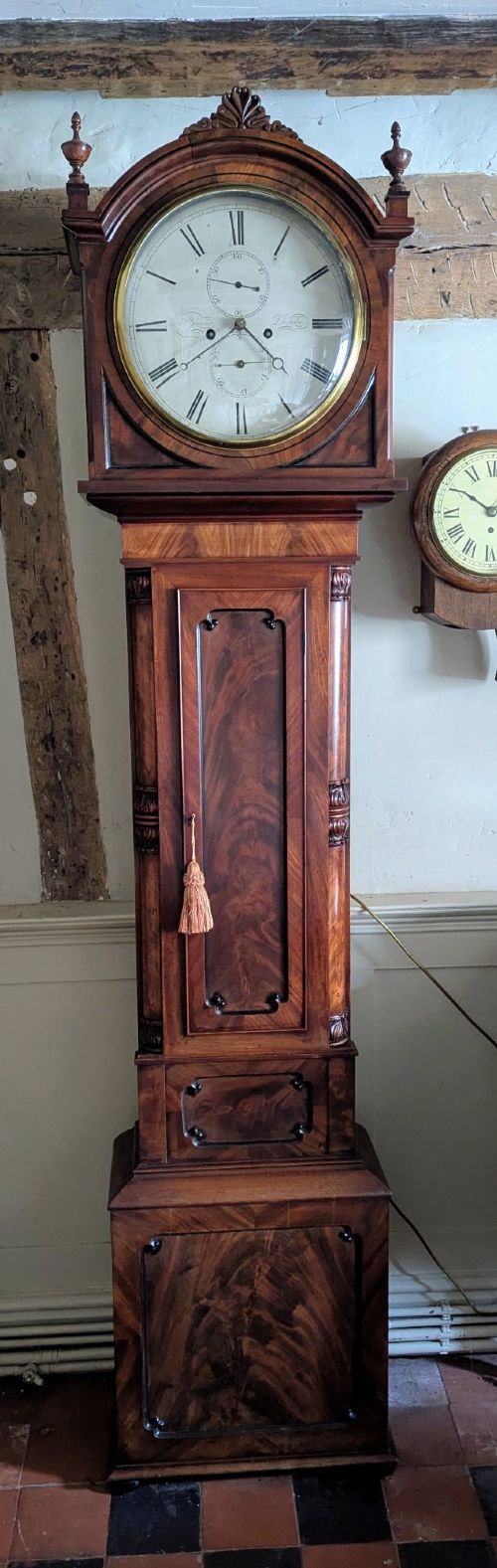
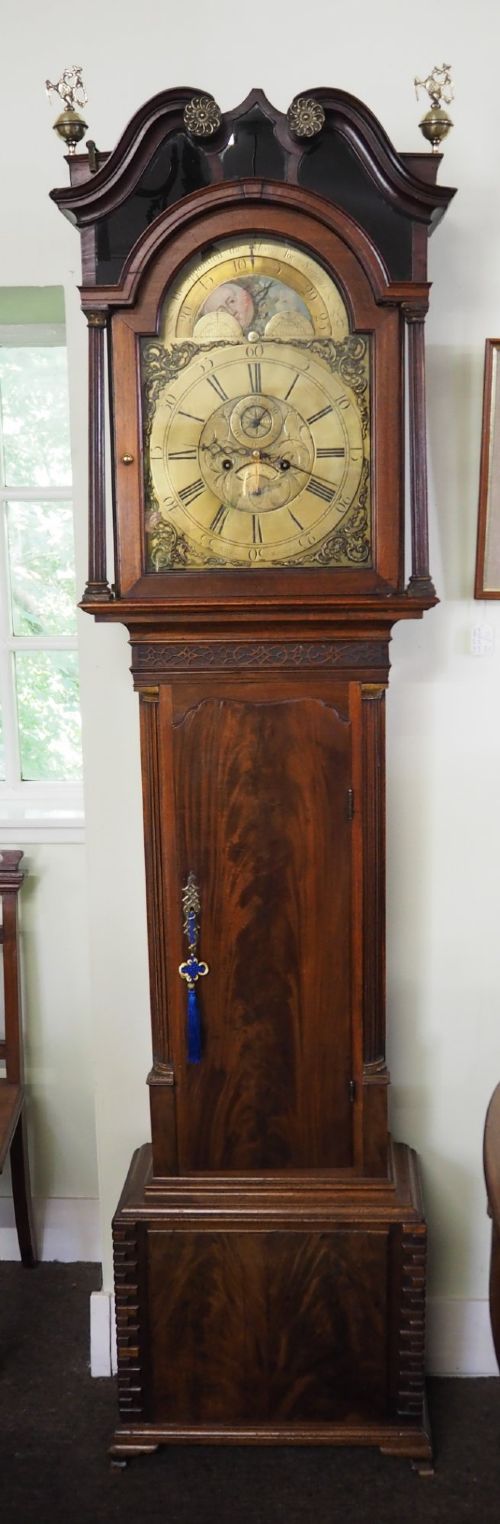
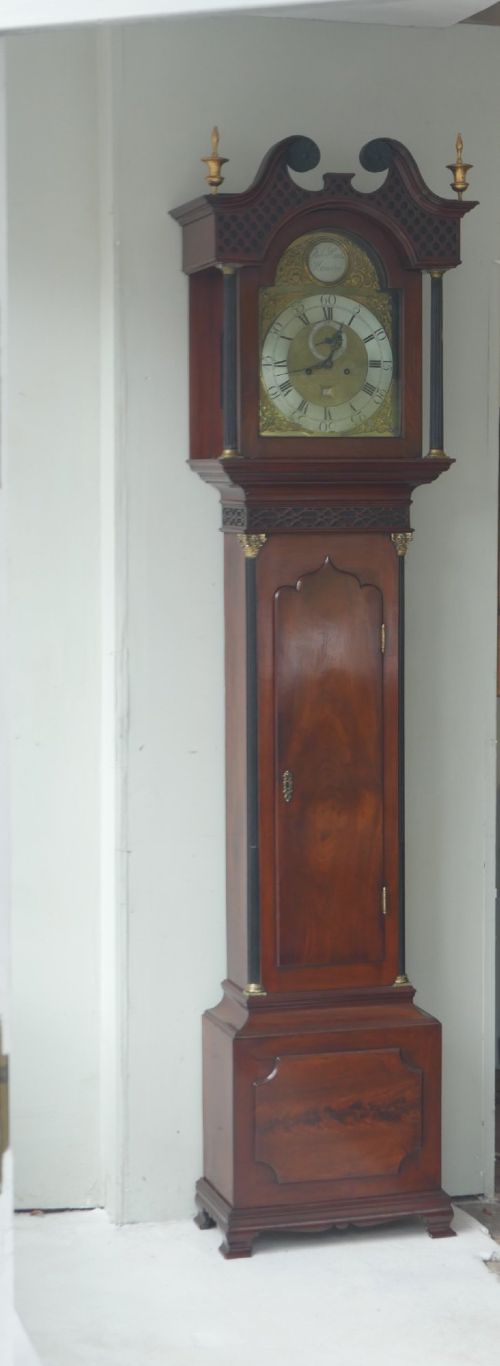
Tall Case Floor Clock
A tall case floor clock anchors a room with mechanical gravity, bringing historical timekeeping and architectural presence into a domestic interior.
Tall Case Floor Clock
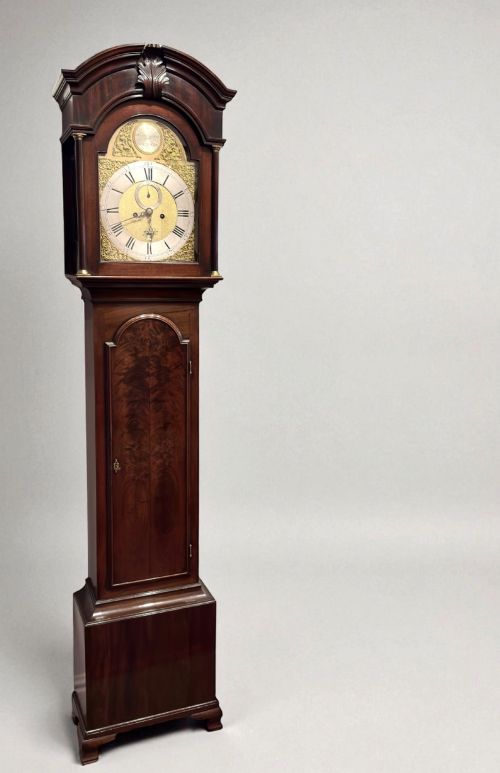
When you search for a tall case floor clock, you encounter upright timepieces spanning the eighteenth and nineteenth centuries, alongside regional and twentieth-century interpretations.
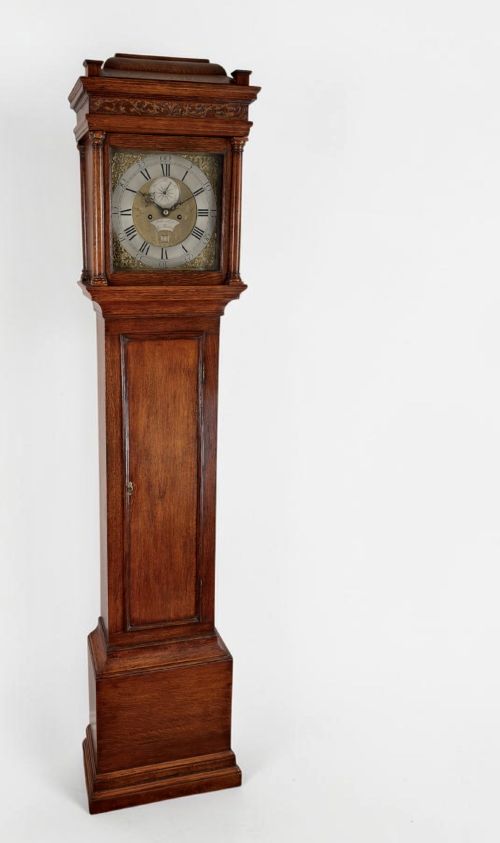
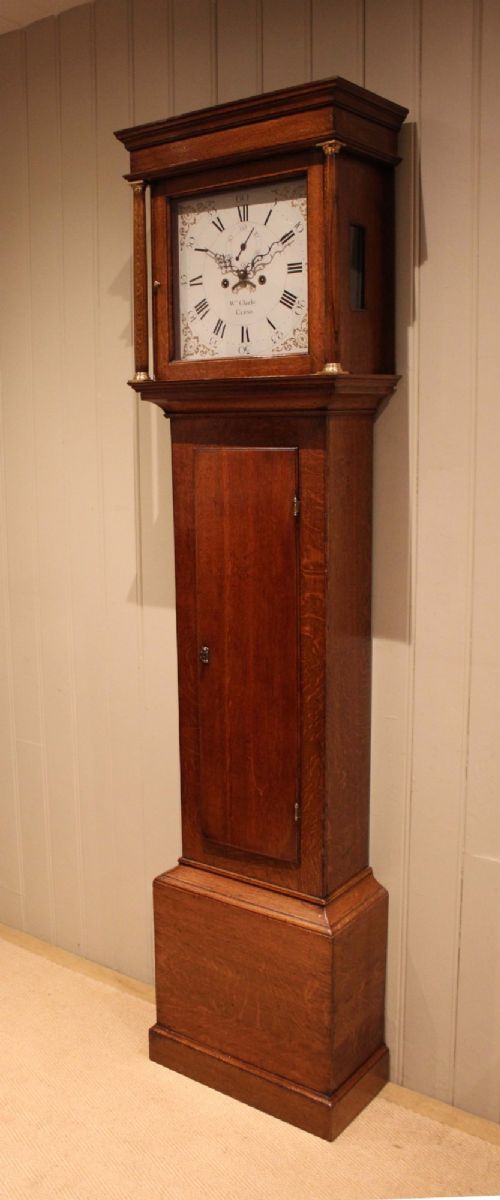
The most common examples on this page are Georgian and nineteenth-century mahogany or oak longcase clocks, often referred to as grandfather clocks.
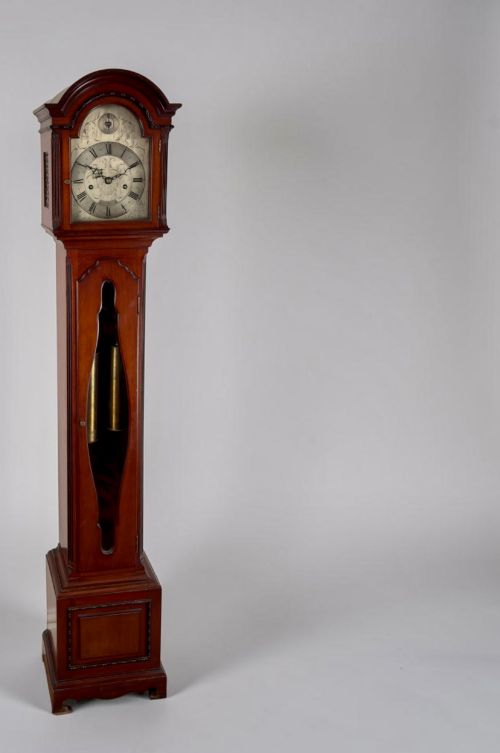
Grandmother clocks and smaller variations also appear, representing more compact scales from the Edwardian and Art Deco eras.
Materials and construction
Cabinets rely heavily on figured timbers such as mahogany, oak, and walnut, frequently combined with brass and painted iron for the dials.
Movement mechanics integrate steel components with brass gear trains, whilst glass protects the face and pendulum chamber.
The listings span multiple centuries, utilising oak, mahogany, and walnut alongside painted iron and brass dials.
Distinctions in craftsmanship
The standard of a tall case floor clock rests on the crispness of the cabinet woodwork and the reputation of the maker inscribed on the dial.
Dial complexity, including moon phases, automata like rocking ships, and specialised movements such as regulators or musical chimes, separates standard workshop production from high-tier examples.
Charles Shuckburgh·Hendrie Ogg·Gordon of Aberdeen·Gillett and Johnston·Lee of Great Marlow·Jn Smith·Tait·James Field·Richard Corless·James McCabe·Handley and Moore·Samuel Kellett·Rickards·D Williams·William Jourdain
The Tall Case Floor Clock Glossary
- Longcase clock
- An alternative term for a grandfather clock, housed in a tall wooden case that encloses the weights and pendulum. This format dominates traditional British horology.
- Grandmother clock
- A scaled-down version of the traditional longcase, typically produced in the twentieth century to fit lower ceilings. It retains the mechanical function in a reduced footprint.
- Regulator
- A precision timekeeper designed for high accuracy, often featuring a simplified dial layout and a deadbeat escapement. These pieces prioritize timekeeping exactness over domestic chime complications.
- Moonphase
- A specialised dial mechanism that tracks the lunar cycle through a rotating painted disk. It represents a complex horological addition found on select eighteenth and nineteenth-century examples.
- Paterae
- Small circular decorative reliefs carved or applied to furniture surfaces, frequently seen on neoclassical mahogany cases. They add subtle architectural refinement to the hood or trunk.
Tall Case Floor Clock: Frequently Asked Questions
How do I wind a tall case floor clock?
Most eight-day movements require winding every week using a specialised crank key that engages the winding arbors on the dial face. Care must be taken not to overwind the weights.
Weight-driven clocks operate by pulling the cords or chains to raise the heavy cast weights back toward the top of the trunk.
What is the difference between a grandfather and a grandmother clock?
Grandfather clocks are full-sized tall case timepieces standing over six feet tall, designed with substantial proportions during the Georgian and Victorian periods.
Grandmother clocks are significantly smaller variants, usually standing under six feet, produced primarily in the twentieth century for smaller domestic spaces.
Where should I place a tall case floor clock?
These clocks require a stable, dry interior wall away from direct sunlight, central heating vents, and exterior doors where vibrations might disturb the pendulum.
Floor stability is critical, so leveling the case using feet or shims ensures the anchor escapement ticks evenly.
How do I tell an 18th-century clock from a 19th-century one?
Eighteenth-century examples often feature square brass dials with cast spandrels in the corners, housed in solid oak or walnut cases with simpler proportions.
Nineteenth-century pieces frequently display arched painted iron dials, richer mahogany veneers, and more ornate inlay work or regional Scottish and Welsh styling.