




Tall Brass Church Candlesticks
Tall brass church candlesticks bring solemn weight and gleaming height to a room, drawing the eye upwards with their ecclesiastical presence.
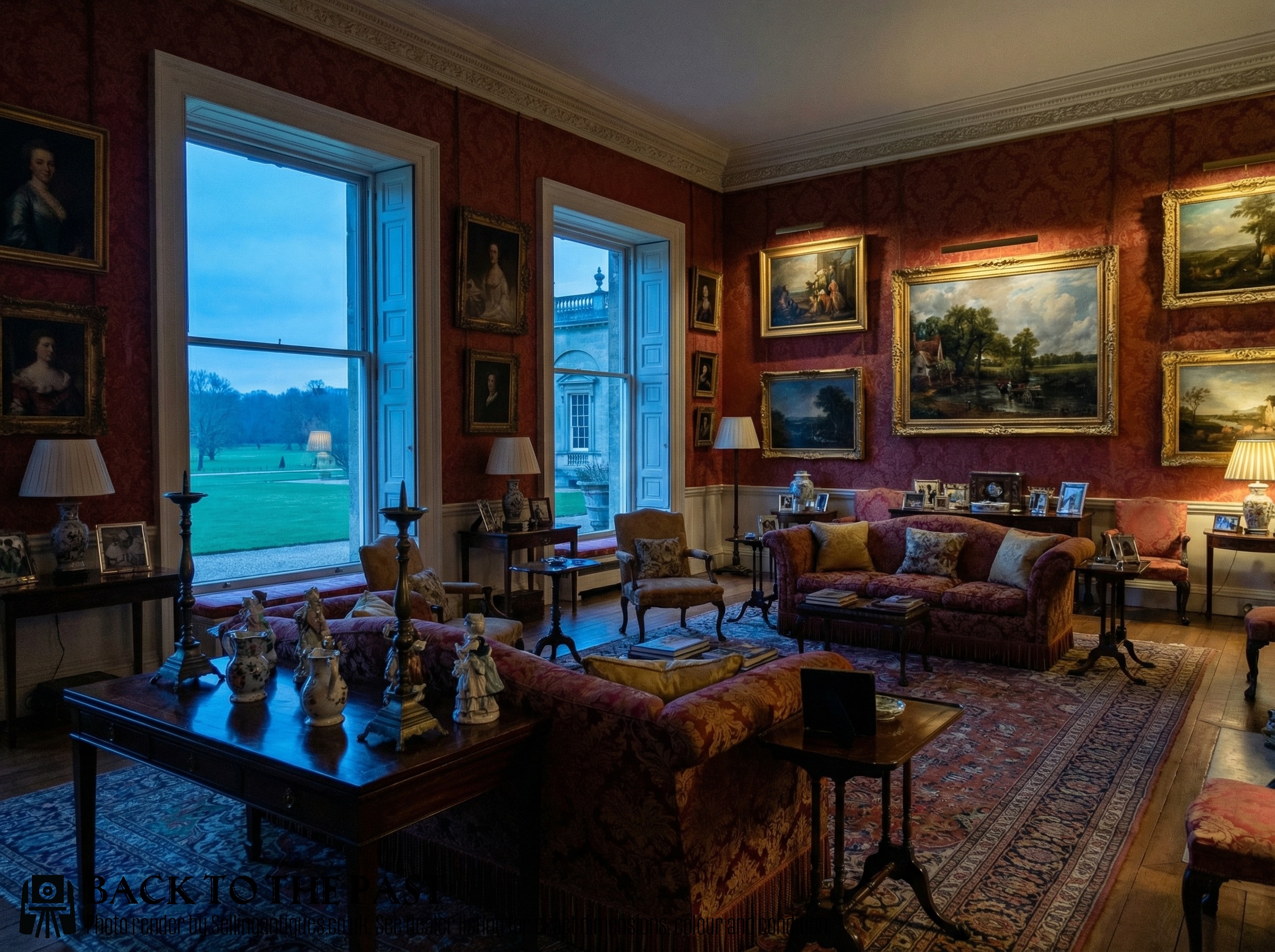
Tall Brass Church Candlesticks
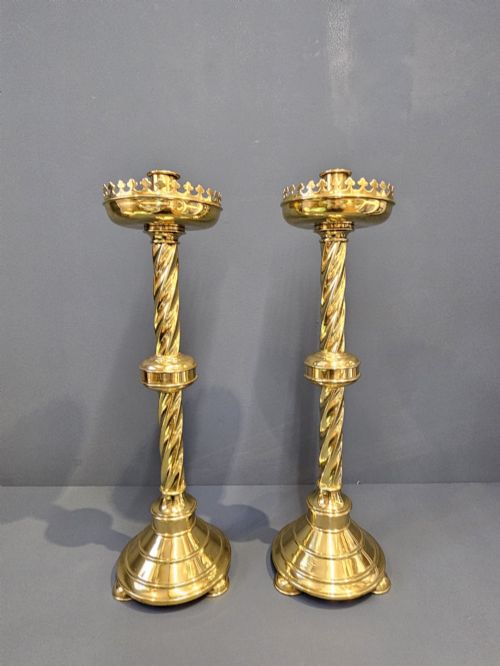
When you search for tall brass church candlesticks, you encounter substantial ecclesiastical fittings designed for altars, chancels and ceremonial spaces. These objects mostly date from the nineteenth century, including Victorian Gothic Revival interpretations alongside earlier Georgian and eighteenth-century examples.
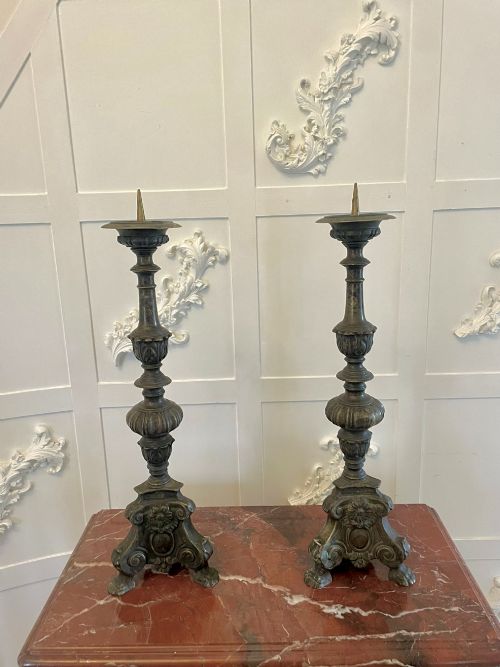
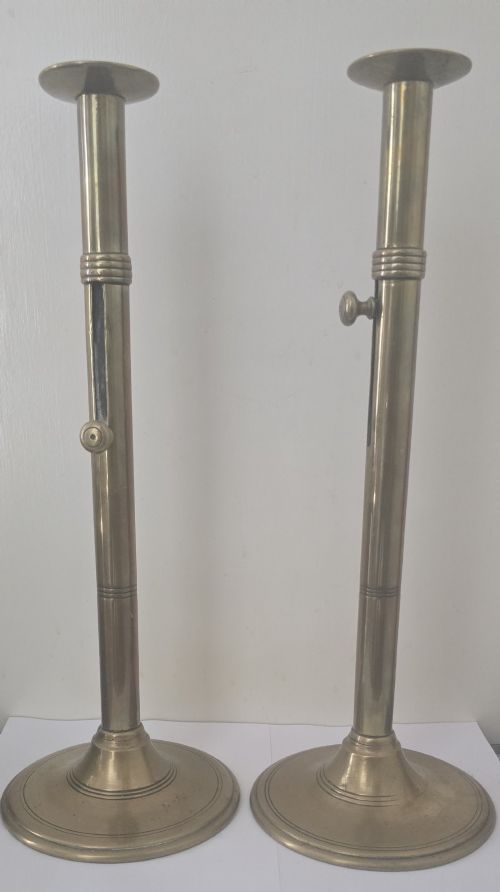
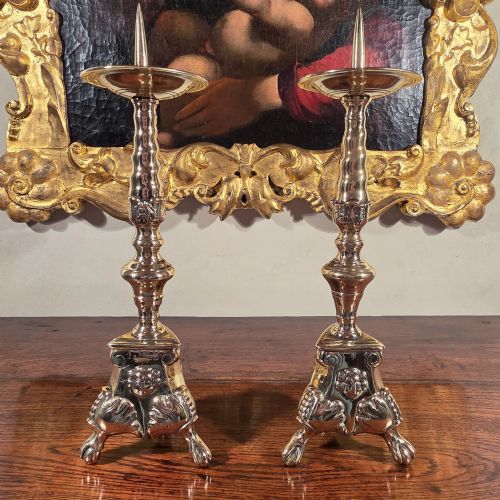
The pairs and individual items available range from standard table-height designs to monumental floor-standing pieces and graduated sets. Many of these tall brass church candlesticks terminate in pricket spikes designed to hold large wax candles directly upon the metal point.
Alongside traditional brass, the selections include combinations of bronze, wrought iron, painted metal, and even wooden elements from later twentieth-century movements like the Amsterdam School. Variants adapted into table lamps also appear within the lineup, bridging historic ecclesiastical use with domestic lighting.
How they were made
Makers utilised cast brass and bronze to achieve the sturdy vertical columns and heavy bases necessary for supporting substantial candle heights safely. Many pieces incorporate turned components, Corinthian column capitals, and ornate decorative motifs cast in sections before assembly.
Detailing often involved surface engraving, painted highlights on metalwork, or mixed-material construction pairing brass with iron, gilt metal, and hardwood components. Floor-standing and pricket variants demanded robust engineering to maintain stability across extended vertical proportions.
Materials across these listings span brass, bronze, gilt metal, wrought iron, painted metal, cast brass, and hardwood.
What varies in quality
The distinction between ordinary and exceptional pieces lies in the crispness of the casting and the proportional harmony of the column and base. Finer examples display deeply chased ornamentation, well-defined architectural details such as Corinthian capitals, and substantial metal thickness that provides genuine heft.
Originality of components, matching pairs, and intact pricket spikes or side ejectors elevate the standing of a piece considerably. Finer workmanship shows in the careful finishing of joints and the retention of authentic surface patination accumulated over centuries of ecclesiastical service.
The Tall Brass Church Candlesticks Glossary
- Pricket candlestick
- A candleholder featuring a sharp metal spike at the top designed to impale the base of a candle rather than a socket to receive it.
- Ecclesiastical design
- Style and ornamentation specifically created for use within a church or religious building, often drawing on Gothic architecture.
- Corinthian column
- An architectural column style featuring ornate acanthus leaves and scrolls around the capital, frequently emulated in candlesticks.
- Side ejector
- A mechanical lever fitted to the side of a socket designed to push out remaining candle stubs cleanly.
- Gothic Revival
- An architectural and decorative style popular during the nineteenth century that revived medieval Gothic forms, arches, and pointed motifs.
Tall Brass Church Candlesticks: Frequently Asked Questions
How were tall brass church candlesticks used?
These candlesticks stood upon church altars and sanctuary floors to provide ceremonial illumination during services and solemn rituals. Their imposing height ensured the light source remained visible to congregations across large liturgical spaces.
Over time, many surviving examples migrated from houses of worship into domestic interiors, where their scale and architectural presence suited grand halls and reception rooms.
Are these candlesticks wired for electricity?
While the majority remain configured for traditional wax candles, a select number of examples have been thoughtfully converted into table lamps over the decades. These converted pieces accommodate modern electrical fittings while retaining their historic ecclesiastical stature.
Buyers can find both purely candle-lit pricket versions and electrified adaptations depending on the specific items listed.
What periods do these candlesticks come from?
The pieces span several centuries, with the vast majority originating from the nineteenth century and the Victorian Gothic Revival era. Earlier eighteenth-century pricket examples and later twentieth-century Amsterdam School designs also appear.
This broad chronological spread allows collectors to choose between austere Georgian forms, ornate Victorian castings, and early twentieth-century interpretations.
How do I care for antique brass?
Maintaining these pieces involves gentle dusting with a soft, dry cloth to protect the historic surface patination and accumulated age. Avoid harsh chemical polishes that strip away the mellow tones acquired over decades of use.
If cleaning is necessary, use a mild, non-abrasive cleaner formulated specifically for antique metals and apply it sparingly.