


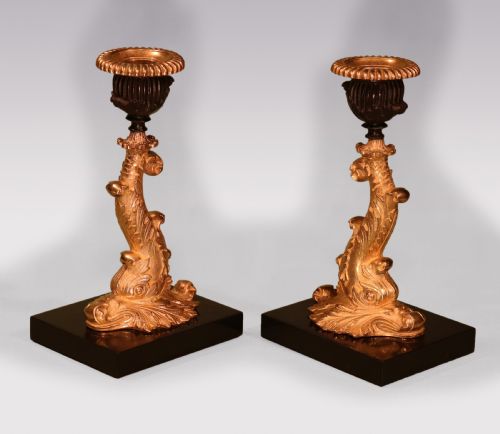

Regency Period Candle Holders
Regency period candle holders bring classical symmetry and exceptional metalwork to a room, offering functional lighting shaped by Neoclassical and French Empire tastes.

Regency Period Candle Holders
When searching for regency period candle holders, buyers encounter a distinct selection of candlesticks, candelabra, chamber sticks and table lustres dating from the late eighteenth century through the nineteenth century. These lighting pieces display the architectural forms and classical motifs favoured during the Regency, Grand Regency and Georgian eras.
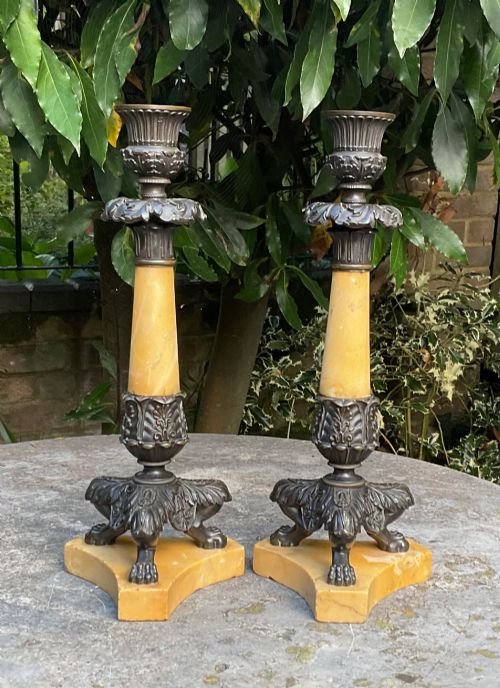
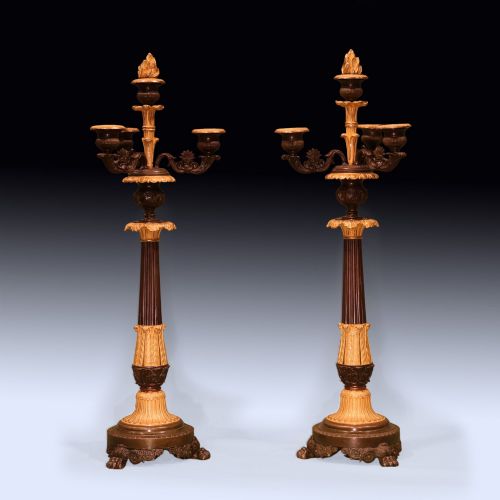
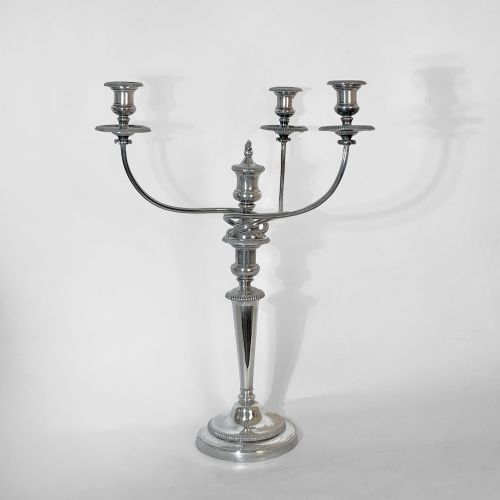
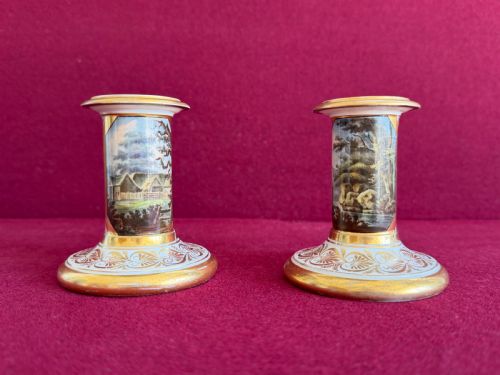
The objects on this page most frequently appear as matched pairs executed in brass, bronze and ormolu, often paired with marble plinths or cut glass components. Alongside standard single candlesticks, the listings include multi-light candelabra with adjustable arms, pricket forms and table lustres hung with glass drops.
Origins span English production as well as continental influences, particularly French Empire styles that reached British workshops during the period. Buyers will find both sturdy utility pieces in brass and highly decorative gilt bronze compositions incorporating mythological creatures such as dolphins and griffins.
Materials and construction
Makers utilised a combination of cast metals, combining the warmth of brass with the rich contrast of patinated bronze and fire-gilded ormolu. Components were individually cast and assembled, allowing for intricate surface details on classical column shafts, figural bases and Athenienne forms.
Glass elements such as cut glass lustres and drops required skilled glassblowing and hand-cutting to achieve the facets that caught and refracted candlelight. Marble plinths were shaped and polished to provide heavy, stable foundations for tall bronze and ormolu candelabra.
Silver plating techniques, notably Sheffield plate, provided a durable silver coating over a base metal core for candelabra requiring a formal appearance. Joinery relied on threaded rods and pins to secure heavy metal sockets and stems to marble or metal bases.
Cast bronze dolphins and griffins frequently hold up the candle sockets, proving that Regency decorators took their mythical creatures very seriously.
Distinctions in craftsmanship
Proportion and balance dictate the architectural success of a piece, ensuring that multi-light candelabra or heavy column candlesticks stand securely on their bases. The integration of contrasting materials, such as the precise fit of bronze mounts against sienna marble plinths, demonstrates the maker's skill.
Completeness of original components, including matching cut-glass lustres and pendant drops, distinguishes pieces that retain their original decorative scheme from those assembled later. Surface treatments like original fire-gilding hold depth and lustre compared to later regilding or stripped brass.
Barr, Flight & Barr
The Regency Period Candle Holders Glossary
- Ormolu
- A technique of applying finely ground high-carat gold to a bronze base using a mercury amalgam, resulting in a rich golden finish. This surface treatment appears frequently on decorative mounts of the period.
- Candelabra
- A branched lighting fixture designed to hold multiple candles simultaneously. These often feature removable arms to convert multi-light fixtures into single candlesticks.
- Pricket
- A sharp metal spike set in the drip pan to secure the base of a candle, rather than a socket that surrounds it. This form is often found on ecclesiastical or heavier devotional pieces.
- Table lustre
- A decorative ornamental glass or metal stand hung with cut-glass pendants designed to reflect candle or daylight. They sit on dining or side tables as decorative centerpieces.
- Sheffield plate
- An early form of composite metal produced by fusing a sheet of silver to a thicker copper ingot before rolling them together into plates. This process created affordable tableware and lighting with a genuine silver surface.
- Athenienne
- A tripod-supported classical stand or brazier form adapted during the Neoclassical period for decorative vessels and candle holders. It draws inspiration from ancient Greek furniture designs.
Regency Period Candle Holders: Frequently Asked Questions
How do I clean bronze and ormolu?
Dust gently with a soft dry brush to remove surface particles without disturbing the underlying metal patination or delicate gilding.
Avoid commercial metal polishes, water and abrasive cloths, as these substances strip away historic ormolu finishes and damage vulnerable bronze surfaces permanently.
Are these candle holders safe to use with real candles?
Many historical candle holders accommodate standard taper candles securely in their original sockets, provided the base remains stable and level.
Inspect the inner socket for secure fit and place a protective drip catcher underneath if the piece lacks an integrated drip pan to protect antique metal.
How do I identify Regency period pieces from later copies?
Examine the construction methods, tool marks and assembly pins underneath the base, as nineteenth-century pieces show hand-finishing and specific casting textures.
Regency items display authentic Neoclassical and French Empire proportions, heavy materials like bronze and marble, and genuine age patination rather than artificial chemical ageing.