

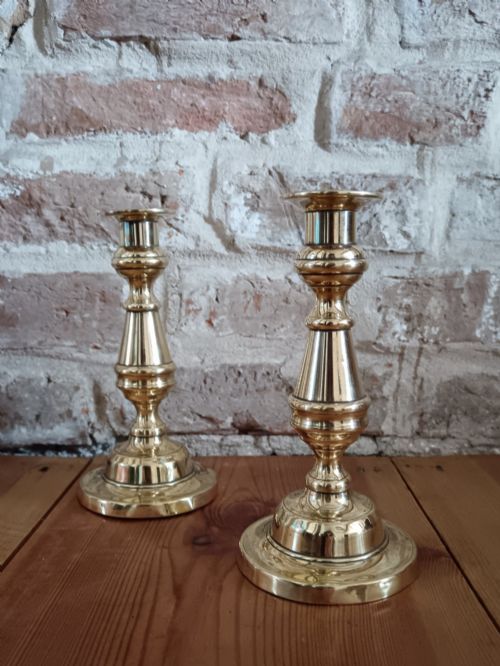
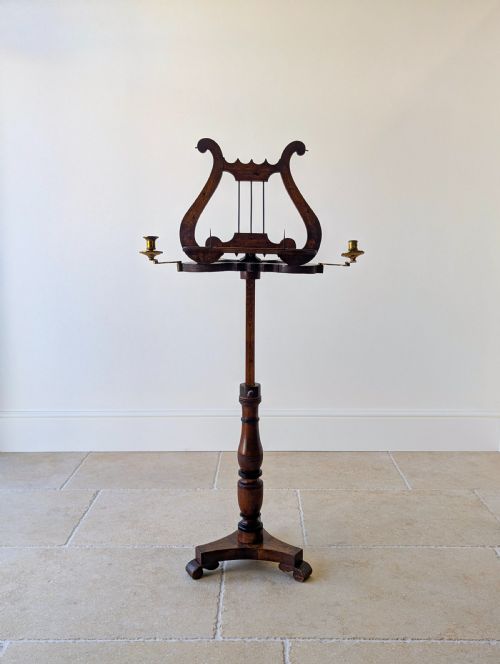


Regency Brass Candle Holders
Regency brass candle holders bring warmth and architectural precision to a room through crisp casting and heavy metal.
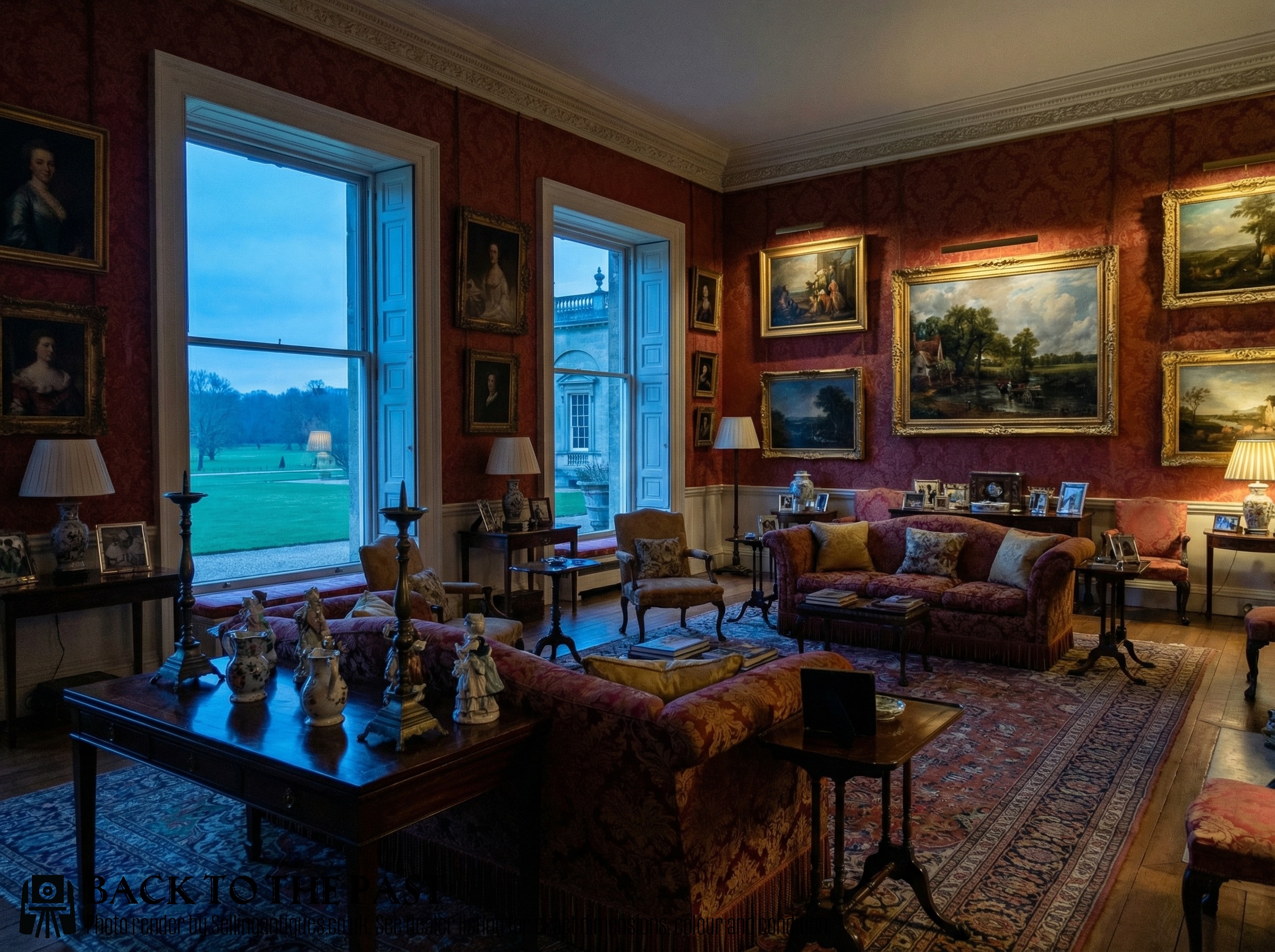
Regency Brass Candle Holders
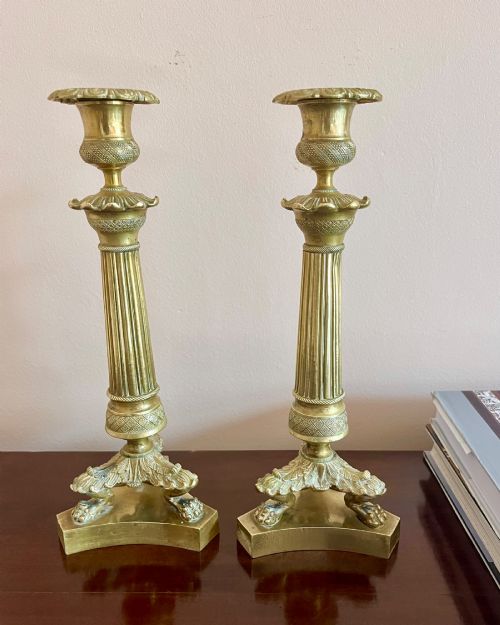
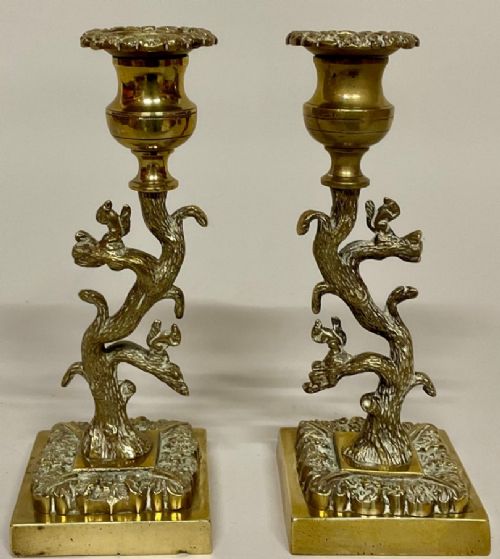
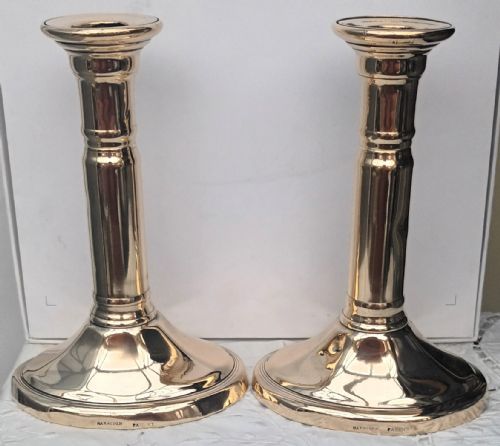
Makers and workshops of this era utilised varied forms such as column candlesticks, ejector mechanisms, and sculptural figures like dolphins or squirrels amongst branches. Alongside brass, pieces frequently incorporate patinated bronze, ormolu, and gilt bronze to create contrast within the design.
The objects span styles from Neoclassical and French Empire to Swedish Empire and Grand Regency, reflecting international influences on British and European metalwork. Surviving examples demonstrate how lighting accessories served both functional roles on tables and decorative purposes in formal interiors.
Materials and technique
Foundry work relied on precision casting in brass, bronze, and ormolu, allowing makers to achieve intricate details such as animal figures and reeded columns. Components were often cast in sections and joined, with gilded highlights applied to contrast against patinated surfaces.
Mechanical elements in adjustable designs, such as telescopic shafts and ejector stems, required careful engineering of sliding brass tubes and internal springs. Surface finishing involved polishing, chasing, and the application of mercury gilt to achieve the characteristic metallic lustre of the period.
Squirrels carved among bronze tree branches perch permanently on branches, holding up light instead of acorns.
Defining quality
Combination of materials also signals quality, particularly where polished ormolu is contrasted against deep patinated bronze rather than relying on uniform brass alone. The integration of functional mechanisms, such as smooth telescopic actions or secure screw fittings, separates masterwork lighting from simpler commercial output.
Galle
The Regency Brass Candle Holders Glossary
- Ormolu
- Gilded bronze, where a layer of gold amalgam is applied to a bronze base and heated to drive off the mercury. This technique produces a rich, matte golden finish often seen on Regency decorative metalwork.
- Campana
- A vase-shaped candle socket resembling an inverted bell, commonly found at the top of Regency sticks and candelabra. It provides a stable receptacle for the base of a wax taper.
- Ejector
- A concealed internal mechanism operated by a thumbpiece that pushes the candle stub upward for easy removal. This practical addition appears in domestic brassware from the Georgian and Regency eras.
- Pricket
- A sharp metal spike rising from the centre of a drip pan to support a heavy wax candle, rather than the more usual socket. These pieces often relate to ecclesiastical or formal hall lighting.
- Lustre
- A candlestick or table light hung with cut glass prisms or drops to reflect and multiply the candlelight. The glass pendants catch the illumination and cast prismatic patterns around the room.
Regency Brass Candle Holders: Frequently Asked Questions
What is an ejector candlestick?
An ejector candlestick contains a sliding internal mechanism that raises the remaining candle stub above the socket for easy extraction. This clever design prevents wax build-up inside the tube.
Such practical innovations were common in nineteenth-century brass lighting, offering everyday convenience in domestic settings.
How do ormolu and bronze differ?
Ormolu refers to gilded bronze, featuring a bright golden surface finish achieved through mercury amalgamation. Patinated bronze exhibits a darker, treated metallic brown or green surface.
Parks of both materials together create a striking visual contrast characteristic of Regency decorative arts.
Were these holders used with candles?
These pieces were designed specifically to hold wax or tallow candles for illumination before the widespread adoption of gas and electric lighting. Their sockets and drip pans managed the burning wax during evening use.
Today, they function as decorative objects while retaining their original mechanical and structural properties.
What distinguishes Regency from Georgian style?
Georgian design often relies on classical proportions, column forms, and traditional brass casting without excessive embellishment. Regency style incorporates bolder classical revivals, French Empire influences, and exotic animal motifs.
Makers of the later period frequently combined patinated dark bronze with bright ormolu to achieve a theatrical aesthetic.