

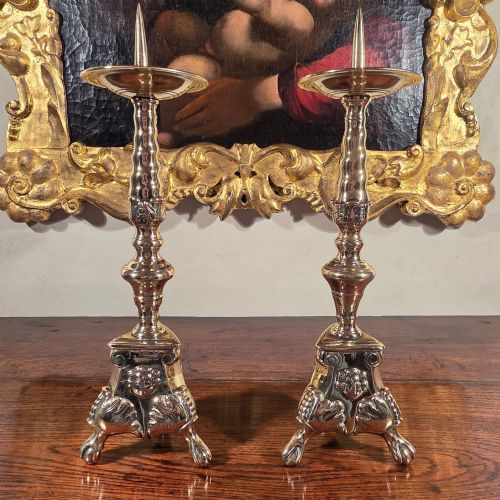


Tall Altar Prickets
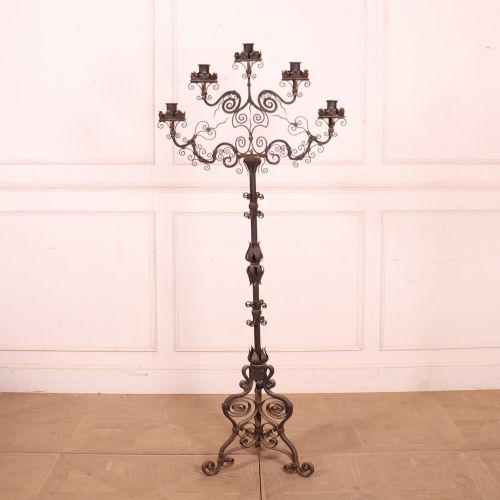
These tall altar prickets are commanding church fixtures and candle stands designed to elevate ecclesiastical lighting.
Tall Altar Prickets
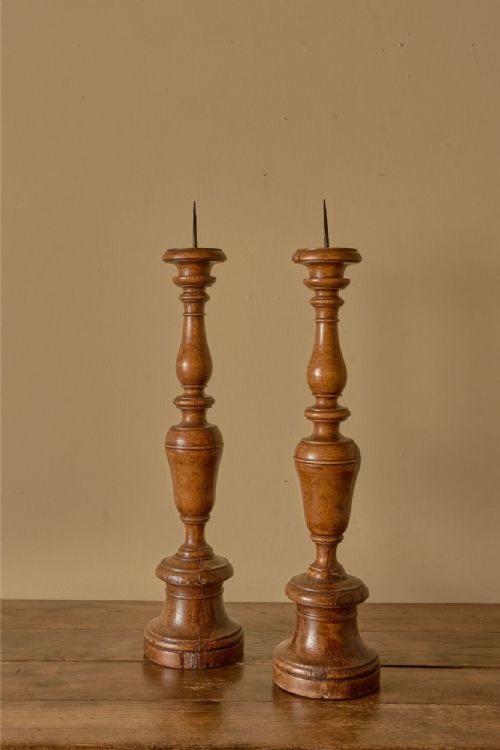
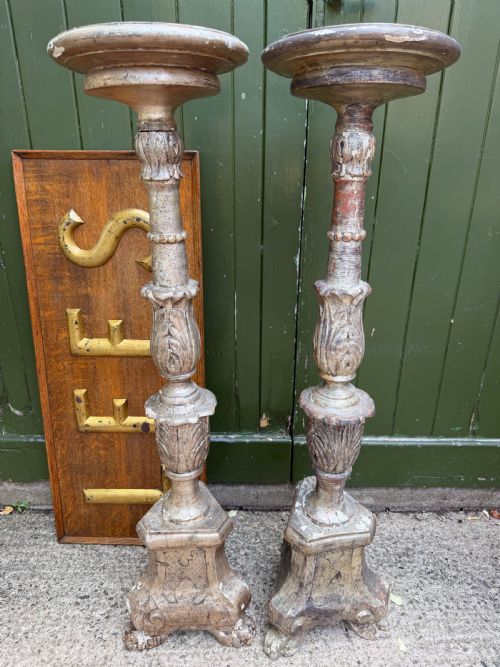
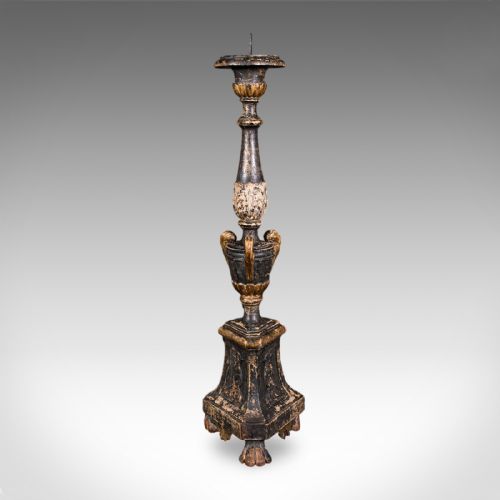
When you search for tall altar prickets, you encounter substantial vertical candle stands and church candlesticks originating from ecclesiastical and domestic settings. These pieces primarily date from the eighteenth and nineteenth centuries, carrying deep historical presence.
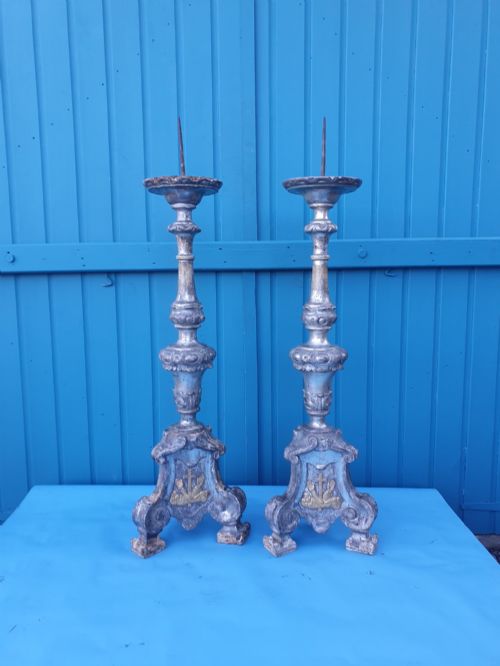
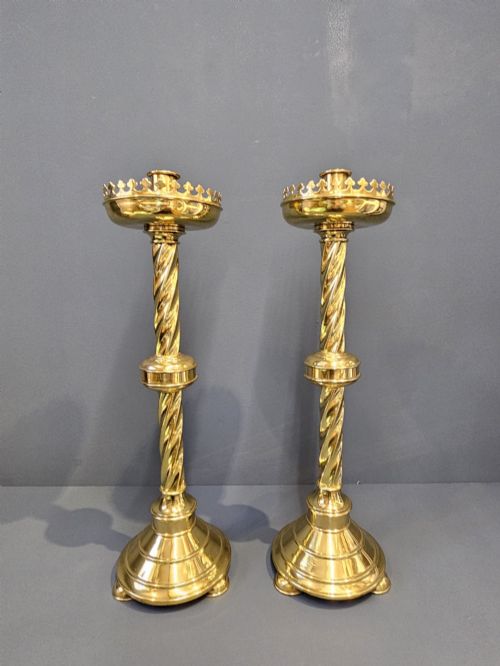
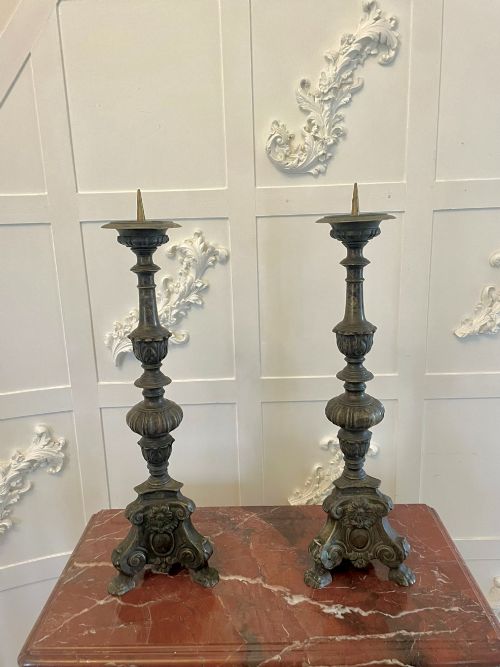
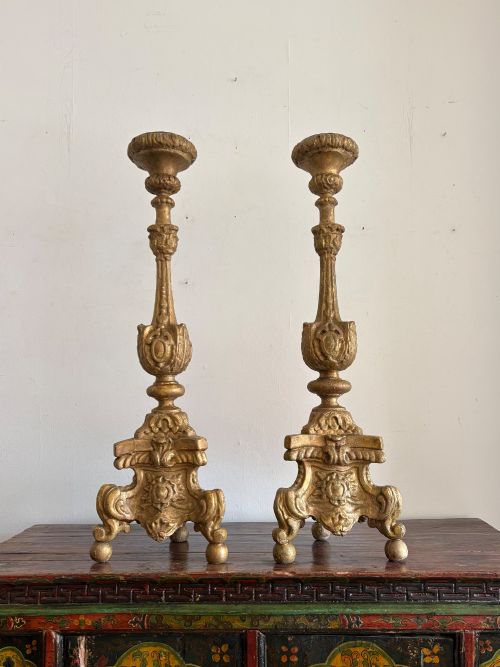
You are most likely to meet Italian carved wood and giltwood examples alongside solid brass and bronze church candlesticks on this page. Many take the form of torcheres, floor-standing candelabras, or large table lamps adapted from earlier liturgical supports.
The aesthetic leans heavily toward Baroque, Rococo, and Gothic Revival styles, reflecting grand European ecclesiastical traditions. Pairs predominate, offering balanced proportions for placement on altars, side tables, or directly on the floor.
How they were made
Carved wood provides the structural core for many examples, finished with gesso, silver leaf, or giltwood to achieve a rich metallic sheen. Artisans shaped pinewood and hardwoods into complex Baroque and Rococo profiles before applying surface gilding.
Metal versions utilise heavy brass and bronze, cast in sections and assembled to support the central spike required for mounting large candles. Iron elements appear in specific regional workshops, adding structural rigidity to taller floor-standing forms.
Tall Altar Prickets Retail Price Guide 2026
Typical asking prices for tall altar prickets among the pieces listed under this phrase on Sellingantiques today, from the lower quarter to the upper quarter. They describe what is for sale here now, not the wider market.
Listings span the eighteenth and nineteenth centuries, featuring materials such as carved wood, giltwood, brass, bronze, and iron across various European liturgical styles.
What varies in quality
The depth and crispness of the carving distinguish finer wooden pieces from simpler commercial output. Hand-chased details on brass and bronze components similarly separate master metalwork from standard foundry production.
Original surface treatments, such as genuine period gilding or mecca silvering, retain a depth that modern restorations struggle to replicate. The overall architectural proportion and balance of the turned or carved stem determine the visual impact of the piece.
The Tall Altar Prickets Glossary
- Pricket
- A metal spike on top of a candlestick designed to hold a large candle securely in place. This form predates socket-type candle holders.
- Torchere
- A tall ornamental stand or candlestick designed to support a light source. Originating in the seventeenth century, these pieces often feature elaborate carved wooden shafts.
- Giltwood
- Wood that has been coated with a thin layer of gold leaf or powder. This finish protects the underlying timber while providing a luminous decorative surface.
- Gesso
- A plaster-like mixture applied to wood surfaces as a base for gilding or painting. It allows craftsmen to carve intricate relief details before applying gold leaf.
- Baroque
- An extravagant artistic style characterised by dynamic movement and exuberant ornamentation. Pieces from this period employ dramatic curves and rich surface textures.
Tall Altar Prickets: Frequently Asked Questions
What is a pricket candlestick?
A pricket candlestick uses an upward-pointing metal spike rather than a socket to secure the candle. The base of the candle is pressed directly onto this spike.
This traditional design was standard in churches and large households before socket holders became common during the nineteenth century.
How were these tall stands used?
These tall stands served primarily on church altars and in large ecclesiastical interiors to illuminate liturgical spaces. Their height ensured light reached above ritual objects on the altar.
Many examples were later adapted for secular interiors as torcheres, floor lamps, or decorative sculpture bases during subsequent centuries.
How do I date an antique pricket?
Dating relies on examining the construction methods of the wooden core or the casting marks on the metal. Tool marks, joinery techniques, and the composition of the gesso provide clear chronological clues.
Stylistic indicators such as Baroque curves or Gothic Revival motifs help narrow the period of manufacture.
Can I use modern candles on them?
Modern candles can be used provided they have a suitable base to accept the central iron spike safely. Piercing the base of a pillar candle allows it to mount firmly onto the pricket.
Care should be taken with the weight and diameter to ensure the candle balances securely without tilting.
How do I care for giltwood surfaces?
Giltwood surfaces require gentle dusting with a soft, dry brush to prevent accumulation without disturbing the delicate gold leaf. Moisture and harsh cleaning agents must be avoided entirely.
Placing them away from direct sunlight and heat sources preserves the integrity of the underlying gesso and wood.