




Tall Altar Candle Holders
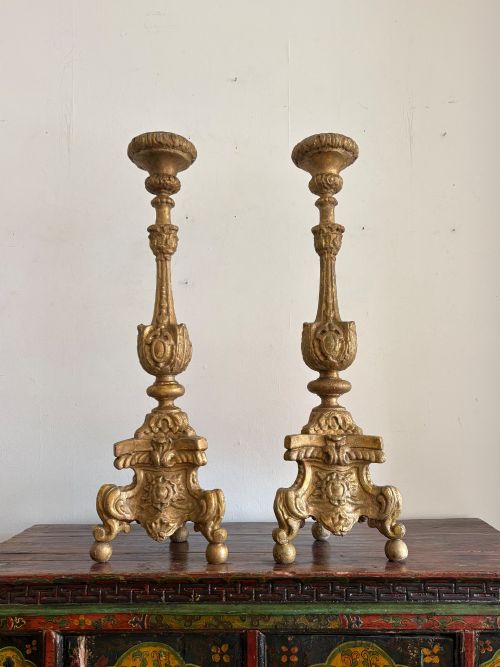
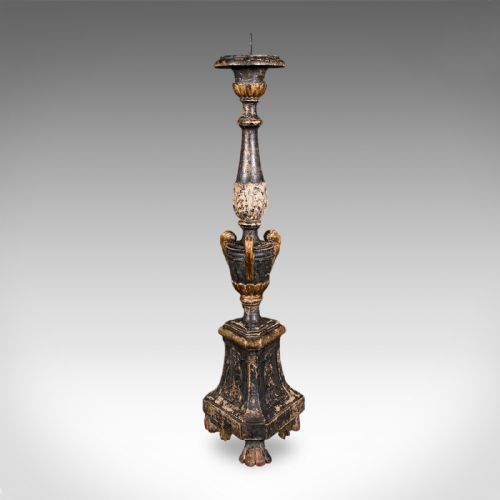
Tall altar candle holders bring vertical presence to a room, offering ecclesiastical character through brass, carved wood, and gilt surfaces.
Tall Altar Candle Holders
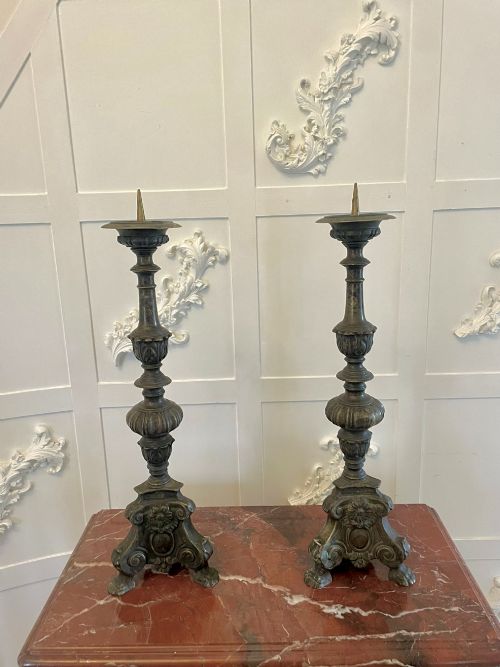
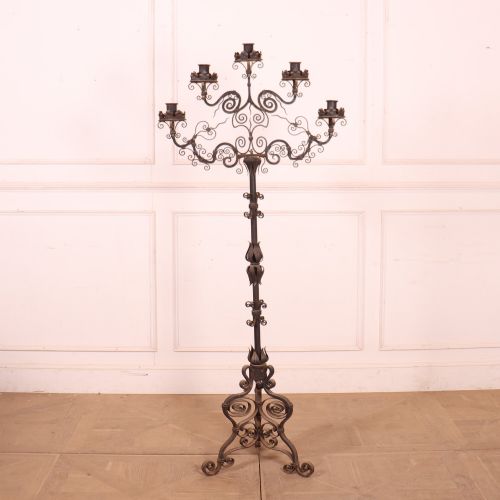
When buyers search for tall altar candle holders, they encounter ecclesiastical and domestic lighting pieces spanning the eighteenth, nineteenth, and early twentieth centuries. These objects take the form of substantial candlesticks, floor Candelabras, and torcheres designed originally for liturgical use or grand interiors.
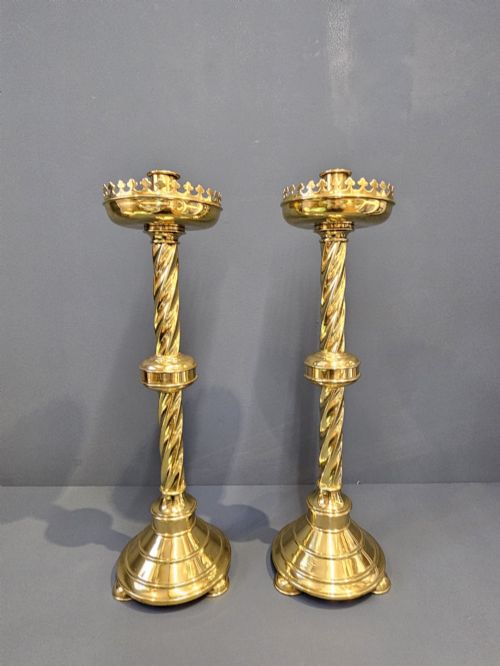
The most common examples on this page are nineteenth-century Victorian brass items alongside eighteenth-century Italian carved wooden and giltwood pieces. Styles range from strict Gothic Revival and Baroque to Georgian and Italian Neoclassical designs.
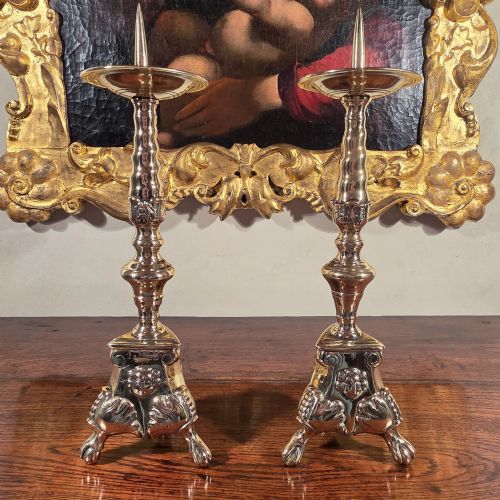
Forms vary from standard socket candlesticks to pricket sticks featuring sharp spikes designed to hold large wax candles securely. Buyers also find pieces adapted into table lamps while retaining their original height and architectural silhouette.
Materials and construction methods
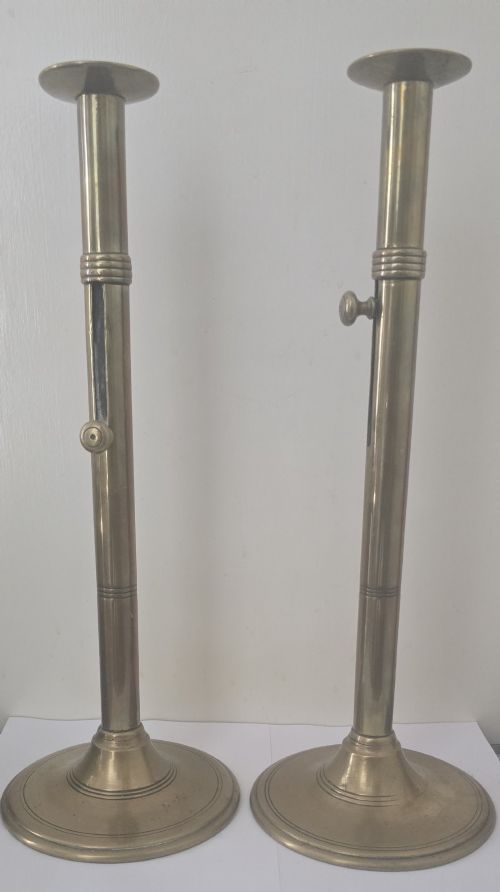
Metal pieces rely heavily on cast and turned brass, solid bronze, and wrought iron, frequently displaying heavy gauge construction for stability at height. Brass components often feature detailed chasing, Corinthian column capitals, or side ejectors.
Wooden examples utilise carved pine, oak, and turned timber finished with gesso, silver leaf, polychrome paint, or heavy gilding. Artisans built these altar-style pieces in sections, joining heavy bases to tall shafts with robust tenons or threaded metal rods.
Masonic lodge candlesticks occasionally appear among the church items, proving that tall illumination had secrets of its own.
Factors of quality and craftsmanship
Quality rests in the crispness of the casting for metal items and the depth and definition of hand carving for wooden and giltwood pieces. Superior examples exhibit substantial weight, balanced proportions, and original surface treatments rather than later repainting.
The integrity of construction separates standard production from exceptional ecclesiastical commissions, particularly where heavy prickets or column sections meet broad weighted bases.
The Tall Altar Candle Holders Glossary
- Pricket
- A sharp metal spike on top of a candlestick designed to impale and hold a large candle securely in place. This form appears frequently on church and altar pieces.
- Torchere
- A tall ornamental stand or candlestick designed to elevate a light source above furniture level. They often feature carved wooden columns in Italian or French styles.
- Giltwood
- Timber that has been coated with a thin layer of gold leaf over a prepared gesso ground. This finish defines many baroque altar pieces.
- Gesso
- A plaster mixture applied to wood surfaces to create a smooth base for gilding or painting. It allows intricate relief work on decorative candle holders.
- Side ejector
- A mechanical lever fitted to the shaft of a candlestick to push out remaining candle stubs. This detail appears on specific Georgian and nineteenth-century brass designs.
Tall Altar Candle Holders: Frequently Asked Questions
How do I clean antique brass candle holders?
Maintenance requires gentle dusting with a soft cloth to preserve accumulated age and stable patination. Avoid abrasive metal polishes that strip historical surface character.
Heavier grime can be reduced using a mild soapy solution on a damp cloth, followed immediately by thorough drying to prevent spotting.
Can these candle holders be converted to lamps?
Many tall examples are adapted into table lamps by running a cord through the centre without altering the exterior structure. This allows them to function safely with modern electrical wiring in domestic settings.
Unconverted pieces remain suitable for traditional wax candles, particularly pricket styles equipped with spike mounts.
What is the difference between an altar stick and a standard candlestick?
Altar candlesticks are built with exceptional height and substantial weighted bases to stand on church altars or floors rather than small tables. Their decoration often reflects ecclesiastical motifs such as Gothic Revival or Baroque ornamentation.
Standard domestic candlesticks generally measure shorter and feature simpler domestic forms intended for close illumination.
How do I identify eighteenth-century wooden altar pieces?
Eighteenth-century wooden pieces typically display deep hand carving, heavy gesso layers, and authentic gilt or polychrome surfaces that show natural wear over centuries. Construction often involves pegged joints and dense native timbers like pine or oak.
Later nineteenth and twentieth-century revivals imitate these styles but generally exhibit machine-turned elements or different preparation under the finish.