
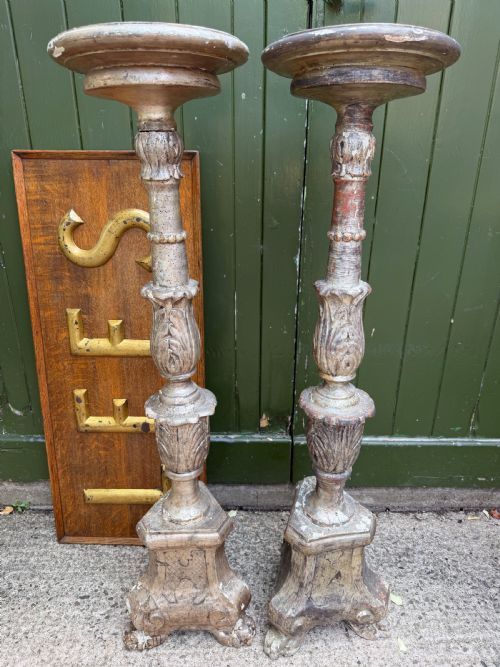


Italian Wooden Pricket Candlesticks
Italian wooden pricket candlesticks are towering altar lights and torcheres that bring sculptural presence and centuries of devotional craftsmanship into a room.
Italian Wooden Pricket Candlesticks
When you search for Italian wooden pricket candlesticks, you are looking at carved devotional furnishings that originate from churches and domestic chapels across Italy. These heavy altar-style lights date from the eighteenth and nineteenth centuries, spanning periods from the Baroque era through to later revivals.
The objects appearing on this page take several distinct forms, including monumental torcheres, standard lamps, and smaller altar candlesticks. Many retain their original spikes, known as prickets, designed to hold large beeswax candles during liturgical services.
Stylistic influences range from exuberant Florentine and Venetian Baroque carvings to restrained Neoclassical and provincial designs. You will encounter pairs of tall giltwood standards alongside converted lamp bases that preserve the historic wooden structure.
How they were made
Artisans built these candlesticks from native timbers such as pine and other structural woods, carving the bulk of the shafts and bases by hand. Craftsmen then applied layers of gesso to the carved wooden surfaces to create a smooth, resilient ground for subsequent decoration.
Finishing techniques relied heavily on the application of fine metallic leaf, including silver leaf and gold leaf, often sealed with mecca varnish to impart a warm, aged tone. Select examples also incorporate polychrome paint and iron or brass components to reinforce the structure.
Many of these towering altar sticks spent centuries enduring stubborn candle drips before finding a second life holding modern lamp fittings.
What varies in quality
The distinction between ordinary and exceptional pieces rests upon the depth and vigour of the hand carving. Finer examples display crisp undercut foliage, balanced proportions, and expressive sculptural details that reflect the hand of a skilled artisan rather than routine workshop production.
The integrity of the original gesso and metal leaf finish determines the visual power of a candlestick. Pieces that retain their historic silvered or gilt surfaces with natural patination command greater attention than those with heavy, unsympathetic modern repainting.
The Italian Wooden Pricket Candlesticks Glossary
- Pricket
- A sharp metal spike on top of a candlestick designed to impale and secure a large candle. This traditional fitting distinguishes altar sticks from socket candlesticks.
- Torchere
- A tall ornamental stand or candlestick designed to support a light source. These imposing fixtures often feature heavily turned or carved wooden shafts.
- Gesso
- A plaster-like mixture applied to wood to create a smooth surface for gilding or painting. It allows carvers to achieve sharp relief details before applying metal leaf.
- Giltwood
- Timber decorated with a thin layer of gold leaf over a prepared ground. It provides a luminous surface that reflects candlelight in dim ecclesiastical interiors.
- Mecca varnish
- A transparent yellow-gold lacquer applied over silver leaf to simulate the rich appearance of gold. It creates a distinctive warm metallic sheen found on antique Italian furnishings.
Italian Wooden Pricket Candlesticks: Frequently Asked Questions
How do I date these candlesticks?
Dating relies on examining the carving style, the type of wood, and the construction methods visible beneath the surface finishes. Eighteenth-century examples typically show heavier timber framing and deep, spirited Baroque or Neoclassical carving.
Later nineteenth-century pieces and revival items often adopt lighter proportions or incorporate stylistic traits from earlier periods. Surface finishes like gesso and mecca varnish also help place the object within a specific era.
Were these used in homes?
While originally designed for altars, chapels, and grand ecclesiastical spaces, many large torcheres and candlesticks found their way into domestic interiors over the centuries. Wealthy families often displayed them in antechambers or private oratories to project status and piety.
Today, their grand proportions make them well-suited as sculptural floor standards or architectural focal points in large living spaces.
How should I live with giltwood?
Giltwood requires a stable environment away from direct sunlight and excessive moisture to protect the delicate metallic leaf and underlying gesso. Dust them gently with a soft, dry brush, avoiding modern chemical polishes that can strip the historic finish.
Accepting the natural losses and gentle rubbing of the gold or silver leaf is part of living with authentic antique devotional items.