
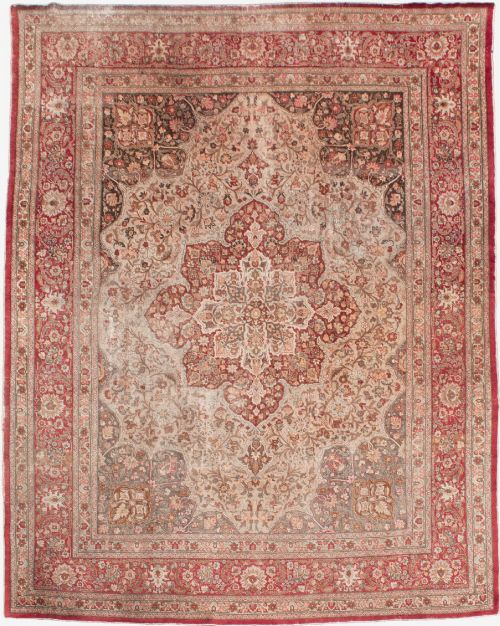
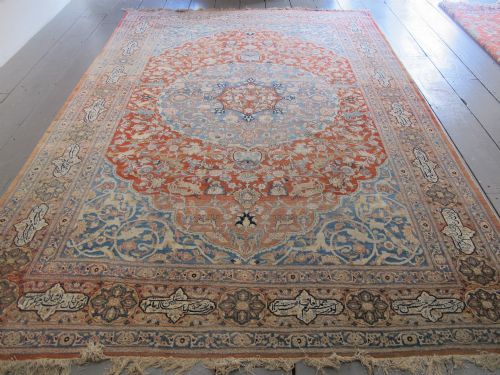


Tabriz Medallion Carpet
A tabriz medallion carpet anchors a room with centuries of Persian weaving tradition, offering intricate central motifs and durable construction.

Tabriz Medallion Carpet
A tabriz medallion carpet represents a sophisticated strand of Persian carpet production, originating from the historic weaving centre of Tabriz in north-west Persia. These floor coverings range from compact room-size formats to large country house proportions measuring over four metres in length.
The version most frequently encountered on this page is the antique room-size carpet or rug, typically dating from the late nineteenth century to the early decades of the twentieth century. Examples often display traditional floral medallion designs or overall patterns executed within a structured Persian format.
Pieces from this category include specific regional workshop attributions, such as creations associated with master weavers or houses like Haji Jalili and Benlian. Buyers encounter both grand reception formats and smaller village pieces reflecting the diverse output of the Tabriz region.
Materials and Construction
The foundational structure of these textiles relies upon sturdy cotton warps and wefts, providing a stable grid that supports the dense pile. Wool forms the primary pile material across the majority of examples, yielding a resilient surface suited to domestic use.
Selected finer pieces incorporate silk into the pile or structural elements, allowing for enhanced detail in the execution of classic floral motifs. Natural dyeing traditions produce the characteristic soft pastel tones and deeper colour palettes recorded in the period evidence.
Tabriz Medallion Carpet Retail Price Guide 2026
Typical asking prices for tabriz medallion carpet among the pieces listed under this phrase on Sellingantiques today, from the lower quarter to the upper quarter. They describe what is for sale here now, not the wider market.
Listings span production dates from the eighteen-seventies to the nineteen-thirties, documenting both room-size formats and compact area rugs.
Assessing Quality
Quality in these carpets rests upon the precision of the knotting density and the refinement of the drawing within the medallion and border systems. Master workshop pieces demonstrate exceptional clarity in floral articulation and a harmonious balance of colour.
The handling of materials also distinguishes the grade, where finely spun wool or the judicious use of silk contributes to a suppleness in the drape and handle of the textile. Scale and proportion further elevate certain examples, particularly grand country house carpets maintaining architectural symmetry.
Haji Jalili·Benlian
The Tabriz Medallion Carpet Glossary
- Medallion
- A symmetrical central ornament placed in the field of a carpet. This decorative focal point structures the surrounding floral and geometric design.
- Pile
- The upright yarn loops that form the usable surface of the carpet. Hand-knotted from wool or silk, the pile determines the texture and depth of the pattern.
- Warp
- The stationary longitudinal threads stretched on the loom before weaving begins. Cotton serves as the standard warp material for these Persian pieces.
- Weft
- The transverse threads passed across the warps to bind the knots in place. Together with the warp, it forms the foundational grid of the textile.
- Region
- The geographical area associated with the production of a specific weaving style. North-west Persia designates the provenance for these Tabriz examples.
Tabriz Medallion Carpet: Frequently Asked Questions
How do I date a tabriz medallion carpet?
Dating relies upon stylistic markers, structural analysis, and comparative evidence from late nineteenth and early twentieth century production. Period attributions span from the eighteen-eighties through to the nineteen-thirties based on wool quality, dye palettes, and design execution.
Workshop signatures or specific attribution names woven into certain pieces provide further chronological precision for collectors.
Where were these carpets made?
These textiles originate from Tabriz, a major historic weaving hub situated in north-west Persia. Production encompasses both urban workshop output and regional village interpretations.
Master weavers and commercial houses established specific aesthetic standards in this region that endured across decades.
What materials are used in their construction?
The foundation typically consists of cotton warps and wefts, providing stability to the textile. Wool forms the primary pile, while select finer examples integrate silk.
Natural dyeing techniques supply the soft pastel tones and traditional colour combinations found across the inventory.
How should I care for an antique carpet?
Protect the textile by placing it in areas with moderate foot traffic and avoiding direct, prolonged exposure to sunlight. Regular gentle vacuuming without a rotating brush helps maintain the wool pile.
Consult a specialist in antique textile conservation for professional cleaning and maintenance.
What distinguishes a hajji jalili carpet?
Pieces attributed to this maker or workshop are noted for exceptionally fine knotting and refined drawing styles. They frequently employ a softer, muted palette compared to standard commercial production.
The overall aesthetic balances classical Persian floral motifs with a subtle elegance valued by collectors.