

Swivel Office Armchair
A swivel office armchair brings mechanical utility and period timber together, offering solid support for daily desk work.
Swivel Office Armchair
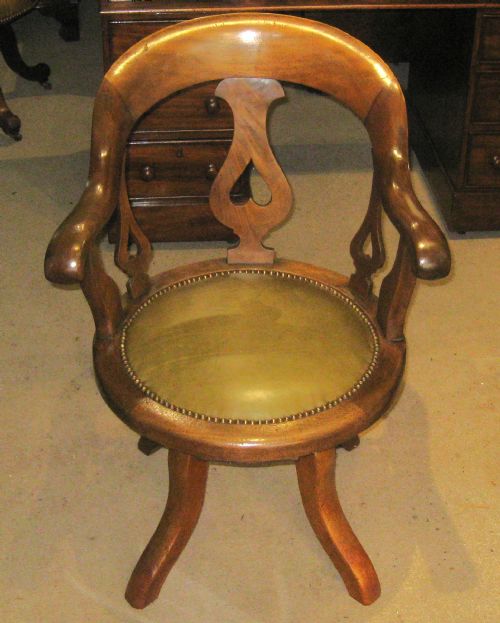
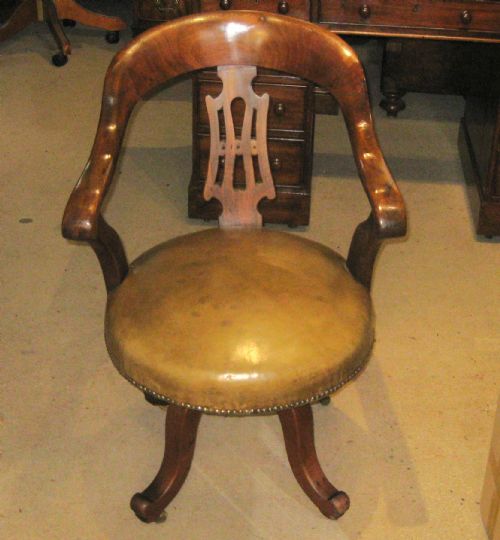
When searching for a swivel office armchair, a buyer encounters sturdy seating built to turn and adjust for long hours at a desk. These chairs date predominantly from the Victorian and Edwardian periods, stretching from the late nineteenth century into the early twentieth century.
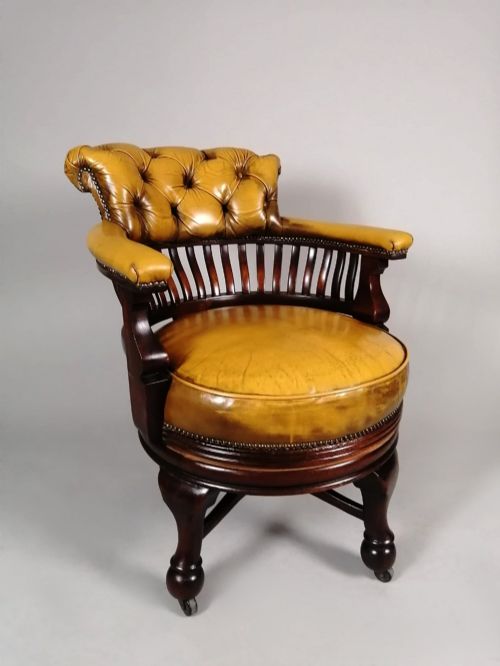
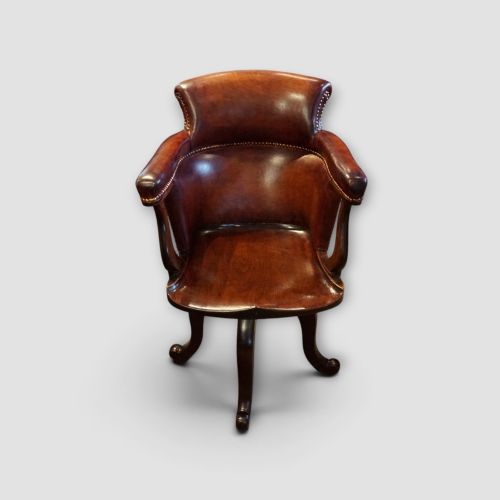
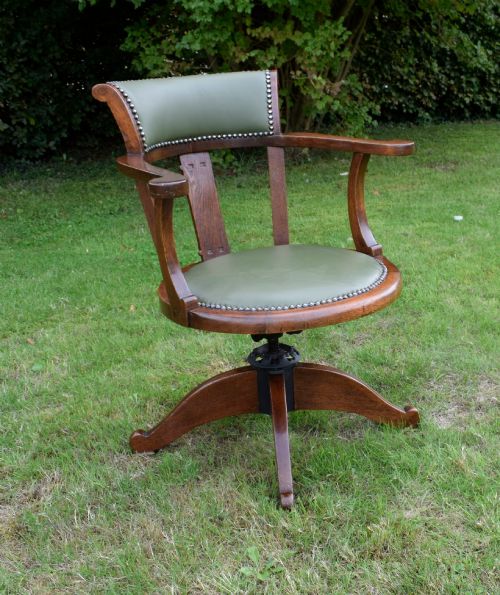
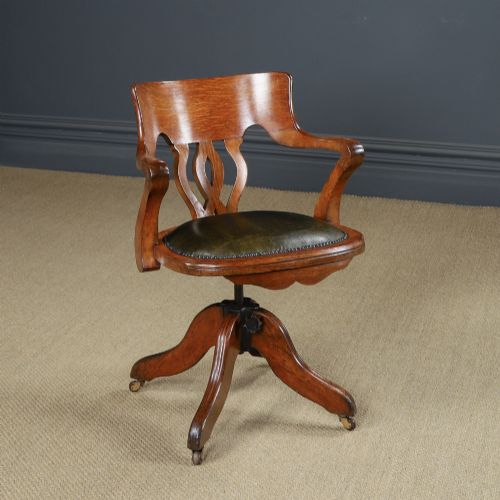
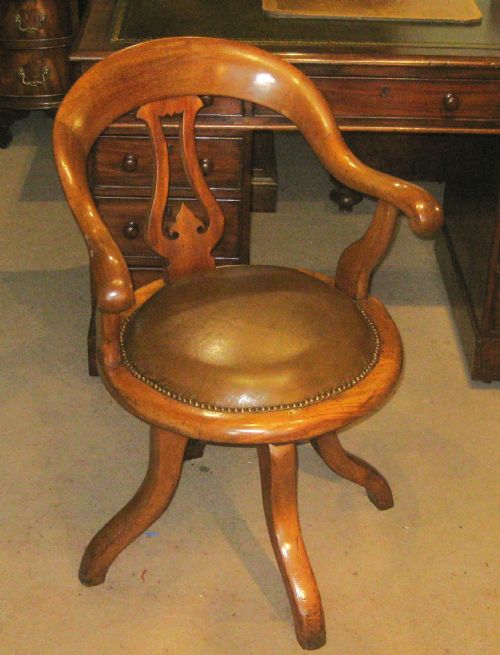
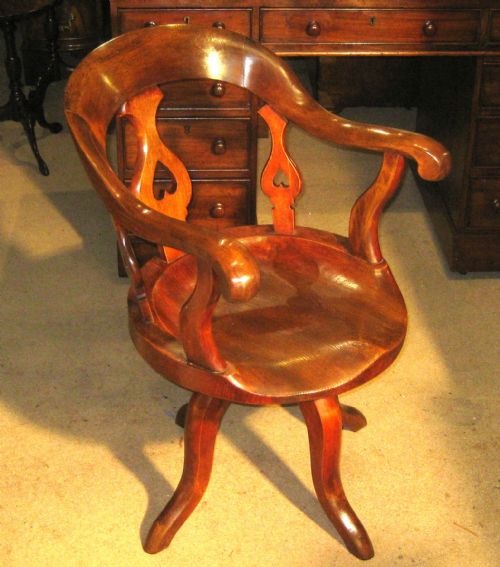
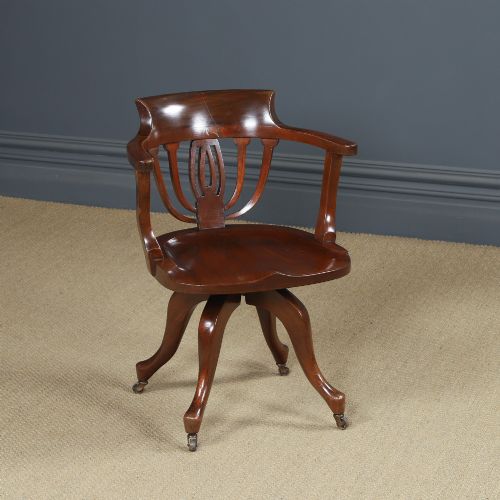
The most common form on this page is the revolving desk chair fashioned in timber with a low back and arms. Many of these pieces originate from British workshops and feature mechanical height adjustment.
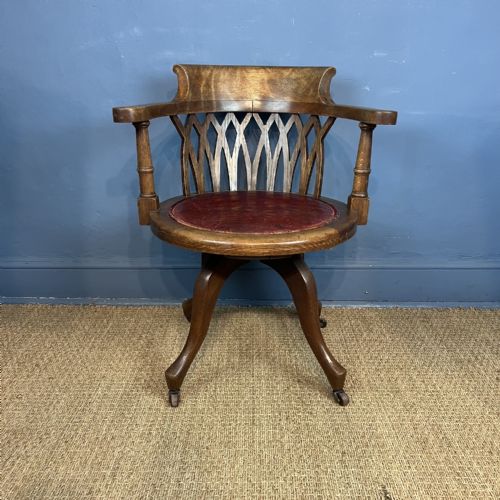
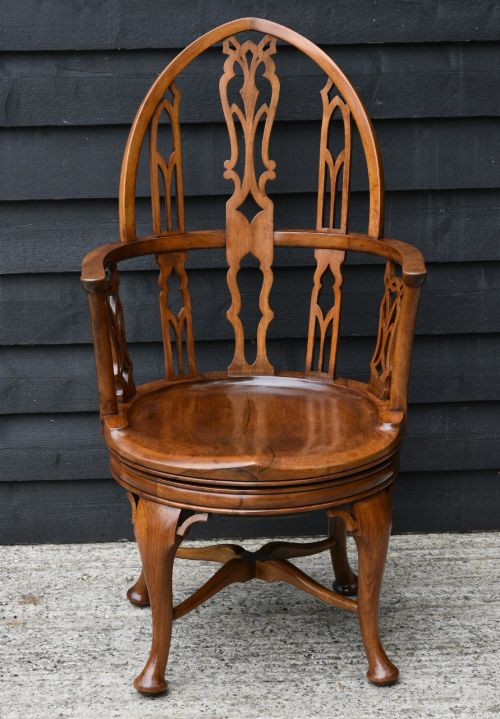
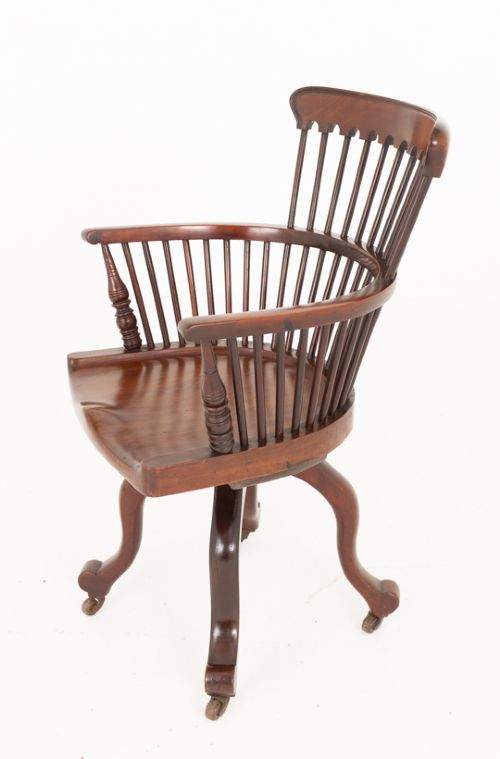
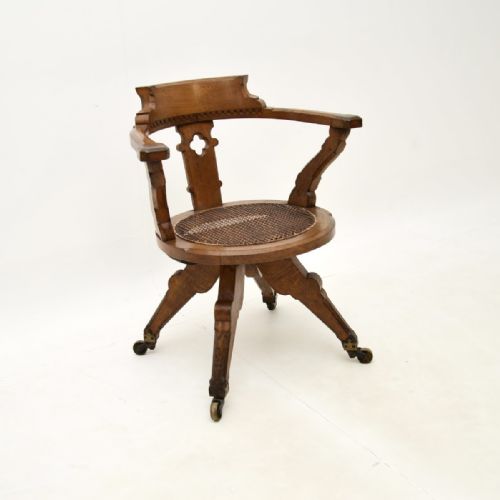
Makers often built these chairs as Captains chairs or library seating, incorporating solid wood frames designed to withstand constant rotation. Examples appear in various regional styles, including Gothic Revival and Arts and Crafts.
How they were made
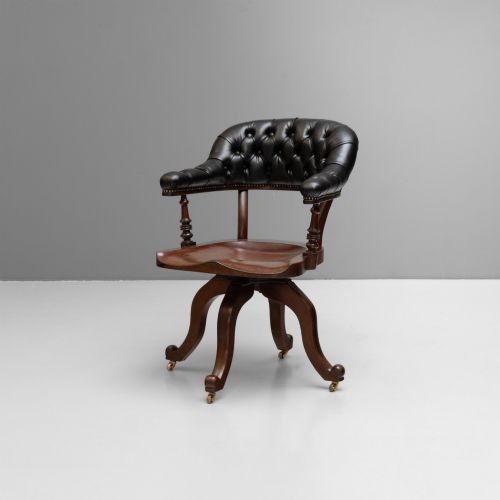
Cabinet makers built these chairs using hardwoods such as mahogany, oak, and walnut, often pairing them with leather or hide upholstery. The primary timber provided a rigid frame while cast iron and brass mechanisms allowed the seat to swivel and tilt.
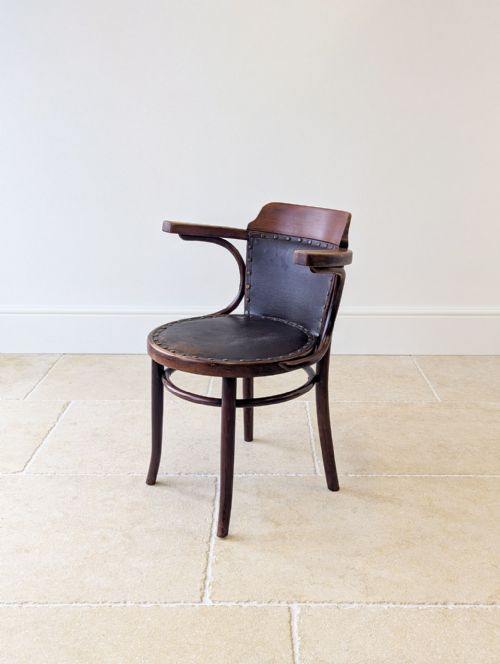
Joinery techniques relied on sturdy dowels and bentwood construction, particularly in Thonet models, to handle the stress of daily movement. Craftsmen fitted metal spindles beneath the seat to support the revolving action.
The inventory spans the Victorian and Edwardian periods alongside the Arts and Crafts style.
What varies in quality
The sophistication of the revolving mechanism and the weight of the cast iron components separate standard office seating from finer library examples. Better pieces utilise heavy timber turnings and thick leather hides secured with closely spaced brass tacks.
Design ambition also marks the upper tier, where cabinet makers incorporated carved Gothic details, aesthetic movement inlays, or complex tilt mechanisms. Simpler variants rely on plain oak or mahogany frames with straightforward spindle backs.
Kendrick & Jefferson·T Scott & Co
The Swivel Office Armchair Glossary
- Revolving
- Turning completely on a central vertical axis. This mechanism relies on an internal iron spindle or screw thread.
- Captains Chair
- A low backed wooden armchair designed for office or library use. These typically feature spindle supports around the arms and back.
- Bentwood
- Wood steamed and bent into curved shapes. This technique creates rounded chair backs without traditional joints.
- Bergere
- A closed upholstered armchair with a cane or wicker panelled back and sides. Some office variants integrate this weave into the arms.
- Gothic Revival
- A nineteenth century architectural and decorative style. Furniture in this taste uses pointed arches, tracery, and heavy carved mouldings.
Swivel Office Armchair: Frequently Asked Questions
How do I adjust the height on these chairs?
Many period swivel chairs use a central wooden or iron screw mechanism hidden beneath the seat. Turning the entire seat clockwise or anticlockwise raises or lowers the platform.
Other examples feature a tilt and swivel mechanism controlled by a metal lever or underseat spring assembly.
Were these chairs meant for ships?
Certain specialised forms, such as ships chairs, were constructed with weighted bases or distinct frames to remain stable at sea. Manufacturers like P & O utilised revolving chairs in maritime settings.
Standard desk chairs, however, were intended for stationary offices, libraries, and studies on land.
How do I care for the leather upholstery?
Period leather requires careful cleaning with a damp cloth followed by a neutral wax or leather food to maintain flexibility. Avoid synthetic detergents that dry out nineteenth century hide.
Keeping the chair away from direct heat sources prevents the leather from cracking around the tack lines.
How do I distinguish Victorian from Edwardian examples?
Victorian office chairs generally employ darker timbers like mahogany and walnut, frequently featuring heavy turnings or Gothic Revival details. These pieces often emphasise deep, formal upholstery.
Edwardian variants lean towards brighter oak frames, simpler lines, and the influence of the Arts and Crafts movement.