




Executive Swivel Chair
An executive swivel chair brings genuine gravitas to a study, offering the mechanical comfort and traditional presence that serious desk work demands.
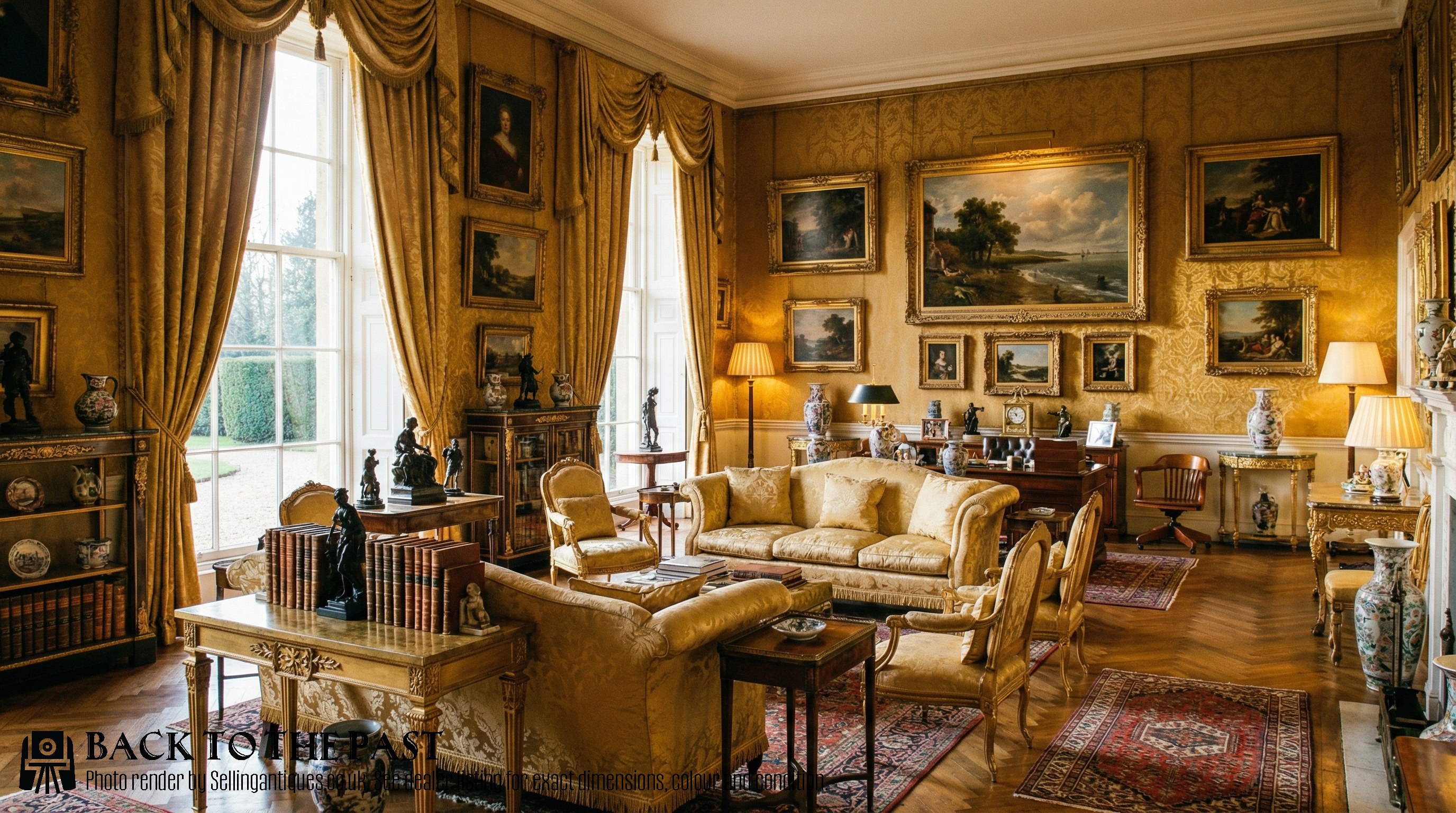
Executive Swivel Chair
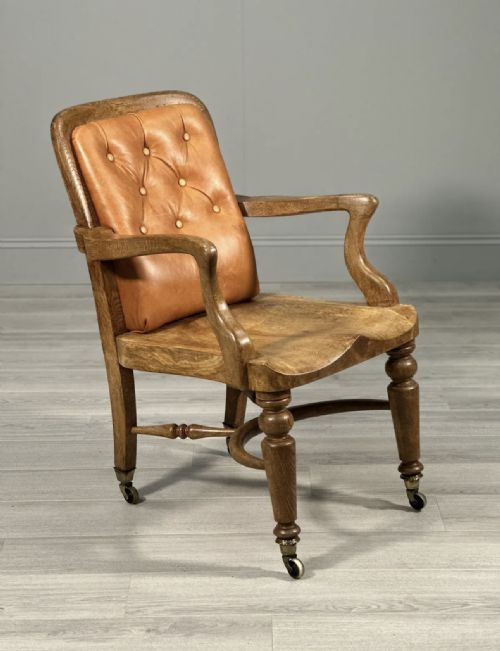
When you search for an executive swivel chair, you encounter a robust lineage of nineteenth and early twentieth-century seating designed for administrative labour and studies. These forms encompass Victorian golden mahogany revolving desk chairs, Edwardian oak examples, and early twentieth-century variants built for sustained daily use.
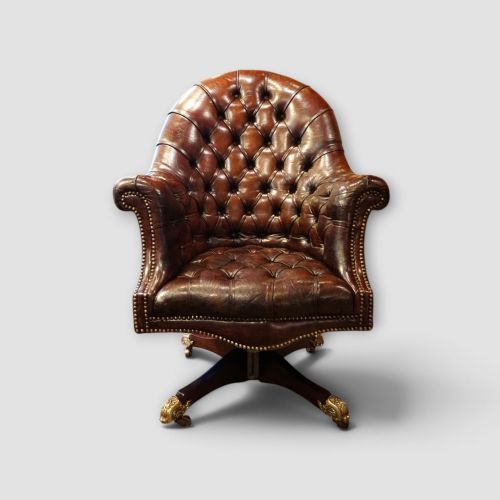
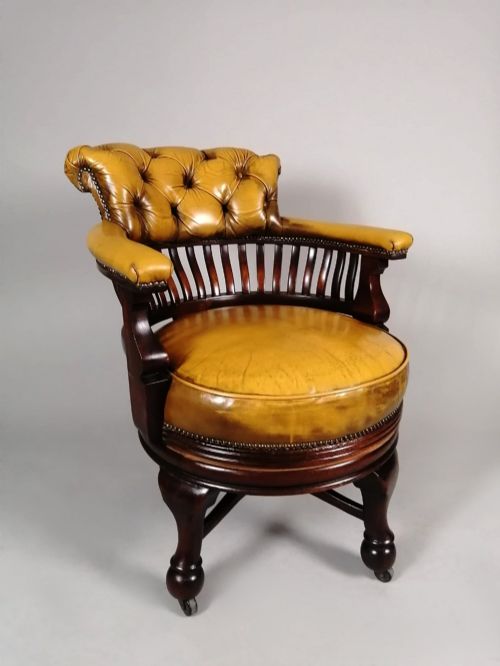
You are most likely to meet mahogany or oak framed models upholstered in leather, featuring a revolving mechanism supported by a cast iron or iron undercarriage. The nineteenth-century and Victorian styles dominate the selection, often pairing deep buttoning with substantial timber frames.
The typology bridges the gap between domestic armchair comfort and office utility, incorporating height adjustment and revolving movement into traditional cabinet-making. These pieces serve as functional furniture rather than decorative items, built to anchor a partner desk or library table.
How they were made
Makers constructed the primary frames of an executive swivel chair using dense hardwoods like mahogany and oak, alongside bentwood for curved structural elements. These timbers were selected for their ability to withstand the rotational stresses placed upon a revolving seating platform.
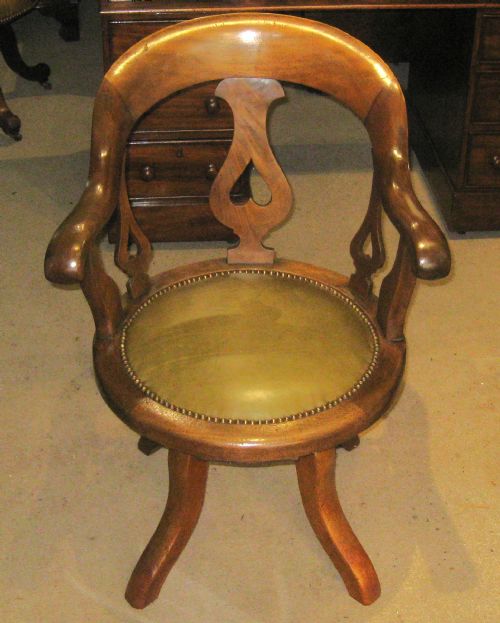
Upholstery typically involved leather stretched over padding and secured with brass tacks, occasionally complemented by fabric or distressed green leather finishes. The mechanical capability relied upon iron and cast iron components housed beneath the seat to permit smooth swivelling action.
Victorian clerks spun on iron pivots with such enthusiasm that entire generations of office furniture developed remarkably squeaky personalities.
What varies in quality
The distinction between standard office seating and superior examples rests upon the architectural ambition of the timber frame and the sophistication of the turning work. Finer models display carefully chosen mahogany or golden mahogany grain, substantial arm construction, and well-proportioned spindle arrangements.
Mechanical integrity and the original condition of the iron revolving mechanism dictate the functional standard of each piece. Superior execution involves robust joinery that supports the swivel action without excessive play, alongside high-grade leather upholstery that ages gracefully.
WM Heywood Chair Co
The Executive Swivel Chair Glossary
- Revolving
- The property of a chair that allows the upper seat section to turn full circle on a central spindle or iron pivot mechanism.
- Bentwood
- Wood steamed and pressed into curved structural shapes, frequently utilised for the supportive backs of desk chairs.
- Mahogany
- A durable tropical hardwood prized for its rich reddish-brown tone and strength, commonly employed in Victorian and Edwardian office furniture.
- Cast Iron
- A heavy alloy used to form the sturdy undercarriages, bases, and mechanical brackets that support swivel desk seating.
Executive Swivel Chair: Frequently Asked Questions
Are executive swivel chairs comfortable for daily work?
These pieces were originally engineered for long hours of administrative desk work, offering sturdy back support and ergonomic movement for their era.
Most examples feature upholstered leather seats and supportive armrests, making them practical for modern study spaces when paired with appropriate desk heights.
How do I identify a Victorian desk chair?
Victorian models typically utilise rich mahogany timbers, turned wooden spindles, and heavy iron revolving mechanisms beneath the seat. Look for deep leather upholstery and traditional joinery methods characteristic of the nineteenth century.
Later Edwardian versions often favour oak frames and slightly lighter proportions while retaining the functional swivel base.
Do these chairs adjust for height?
Many period revolving chairs incorporate a threaded iron spindle or mechanical screw mechanism concealed beneath the seat. Turning the seat allows the user to raise or lower the chair position.
This functional adaptation distinguished executive office furniture from standard domestic armchairs during the Victorian and Edwardian periods.
How do I care for leather upholstery on an antique chair?
Maintain the leather by applying appropriate conservation waxes or leather balms to prevent drying and cracking over time. Avoid placing the chair in direct sunlight or near heat sources.
Gentle dusting with a soft cloth preserves the original finish and the character of distressed leather surfaces.