
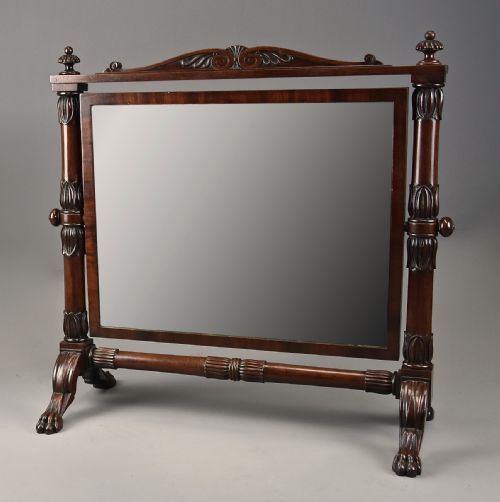
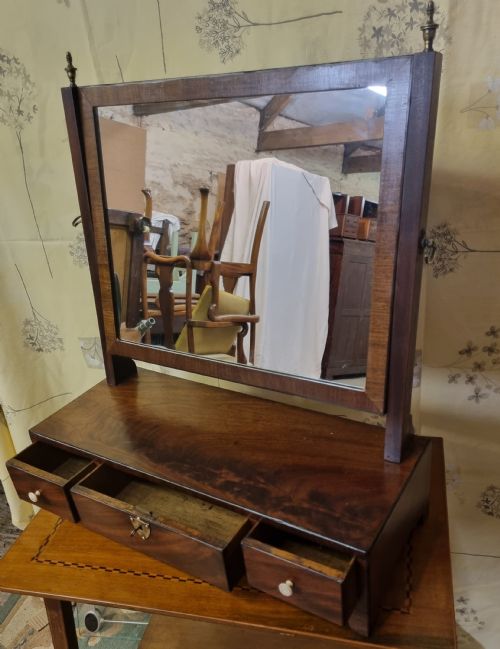
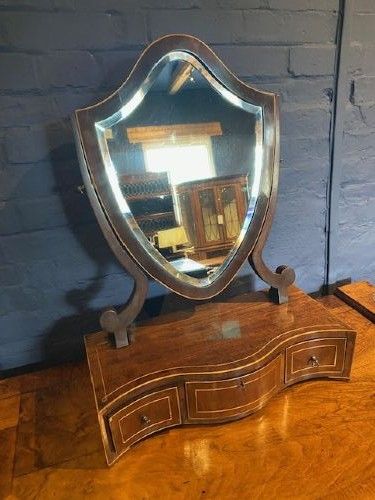
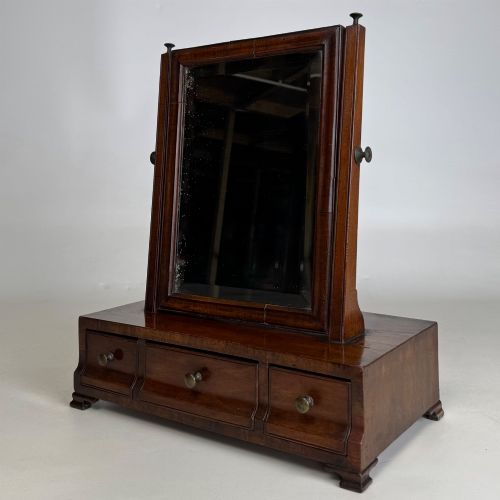
Swing Vanity Mirror
When you look for a swing vanity mirror, you are seeking a practical pivoting glass for a dressing surface that brings period timber and proportion to a room.
Swing Vanity Mirror
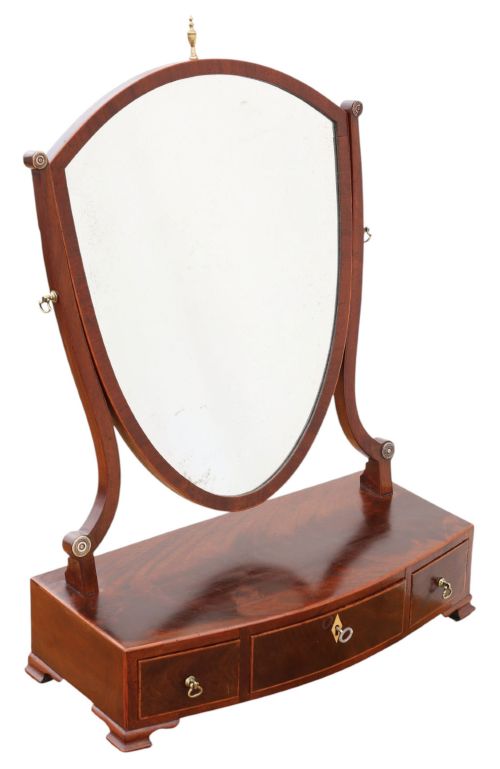
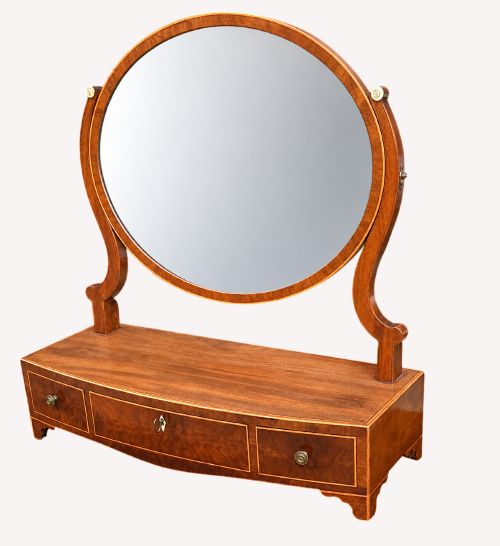
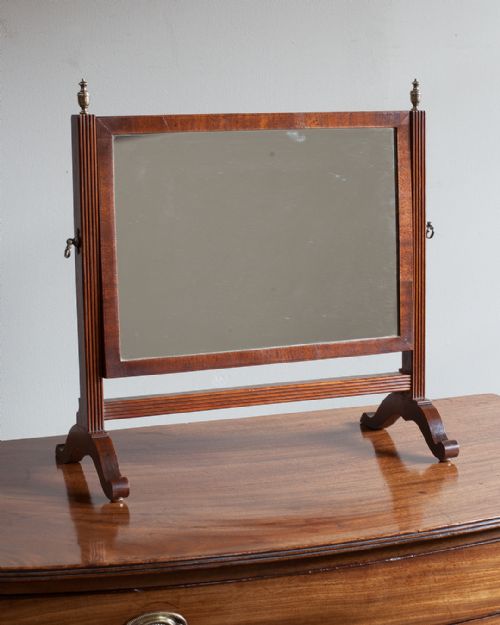
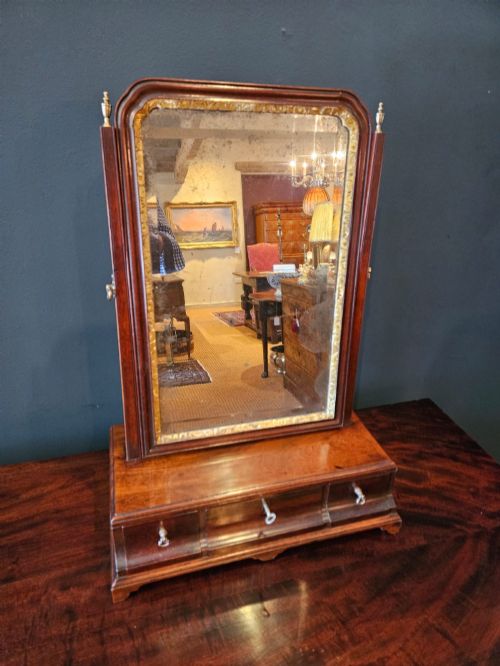
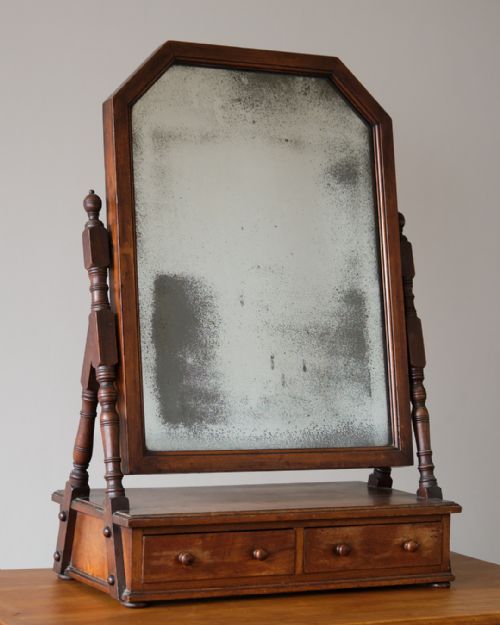
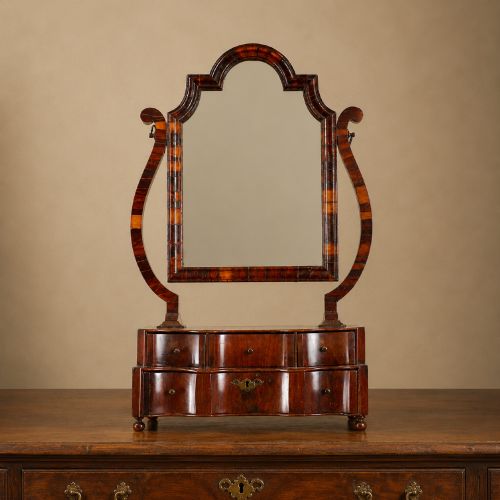
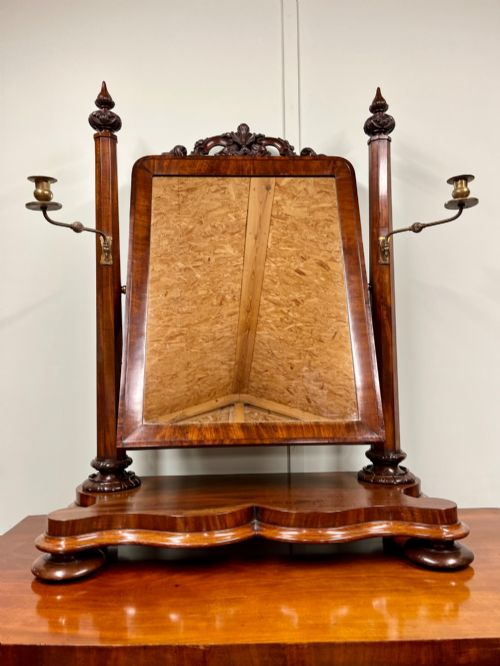
A swing vanity mirror is a pivoting looking glass designed to sit upon a dressing table, chest of drawers, or dedicated platform base. The glass hangs in a vertical or horizontal frame supported by two upright arms, allowing the user to tilt the angle of reflection as needed.
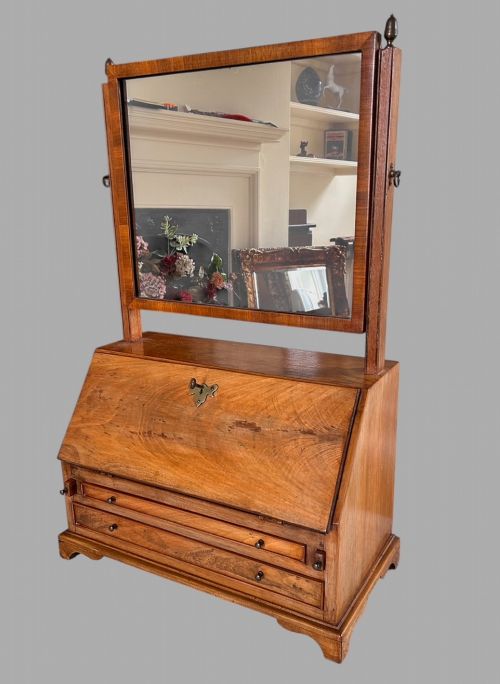
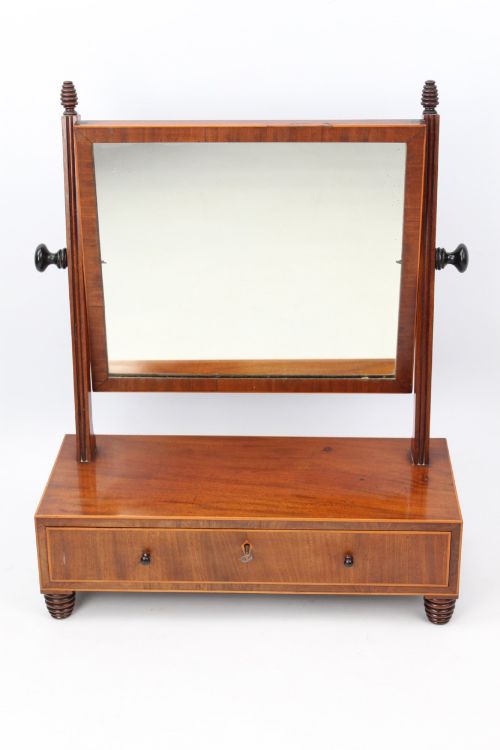
The most common examples met on this page date from the Georgian and Victorian periods, alongside Regency and Edwardian variations. They appear in forms such as dressing mirrors, toilet mirrors, and tabletop bureaux fitted with small drawers beneath the plate.
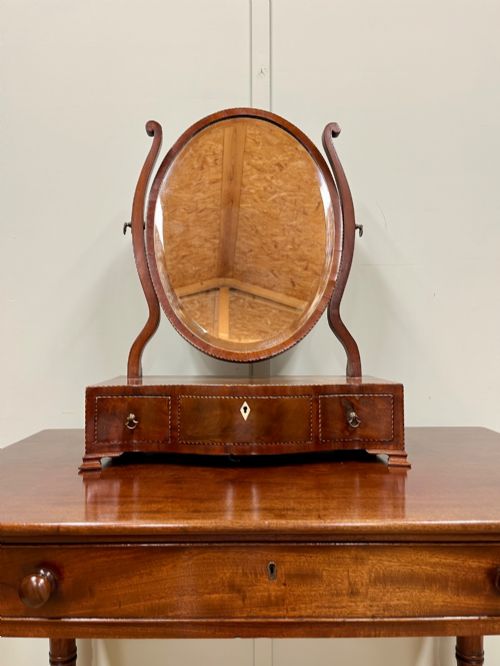
Makers constructed these pieces to complement bedroom furniture of the same era, utilising cabinet woods that matched larger chests and wardrobes. They range from simple rectangular plates on plain uprights to elaborate setups with serpentine drawer boxes and candle sconces.
How they were made
Makers relied primarily on mahogany, walnut, and satinwood, often selecting figured grains for the drawer fronts and crossbanding the edges with contrasting veneers. Secondary timbers like oak lined the small storage compartments and supported the internal framework.
The pivoting mechanism relied on brass screw pins, side knobs, or swing-lock hardware set into the upright supports to hold the frame steady at the desired angle. Glass plates were silvered by hand in earlier examples and set into rebated frames with wooden backboards.
What varies in quality
The caliber of a swing vanity mirror rests on the selection of timber veneers and the crispness of the cabinetwork on the base box. Better examples feature finely figured mahogany or walnut, neat dovetailing on the drawers, and substantial cast brass hardware rather than stamped metal.
Proportion and stability separate standard pieces from exceptional ones. A well-designed mirror plate matches the weight and footprint of the supporting base without tipping when tilted, while the upright standards exhibit careful turning or carving that reflects the prevailing style of the period.
P & MA Nicholson·Heal & Sons·Gillows
The Swing Vanity Mirror Glossary
- Toilet mirror
- A term historically used for a small tabletop dressing glass designed for personal grooming. These often sat upon a chest or dedicated stand.
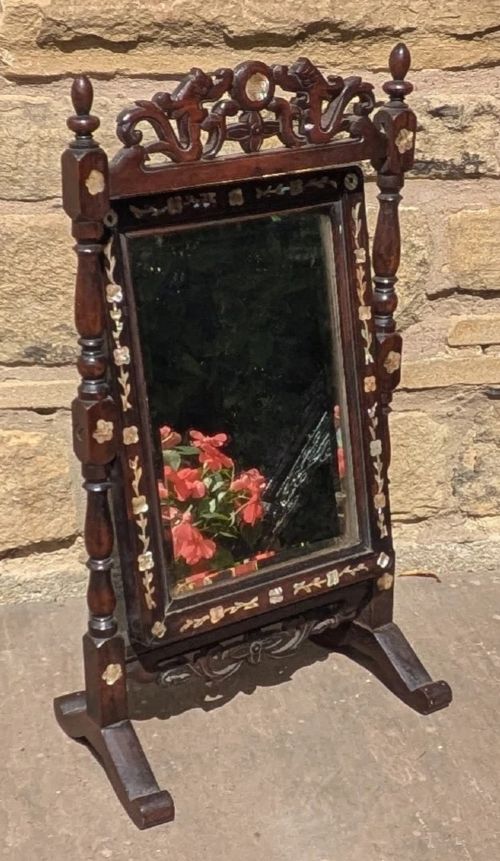
- Cheval mirror
- A full-length swing mirror supported on a freestanding floor frame rather than a table base. Some smaller tabletop variants adopt this upright proportion.
- Crossbanding
- A decorative border of veneer laid around the perimeter of a drawer front or mirror frame with the wood grain running perpendicular to the centre panel.
- Plate
- The sheet of glass itself, silvered on the reverse to create the reflection. Original plates often display minor blemishes and distortions characteristic of older manufacturing methods.
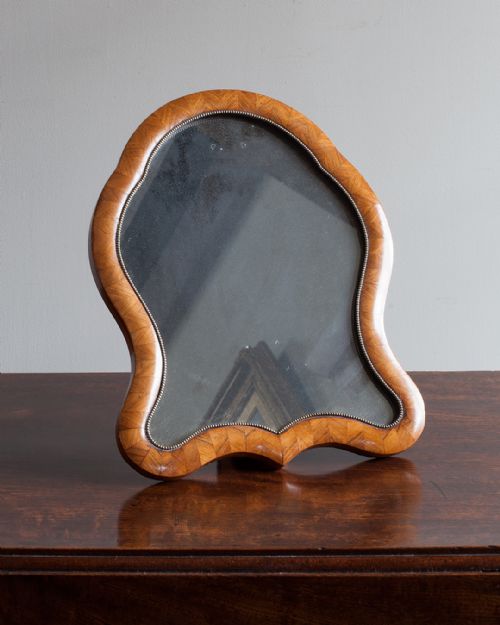
- Shield mirror
- A looking glass cut into the shape of a heraldic shield, popular during the Georgian period. It is typically mounted within a matching wooden frame that pivots between slender upright arms.
Swing Vanity Mirror: Frequently Asked Questions
What is a swing vanity mirror?
A swing vanity mirror is a tabletop looking glass mounted on pivots that allow it to tilt back and forth. They were traditionally placed on dressing tables or chests of drawers for personal grooming.
These pieces combine functional glass with small cabinet bases, often featuring one or more drawers for storage. They span multiple historic periods, incorporating the timber and design traits of their respective eras.
How were they used historically?
Historically, these mirrors served as the primary looking glass for morning routines, hair styling, and applying cosmetics in the bedroom. Users adjusted the tilt to catch the light from windows or candles.
Many examples include small drawer compartments at the base for keeping jewellery, trinkets, or grooming tools close at hand. Some specialised models even featured integrated candle sconces for evening use.
How do I date a swing mirror?
Dating relies on observing the timber species, construction methods of the drawer boxes, and the shape of the mirror frame. Georgian models frequently use mahogany with fine dovetails, while Victorian versions often feature heavier proportions and darker finishes.
Hardware also offers clues, as original brass side screws, knobs, and lock plates correspond to the manufacturing techniques of specific decades. Examining the backing boards and the silvering on the glass plate further helps confirm the age.
Where should I place it?
A swing vanity mirror works well atop a sturdy chest of drawers, a dressing table, or a dedicated console surface. It provides both a functional reflection and a classic decorative touch to a bedroom or hallway.
Because these pieces are top-heavy when adjusted, placing them on a stable, flat surface away from busy walkways ensures they remain secure. Their compact footprint also makes them suitable for smaller spaces where a full-length floor mirror will not fit.