
Swing Mirror Dressing Table
When you search for a swing mirror dressing table, you are looking at tabletop and freestanding glasses designed for personal grooming across the Georgian, Regency and Victorian periods.
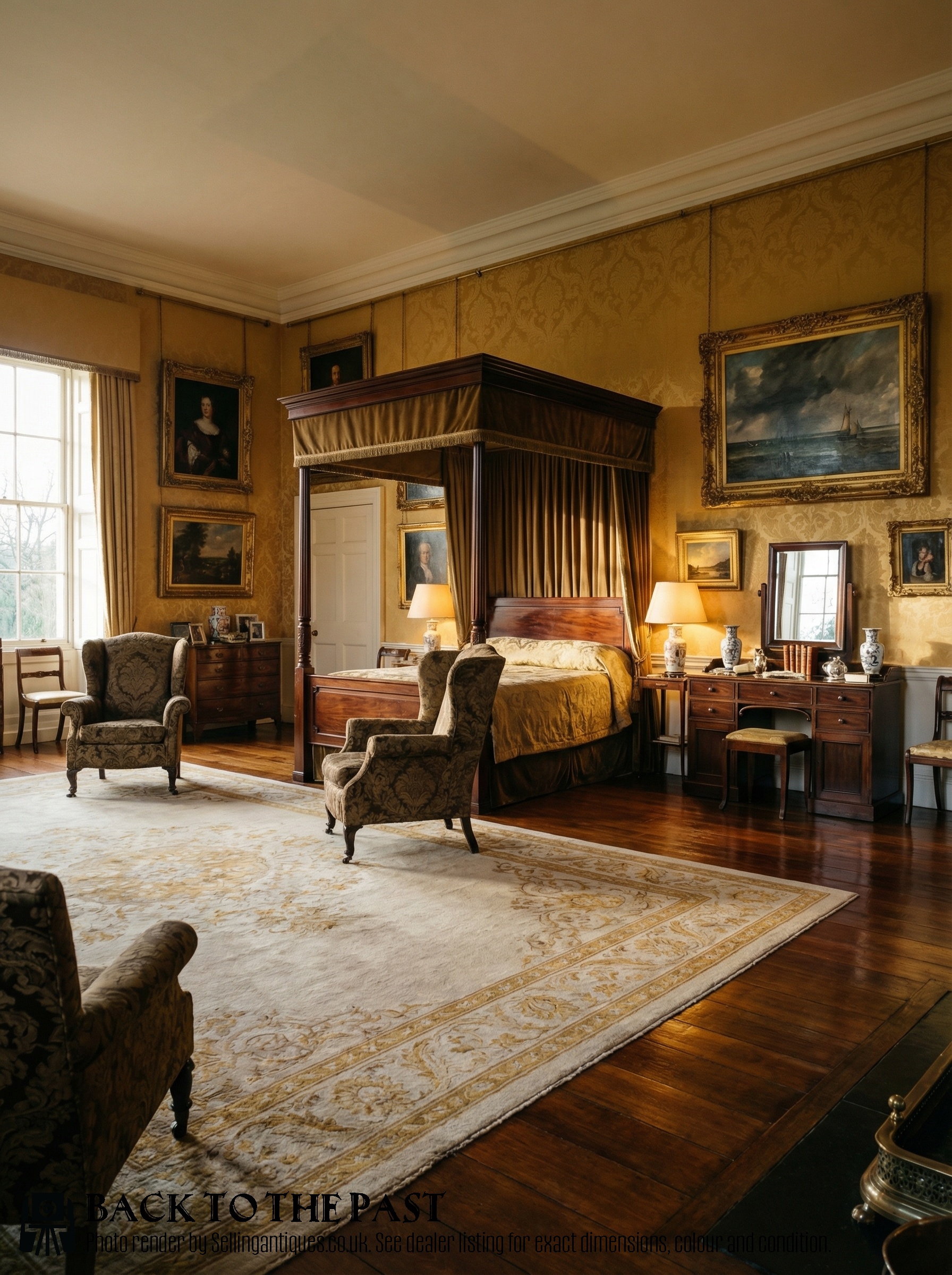
Swing Mirror Dressing Table
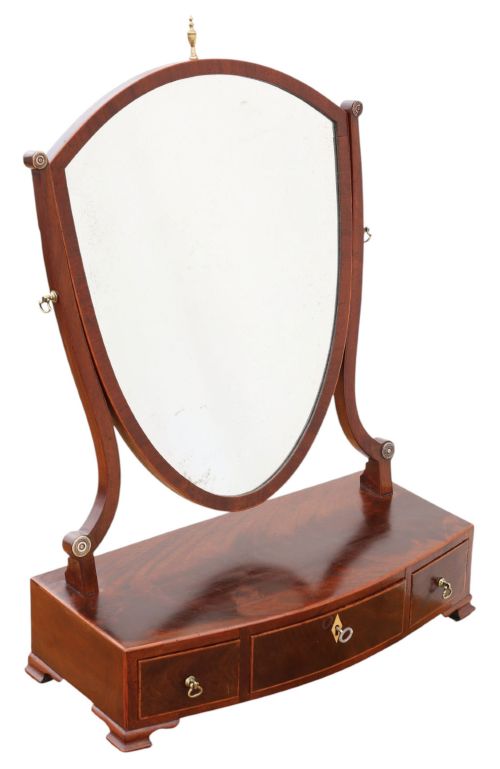
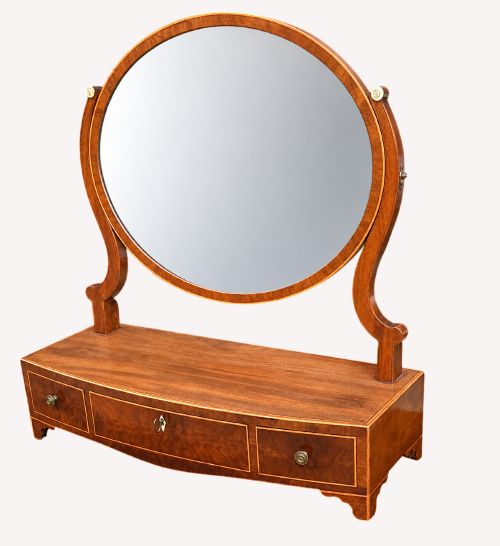
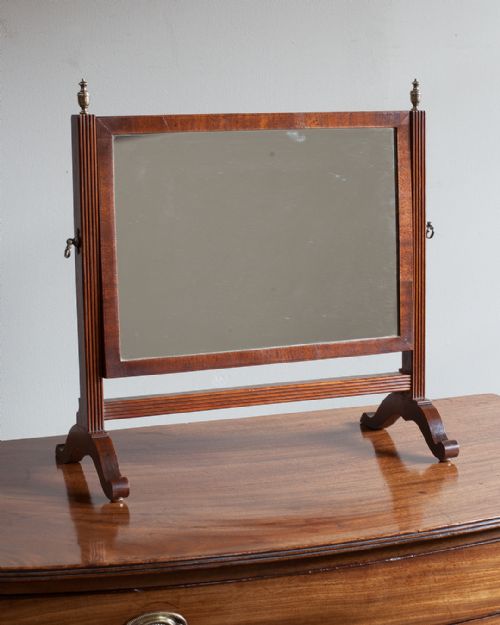
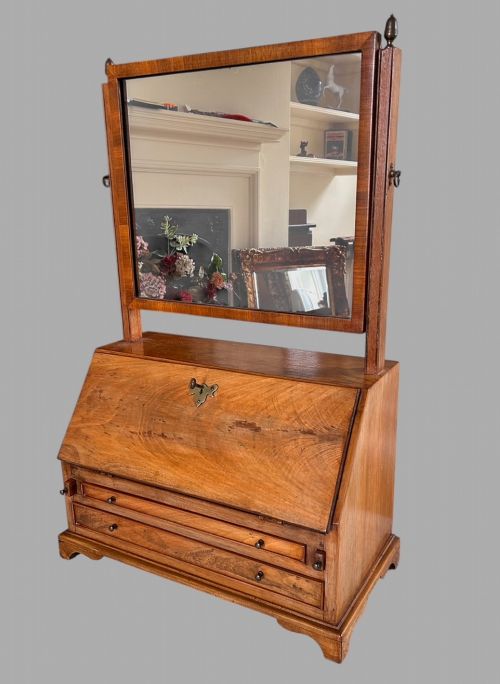
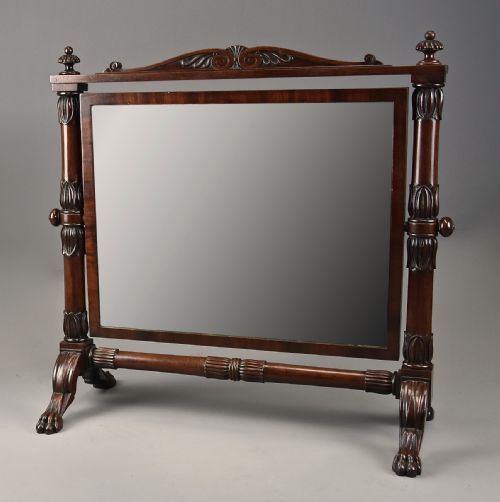
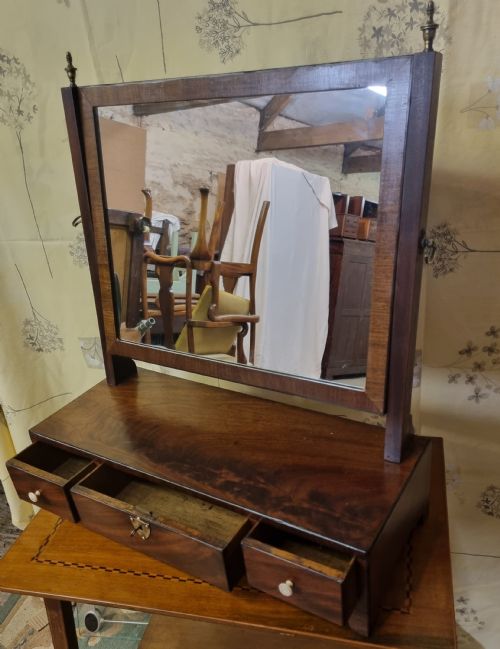
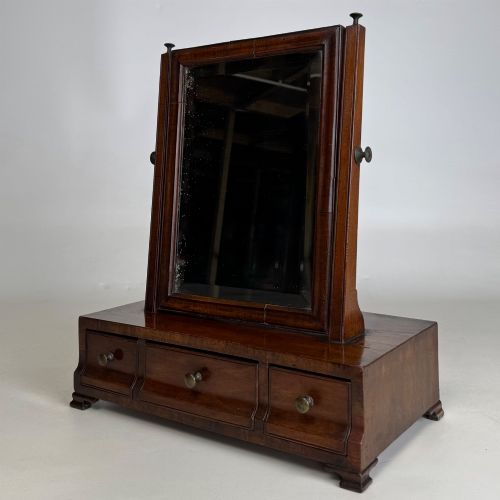
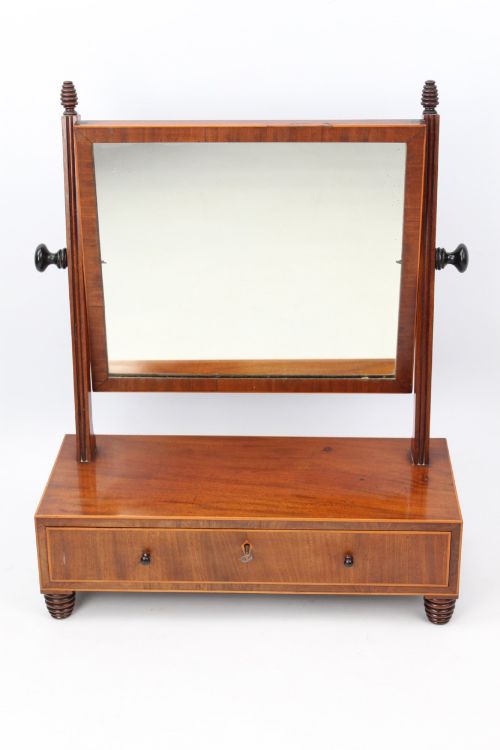
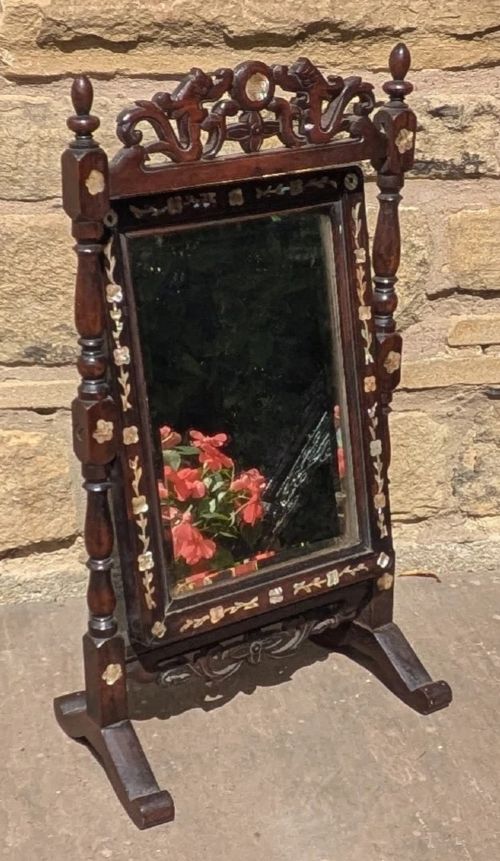
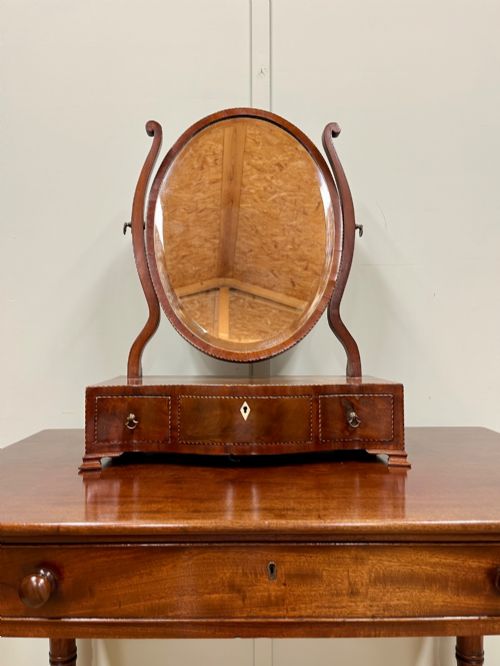
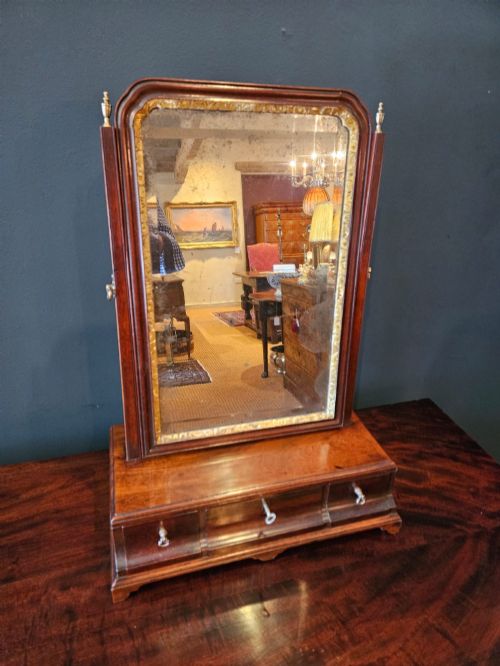
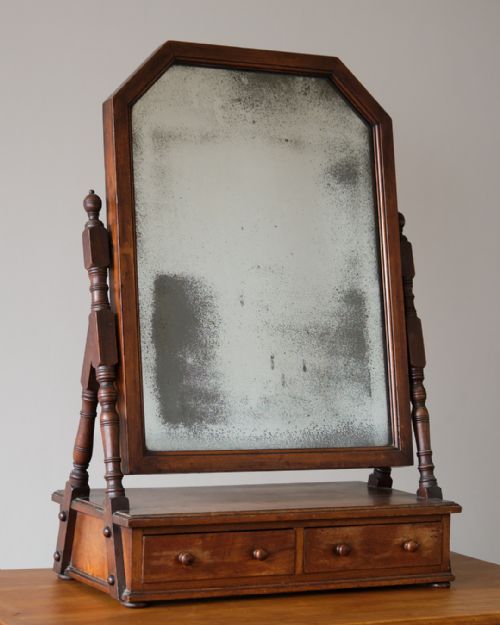
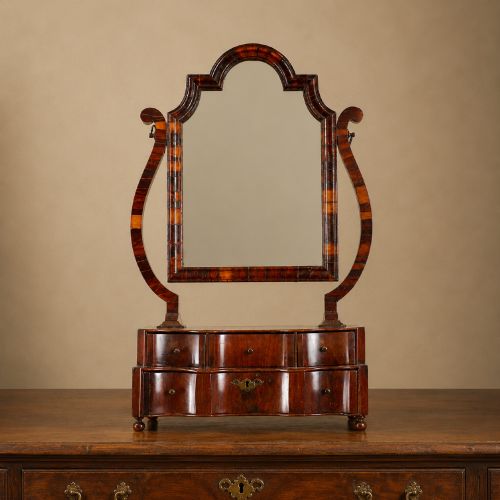
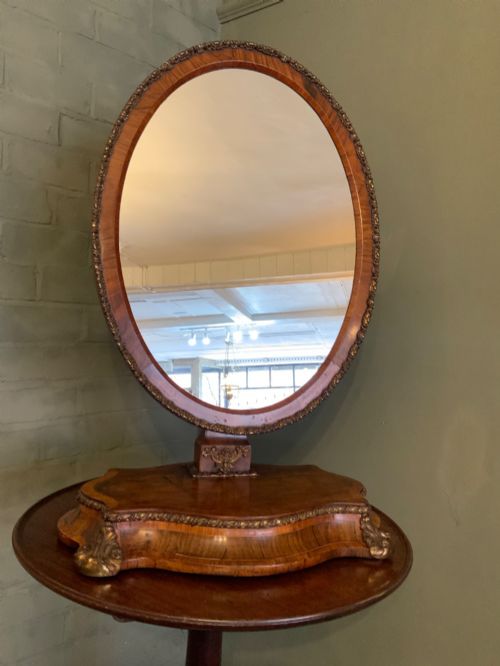
A swing mirror dressing table typically comprises a pivoting glass plate set within a supportive frame, often mounted on a small base containing functional drawers for small items. The forms seen span compact toilet mirrors intended for chests of drawers alongside larger cheval frames designed to stand directly on the floor.
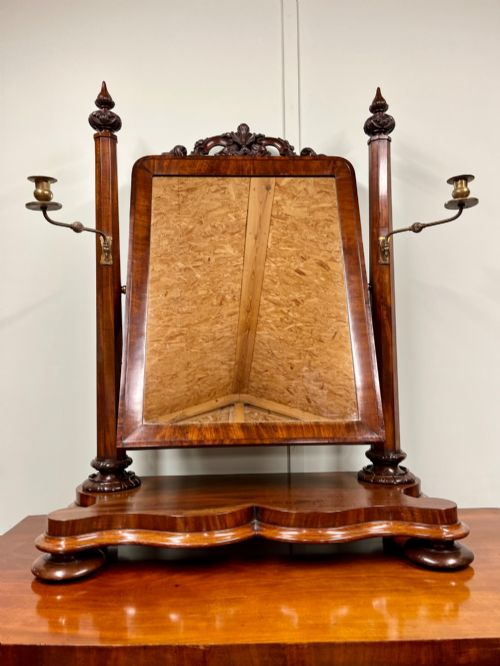
The material record is dominated by mahogany from the Georgian and Regency eras, alongside walnut, satinwood and oak examples from later Victorian and Edwardian workshops. The most frequent iteration encountered here is the mahogany tabletop mirror with a rectangular or shield-shaped glass.
Pieces frequently incorporate period details such as boxwood stringing, crossbanding, brass finials and serpentine drawer fronts. These objects trace the evolution of personal dressing furniture from the eighteenth century into the early twentieth century.
Materials and Construction
Cabinetmakers utilised dense timbers such as mahogany and walnut for structural stability, frequently employing fine veneers like flame mahogany or burr walnut on the visible drawer fronts and plinths. Brass featured prominently for pivoting screw assemblies, candle arms and decorative finials.
Mirror plates were historically silvered on glass, held in place within rebated frames by wooden slips or thin panels at the rear. Joinery methods relied on dovetailed drawer boxes and traditional tenon joints to bear the weight of the pivoting glass frame.
Listings feature mahogany, walnut and oak, spanning the eighteenth-century Georgian era to the early twentieth-century Edwardian period.
Evaluating Execution
Quality rests on the selection of timber figures, where symmetrical flame mahogany or figured walnut veneers elevate a piece above plain stock. The refinement of the brasswork, the neatness of the dovetailing in the miniature drawers and the proportion of the upright supports all indicate superior workshop practice.
Subtle details such as crossbanding, string inlay and well-turned support pillars demonstrate the maker's time and skill. The survival of original mirror glass and matching brass hardware preserves the integrity of the piece.
Heal & Sons·P & MA Nicholson
The Swing Mirror Dressing Table Glossary
- Cheval mirror
- A freestanding full-length or large dressing mirror mounted on a vertical frame with side pivots allowing it to tilt. These taller pieces usually stand on the floor rather than on a table.
- Toilet mirror
- A smaller tabletop mirror designed to sit upon a chest of drawers or a dedicated dressing table. They frequently include one or more small drawers in the base.
- Shield mirror
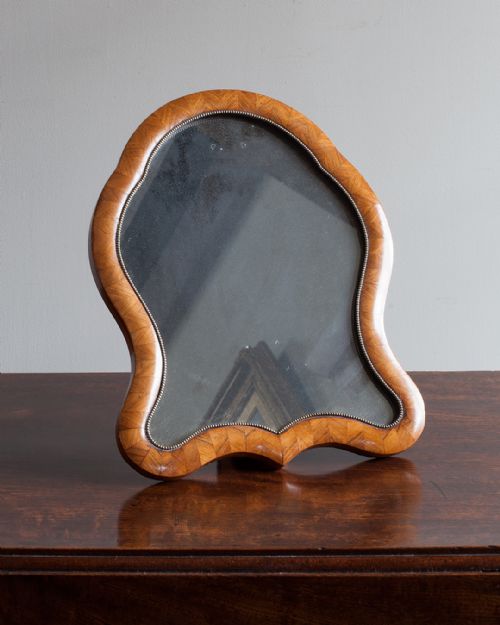
- A glass plate cut into the shape of a heraldic shield, popular during the Georgian period. The curved upper outline is mounted within upright arms.
- Crossbanding
- A decorative technique where a border of veneer is laid across the grain of the primary wood. This creates a contrasting frame around drawer fronts or mirror surrounds.
- Parcel-gilt
- A decorative treatment where specific carved details or mouldings are partially gilded with gold leaf. This highlights particular architectural elements against a dark wood background.
Swing Mirror Dressing Table: Frequently Asked Questions
What is the difference between a toilet mirror and a cheval mirror?
A toilet mirror is a compact tabletop glass designed to sit on top of a chest of drawers or sideboard, usually featuring a small drawer base.
A cheval mirror is a much larger freestanding glass mounted on a tall vertical frame that rests directly on the floor.
How do I date a mahogany dressing mirror?
Dating relies on timber choice, hardware style and construction methods like dovetailing. Georgian pieces often feature slender proportions and shield shapes, while Victorian examples tend to be heavier with turned supports.
Secondary woods inside the drawer boxes and the type of veneer used also help narrow down the period of manufacture.
Are the mirror plates original on these pieces?
Many older pieces have had their glass replaced over time due to foxing or breakage. Original plates often display minor blemishes, slight distortion or light silver degradation.
Examining the backboards and the way the glass is secured in the rebate provides clues to its age.
How were these mirrors used historically?
They were placed on dressing tables or chests in bedrooms to assist with personal grooming, styling hair and adjusting attire. The pivoting frame allowed the user to change the angle of reflection.
Small drawers in the base held jewellery, cosmetics and hairpins.