
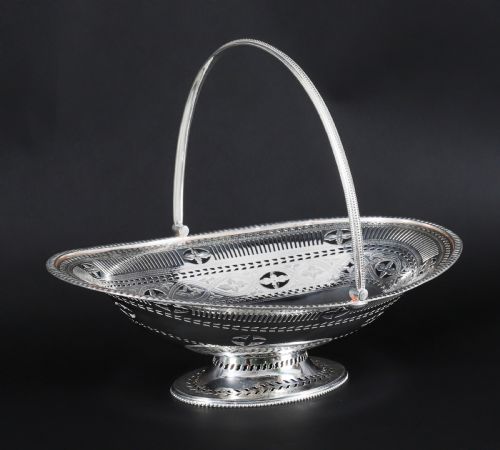
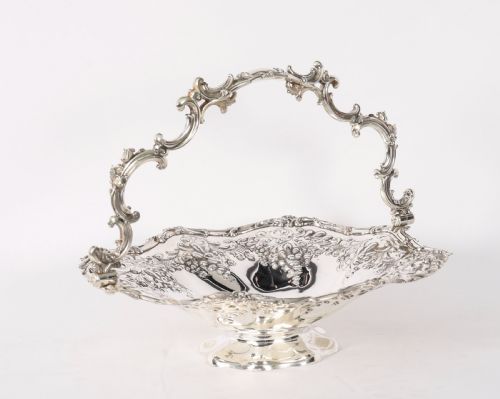
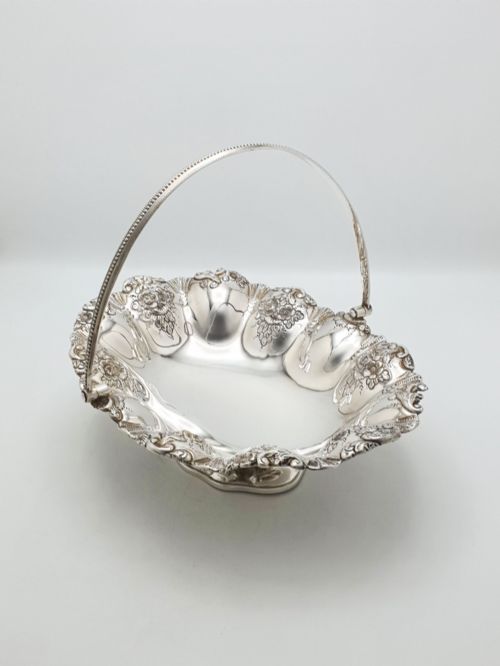
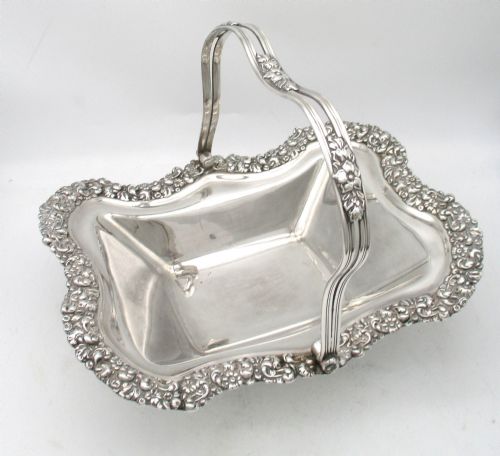
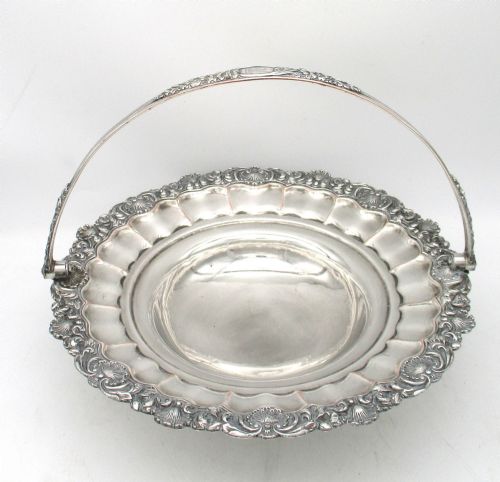


Swing Handle Fruit Bowl
A swing handle fruit bowl brings sculptural grace and practical service to a dining table.
Swing Handle Fruit Bowl
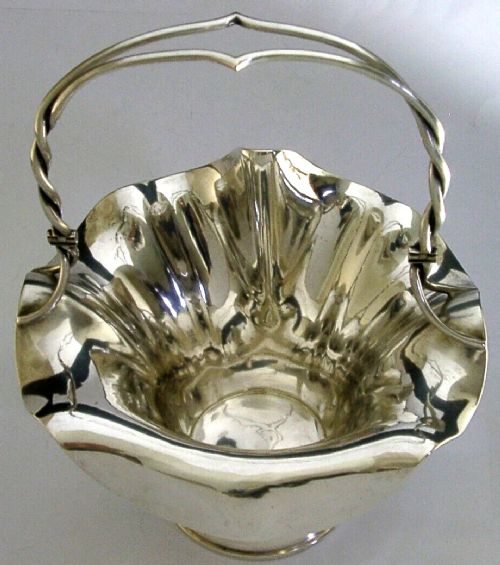
A swing handle fruit bowl provides a refined centrepiece for a dining table or sideboard, designed with a pivoting handle for easy movement. These forms function primarily as fruit baskets, cake baskets, and serveware across various historical periods.
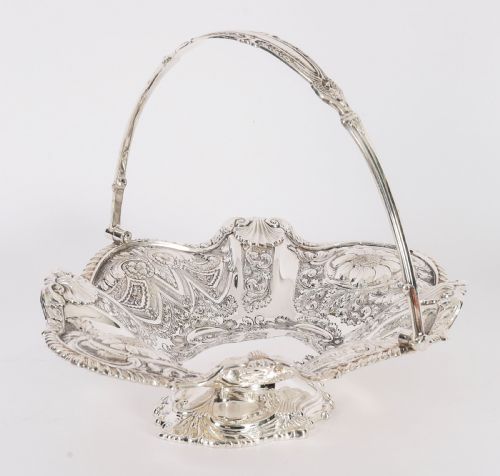
The pieces visible on this page date predominantly from the nineteenth century and the Edwardian era, spanning Victorian, Art Nouveau, and Regency styles. Victorian examples often display elaborate ornamentation, while Edwardian pieces lean towards lighter, pierced silver designs.
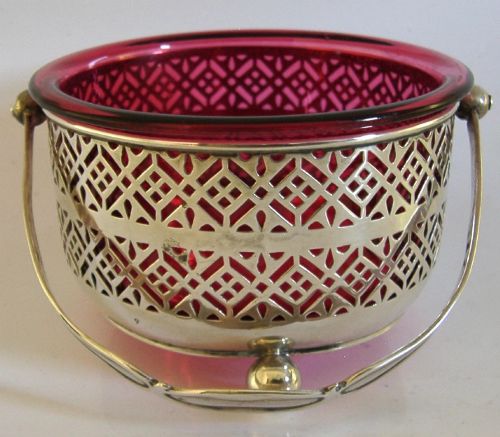
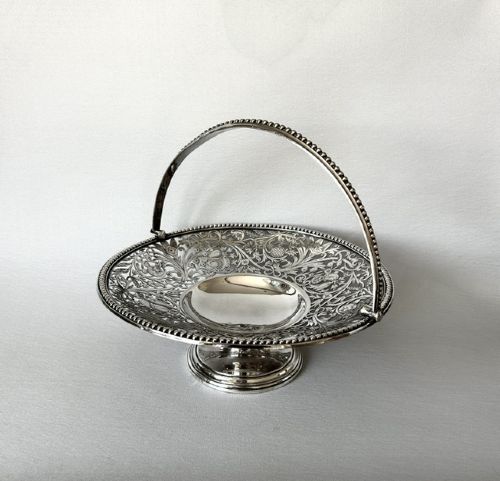
Materials range from sterling and solid silver to silver plate, electroplated nickel silver, and combinations featuring cranberry glass inserts. Buyers encounter everything from heavy solid silver art nouveau bowls to silver plated baskets with floral repoussé rims.
Construction and Materials
Makers utilised solid silver, sterling silver, and old Sheffield plate alongside base metals finished with silver plating or electroplated nickel silver. Piercing, fretwork, and hammering techniques shape the metal bodies of these baskets and bowls.
Decorative details such as floral repoussé rims and embossed motifs are applied by hand to give texture and depth to the silver or plated surfaces. Swing handles are attached with pivoting pins or hinges to allow smooth movement without compromising the structural integrity of the rim.
Some nineteenth century bakers had to specify whether their heavy handle required extra reinforcement just to carry the afternoon scones.
Judging Quality
Quality rests on the crispness of the piercing, the weight of the metal, and the integrity of the silver plating over the underlying base metal. Heavier solid silver pieces demonstrate substantial material investment, while plated items rely on the thickness of the silver layer.
Design execution separates standard domestic items from superior studio work, particularly in Art Nouveau pieces where organic lines require fluid shaping. Maker attribution and clear hallmarks add historical authority and confirm the provenance of the piece.
George W. Scott & Sons Ltd·Elkington·Hammond, Creake & Co·William Hutton & Sons·W M F·James Dixon
The Swing Handle Fruit Bowl Glossary
- Swing handle
- A movable bail handle attached to the rim of a bowl or basket via pivots, allowing it to drop to the sides when not in use. This mechanism facilitates compact storage and easy serving at the table.
- Repoussé
- A metalworking technique where the artisan hammers the metal from the reverse side to form a raised design in relief on the front. Floral and scroll motifs frequently appear rendered in this manner.
- Old Sheffield plate
- An early form of composite metal made by fusing a thin sheet of silver to a thicker copper base before rolling them together. This process creates a durable material with the appearance of solid silver.
- Piercing
- The practice of cutting decorative apertures or fretwork through the metal wall of a basket or bowl to create intricate patterns. This technique lightens the visual weight of silver and plated tableware.
- Electroplated nickel silver
- A base metal alloy of copper, nickel, and zinc coated with a layer of pure silver through an electrical process. It became a popular substitute for solid silver during the nineteenth century.
Swing Handle Fruit Bowl: Frequently Asked Questions
What were swing handle bowls used for?
These vessels served primarily for presenting fruit, cakes, and bread at formal dining tables throughout the nineteenth and early twentieth centuries.
The movable handle allowed servants or hosts to lift and pass the heavy vessel around the table with ease during dessert courses.
How do I clean a silver plated bowl?
Cleaning requires a soft cloth and a gentle silver polish specifically formulated for plated items to avoid wearing away the thin silver layer.
Harsh chemical dips and abrasive scouring pads damage the historical surfaces and remove the natural patina accumulated over decades.
How do I identify an Edwardian piece?
Edwardian baskets often feature lighter pierced fretwork, lattice patterns, and delicate floral motifs characteristic of the period between nineteen hundred and ten.
Assaying marks, date letters, and maker stamps stamped into the silver provide precise verification of the manufacturing year.
Can I use these bowls for daily dining?
These antique vessels accommodate everyday service, though acidic fruits left for extended periods can tarnish silver and plated surfaces.
Hand washing immediately after use preserves the finish and prevents moisture from lingering in the hinged joints of the handle.